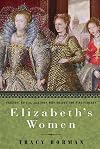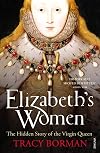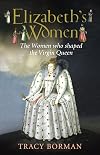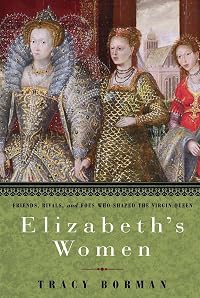
Elizabeth's Women: The Hidden Story of the Virgin Queen
by Tracy Borman
On This Page
Description
Examines Queen Elizabeth I through the eyes of the women who shaped her life--from her bewitching mother to her dangerously obsessive sister, and from the rivals to her throne to her rivals in love.Tags
Recommendations


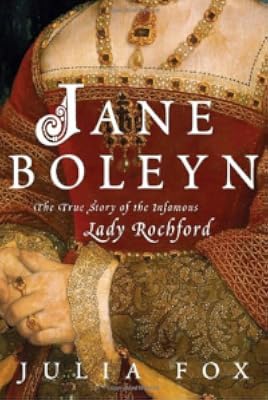
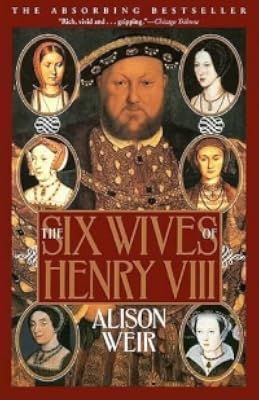
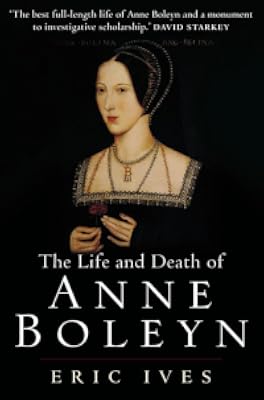

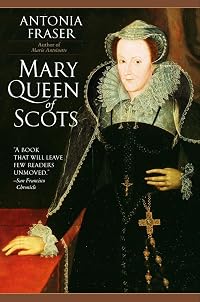
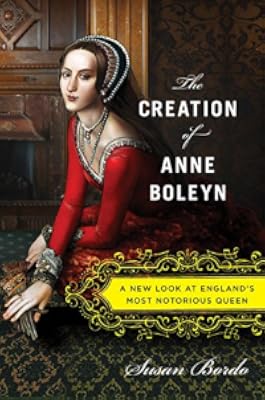
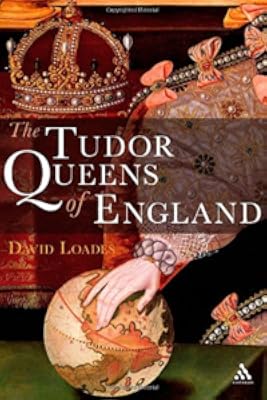

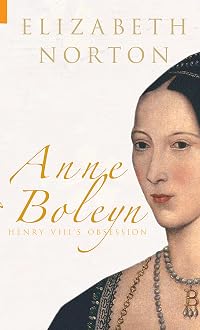
Member Recommendations


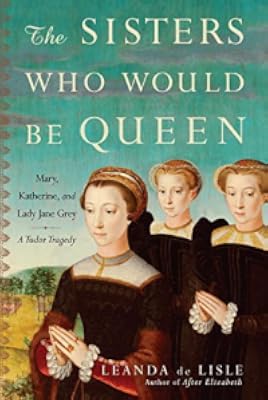
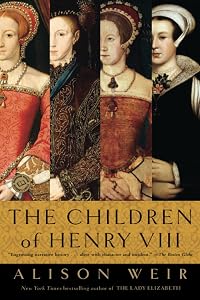
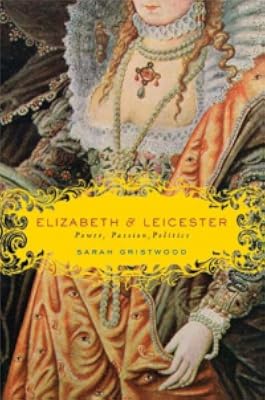
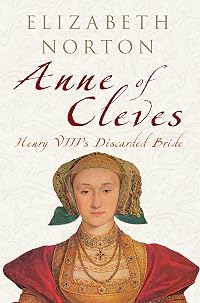
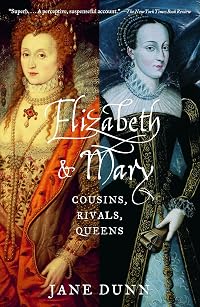
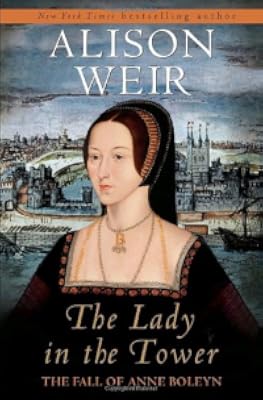
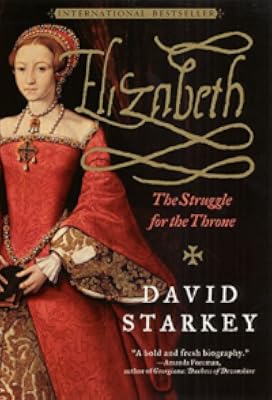
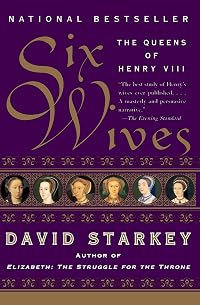
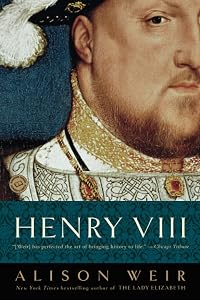
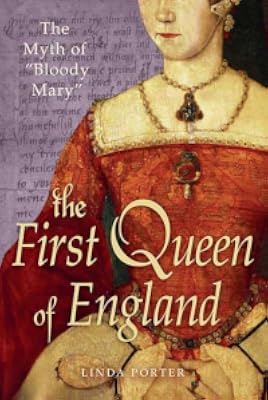
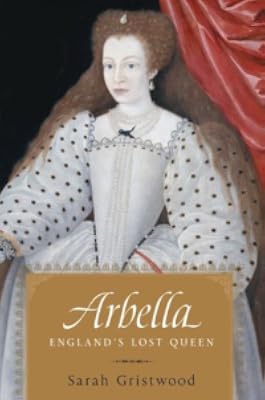
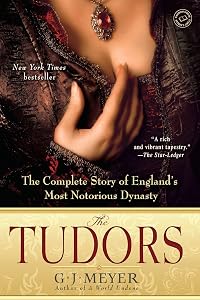
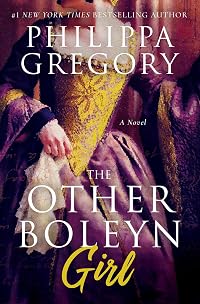
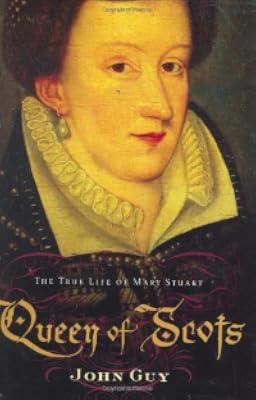
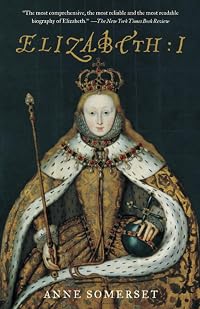
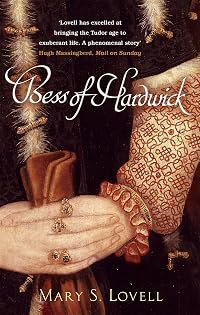
PuddinTame Both books about the women who shaped Elizabeth I. The Queen's Governess is fictional.
Member Reviews
I must admit I've been reading more books on the Tudors recently than I should, I'm sure. Elizabeth's Women was one of my favorite ones. It had a flow that kept me reading almost as a good fiction book would. In fact, I had it out at work and a number of people picked it up and were intrigued. I have a feeling I'll be lending it out soon enough.
Though sometimes I get a little impatient when quotes from this time period are written as they were before a definite spelling was in use, it added a nice flavor to the package. I felt like I understood the pronunciation of the time better. On the other hand, the full title of the book was a tad long.
The perspective was novel. We read so much about Elizabeth I and the men in her life: the show more flirtations, the counselors, the rivals for her affections. The women seemed to cower behind the curtains in the privy chamber. Here, though, we get a fresh look at the females who made a deep impression in the life of one of the most intriguing of English queens. From a mother she barely knew to her loyal governesses, to the overabundance of females next in line to her throne to her volatile relationship with her predecessor; even the many ladies who saw her at her most private - all had an important place in her life and affected the way she ruled and survived so long. I admired her cautiousness previous to her accession and how she applied the lessons learned later on. I wasn't so impressed by the sometimes outright cruelty she would inflict on her ladies, particularly when they'd get punished for merely falling in love, forcing them to marry in secret, then usually having to spend time in the Tower for their secrecy. At times she'd be incredibly lenient and kind to a lady, and you'd wonder why on earth it was different this time. All of these nuances were explored.
My only problem with the writing, and this was a very minute problem, was the overabundance of the word 'precocious' in the chapters covering Elizabeth's childhood. I pet peeve easily, though. Good reading otherwise. show less
Though sometimes I get a little impatient when quotes from this time period are written as they were before a definite spelling was in use, it added a nice flavor to the package. I felt like I understood the pronunciation of the time better. On the other hand, the full title of the book was a tad long.
The perspective was novel. We read so much about Elizabeth I and the men in her life: the show more flirtations, the counselors, the rivals for her affections. The women seemed to cower behind the curtains in the privy chamber. Here, though, we get a fresh look at the females who made a deep impression in the life of one of the most intriguing of English queens. From a mother she barely knew to her loyal governesses, to the overabundance of females next in line to her throne to her volatile relationship with her predecessor; even the many ladies who saw her at her most private - all had an important place in her life and affected the way she ruled and survived so long. I admired her cautiousness previous to her accession and how she applied the lessons learned later on. I wasn't so impressed by the sometimes outright cruelty she would inflict on her ladies, particularly when they'd get punished for merely falling in love, forcing them to marry in secret, then usually having to spend time in the Tower for their secrecy. At times she'd be incredibly lenient and kind to a lady, and you'd wonder why on earth it was different this time. All of these nuances were explored.
My only problem with the writing, and this was a very minute problem, was the overabundance of the word 'precocious' in the chapters covering Elizabeth's childhood. I pet peeve easily, though. Good reading otherwise. show less
 This review was written for LibraryThing Early Reviewers.
Seldom has a non-fiction book riveted me to the pages as Elizabeth’s Women has. Although it seems that lately numerous books, movies and TV shows have appeared about Elizabeth I and her father’s tumultuous reign, stuffed with historical data or dripping with romantic notions and literary liberties. Borman’s book presents a uniquely fresh viewpoint allowing the reader a glimpse of the real person behind the pomp and etiquette.
Elizabeth’s Women: Friends, Rivals, and Foes who Shaped the Virgin Queen by Tracy Borman is the US release of a book that was released in the UK under a slightly altered title, Elizabeth’s Women: The Hidden Story of the Virgin Queen.
Tracy Borman’s book Elizabeth’s Women poses the hypothesis that the show more women in Elizabeth I’s life shaped her to become the successful “Virgin Queen” of her reign, and the book expounds on this further with merit. Meticulously researched and peppered with many excepts from letters from the era, Borman gives a fascinating view of the person Elizabeth must have been by those who were closest to her, her confidants and maids of honor, as well as her adversaries, her sister Mary Tudor, her cousin Mary, Queen of Scots, and other claimants to the throne that plagued her throughout her reign.
I was struck by the many similarities to todays’ political discourse; Elizabeth navigated life and political intrigue at the royal court as a keen observer. Some may criticize her (today) for cruelty for condemning many of her her adversaries to the Tower. It strikes me, however, that she still read her prisoners’ letters and listened to their grievances. Her selfish decision to remain unmarried initially caused her monastic grief when numerous claimants to the throne intrigued against her, but ultimately she used her unmarried state to her advantage when the Spanish Armada was defeated, she ruled uncontested until her death. show less
Elizabeth’s Women: Friends, Rivals, and Foes who Shaped the Virgin Queen by Tracy Borman is the US release of a book that was released in the UK under a slightly altered title, Elizabeth’s Women: The Hidden Story of the Virgin Queen.
Tracy Borman’s book Elizabeth’s Women poses the hypothesis that the show more women in Elizabeth I’s life shaped her to become the successful “Virgin Queen” of her reign, and the book expounds on this further with merit. Meticulously researched and peppered with many excepts from letters from the era, Borman gives a fascinating view of the person Elizabeth must have been by those who were closest to her, her confidants and maids of honor, as well as her adversaries, her sister Mary Tudor, her cousin Mary, Queen of Scots, and other claimants to the throne that plagued her throughout her reign.
I was struck by the many similarities to todays’ political discourse; Elizabeth navigated life and political intrigue at the royal court as a keen observer. Some may criticize her (today) for cruelty for condemning many of her her adversaries to the Tower. It strikes me, however, that she still read her prisoners’ letters and listened to their grievances. Her selfish decision to remain unmarried initially caused her monastic grief when numerous claimants to the throne intrigued against her, but ultimately she used her unmarried state to her advantage when the Spanish Armada was defeated, she ruled uncontested until her death. show less
This review was written for LibraryThing Early Reviewers.3.5
What an arduous read...there was so much information! There has been very little written about Elizabeth and her Privy Household...so if you want to really know about the other side of Elizabeth's life, I suggest that this is the book to read.
Although Elizabeth was a Great Ruler, she was no less fickle, egocentric, & vengeful than her father Henry VIII. She ruled by answering problems with "answers answerless".
The turmoil of her younger life made for a sociopath of a woman. She never knew whom she could trust and therefore played mind games with her court & everyone she came in contact with. She was extremely paranoid and saw plots against here, even where there were none.
The way she treated her "ladies" was abominable...she was show more mean, jealous, verbally abusive, petty & downright nasty.
She refused to allow any of her Ladies to marry without her permission (which she ALWAYS refused to give), so in desperation, most of them either became someone's mistress or married behind her back. When Elizabeth found out, usually because of a pregnancy, she would fly into a rage and severely punish the woman & her husband. If/when she deigned to forgive the "transgression", it was usually the man who fared better.
She was also Extremely vain and delusional about her beauty until she was in her late sixties.....that is when she finally realized that she had become a veritable old hag (my description). At that point she basically gave up living, sequestered herself in her rooms and stopped eating.
So after reading this exhausting account of Elizabeth I, she is no longer my Idol....I found her behavior to be inexcusable for one of her rank & privilege. show less
What an arduous read...there was so much information! There has been very little written about Elizabeth and her Privy Household...so if you want to really know about the other side of Elizabeth's life, I suggest that this is the book to read.
Although Elizabeth was a Great Ruler, she was no less fickle, egocentric, & vengeful than her father Henry VIII. She ruled by answering problems with "answers answerless".
The turmoil of her younger life made for a sociopath of a woman. She never knew whom she could trust and therefore played mind games with her court & everyone she came in contact with. She was extremely paranoid and saw plots against here, even where there were none.
The way she treated her "ladies" was abominable...she was show more mean, jealous, verbally abusive, petty & downright nasty.
She refused to allow any of her Ladies to marry without her permission (which she ALWAYS refused to give), so in desperation, most of them either became someone's mistress or married behind her back. When Elizabeth found out, usually because of a pregnancy, she would fly into a rage and severely punish the woman & her husband. If/when she deigned to forgive the "transgression", it was usually the man who fared better.
She was also Extremely vain and delusional about her beauty until she was in her late sixties.....that is when she finally realized that she had become a veritable old hag (my description). At that point she basically gave up living, sequestered herself in her rooms and stopped eating.
So after reading this exhausting account of Elizabeth I, she is no longer my Idol....I found her behavior to be inexcusable for one of her rank & privilege. show less
In a world inundated with modern biographies on Elizabeth I, historian Tracy Borman sets out to explore the world of women surrounding Elizabeth I in hopes of shedding light on Elizabeth's character and personality. Who helped shaped Elizabeth into such a formidable female ruler, something that was an anomaly in itself? This is a proficient account of the story behind the stories of Elizabeth's peers, elders and family members that helps the reader to better understand the nuts and bolts of Elizabeth's mind, which was always skillfully at work.
Despite the bevy of information at our fingertips regarding Elizabeth, she is still one of the most intriguing figures of the Tudor era. Born to Henry VIII and his second wife, Anne Boleyn, she show more was at first a disappointment to her parents and a kingdom by being a girl. Losing her mother at the age of 3, she was brought up in her own household under the tutelage of preferred women. It is with these women that Elizabeth begins cultivating her personality and understanding the way of the tumultuous world around her. Although we regularly hear of the men or the favorites in Elizabeth's life, rarely do we obtain as much information about the women who constantly attended her and were with her behind the scenes.. until now.
Borman begins the story of Elizabeth with her mother, Anne Boleyn, and gives the standard biography of Anne. Although at first she praises Anne's intellect, she soon writes of her haughtiness and the swift fall from Henry's graces once they were finally married. Seemingly it was once they were married that Anne's and Henry's marriage fell apart. Elizabeth seems to have not had much of a relationship with Anne or Henry as a child, except for Anne sending gifts to Elizabeth.
Borman explains how Elizabeth interacted with a few of the children and caretakers, such as Blanche Parry (who ended up serving Elizabeth for over fifty years), and she goes into small biographies of these secondary women as she introduces them to us. Another woman who also stayed with Elizabeth a lengthy amount and therefore gets more attention is the governess, Kat Astley or Ashley, who joined Elizabeth's household when Elizabeth was 3 and Kat was probably in her late twenties. Elizabeth was very close to her as Kat was one of the few people in her life that stayed with her in her younger years. I had not realized the extent of Kat's own learning because of the ridicule she receives by historians due to the Thomas Seymour affair. After Lady Bryan it was Kat who had continued to instill a love for learning, which was further enhanced by her last stepmother, Katherine Parr and the tutors she chose for Elizabeth.
For some thirty, forty and fifty years these few women such as Kat Ashley, Blanche Parry and Anne Dudley stayed nearby with Elizabeth and were close confidantes and friends to the Queen. Borman details the relationships of the women with Elizabeth in a way that has not been done before, when before we had always heard of merely Cecil influencing Elizabeth's political decisions. We now get a look on the inside, the female perspective of jealousy, vanity and courtly appearance.
One of the most interesting continuing relationships in Borman's book deals with the sisterhood of Elizabeth and Mary. Borman tells of how Elizabeth interacted with her half siblings, and I was surprised to learn that her sister Mary had eventually grown fond of Elizabeth, probably out of pity, once Anne Boleyn was executed. Knowing of the strained relationship Mary and Elizabeth had once their brother King Edward had died, I had never assumed that they were in reality ever close, yet Borman portrays Mary as once being maternal to Elizabeth. They were 17 years apart, and with Elizabeth being 3 when she lost her mother, Mary may have felt sorry for her. But soon enough for Mary's reign, Mary was calling Elizabeth the bastard, the daughter of the little whore, etc. A swift turn around for Mary's feelings towards Elizabeth, but one wonders all the different mechanisms at play, such as Mary's jealousy towards Elizabeth as Elizabeth grew into a pleasant looking young lady and Mary was soon eclipsed by Elizabeth's sharp mind and looks. Anne of Cleves favored Elizabeth over Mary, and Katherine Parr did as well. Did Mary resent this? Once Mary was queen, she did not trust Elizabeth, and denounced her right to the succession. There was a long look at Mary Tudor here, but was appreciated for the fact that we were able to glean what Elizabeth learned from Mary's reign.
One of the many people who helped shaped the progress of Elizabeth's reign was her cousin, Mary the Queen of Scots. Most people know of the outcome that happened after Mary had been a burr in Elizabeth's side for nearly thirty years, and the author devotes an entire 50 page chapter to this conflict. This is where the allure of the book started to lose its luster, but it picked up its interesting pace as soon as the Queen of Scots was dealt with. I had already read enough accounts of these two Queen's relationships and there was not any new insight for me regarding the effects of their animosity towards each other. Those who are not acquainted with that story may not be as disappointed as I was to see so much time devoted to this, however.
Of some of the influencers and courtiers that we read about are the Seymour family, the Sidneys, and Lettice Knollys (who married Elizabeth's favorite, Leicester, much to Elizabeth's chagrin). We also are treated to accounts regarding Bess of Hardwick, married to George Talbot, both as she was a gaoler for Mary Queen of Scots and later when Arbella was growing up into an eccentric young lady. Other characters include Bess Throckmorton who shocked Elizabeth by becoming pregnant by Sir Walter Ralegh, and the cousins Katherine and Mary Grey who posed a threat to Elizabeth's throne.
Those who are looking for more insight into the characters surrounding Elizabeth during her life will not be disappointed. Beginning with Anne Boleyn and continuing with the two Queen Mary's, we are privy to the causes and effects that made Elizabeth who she was, Gloriana. This is thoroughly researched, with the footnotes to prove it, and it is put together effectively. Through the reign of Mary I, we are made to understand how Elizabeth learned from Mary's mistakes and held fast to her beliefs on how to rule exclusively without a husband or even an heir, as opposed to the hard and unbending rule of her sister. We begin to understand Elizabeth's decisions on the refusal of marriage when Elizabeth witnesses the catastrophic effects of most marriages of those in power, from her father to her sister. We learn that Elizabeth had a strict expectation of the women in her chambers and wished for them to not marry at all, and was hard on those that strayed from the virginal status.
This is not just another biography of Elizabeth I or the history of Elizabethan England. In fact, Borman successfully dodges that bullet by not repeating many of the historical events that happened during Elizabeth's life, and even skips those that greatly effected her. For instance, the author does not discuss the fatal period of Lady Jane Grey's reign, nor does she go into the Dudley plot which scared Elizabeth half out of her mind as she was imprisoned when her sister was Queen and there is no mention of the burning of heretics. This is a fulfilling account of the women who definitely instilled Elizabeth's characteristics and beliefs into her heart and mind. Moreover, I would recommend reading a biography on Elizabeth I before reading this one due to the nature that this is more of a study and commentary on those surrounding her who helped to shape the character of Elizabeth. It would be hard to understand the ramifications of some of the things that Elizabeth encountered in her relationships that are discussed here without knowing any of the political and biographical history of Elizabeth I. If you do not feel intrigued by the persona of Elizabeth I, this is not the book for you. I had hoped for more of a finishing commentary as a summary on Elizabeth from the author's opinion; but overall I was sad that I had completed this book because I was enjoying my enlightened status of understanding Elizabeth as a woman, as the Virgin Queen, and why she chose that status for herself. There was the blurb about George and Jane Boleyn having a son which I disagree with, and the excessive information on the Queen of Scots negated a star for me. I enjoyed 95% of this book, being a Tudor fanatic that I am, and I definitely recommend this book for anyone who has an interest in the workings of Elizabeth's mind, and of the many supporting or bothersome women in her life. show less
Despite the bevy of information at our fingertips regarding Elizabeth, she is still one of the most intriguing figures of the Tudor era. Born to Henry VIII and his second wife, Anne Boleyn, she show more was at first a disappointment to her parents and a kingdom by being a girl. Losing her mother at the age of 3, she was brought up in her own household under the tutelage of preferred women. It is with these women that Elizabeth begins cultivating her personality and understanding the way of the tumultuous world around her. Although we regularly hear of the men or the favorites in Elizabeth's life, rarely do we obtain as much information about the women who constantly attended her and were with her behind the scenes.. until now.
Borman begins the story of Elizabeth with her mother, Anne Boleyn, and gives the standard biography of Anne. Although at first she praises Anne's intellect, she soon writes of her haughtiness and the swift fall from Henry's graces once they were finally married. Seemingly it was once they were married that Anne's and Henry's marriage fell apart. Elizabeth seems to have not had much of a relationship with Anne or Henry as a child, except for Anne sending gifts to Elizabeth.
Borman explains how Elizabeth interacted with a few of the children and caretakers, such as Blanche Parry (who ended up serving Elizabeth for over fifty years), and she goes into small biographies of these secondary women as she introduces them to us. Another woman who also stayed with Elizabeth a lengthy amount and therefore gets more attention is the governess, Kat Astley or Ashley, who joined Elizabeth's household when Elizabeth was 3 and Kat was probably in her late twenties. Elizabeth was very close to her as Kat was one of the few people in her life that stayed with her in her younger years. I had not realized the extent of Kat's own learning because of the ridicule she receives by historians due to the Thomas Seymour affair. After Lady Bryan it was Kat who had continued to instill a love for learning, which was further enhanced by her last stepmother, Katherine Parr and the tutors she chose for Elizabeth.
For some thirty, forty and fifty years these few women such as Kat Ashley, Blanche Parry and Anne Dudley stayed nearby with Elizabeth and were close confidantes and friends to the Queen. Borman details the relationships of the women with Elizabeth in a way that has not been done before, when before we had always heard of merely Cecil influencing Elizabeth's political decisions. We now get a look on the inside, the female perspective of jealousy, vanity and courtly appearance.
One of the most interesting continuing relationships in Borman's book deals with the sisterhood of Elizabeth and Mary. Borman tells of how Elizabeth interacted with her half siblings, and I was surprised to learn that her sister Mary had eventually grown fond of Elizabeth, probably out of pity, once Anne Boleyn was executed. Knowing of the strained relationship Mary and Elizabeth had once their brother King Edward had died, I had never assumed that they were in reality ever close, yet Borman portrays Mary as once being maternal to Elizabeth. They were 17 years apart, and with Elizabeth being 3 when she lost her mother, Mary may have felt sorry for her. But soon enough for Mary's reign, Mary was calling Elizabeth the bastard, the daughter of the little whore, etc. A swift turn around for Mary's feelings towards Elizabeth, but one wonders all the different mechanisms at play, such as Mary's jealousy towards Elizabeth as Elizabeth grew into a pleasant looking young lady and Mary was soon eclipsed by Elizabeth's sharp mind and looks. Anne of Cleves favored Elizabeth over Mary, and Katherine Parr did as well. Did Mary resent this? Once Mary was queen, she did not trust Elizabeth, and denounced her right to the succession. There was a long look at Mary Tudor here, but was appreciated for the fact that we were able to glean what Elizabeth learned from Mary's reign.
One of the many people who helped shaped the progress of Elizabeth's reign was her cousin, Mary the Queen of Scots. Most people know of the outcome that happened after Mary had been a burr in Elizabeth's side for nearly thirty years, and the author devotes an entire 50 page chapter to this conflict. This is where the allure of the book started to lose its luster, but it picked up its interesting pace as soon as the Queen of Scots was dealt with. I had already read enough accounts of these two Queen's relationships and there was not any new insight for me regarding the effects of their animosity towards each other. Those who are not acquainted with that story may not be as disappointed as I was to see so much time devoted to this, however.
Of some of the influencers and courtiers that we read about are the Seymour family, the Sidneys, and Lettice Knollys (who married Elizabeth's favorite, Leicester, much to Elizabeth's chagrin). We also are treated to accounts regarding Bess of Hardwick, married to George Talbot, both as she was a gaoler for Mary Queen of Scots and later when Arbella was growing up into an eccentric young lady. Other characters include Bess Throckmorton who shocked Elizabeth by becoming pregnant by Sir Walter Ralegh, and the cousins Katherine and Mary Grey who posed a threat to Elizabeth's throne.
Those who are looking for more insight into the characters surrounding Elizabeth during her life will not be disappointed. Beginning with Anne Boleyn and continuing with the two Queen Mary's, we are privy to the causes and effects that made Elizabeth who she was, Gloriana. This is thoroughly researched, with the footnotes to prove it, and it is put together effectively. Through the reign of Mary I, we are made to understand how Elizabeth learned from Mary's mistakes and held fast to her beliefs on how to rule exclusively without a husband or even an heir, as opposed to the hard and unbending rule of her sister. We begin to understand Elizabeth's decisions on the refusal of marriage when Elizabeth witnesses the catastrophic effects of most marriages of those in power, from her father to her sister. We learn that Elizabeth had a strict expectation of the women in her chambers and wished for them to not marry at all, and was hard on those that strayed from the virginal status.
This is not just another biography of Elizabeth I or the history of Elizabethan England. In fact, Borman successfully dodges that bullet by not repeating many of the historical events that happened during Elizabeth's life, and even skips those that greatly effected her. For instance, the author does not discuss the fatal period of Lady Jane Grey's reign, nor does she go into the Dudley plot which scared Elizabeth half out of her mind as she was imprisoned when her sister was Queen and there is no mention of the burning of heretics. This is a fulfilling account of the women who definitely instilled Elizabeth's characteristics and beliefs into her heart and mind. Moreover, I would recommend reading a biography on Elizabeth I before reading this one due to the nature that this is more of a study and commentary on those surrounding her who helped to shape the character of Elizabeth. It would be hard to understand the ramifications of some of the things that Elizabeth encountered in her relationships that are discussed here without knowing any of the political and biographical history of Elizabeth I. If you do not feel intrigued by the persona of Elizabeth I, this is not the book for you. I had hoped for more of a finishing commentary as a summary on Elizabeth from the author's opinion; but overall I was sad that I had completed this book because I was enjoying my enlightened status of understanding Elizabeth as a woman, as the Virgin Queen, and why she chose that status for herself. There was the blurb about George and Jane Boleyn having a son which I disagree with, and the excessive information on the Queen of Scots negated a star for me. I enjoyed 95% of this book, being a Tudor fanatic that I am, and I definitely recommend this book for anyone who has an interest in the workings of Elizabeth's mind, and of the many supporting or bothersome women in her life. show less
The hook of this biography of Elizabeth I is that it sets out to do something new—to create the queen and her society by examining the network of women who surrounded Elizabeth and who influenced her, from the memory of her mother's execution through to faithful female courtiers who attended her in her final days. Sadly, Borman fails to deliver on the promise of that hook. What could have been a very intriguing study of female networks of friendship, co-operation, education, and enmity; of the centrality of the female body and its display and its (mis)behaviours to Tudor politics; is instead largely a rehashing of earlier biographies, which says nothing new and frequently repeats as truth things which have previously been shown to be show more at best unreliable. There are also some weird factual slips—with titles; I think one or two other things as well—and some hints of depressingly familiar attitudes towards female sexuality and sexual expression. The best I can say about this is that it's not the worst biography of Elizabeth that I've read—and yes, I am aware that I'm damning with faint praise. show less
This review was written for LibraryThing Early Reviewers.I found Elizabeth's Women a truly fascinating study of the women who influenced Elizabeth Tudor's life and reign. Borman has chosen a new angle on Elizabeth's life, one which has more credence than might be supposed. Although such male councillors as Walsingham, Burghley and Cecil certainly shaped the political landscape of the Elizabethan court, it was among women that Elizabeth lived her most intimate life from her birth to her death.
In the period before her accession to the throne at the age of twenty-five, Elizabeth's households, guardians, tutors, and servants were chosen by the whims of the reigning monarch or regent -- in turn, Henry VIII, her father (and his various wives); Edward Seymour, the Lord Protector for Edward VI, who show more followed Katherine Parr's advice for Elizabeth; and her sister, Queen Mary.
On the whole, in her early life, Elizabeth was blessed with caring and intelligent guardians and teachers. Her first governess, Katherine (Kat) Champernowne, was herself the product of a humanist household in which it was as important to educate the daughters as well as the sons. Even after Kat married, she remained within Elizabeth's inner circle among her most trusted friends. As the brilliant and disciplined young Princess exceeded the education of her governess, Henry VIII's last queen, Katherine Parr, took charge of Elizabeth's education and made sure she had the best tutors available -- Roger Ascham and William Grindal.
The examples of her mother and stepmothers also taught Elizabeth hard lessons in the realities of court life. The executions of Anne Boleyn and Katherine Howard highlighted how easily folly could lead to tragedy. From Anne of Cleves and Katherine Parr, Elizabeth learned pragmatism and the crucial importance of bowing to the reigning sovereign's will for survival.
The first half of Borman's book chronicling Elizabeth's life before her accession to the throne is by far the richest. She paints nuanced portraits of Anne Boleyn, Mary Tudor, Henry's wives, and the important women of Elizabeth's household, as well as of Elizabeth herself. The second half of the book has some interesting portraits of rivals to Elizabeth's throne, especially Mary Queen of Scots and Lady Margaret Douglas, Countess of Lennox and her granddaughter, Arbella. However, it gets a bit lost in the sheer numbers of Elizabeth's ladies-in-waiting -- many of whom have similar names. Elizabeth, herself, begins to be characterized as a harridan who often made her ladies' lives miserable. The ARC I read, unfortunately, lacked an index, so it was even harder to keep track of their identities. A Tudor family tree would have been a much appreciated visual aid.
These quibbles aside, I highly recommend Elizabeth's Women as an entree into or an addition to the life of England's Gloriana. show less
In the period before her accession to the throne at the age of twenty-five, Elizabeth's households, guardians, tutors, and servants were chosen by the whims of the reigning monarch or regent -- in turn, Henry VIII, her father (and his various wives); Edward Seymour, the Lord Protector for Edward VI, who show more followed Katherine Parr's advice for Elizabeth; and her sister, Queen Mary.
On the whole, in her early life, Elizabeth was blessed with caring and intelligent guardians and teachers. Her first governess, Katherine (Kat) Champernowne, was herself the product of a humanist household in which it was as important to educate the daughters as well as the sons. Even after Kat married, she remained within Elizabeth's inner circle among her most trusted friends. As the brilliant and disciplined young Princess exceeded the education of her governess, Henry VIII's last queen, Katherine Parr, took charge of Elizabeth's education and made sure she had the best tutors available -- Roger Ascham and William Grindal.
The examples of her mother and stepmothers also taught Elizabeth hard lessons in the realities of court life. The executions of Anne Boleyn and Katherine Howard highlighted how easily folly could lead to tragedy. From Anne of Cleves and Katherine Parr, Elizabeth learned pragmatism and the crucial importance of bowing to the reigning sovereign's will for survival.
The first half of Borman's book chronicling Elizabeth's life before her accession to the throne is by far the richest. She paints nuanced portraits of Anne Boleyn, Mary Tudor, Henry's wives, and the important women of Elizabeth's household, as well as of Elizabeth herself. The second half of the book has some interesting portraits of rivals to Elizabeth's throne, especially Mary Queen of Scots and Lady Margaret Douglas, Countess of Lennox and her granddaughter, Arbella. However, it gets a bit lost in the sheer numbers of Elizabeth's ladies-in-waiting -- many of whom have similar names. Elizabeth, herself, begins to be characterized as a harridan who often made her ladies' lives miserable. The ARC I read, unfortunately, lacked an index, so it was even harder to keep track of their identities. A Tudor family tree would have been a much appreciated visual aid.
These quibbles aside, I highly recommend Elizabeth's Women as an entree into or an addition to the life of England's Gloriana. show less
This review was written for LibraryThing Early Reviewers.I was excited to pick up a book which looks at Elizabeth I’s life from a different perspective. All the histories I have read (sorry Alison Weir – you too) seem to only treat her as a powerful monarch (which she was).
Borman explores what she might have felt as a precocious girl, a teen, a young woman – and how her life experiences shaped her psyche and her character - almost all the people in her life were women. Strong, smart women.
Unfortunately, the narrative bogged down in the second half (as does every other book about Gloriana I have read), when her life became consumed by the great high school lunchroom that was the British royal court.
Borman explores what she might have felt as a precocious girl, a teen, a young woman – and how her life experiences shaped her psyche and her character - almost all the people in her life were women. Strong, smart women.
Unfortunately, the narrative bogged down in the second half (as does every other book about Gloriana I have read), when her life became consumed by the great high school lunchroom that was the British royal court.
Members
- Recently Added By
Lists

Biographies: Women
112 works; 1 member
Author Information

23 Works 2,768 Members
Tracy Borman is a British writer and historian. She studied and taught history at the University of Hull and was awarded a Ph. D in 1997. Tracy is now Chief Executive of the Heritage Education Trust, a charity that encourages children to visit and learn from historic properties. She has recently been appointed Interim Chief Curator for Historic show more Royal Palaces, the charity that manages Hampton Court Palace, the Tower of London, Kensington Palace, Kew Palace and the Banqueting House, Whitehall. Her works include: Elizabeth's Women: The Hidden Story of the Virgin Queen, Henrietta Howard: King's Mistress, Queen's Servant, and Witches: A Tale of Sorcery, Scandal and Seduction. (Bowker Author Biography) show less
Common Knowledge
- Canonical title
- Elizabeth's Women: Friends, Rivals, and Foes Who Shaped the Virgin Queen; Elizabeth's Women: The Hidden Story of the Virgin Queen
- Alternate titles
- Elizabeth's Women: Friends, Rivals, and Foes Who Shaped the Virgin Queen
- Original publication date
- 2009
- People/Characters
- Elizabeth I, Queen of England; Anne Boleyn; Mary I, Queen of England; Mary, Queen of Scots; Blanche Parry; Kat Ashley (show all 7); Anne Dudley
- Important places
- England, UK; London, England, UK
- Dedication
- To my parents, John and Joan Borman, with love and thanks for all their support
- First words
- Giovanni Michiel, the Venetian ambassador to England during "Bloody" Mary Tudor's reign, noted with barely concealed distaste that the Queen's younger sister, Elizabeth, "is proud and haughty ... although she knows that she w... (show all)as born of such a mother."
- Last words
- (Click to show. Warning: May contain spoilers.)She and the other members of the late queen's household who followed her coffin to its final resting place were as assiduous in serving their royal mistress in death as they had been in life.
- Publisher's editor
- Murphy, Katherine; Allfrey, Ellah
Classifications
- Genres
- History, Nonfiction, General Nonfiction, Biography & Memoir
- DDC/MDS
- 942.055092 — History & geography History of Europe England and Wales England 1485-1603, Tudors 1558-1603, Elizabeth I History, geographic treatment, biography Biography
- LCC
- DA355 .B67 — History of Europe, Asia, Africa and Oceania Great Britain History of Great Britain England History By period Modern, 1485- Tudors, 1485-1603 Elizabeth I, 1558-1603. Elizabethan age
- BISAC
Statistics
- Members
- 387
- Popularity
- 81,135
- Reviews
- 24
- Rating
- (3.74)
- Languages
- English
- Media
- Paper, Ebook
- ISBNs
- 7
- UPCs
- 1
- ASINs
- 7