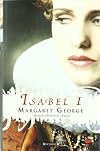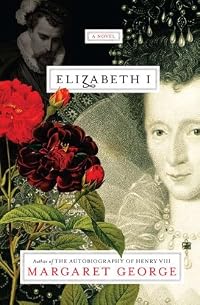
Elizabeth I
by Margaret George
On This Page
Description
Elizabeth's rival for the love of Robert Dudley, Earl of Leicester, and mother to the Earl of Essex, the mercurial nobleman who challenged Elizabeth's throne, Lettice Knollys had been intertwined with Elizabeth since childhood. They are both women of fierce intellect and desire: one trying to protect her country, and throne, the other trying to regain power and position for her family and each vying to convince the reader of her own private vision of the truth.Tags
Recommendations




Member Recommendations
Member Reviews
In this novelized version of Elizabeth I, Margaret George looks at the later part of her life--the years of the Spanish Armadas (the famous one was just the beginning), the years after the deaths of her most trusted advisors, and the years when her life was entwined with the Earl of Essex. Her story is told in the first person by Elizabeth herself, and interspersed with sections by her cousin, Lettice Knollys. Lettice is a Tudor-era character previously unknown to me, but a very important person in Elizabeth's life as she was the wife of the queen's dear Robert Dudley and the mother of Robert Deveraux, Earl of Essex. Lettice is physically similar to Elizabeth, but contrasts sharply in her character. Compared to Elizabeth's virginal show more status, cousin Lettice is rather a cougar; not only is she thrice married, she also has affairs with several of her son's friends. Also woven into the story are the characters and writings of Will Shakespeare, Edmund Spencer, John Donne and Francis Bacon.
I have been recommending Margaret George's Tudor novels for years because they are entertaining reads that are well researched. Unlike every film treatment of the dynasty that I can remember, George doesn't change the known facts to "improve" the story. Instead she leaves the historical record intact and then weaves her fiction around it (a formula that should be followed by more authors of historical fiction). It is always a bonus to actually learn something while being entertained.
And now I finally understand who all the various men in Elizabeth's life were!
Recommended for: This is a must-read for any fan of the Tudors. Also recommended for those who love long books that they can sink themselves into. show less
I have been recommending Margaret George's Tudor novels for years because they are entertaining reads that are well researched. Unlike every film treatment of the dynasty that I can remember, George doesn't change the known facts to "improve" the story. Instead she leaves the historical record intact and then weaves her fiction around it (a formula that should be followed by more authors of historical fiction). It is always a bonus to actually learn something while being entertained.
And now I finally understand who all the various men in Elizabeth's life were!
Recommended for: This is a must-read for any fan of the Tudors. Also recommended for those who love long books that they can sink themselves into. show less
 This review was written for LibraryThing Early Reviewers.
I haven't read historical fiction in a minute and I will admit that I was first daunted by the size of this book. However I was quickly captivated and this book and it was all I could think about. I had to know more! I vaguely remember learning about Queen Elizabeth I in history class, but what did I really know about her? So much was a mystery about her. This 600+ page novel, doesn't start during her childhood or even her early reign. It starts when the Queen is in her fifties and follows her through the end of her rule. It was FASCINATING! The plot is told through the Queen's perspective and through her cousin, Lettice. Together they know an impressive cast of character, Shakespeare, Francis Bacon, Grace O'Malley and more. I learned show more soo much and was kept utterly charmed. I couldn't believe how wonderfully this was written and how much research the author put in to flesh out the queen's life. I can't wait to read more by this author. show less
This author wrote one of my favourite novels about the Tudor era and Henry VIII. This book on the life of Elizabeth 1 centres on the last part of her reign. George tells that story from two points of view-that of Elizabeth and of Lettice Knollys. Knollys was one of Elizabeth's ladies in waiting as well as her cousin. However, she eloped and married Elizabeth's favourite, Robert Dudley, Earl of Leicester. Although the queen forgave Dudley, she sent Lettice away from court. This book begins with the threat of the Armada and the queen having ruled England for thirty years. The earlier events of Elizabeth's life and the threat of Mary Queen of Scots have been dealt with by many other authors. George was wise to look at the latter part of show more Elizabeth's rule and her relationship with Lettice's son from her first marriage, the Earl of Essex. George convincingly writes about the conflicts with Spain and Ireland and the exploits of Raleigh, Drake, John Dee, Shakespeare, and even John Donne. The aging of Elizabeth's able advisors, her own innate intelligence, and the politics of her opponents are all worked in to a compelling read. I enjoyed and appreciated George's prose with her explanations and descriptions of a very exciting era in British history. show less
This review was written for LibraryThing Early Reviewers.I thoroughly enjoyed reading this novel that covers the second half of Elizabeth I's life. Narrated in turn by Elizabeth and Lettice Knollys, lifelong enemy of the queen because of their shared love for Robert Dudley, the people and events of the era are seen through the eyes of these older, more mature and reflective women.
Though the novel is ostensibly about Elizabeth, the more poignant story for me is that of the rise and fall of Robert Devereux, Earl of Essex, son of Lettice and a favourite of Elizabeth. Like a Shakespearean hero with a tragic flaw, Essex manufactures his own downfall through his pride and sense of entitlement. Shakespeare himself is a major character in this novel. While much of what he says and does may be show more speculation on George's part, her portrayal of his character is entirely consistent with what I would expect, or perhaps hope, he had been like.
Surprisingly, my 12-year-old daughter, who is a huge fan of Tudor history, also finished this novel and enjoyed it very much. Some of the ideas may have been beyond her grasp, but she found the characters and plot engaging enough to get through the almost-700 pages.
I would definitely recommend this novel to fans of historical novelists such as Philippa Gregory and Jean Plaidy. show less
Though the novel is ostensibly about Elizabeth, the more poignant story for me is that of the rise and fall of Robert Devereux, Earl of Essex, son of Lettice and a favourite of Elizabeth. Like a Shakespearean hero with a tragic flaw, Essex manufactures his own downfall through his pride and sense of entitlement. Shakespeare himself is a major character in this novel. While much of what he says and does may be show more speculation on George's part, her portrayal of his character is entirely consistent with what I would expect, or perhaps hope, he had been like.
Surprisingly, my 12-year-old daughter, who is a huge fan of Tudor history, also finished this novel and enjoyed it very much. Some of the ideas may have been beyond her grasp, but she found the characters and plot engaging enough to get through the almost-700 pages.
I would definitely recommend this novel to fans of historical novelists such as Philippa Gregory and Jean Plaidy. show less
This review was written for LibraryThing Early Reviewers.Hundreds of novels have been written about Elizabeth I, so one wonders, what could be written about her life that hasn't been covered before? Margaret George takes as her subject a less familiar period of Elizabeth's life, the last 15 years or so, from the approach of the Spanish Armada to her death in 1603. It's a daring decision, since what we generally think of as the most exciting events in her reign--her imprisonment by her half-sister Mary, her dalliance Thomas Seymour, her ascendance to the throne, the string of foreign suitors and her 'affair' with Robert Dudley, the arrest of her cousin Mary of Scotland, etc.--have already occurred. So what could there be in the life of an aging queen that is worthy of another massive show more tome?
Plenty--especially if you are a reader who is more interested in characters than action. And George starts us off with plenty of action as the English troops prepare to meet the Armada. We're introduced to some of the major players of the period: Robert Dudley, Earl of Leicester, the leader of Elizabeth's troops; her spymaster Frances Walsingham (incongruously clad in armor); Sir Walter Raleigh; Secretary Burleigh; Leicester's stepson, the Earl of Essex;--the list goes on.
But characters drive this novel. By focusing on an aging queen with aging advisors who are often in conflict with the younger members of the council, George finds a reason to explore relationships, the changes wrought by maturity and experience, and a growing generation gap that affects both court and country. The effect is enhanced by dividing the novel between two narrators, Elizabeth and her cousin Lettice Knollys. The ten years younger, more beautiful, and thrice-married Lettice is the granddaughter of Mary Boleyn, sister of the queen's doomed mother. A third Boleyn cousin, Catherine Knollys, enters the picture as one of Elizabeth's foremost ladies in waiting. It is Catherine who observes near the end of the book that together they represent the three paths of womanhood: one a life-long virgin, one thrice widowed, and one happily married to the same man since her youth.
While Elizabeth and Lettice would seem to be polar opposites (and Lettice had incurred the queen's lifelong enmity for seducing away and marrying Leicester), George's narrative subtly reveals the similarities between them as well. For one thing, both have learned the value of patience; for another, both reflect on the mistakes and lessons of the past and on the process of aging. Whatever else she may be, Lettice is also a devoted mother; and George depicts Elizabeth as a mother much devoted to her "children," the people of England, as well as to her many godchildren. In the case of Elizabeth, George attempts to dig below the myths and give us a closer look at the woman behind the face paint and the crown. The double narratives remind us of how difficult it was to be a woman in those days, especially for a woman who had to remind the world that she was a prince as well.
Now, don't get the impression that this book is all thought and no action. After all, we are talking about a period that encompassed the invasion of the Armada and the continued threat from Spain, the Lopez 'plot,' the Irish wars, the Essex rebellion, the problem of the succession, and more. And for good measure, George imagines a dalliance between Lettice and that upstart playwright William Shakespeare. (Both women comment on his work and ponder its relevance--and John Donne makes two appearances as well.) In short, George gives us a brimming picture of life, both public and private, in late Elizabethan England.
There is so much more that I could say about this book, but I never like to give away too much. I recommend that you read and enjoy it for yourself! show less
Plenty--especially if you are a reader who is more interested in characters than action. And George starts us off with plenty of action as the English troops prepare to meet the Armada. We're introduced to some of the major players of the period: Robert Dudley, Earl of Leicester, the leader of Elizabeth's troops; her spymaster Frances Walsingham (incongruously clad in armor); Sir Walter Raleigh; Secretary Burleigh; Leicester's stepson, the Earl of Essex;--the list goes on.
But characters drive this novel. By focusing on an aging queen with aging advisors who are often in conflict with the younger members of the council, George finds a reason to explore relationships, the changes wrought by maturity and experience, and a growing generation gap that affects both court and country. The effect is enhanced by dividing the novel between two narrators, Elizabeth and her cousin Lettice Knollys. The ten years younger, more beautiful, and thrice-married Lettice is the granddaughter of Mary Boleyn, sister of the queen's doomed mother. A third Boleyn cousin, Catherine Knollys, enters the picture as one of Elizabeth's foremost ladies in waiting. It is Catherine who observes near the end of the book that together they represent the three paths of womanhood: one a life-long virgin, one thrice widowed, and one happily married to the same man since her youth.
While Elizabeth and Lettice would seem to be polar opposites (and Lettice had incurred the queen's lifelong enmity for seducing away and marrying Leicester), George's narrative subtly reveals the similarities between them as well. For one thing, both have learned the value of patience; for another, both reflect on the mistakes and lessons of the past and on the process of aging. Whatever else she may be, Lettice is also a devoted mother; and George depicts Elizabeth as a mother much devoted to her "children," the people of England, as well as to her many godchildren. In the case of Elizabeth, George attempts to dig below the myths and give us a closer look at the woman behind the face paint and the crown. The double narratives remind us of how difficult it was to be a woman in those days, especially for a woman who had to remind the world that she was a prince as well.
Now, don't get the impression that this book is all thought and no action. After all, we are talking about a period that encompassed the invasion of the Armada and the continued threat from Spain, the Lopez 'plot,' the Irish wars, the Essex rebellion, the problem of the succession, and more. And for good measure, George imagines a dalliance between Lettice and that upstart playwright William Shakespeare. (Both women comment on his work and ponder its relevance--and John Donne makes two appearances as well.) In short, George gives us a brimming picture of life, both public and private, in late Elizabethan England.
There is so much more that I could say about this book, but I never like to give away too much. I recommend that you read and enjoy it for yourself! show less
I have read numerous history books and historical novels about Elizabeth I but there is always something new to learn or a different perspective to consider. By starting her story with the Armada, Ms George was able to focus on the queen as a mature ruler and by highlighting her relationship with her cousin Lettuce Knollys, explore her important relationships with Dudley and later Essex and how they shaped her rule. The novel, however comes into it own with the stong female friendship she shared with her friend and cousin and lady in waiting, Catherine Carey, and her friend and lady in waiting, Marjorie Norris. Her cousin Lettuce Knollys is certainly due her own biograghy. Living to the age of 92 in the 15th century was quite an show more accomplishment.
to be continued show less
to be continued show less
This review was written for LibraryThing Early Reviewers.One might think that reading through 688 pages is daunting but I tend to prefer longer novels - they allow me to really reside in the book and get to know the characters. One of my favorite female heroines is Elizabeth the First and one of my favorite historical novelists is Margaret George so I figured this would be a perfect combination - and I right!
The novel is co-narrated by Elizabeth herself and begins in 1588 as she enters late middle age . Co-narrator is her cousin, Lettice Knollys - the woman who had the audacity to actually marry the queen's main squeeze - Robert Dudley, The Earl of Leicester. Covering the last 25 years of Elizabeth's illustrious reign this book puts a very human face on the great Queen - complete with her show more need to keep notes to jog her memory, hot flashes that are troublesome, the sadness of the loss of more and more long time friends and trusted advisers.
The characters are rounded out, well developed and made very human - among the stand-outs are William Shakespeare, Francis Drake, Francis Bacon, Walter Raleigh, William and Robert Cecil and the indomitable Earl of Essex - Robert Deveraux, the step-son of Robert Dudley and the son of Lettice Knollys- who Elizabeth had taken under her wing and upon whom she had lavished many rewards and titles.
The book follows Elizabeth commitment - she is wedded to her country and it's people rather to any man of her choosing - and Lettice who lives a passion filled life of loves and losses. Lettice was banished from the Court upon her marriage to Robert Dudley and the book follows the querulous nature of their relationship and the gradual thawing of the Queen's displeasure as the pair meet on common ground - the garden of Hever castle - former home of their forbears - Anne and Mary Boleyn.
Also featured in the book is Elizabeth's life long friend and confident Catherine Knollys, wife of Sir Francis Knollys and daughter of Mary Boleyn (Lettice Knollys was Mary's grand daughter). Catherine, in the book, is considered the family peace maker. We feel the threat of the Spanish Armada and the Irish threat of the great O'Neill, Lord of Tyrone. All of the political fears and skirmishes of the time are brought to light almost like having a ear on history - like being a fly on the walls of Whitehall and Richmond Palaces. Riveting stuff!
This book is meticulously well researched and it paints a vivid image of what it must have been to be Elizabeth, The Virgin Queen. Historical details bring the period to life and the characters are almost 'touchable'. I loved this book and will, I think, choose to also listen the audible version. I found that Hilary Mantel's "Wolf Hall" really came thoroughly to life when I listened it...and think listening to this book might really highlight my delight with the book even more.
If anything - I would have liked this novel to go on longer. I savored the last pages of this book and was saddened when I finished the last page. It's a book I will, no doubt, re-read. show less
The novel is co-narrated by Elizabeth herself and begins in 1588 as she enters late middle age . Co-narrator is her cousin, Lettice Knollys - the woman who had the audacity to actually marry the queen's main squeeze - Robert Dudley, The Earl of Leicester. Covering the last 25 years of Elizabeth's illustrious reign this book puts a very human face on the great Queen - complete with her show more need to keep notes to jog her memory, hot flashes that are troublesome, the sadness of the loss of more and more long time friends and trusted advisers.
The characters are rounded out, well developed and made very human - among the stand-outs are William Shakespeare, Francis Drake, Francis Bacon, Walter Raleigh, William and Robert Cecil and the indomitable Earl of Essex - Robert Deveraux, the step-son of Robert Dudley and the son of Lettice Knollys- who Elizabeth had taken under her wing and upon whom she had lavished many rewards and titles.
The book follows Elizabeth commitment - she is wedded to her country and it's people rather to any man of her choosing - and Lettice who lives a passion filled life of loves and losses. Lettice was banished from the Court upon her marriage to Robert Dudley and the book follows the querulous nature of their relationship and the gradual thawing of the Queen's displeasure as the pair meet on common ground - the garden of Hever castle - former home of their forbears - Anne and Mary Boleyn.
Also featured in the book is Elizabeth's life long friend and confident Catherine Knollys, wife of Sir Francis Knollys and daughter of Mary Boleyn (Lettice Knollys was Mary's grand daughter). Catherine, in the book, is considered the family peace maker. We feel the threat of the Spanish Armada and the Irish threat of the great O'Neill, Lord of Tyrone. All of the political fears and skirmishes of the time are brought to light almost like having a ear on history - like being a fly on the walls of Whitehall and Richmond Palaces. Riveting stuff!
This book is meticulously well researched and it paints a vivid image of what it must have been to be Elizabeth, The Virgin Queen. Historical details bring the period to life and the characters are almost 'touchable'. I loved this book and will, I think, choose to also listen the audible version. I found that Hilary Mantel's "Wolf Hall" really came thoroughly to life when I listened it...and think listening to this book might really highlight my delight with the book even more.
If anything - I would have liked this novel to go on longer. I savored the last pages of this book and was saddened when I finished the last page. It's a book I will, no doubt, re-read. show less
Members
- Recently Added By
Lists

Historical Fiction
889 works; 91 members

Best Historical Fiction
620 works; 257 members

Best Contemporary Literary Fiction (Around the Last 30 Years)
388 works; 124 members

Female Protagonist
1,056 works; 56 members

Five star books
1,755 works; 108 members

KayStJ's to-read list
1,616 works; 11 members
Author Information

18+ Works 13,533 Members
Margaret George lives with her husband in Madison, Wisconsin.
Awards and Honors
Distinctions
Common Knowledge
- Canonical title
- Elizabeth I
- Original title
- Elizabeth I
- Original publication date
- 2011-04-05
- People/Characters
- Elizabeth I, Queen of England; Lettice Knollys; Robert Dudley, 1st Earl of Leicester; Sir Francis Drake; William Shakespeare; Sir Walter Raleigh (show all 7); Bacon, Francis, 1561-1626
- Important places
- London, England, UK; Wales, UK; Hampton Court Palace, Richmond, London, England, UK; Richmond Palace, Surrey, England, UK; Whitehall Palace, London, England, UK; Hever, Kent, England, UK (show all 9); Essex House, London, England, UK; Tilbury, Essex, England, UK; Greenwich Palace, London, England, UK
- Important events
- Spanish Armada (1588); Essex Rebellion (1601)
- Dedication
- For Robert,
My son-in-law,
A loyal subject of
Her Majesty Queen Elizabeth
Past and Present - First words
- Felice Peretti, otherwise known as Pope Sixtus V, stood swaying before the stack of rolled Bulls.
They were neatly arranged like a cord of wood, alternating short and long sides, their lead seals hanging down like a row of... (show all) puppy tails.
"Ah," he said, eyeing them with great satisfaction. They seemed to radiate power. But one thing was lacking: his blessing. - Last words*
- (Click to show. Warning: May contain spoilers.)- Ya lo entenderéis, niños. Ya lo entenderéis.
- Publisher's editor
- Carlson, Carolyn; Kamlani, Beena
- Blurbers
- Weir, Alison; Bradford, Barbara Taylor; Penman, Sharon Kay
- Original language
- English
*Some information comes from Common Knowledge in other languages. Click "Edit" for more information.
Classifications
Statistics
- Members
- 975
- Popularity
- 26,845
- Reviews
- 49
- Rating
- (3.88)
- Languages
- English, French, Portuguese, Spanish
- Media
- Paper, Audiobook, Ebook
- ISBNs
- 17
- ASINs
- 8