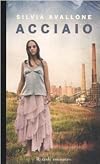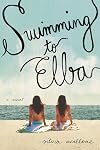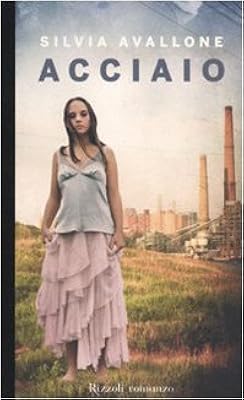
Swimming to Elba
by Silvia Avallone
On This Page
Description
Anna and Francesca are on the brink of everything: high school, adulthood, and the edge of ambition in their provincial town. It's summer in Piombino, Italy, and in their skimpy bathing suits, flaunting their newly acquired curves, the girls suddenly have everyone in their thrall. This power opens up their imagination to a destiny beyond Piombino; the resort town of Elba is just a ferry ride away, and yet they've never dared to go. Maybe the future is waiting for them there—or somewhere show more beyond.When their friendship suffers a blow, the girls set off on their own, only to discover that their budding sexuality won't get them any more than better tips at the bar or any farther than the bed of the foreman of the steel mill. As their choices take them to a painful crossroads, the girls must reconnect if they have any hope of escaping their dead-end town.
In this poetic, prizewinning debut, Silvia Avallone captures the lost innocence of a generation. Harrowing yet ultimately redemptive,Swimming to Elba is a timely story about the power of a friendship and the way that family and economic dynamics shape our world.
. show less
Tags
Recommendations















Member Reviews
Ero un po' titubante nell'accostarmi a questa opera prima che ha riscosso un notevole successo, come del resto mi accade sempre in questi casi. In effetti l'inizio del libro non mi ha fatto una grande impressione, troppo scontato, mi sono detta, ma poi il terribile mondo devastato e devastante in cui si muovono i protagonisti, l'apparente irrealtà della loro vita e dei loro valori, mi hanno preso, così come mi ha preso la storia, con il suo tremendo squallore, con l'abbrutimento costante degli uomini, che non reggono la tremenda tensione quotidiana, con le sue donne che cercano di tenere alta la testa, anche quando finiscono per essere solo vittime.
E con le sue due magnifiche adolescenti, che troppo presto si fanno carico della vita show more adulta, ma non per questo perdono la loro magia. show less
E con le sue due magnifiche adolescenti, che troppo presto si fanno carico della vita show more adulta, ma non per questo perdono la loro magia. show less
Did you ever have an inseparable best friend as a teen, and an insuperable childhood quarrel that almost ruined everything? Or maybe it did and when you think of that friend now you just feel a bottomless sadness and hollowness where that love should be. I have to say, I really loved this book even with all of its darkness and hopelessness. It's the story of a friendship between two girls, Francesca and Anna, two inseparable pretty girls, and the year when everything changed. Everything and nothing. I thought this would be a light beach read but it goes to some dark places very quickly, and the whole story is really colored by tragedy, but it's still beautiful in its way. This is the Italy tourists never see, the Italy of public housing show more and factories and drugs and strip clubs, but the friendship between the girls is as universal as it is unforgettable.
http://www.bostonbibliophile.com/2013/08/review-swimming-to-elba-by-silvia.html show less
http://www.bostonbibliophile.com/2013/08/review-swimming-to-elba-by-silvia.html show less
I picked up Swimming to Elba by Silvia Avallone (trans. by Antony Shuggar) because I read somewhere that everyone in Europe was raving about it and there were only 2 holds ahead of me at the library for it (and I am an incessant hoarder of library books, which I have mentioned elsewhere, so when I see a book that people are talking about with few if any holds on it, I must immediately have it). The book is centered around two Italian girls, one blond and the other brunette, both beautiful, the summer they turn 14. Their town, Poimbino, is dominated and in turn centered around a giant but dying steel plant. The novel takes place in early 2000-2001 (the Italians’ take on 9/11 is amusing), and though well before the economic crash of show more 2008 and later, Poimbino is clearly on the verge of its own economic crash. Glittering just a few miles off-shore is the rich, tourist island of Elba, always visible, but always just out of reach for the novel’s sometimes gritty, usually desperate, and frequently frustrated characters. In many ways this is a classic bildungsroman, but it’s also an indictment of socialism, capitalism, class, and gender stereotypes (however much it fails at the latter).
The two girls, Anna (brunette) and Francesca (blonde) are inseparable best friends. They live one floor up from each other in massive, concrete city-owned housing projects. Anna’s father is a wanna-be Godfather while Francesca’s is a great brute of a man who beats both Francesca and her mother. The novel opens with a scintillating description of the girls in their newly developed, scantily clad bodies frolicking on the beach and flirting with the older boys, all as seen through Francesca’s father’s binoculars and told through his POV. Creepy. While there are beautiful passages and cinematic scenes, that opening really sets the tone for the entire novel, but gets progressively worse and more and more depressing as the girls’ relationship crumbles and they each get caught up in the adult world of sex. Books like this are why I generally stay away from modern literary realism.
The jacket describes the book as a “lightening-rod for discussion” in Europe and a strong criticism of the Leftist, Socialist ideal of the happy proletariat in Italy. I can see that, and I get what Avallone is trying to do here, if what the jacket says is true, and I applaud her for doing so. That doesn’t make me like the book any more than I do. There are a few reasons for my general dislike. The first is technical: Avallone uses the third person omniscient POV, which allows her to jump into the head of whoever she wishes, which she does quite frequently. Therein lies the problem. While most writers that I’ve read who use this narrative technique do so with ease, Avallone’s continual head-hopping is confusing, especially when she does it in the middle of a paragraph using only gender pronouns, when the scene includes several members of that gender whose head she’s already been in and could be in again. I frequently wasn’t sure whose head I was in at a given moment, which continually forced me out of the narrative, instead of keeping me locked in an otherwise engrossingly real world.
The second issue I had with the novel was its treatment and view of women. That the opening description of the girls is given through the highly sexualized gaze of one of their fathers is creepy and gut-tumbling enough, but the book is drenched with more and more of it. All of the men in the book are possessive, nearly misogynistic assholes who see women (or rather 13 and 14 year old girls) as nothing more than a good or bad fuck at best, and inhuman house slaves at worst. The women frequently seem to see themselves in these terms as well, and the young ones do what they can as soon as they get tits to look like a good fuck so they can get married to one of the charming assholes from the steel plant and become a house slave later on.
There is so little hope in this book, and what bright spot there is is imperiled half-way through. I don’t doubt that this may be what life in a small costal city dominated by a dying industry in Italy looks like; her depiction of life there was so thorough it began to bleed into my own view of Seattle and for that I hate the book a little bit. But in the same way I get what it’s like to look at something shining and shimmering that is close enough to touch but is always just out of reach. I think anyone who reads this book would (unless they were reading it on the white beach of Elba), and for that level of realism, that level of detail that can suck you right in and make you part of that world, I give the book and its author my respect. Final verdict: read at your own risk. show less
The two girls, Anna (brunette) and Francesca (blonde) are inseparable best friends. They live one floor up from each other in massive, concrete city-owned housing projects. Anna’s father is a wanna-be Godfather while Francesca’s is a great brute of a man who beats both Francesca and her mother. The novel opens with a scintillating description of the girls in their newly developed, scantily clad bodies frolicking on the beach and flirting with the older boys, all as seen through Francesca’s father’s binoculars and told through his POV. Creepy. While there are beautiful passages and cinematic scenes, that opening really sets the tone for the entire novel, but gets progressively worse and more and more depressing as the girls’ relationship crumbles and they each get caught up in the adult world of sex. Books like this are why I generally stay away from modern literary realism.
The jacket describes the book as a “lightening-rod for discussion” in Europe and a strong criticism of the Leftist, Socialist ideal of the happy proletariat in Italy. I can see that, and I get what Avallone is trying to do here, if what the jacket says is true, and I applaud her for doing so. That doesn’t make me like the book any more than I do. There are a few reasons for my general dislike. The first is technical: Avallone uses the third person omniscient POV, which allows her to jump into the head of whoever she wishes, which she does quite frequently. Therein lies the problem. While most writers that I’ve read who use this narrative technique do so with ease, Avallone’s continual head-hopping is confusing, especially when she does it in the middle of a paragraph using only gender pronouns, when the scene includes several members of that gender whose head she’s already been in and could be in again. I frequently wasn’t sure whose head I was in at a given moment, which continually forced me out of the narrative, instead of keeping me locked in an otherwise engrossingly real world.
The second issue I had with the novel was its treatment and view of women. That the opening description of the girls is given through the highly sexualized gaze of one of their fathers is creepy and gut-tumbling enough, but the book is drenched with more and more of it. All of the men in the book are possessive, nearly misogynistic assholes who see women (or rather 13 and 14 year old girls) as nothing more than a good or bad fuck at best, and inhuman house slaves at worst. The women frequently seem to see themselves in these terms as well, and the young ones do what they can as soon as they get tits to look like a good fuck so they can get married to one of the charming assholes from the steel plant and become a house slave later on.
There is so little hope in this book, and what bright spot there is is imperiled half-way through. I don’t doubt that this may be what life in a small costal city dominated by a dying industry in Italy looks like; her depiction of life there was so thorough it began to bleed into my own view of Seattle and for that I hate the book a little bit. But in the same way I get what it’s like to look at something shining and shimmering that is close enough to touch but is always just out of reach. I think anyone who reads this book would (unless they were reading it on the white beach of Elba), and for that level of realism, that level of detail that can suck you right in and make you part of that world, I give the book and its author my respect. Final verdict: read at your own risk. show less
This book explores the transition from adolescence to adulthood in a gritty and emotional way. This transition is never easy, but it's especially hard for Anna and Francesca. They live in a poverty stricken town next to a dying steel mill.
In Piombino, drug addiction is prevalent, abuse is frequent, and criminal activity is routine. I don't believe I've ever read about more despondent characters.
This novel nearly suffocated me with it's hopelessness. It made me uncomfortable as well. Reading about these young girls using their sexuality left me feeling squeamish.
And yet...
While Swimming to Elba is far from a cheerful story I found it powerful and important. Anna and Francesca are still on my mind. They won't soon be forgotten.
In Piombino, drug addiction is prevalent, abuse is frequent, and criminal activity is routine. I don't believe I've ever read about more despondent characters.
This novel nearly suffocated me with it's hopelessness. It made me uncomfortable as well. Reading about these young girls using their sexuality left me feeling squeamish.
And yet...
While Swimming to Elba is far from a cheerful story I found it powerful and important. Anna and Francesca are still on my mind. They won't soon be forgotten.
Atmospheric.
I listened to this book through Audible, on a few long haul flights but didn't really get the depth of it until I went back and listened again, filling in bits I'd missed. It's actually full of insights into life in a poor town in Italy, but it's a bit slow and didn't grab me on the first listen.
Anna and Francesca are the main characters, best friends, teenage girls, they do absolutely everything together. But there are aspects of each other's lives that can't be shared, things that go on beyond closed doors.
They live in a town where the steel mill is the main employer and drugs, teenage sex, crime and abuse are the norm. There is little hope for the future and meager incentive for self-improvement.
The author paints a show more wonderful picture of summer in Piombino, Italy - the heat, the atmosphere, the oppressive feel of a run-down seaside town, tenement buildings and the desperate need to BE someone. As the two girls develop into young women over this long summer, their friendship is tested, along with their morality and their family ties. show less
I listened to this book through Audible, on a few long haul flights but didn't really get the depth of it until I went back and listened again, filling in bits I'd missed. It's actually full of insights into life in a poor town in Italy, but it's a bit slow and didn't grab me on the first listen.
Anna and Francesca are the main characters, best friends, teenage girls, they do absolutely everything together. But there are aspects of each other's lives that can't be shared, things that go on beyond closed doors.
They live in a town where the steel mill is the main employer and drugs, teenage sex, crime and abuse are the norm. There is little hope for the future and meager incentive for self-improvement.
The author paints a show more wonderful picture of summer in Piombino, Italy - the heat, the atmosphere, the oppressive feel of a run-down seaside town, tenement buildings and the desperate need to BE someone. As the two girls develop into young women over this long summer, their friendship is tested, along with their morality and their family ties. show less
Francesca y Anna, dos amigas de trece anos, viven en un barrio junto a la playa, en el que la mayoría trabaja en unos altos hornos donde se produce acero. Su vida transcurre entre el colegio, la playa y el barrio, donde se conocen todos. Están en la frontera de la niñez , descubriendo la sexualidad, y ya empiezan a ser percibidas como mujeres, lo cual produce tensiones con sus familias. Este es un libro duro, que narra situaciones difíciles, y sin embargo, también refleja sentimientos positivos como la amistad y las ganas de vivir de las protagonistas. Todos los personajes de la novela están bien descritos, son complejos y humanos, la narradora parece entender sus motivaciones y sus relaciones. Los personajes masculinos del libro show more son menos atractivos que los femeninos, y sin embargo la autora consigue hacerlos todos interesantes. Un libro muy bien escrito, una buena lectura. show less
Swimming to Elba is the story of Anna and Francesca, two beautiful teenagers living in Piombino, Italy. They are lifelong friends growing up in the miserable surroundings of a desolate city with a failing steel mill. It is here where they dream of someday escaping their depressing lives to swim across the sea to Elba.
Both girls live in tiny apartments of a housing project and their environment is rough. Anna's father is a chronic gambler and rarely makes an appearance at home. Francesca's father beats her regularly. The girls have been close their entire lives until Anna takes up with her brother's older friend Mattia and Francesca is jealous. Francesca then befriends Lisa, a homely classmate most consider an outcast. While the girls show more are separated tragic events ensue that they are forced to face without the support of each other.
I found this to be a difficult read because of the dismal and gritty subject matter. Adolescent girls flaunting their sexuality and pushed into adult situations is stomach-churning for me. This book is not for the faint of heart. show less
Both girls live in tiny apartments of a housing project and their environment is rough. Anna's father is a chronic gambler and rarely makes an appearance at home. Francesca's father beats her regularly. The girls have been close their entire lives until Anna takes up with her brother's older friend Mattia and Francesca is jealous. Francesca then befriends Lisa, a homely classmate most consider an outcast. While the girls show more are separated tragic events ensue that they are forced to face without the support of each other.
I found this to be a difficult read because of the dismal and gritty subject matter. Adolescent girls flaunting their sexuality and pushed into adult situations is stomach-churning for me. This book is not for the faint of heart. show less
Members
- Recently Added By
Lists

Italian Literature
558 works; 42 members

IMPAC Dublin Literary Award 2014 longlist
150 works; 3 members
Author Information

13 Works 766 Members
Awards and Honors
Awards
Series
Belongs to Publisher Series
Common Knowledge
- Canonical title
- Swimming to Elba
- Original title
- Acciaio
- Original publication date
- 2010
- People/Characters*
- Anna; Francesca
- Important places
- Piombino, Italy
- Epigraph*
- De beste dingen schitteren van angst - Don DeLillo, Weegschaal
- Dedication*
- Voor Eleonora, Erica en Alba mijn beste vriendinnen en voor al diegenen die staal maken
- First words*
- In de onscherpe cirkels van de lenzen bewoog het figuurtje maar nauwelijks, zonder hoofd.
- Last words*
- (Click to show. Warning: May contain spoilers.)Ze pasten perfect.
- Blurbers*
- Staal is origineel en meesleepend - Trouw
- Original language
- Italian
*Some information comes from Common Knowledge in other languages. Click "Edit" for more information.
Classifications
- Genres
- Fiction and Literature, General Fiction
- DDC/MDS
- 853.92 — Literature & rhetoric Italian, Romanian & related literatures Italian fiction 1900- 21st Century
- LCC
- PQ4901 .V34 .A63 — Language and Literature French, Italian, Spanish and Portuguese literatures Italian literature Individual authors, 2001-
- BISAC
Statistics
- Members
- 515
- Popularity
- 58,257
- Reviews
- 38
- Rating
- (3.57)
- Languages
- 13 — Dutch, English, Finnish, French, German, Hungarian, Italian, Norwegian (Bokmål), Portuguese, Serbian, Croatian, Spanish, Swedish
- Media
- Paper, Audiobook, Ebook
- ISBNs
- 42
- ASINs
- 10