The History of White People
by Nell Irvin Painter
On This Page
Description
Historian Painter centers her momentous study of racial classification on the slave trade and the nation-building efforts which dominated the United States in the 18th century, when thinkers led by Ralph Waldo Emerson strove to explain the rapid progress of America within the context of white superiority. Her research is filled with frequent, startling realizations about how tenuous and temporary our racial classifications really are.Tags
Recommendations



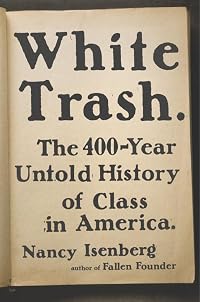
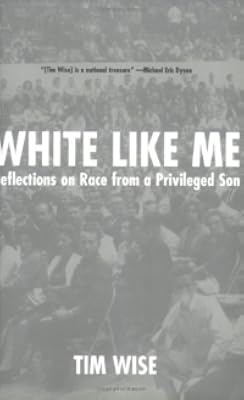
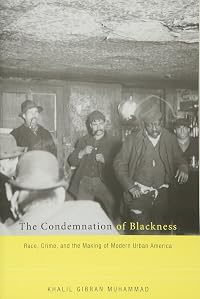
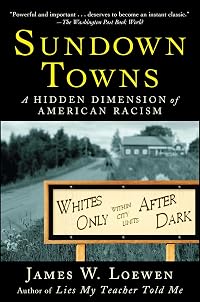



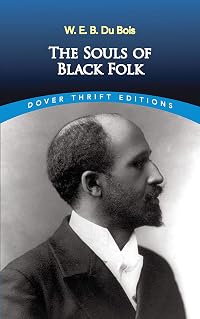

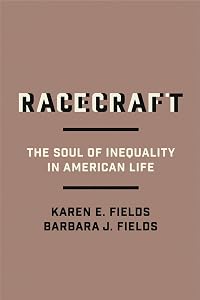


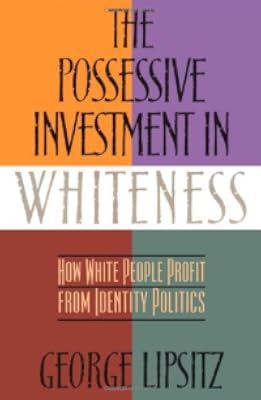


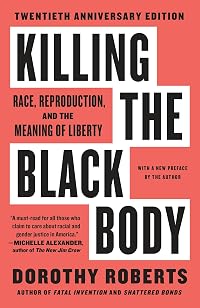




Member Recommendations


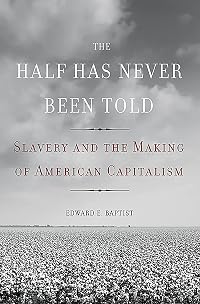
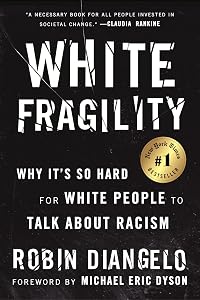
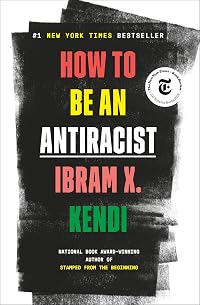
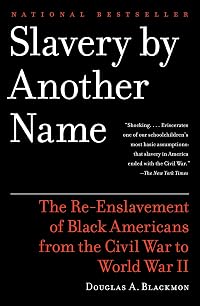
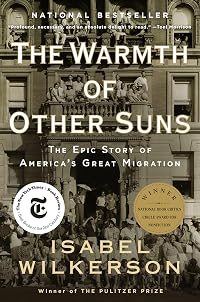
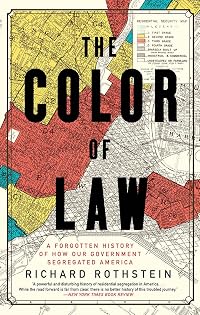
electronicmemory Two works that critically examine the flexibility of race and our understandings and constructions of identity through historical figures and times. Both make for fascinating reading.
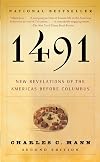
electronicmemory While The History of White People is the more scholarly of the two works, both are engaging, thoughtful explorations of commonly held beliefs and misunderstandings of history in American culture.

Member Reviews
What a read. Painter's work about the concept of whiteness as both historical canard and force is just fascinating. It's also hard to read in the sense that it's constantly hitting you with anachronistic arguements for "race science"--it takes a toll. It's just so tiring to experience the same story of contemporary racism play out over and over again. It took me over a year to finish but it's worth it. The origins of even contemporary attitudes towards whiteness are appallingly arbitrary and owe a large burden to the previous "successes" of craniometry.
Painter's patient prose depicts a history of controlling and expanding "whiteness" that's appalling and yet understandable for how effective it was even among the elites. In fact, it's show more the scientists and men of power that frequently star in the Yakety Sax pursuit of weaponized whiteness.
My only suggestion is that the title of this book could more appropriately termed "The Invention of Whiteness." show less
Painter's patient prose depicts a history of controlling and expanding "whiteness" that's appalling and yet understandable for how effective it was even among the elites. In fact, it's show more the scientists and men of power that frequently star in the Yakety Sax pursuit of weaponized whiteness.
My only suggestion is that the title of this book could more appropriately termed "The Invention of Whiteness." show less
The history of white people by Nell Irvin Painter drives home the point that "race" is a social construct, by examining the changing attitudes, in the American context, towards various groups of "white people".
The largest part of the book is a history of racialist ideas that held sway in the United States for several centuries and which are still present in some form today. Most of us have encountered the dominant paradigm--the very whitest blondest--"best"--people on top, the very darkest--"worst"--on the bottom, with a continuum of shades in-between.
Painter gives many examples of how complicated this model could get, and what circles professional racists ran in order to keep their cockamamie theories afloat. These are fascinating, in show more a way, but the sheer craziness and wilful stupidity get wearisome rather quickly. What should keep the attention going is the devastating fact that no matter how idiotic and wrong, how evidently self-serving and supremely malicious these myths, they were used to govern policy and order society.
Unfortunately (in my view), Painter's book isn't a criticism so much as a history, although, obviously, a lot of criticism is implied.
What emerges, to me, is that racism was invented to oppress politically those we want to use. Black people and poor white people were needed as beasts of burden, therefore they were claimed to be no better and no other than beasts of burden, vaguely humanoid cattle.
The American context makes this especially clear. America (United States in Painter's focus), was a developing country, such as, say France or Germany, were not. The genocide of Native Americans literally and figuratively opened up room for settlement and large-scale industries. There is nothing in capitalist ideology to restrain the abuse of labour--capitalism in fact strives toward its total enslavement. With collusion from the church (slaves will get their reward in heaven) and support from the academia (or "academia" as the case may be), this economic system could exist with the semblance of moral and scientific justification. show less
The largest part of the book is a history of racialist ideas that held sway in the United States for several centuries and which are still present in some form today. Most of us have encountered the dominant paradigm--the very whitest blondest--"best"--people on top, the very darkest--"worst"--on the bottom, with a continuum of shades in-between.
Painter gives many examples of how complicated this model could get, and what circles professional racists ran in order to keep their cockamamie theories afloat. These are fascinating, in show more a way, but the sheer craziness and wilful stupidity get wearisome rather quickly. What should keep the attention going is the devastating fact that no matter how idiotic and wrong, how evidently self-serving and supremely malicious these myths, they were used to govern policy and order society.
Unfortunately (in my view), Painter's book isn't a criticism so much as a history, although, obviously, a lot of criticism is implied.
What emerges, to me, is that racism was invented to oppress politically those we want to use. Black people and poor white people were needed as beasts of burden, therefore they were claimed to be no better and no other than beasts of burden, vaguely humanoid cattle.
The American context makes this especially clear. America (United States in Painter's focus), was a developing country, such as, say France or Germany, were not. The genocide of Native Americans literally and figuratively opened up room for settlement and large-scale industries. There is nothing in capitalist ideology to restrain the abuse of labour--capitalism in fact strives toward its total enslavement. With collusion from the church (slaves will get their reward in heaven) and support from the academia (or "academia" as the case may be), this economic system could exist with the semblance of moral and scientific justification. show less
“Whiteness” has been a European obsession for centuries, including claims about how ancient Egyptians—at least the ruling castes—were white and fair-haired (they just wore wigs in pictures, the story went) and how modern Greeks weren’t really the Greeks of ancient times, whose proper descendants were some version of French, German, or English depending on the commitments of the proponent. In the US, this turns into a persistent contrast with blackness, though Painter also recounts the arguments for why the Irish, the Italians, and the Jews who immigrated weren’t really white, until they became so (most often in response to a new wave of immigrants who seemed even more different).
Nell Irvin Painter’s The History of White People is an eye-opening book. It teases out the rich history of whiteness as a concept and, through a broad overview, fills out gaps in ones knowledge that we too often assume ourselves to have but, in fact, do not. We too often refer by implication only to the historical injustice of racial constructs, rarely stating explicitly for the purpose of memory the facts of that history. This book goes some way to rectifying that memory gap. She does so in various ways. One is to lay bare the abusurdly vague race categories and ridiculous justifications for them.
Another is to present the varying contradictions in the creation and evolution of social constructs of race and it’s intersection with show more questions of class, gender, nationalism and politics. This not only refers to the way that different race theorists could not agree amongst themselves on the ‘scientific’ categories. For example, de Toqueville helps create the myth of America as an egalitarian escape from hierarchical Europe - at the same time as dismissing America’s southerners as lazy/lesser and excluding blacks and natives altogether. Another example is the way whiteness was created as intelligent/civilised/rational and therefore superior to dumb/animalistic/impulsive Blackness. The problem with this framework was that society’s greater social framework for gender associated outdoorsy violence with superior masculine men and indoorsy bookishness with inferior effeminate men. As a result, non-white (and especially black) men were assumed to be simultaneously inferior and sexually superior. Incoherent resolution of this crisis of white masculinity (which remains in many forms today) was ironically propagated by Emerson (a closeted gay white man) who held that whites were both more intelligent and genetic heirs to anti-Roman barbarian violence. Again, this is another legacy of whiteness that lives on today - deploring the 'violence' of unarmed Black men walking down the street, or the violence of Arab terrorists, while celebrating the violence of white police officers, armed white protest groups, and whiteness transmuted through the state into military violence in darker countries overseas. All the while, Painter shows how those who so often proclaimed themselves to be liberal, in fact enabled and perpetuated systems of racial injustice.
Painter also demonstrates how definitions of whiteness have constantly expanded - with the Irish being included in order to fill a need for cheap immigrant labour; Jews being included in contrast with Nazi Germany as it became a US enemy; Italians following after Jews into whiteness. Along the way, gateways to whiteness evolve from Protestantism, to tracing one’s lineage back to Europe, to tracing one’s lineage back to the Mayflower, to blue eyes, to height and longheadedness - up to even exceptionally beautiful and wealthy blacks being brought into contemporary whiteness. As recent Pew studies show Asian-Americans integrating into ‘whiteness’ at exceptional speed and Hispanic-Americans (said to be ‘an ethnicity not a race’ as if the semantic claim that ethnicity is cultural instead of genetic means it does not function the same way for social discrimination) not far behind them, it becomes clear through Painter’s sweeping study of whiteness that the one silent constant is the exclusion of blackness.
And yet, this core strength of Painter’s detailed and informative book is also its weakness. Despite writing that she was motivated by race history’s lack of a “broader view than I found in work focusing on the United States,” Painter both focuses too much on the United States and doesn’t take a broad enough view. In Spain, for example, race hierarchies place natives from South America at the bottom, not blacks, because Spanish colonies tended to use native populations more as slaves than by importing African slaves or white indentured servants to replace ethnically cleansed natives for colonial labour. Such perspectives are not drawn in. This could have been justified by discussing the birth and rise of race as a social construct in response to black-white slave uprisings as a threat to landed aristocracies in Virginia and the early American colonies. Yet, oddly, Painter completely overlooks this important chapter, whereas Theodore Allen, David Roediger and Michelle Alexander do not. Alexander (and perhaps also the others) also bring up the Populist Party of the late 1800s and the Poor Peoples Campaign, both of which also reached across the 'color line' to unite the lower classes in their demands from the established elites to mitigate inequality.
One reason this may have occurred is the contemporary academic trap that Painter seems to have fallen into. Like so many, she demonstrates tremendous skills as a researcher of individual events and facts, but does not provide the reader with much in the form of analysis. She collects the raw evidence and engages in some collation, and too often assumes the audience will draw the same conclusions as she has. But apart from the absurdity of it all, which is readily apparent, we might need more help than she provides. If history needs to be retold explicitly in order to be remembered, then systems of injustice also need to be explained to be understood. Painter makes fun of the reception for a racist book: “Scholars also loved Races of Europe. The sheer amount of labor it required delighted the American Anthropologist’s reviewer, who gushed over 'the best results of the last twenty years in physical anthropology.’” And yet Painter is guilty of the same. It is not just the contemporary academic celebration of safe primary research over more difficult theoretical analysis, but also its methodological individualism that infects Painter’s writing. Her collation of evidence skews excessively toward anecdotal stories about key figures, thus playing to contemporary notions that key thinkers or decision-makers at particular junctions determine the course of events - not aggregate systems and interests. There is much to be learned from such great detailed collation of facts at the micro level. Here is an excerpt of the list of things I learned:
- Why it is offensive to use the word “stock” when referring to immigrants past and present. It uses animal breeding terminology to refer to quality of humans based on physical, heritable traits.
- The racist and genocidal (eugenics, sterilisation) origins of the "nature” argument in “nature versus nurture"
- Why posh French people often have German names.
- That Bristol was a major slave trading centre under the Vikings - well before more of the same in the British colonial era
- Before the 1700s massively increased the African slave trade, between half and two thirds of all white immigrants to North America were indentured servants (slaves), convicts and other unfree labourers.
- The Elgin Marbles were almost ruined by attempts to turn Greece's black marble white, like Italy’s and like the assumed image Britain’s white supremacist curators had of themselves.
- The woman whose skull gave white people a name (“Caucasian”) had been a Georgian sex slave in Moscow.
- That when people tell you the Normans weren’t actually French, but Norsemen who had learned to speak French, they are not more knowledgeable of history than you, but have been educated by racist sources (Carlyle) that needed to establish rhetorical English connection to a mythical historic Saxon people deemed superior to the “ape” French.
- During the 1930s, US "local law enforcement and welfare officials rounded up the poor and sterilized them practically en masse: by 1968, some 65,000 Americans had been sterilized against their will, with California far in the lead and Virginia a distant second."
And yet despite all this, the macro story is severely lacking. I would not, therefore, recommend this book as a singular resource (“if you read only one book on race”) or as a starting/entry point into explorations of the field. However, the book does serve as a stimulating sweep of provocations to look into primary sources that might be relevant to one’s interests. show less
Another is to present the varying contradictions in the creation and evolution of social constructs of race and it’s intersection with show more questions of class, gender, nationalism and politics. This not only refers to the way that different race theorists could not agree amongst themselves on the ‘scientific’ categories. For example, de Toqueville helps create the myth of America as an egalitarian escape from hierarchical Europe - at the same time as dismissing America’s southerners as lazy/lesser and excluding blacks and natives altogether. Another example is the way whiteness was created as intelligent/civilised/rational and therefore superior to dumb/animalistic/impulsive Blackness. The problem with this framework was that society’s greater social framework for gender associated outdoorsy violence with superior masculine men and indoorsy bookishness with inferior effeminate men. As a result, non-white (and especially black) men were assumed to be simultaneously inferior and sexually superior. Incoherent resolution of this crisis of white masculinity (which remains in many forms today) was ironically propagated by Emerson (a closeted gay white man) who held that whites were both more intelligent and genetic heirs to anti-Roman barbarian violence. Again, this is another legacy of whiteness that lives on today - deploring the 'violence' of unarmed Black men walking down the street, or the violence of Arab terrorists, while celebrating the violence of white police officers, armed white protest groups, and whiteness transmuted through the state into military violence in darker countries overseas. All the while, Painter shows how those who so often proclaimed themselves to be liberal, in fact enabled and perpetuated systems of racial injustice.
Painter also demonstrates how definitions of whiteness have constantly expanded - with the Irish being included in order to fill a need for cheap immigrant labour; Jews being included in contrast with Nazi Germany as it became a US enemy; Italians following after Jews into whiteness. Along the way, gateways to whiteness evolve from Protestantism, to tracing one’s lineage back to Europe, to tracing one’s lineage back to the Mayflower, to blue eyes, to height and longheadedness - up to even exceptionally beautiful and wealthy blacks being brought into contemporary whiteness. As recent Pew studies show Asian-Americans integrating into ‘whiteness’ at exceptional speed and Hispanic-Americans (said to be ‘an ethnicity not a race’ as if the semantic claim that ethnicity is cultural instead of genetic means it does not function the same way for social discrimination) not far behind them, it becomes clear through Painter’s sweeping study of whiteness that the one silent constant is the exclusion of blackness.
And yet, this core strength of Painter’s detailed and informative book is also its weakness. Despite writing that she was motivated by race history’s lack of a “broader view than I found in work focusing on the United States,” Painter both focuses too much on the United States and doesn’t take a broad enough view. In Spain, for example, race hierarchies place natives from South America at the bottom, not blacks, because Spanish colonies tended to use native populations more as slaves than by importing African slaves or white indentured servants to replace ethnically cleansed natives for colonial labour. Such perspectives are not drawn in. This could have been justified by discussing the birth and rise of race as a social construct in response to black-white slave uprisings as a threat to landed aristocracies in Virginia and the early American colonies. Yet, oddly, Painter completely overlooks this important chapter, whereas Theodore Allen, David Roediger and Michelle Alexander do not. Alexander (and perhaps also the others) also bring up the Populist Party of the late 1800s and the Poor Peoples Campaign, both of which also reached across the 'color line' to unite the lower classes in their demands from the established elites to mitigate inequality.
One reason this may have occurred is the contemporary academic trap that Painter seems to have fallen into. Like so many, she demonstrates tremendous skills as a researcher of individual events and facts, but does not provide the reader with much in the form of analysis. She collects the raw evidence and engages in some collation, and too often assumes the audience will draw the same conclusions as she has. But apart from the absurdity of it all, which is readily apparent, we might need more help than she provides. If history needs to be retold explicitly in order to be remembered, then systems of injustice also need to be explained to be understood. Painter makes fun of the reception for a racist book: “Scholars also loved Races of Europe. The sheer amount of labor it required delighted the American Anthropologist’s reviewer, who gushed over 'the best results of the last twenty years in physical anthropology.’” And yet Painter is guilty of the same. It is not just the contemporary academic celebration of safe primary research over more difficult theoretical analysis, but also its methodological individualism that infects Painter’s writing. Her collation of evidence skews excessively toward anecdotal stories about key figures, thus playing to contemporary notions that key thinkers or decision-makers at particular junctions determine the course of events - not aggregate systems and interests. There is much to be learned from such great detailed collation of facts at the micro level. Here is an excerpt of the list of things I learned:
- Why it is offensive to use the word “stock” when referring to immigrants past and present. It uses animal breeding terminology to refer to quality of humans based on physical, heritable traits.
- The racist and genocidal (eugenics, sterilisation) origins of the "nature” argument in “nature versus nurture"
- Why posh French people often have German names.
- That Bristol was a major slave trading centre under the Vikings - well before more of the same in the British colonial era
- Before the 1700s massively increased the African slave trade, between half and two thirds of all white immigrants to North America were indentured servants (slaves), convicts and other unfree labourers.
- The Elgin Marbles were almost ruined by attempts to turn Greece's black marble white, like Italy’s and like the assumed image Britain’s white supremacist curators had of themselves.
- The woman whose skull gave white people a name (“Caucasian”) had been a Georgian sex slave in Moscow.
- That when people tell you the Normans weren’t actually French, but Norsemen who had learned to speak French, they are not more knowledgeable of history than you, but have been educated by racist sources (Carlyle) that needed to establish rhetorical English connection to a mythical historic Saxon people deemed superior to the “ape” French.
- During the 1930s, US "local law enforcement and welfare officials rounded up the poor and sterilized them practically en masse: by 1968, some 65,000 Americans had been sterilized against their will, with California far in the lead and Virginia a distant second."
And yet despite all this, the macro story is severely lacking. I would not, therefore, recommend this book as a singular resource (“if you read only one book on race”) or as a starting/entry point into explorations of the field. However, the book does serve as a stimulating sweep of provocations to look into primary sources that might be relevant to one’s interests. show less
The history of the concept of “white People” is traced from Classical Times, when the “Top People” weren’t, strictly speaking, “White” down to relatively recent times. It is the story of the exponents of various racial theorists’ thoughts at least through their published works, though filmed and other media are also explored. Some of these theorists are shown to be deliberately pursuing political or economic programs, while others are drawn into the discussion of “Race” from other fields and interests. There is also a discussion of the extent to which the social concept of “Race” can be verified by any form of physical evidence save personal appearance.
Clear and to the point, meticulously researched and annotated, with an impressive range of primary sources; well-organized and devastating. This is an excellent scholarly text.
Of course it wasn't easy to read, both because it's full of people I don't actually want to engage with, and because I kept finding myself preparing for a debate with white supremacists. Once I stopped reading to memorize and read to deepen my understanding, it went more smoothly.
Of course it wasn't easy to read, both because it's full of people I don't actually want to engage with, and because I kept finding myself preparing for a debate with white supremacists. Once I stopped reading to memorize and read to deepen my understanding, it went more smoothly.
It isn't what I expected (I thought it would be a deeper deconstruction of what we perceive to be white, but it's more of an academic historical survey), but I certainly did learn a lot. My favourite parts were reading about courageous progressives, telling the truth about racial oppression in much more racist and backward-thinking times. Also, I didn't know the racist history of the GI bill, and it makes so much sense (so much racial oppression is omitted from the history we learn growing up), and gave me a different perspective on the incessant self-congratulation of my parents' generation, the baby boomers, who act like they weren't born into the most privileged generation in history.
Members
- Recently Added By
Published Reviews
ThingScore 75
added by danielx
Lists

Works Cited in The History of White People by Nell Irvin Painter
321 works; 2 members
Author Information

15+ Works 2,513 Members
Nell Irvin Painter is the Edwards Professor of American History, Emerita, at Princeton University. Her acclaimed works of history include the New York Times bestseller The History of White People. She holds an MFA from the Rhode Island School of Design and a BFA from Mason Gross School of the Arts.
Awards and Honors
Common Knowledge
- Canonical title
- The History of White People
- Original publication date
- 2010
- Dedication
- To Edwin Barber and the Princeton University Library, the absolute indispensables.
- First words
- (Introduction) I might have entitled this book Constructions of White Americans from Antiquity to the Present, because it explores a concept that lies within a history of events.
(Chapter 1) Were there “white” people in antiquity? - Last words
- (Click to show. Warning: May contain spoilers.)Nonetheless, poverty in a dark skin endures as the opposite of whiteness, driven by an age-old social yearning to characterize the poor as permanently other and inherently inferior.
- Publisher's editor
- Edwin Barber
- Blurbers
- Banks, Russell; Ayers, Edward; Gordon-Reed, Annette; Goodman, Ellen; Lewis, David Levering
Classifications
- Genres
- Anthropology, History, Nonfiction, Sociology, General Nonfiction
- DDC/MDS
- 305.800973 — Society, government, & culture Social sciences, sociology & anthropology Social group - Age, Gender, Ethnicity Ethnic and national groups standard subdivisions / Ethnic and national groups with ethnic origins from more than one continent, of European descent standard subdivisions Biography And History North America United States
- LCC
- E184 .A1 .P29 — History of the United States United States Elements in the population Afro-Americans
- BISAC
Statistics
- Members
- 1,094
- Popularity
- 23,320
- Reviews
- 26
- Rating
- (3.97)
- Languages
- English, French
- Media
- Paper, Audiobook, Ebook
- ISBNs
- 5
- ASINs
- 3