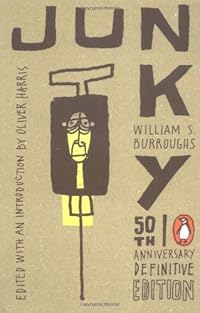
Junky
by William S. Burroughs
On This Page
Description
Burroughs' first novel, a largely autobiographical account of the constant cycle of drug dependency, cures and relapses, remains the most unflinching, unsentimental account of addiction ever written. Through time spent kicking and time spent dealing, through junk sickness and a sanatorium, Junky is a field report from the American post-war drug underground. It has influenced generations of writers with its raw, sparse and unapologetic tone.Tags
Recommendations



Member Recommendations

Member Reviews
Burroughs wrote this book much based on his own experience with addiction decades ago, and I think it'll forever be potent.
It's a very straight-forward, no-nonsense and no-tearjerker experience as Burroughs writes of Lee's addictions, faltering friendships, his fleeting meets with people while trying to attain drugs as quickly as possible, at times doing anything for it. He goes from selling drugs to using them, to robbing drunks on trains to escaping the law, to trying to fence stuff to get money to get more drugs to avoid The Sickness, to get to Mexico to live a better life, to avoid his wife, to get together with her, to be able to get out of bed, to try and get off drugs completely, to get into less hardcore stuff to get back into show more heroin.
It's very well-written, and eloquently cut-up in terms of what goes in which chapters. The descriptions of people, events and feelings aren't poetic - it's all straight-forward and I got the sense that his abuse just went on and on, a vortex that went round and round.
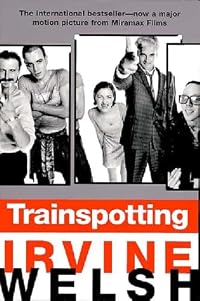
This book reminds me a lot of Irvine Welsh's "Trainspotting", although this is timeless and different. It's like the inspirational big brother to Martin Amis' "Money".
And it stands out. Burroughs was a very livid writer and this is a powerful and telling work on addiction, and in his desire to explain the elements that make out addiction to everybody, he dispels myths and actually writes some really stupid shit (e.g. that cocaine does not create any form of dependency), so just have an open, questioning mind when reading this (as with every written word, anywhere).
In this edition from Penguin, there are several inclusions of nice extraneous material here: appendixes, a glossary and a long introduction. show less
It's a very straight-forward, no-nonsense and no-tearjerker experience as Burroughs writes of Lee's addictions, faltering friendships, his fleeting meets with people while trying to attain drugs as quickly as possible, at times doing anything for it. He goes from selling drugs to using them, to robbing drunks on trains to escaping the law, to trying to fence stuff to get money to get more drugs to avoid The Sickness, to get to Mexico to live a better life, to avoid his wife, to get together with her, to be able to get out of bed, to try and get off drugs completely, to get into less hardcore stuff to get back into show more heroin.
It's very well-written, and eloquently cut-up in terms of what goes in which chapters. The descriptions of people, events and feelings aren't poetic - it's all straight-forward and I got the sense that his abuse just went on and on, a vortex that went round and round.
This book reminds me a lot of Irvine Welsh's "Trainspotting", although this is timeless and different. It's like the inspirational big brother to Martin Amis' "Money".
And it stands out. Burroughs was a very livid writer and this is a powerful and telling work on addiction, and in his desire to explain the elements that make out addiction to everybody, he dispels myths and actually writes some really stupid shit (e.g. that cocaine does not create any form of dependency), so just have an open, questioning mind when reading this (as with every written word, anywhere).
In this edition from Penguin, there are several inclusions of nice extraneous material here: appendixes, a glossary and a long introduction. show less
I listened to the audiobook, which is exceptionally well read. The book itself, although it wanes a bit toward the end, is a fascinating look at drug addict culture in New York City, New Orleans, and Mexico City, as the narrator moves to avoid trouble. The problematic parts of the book are the sporadic mention of his wife, and even kids at one point, who play no part in most of the book. It could easily be criticized for a bit of randomness here and there, but the small details are very well done. This isn't nearly as harrowing, if that's what you're looking for, as Hubert Selby's Requiem for a Dream, but in its matter-of-factness, it rings true. Of course, when the author's opinions intrude, or when you read Burroughs' original 1952 show more introduction--not published--you enter a bit into the world of fantasy. This edition includes a long introduction and a number of appendices which are worthwhile, but not really necessary to your understanding or enjoyment of the book. It does provide a more complete text, apparently, but I have nothing to compare it with. It is nice to know it hasn't been bowdlerized, though. show less
Burroughs is, of course, one of the most important writers to me. Or, at least, was. Reading his hard looks at life was informative. He was an investigator, never taking things for granted, always questioning, always writing w/ clarity. Always writing w/ a challenging imagination. He existed in a world that many ignore or disparage w/o understanding & cast fresh light on it. He was a great critic of the so-called "Great Society" & he hated it for much the same reasons that I do. He incisively described its giant boot tromping on our minds & lit a firecracker under the boot. & he was very successful. I've read almost everything he ever wrote.
On the other hand, he made junk look glamorous. Bad idea. He accidentally shot his wife. show more Phenomenally stupid. In "Junkie" he writes: "Most addicts look younger than they are." "Perhaps if a junkie could keep himself in a constant state of kicking, he would live to a phenomenal age." Right. A rock musician's dream: eternal life thru drug abuse.
Having lived in Baltimore City for 18 yrs as an adult, a city where something like 10% of the population are drug addicts, 60,000 drug addicts; having been surrounded by drug addiction amongst my friends, having shot heroin myself, I can safely say that shooting heroin is a VERY BAD IDEA. It's, simply speaking, an enslaving tool & little else. The people who sell it, esp at the higher levels of course, want to enslave the user plain & simple. Heroin & Crack are the ultimate control & fund-raising tools of governments. Need to fund a secret war? Addict a population. Want to suppress a potential uprising? Use heroin as chemical warfare. Burroughs' romanticization of heroin use was all well & good for him - he came from a wealthy family & lived off a trust fund. He didn't have to resort to the most desperate tactics to support his habit. There was always the check from Mummy & Daddy to take care of it for him. &, later, the publishers.
& Burroughs understood some of this. Lardy knows he wrote about CONTROL as a main subject. But his son tried to emulate his drug reportage & died fairly young as a result. Burroughs was one of the greatest explorers of human consciousness to ever live & survive & write about it. I have the utmost respect for him. But before anyone follows in his footsteps they shd realize that he was a fool too. show less
On the other hand, he made junk look glamorous. Bad idea. He accidentally shot his wife. show more Phenomenally stupid. In "Junkie" he writes: "Most addicts look younger than they are." "Perhaps if a junkie could keep himself in a constant state of kicking, he would live to a phenomenal age." Right. A rock musician's dream: eternal life thru drug abuse.
Having lived in Baltimore City for 18 yrs as an adult, a city where something like 10% of the population are drug addicts, 60,000 drug addicts; having been surrounded by drug addiction amongst my friends, having shot heroin myself, I can safely say that shooting heroin is a VERY BAD IDEA. It's, simply speaking, an enslaving tool & little else. The people who sell it, esp at the higher levels of course, want to enslave the user plain & simple. Heroin & Crack are the ultimate control & fund-raising tools of governments. Need to fund a secret war? Addict a population. Want to suppress a potential uprising? Use heroin as chemical warfare. Burroughs' romanticization of heroin use was all well & good for him - he came from a wealthy family & lived off a trust fund. He didn't have to resort to the most desperate tactics to support his habit. There was always the check from Mummy & Daddy to take care of it for him. &, later, the publishers.
& Burroughs understood some of this. Lardy knows he wrote about CONTROL as a main subject. But his son tried to emulate his drug reportage & died fairly young as a result. Burroughs was one of the greatest explorers of human consciousness to ever live & survive & write about it. I have the utmost respect for him. But before anyone follows in his footsteps they shd realize that he was a fool too. show less
Thank you, thank you, thank you Selene!
At first I was skeptical. This book was titled Junky after all and was being recommended/lent to me by someone who had earlier reassured me that William S. Burroughs was indeed the most amoral of the altogether quite amoral beats. Beyond this, she promised, that the beats were in fact quite wary of him and his strange...ways.
Legend upon legend was repeated to me by her and pretty soon I was as intrigued by this as I was strangely disgusted. I simply had to read this book.
Junky, needless to say, was altogether quite different than I expected. Although I did find it mildly difficult to get through the Introduction (which goes into deep detail of the publishing of Junk(y) and the problems thusly show more encountered, the text itself was simply incredible.
Burroughs weaved a tale of the singular junkie aspect of his life in such a way that leaves you wanting more. His prose is that of the hardboiled detective sum con man, and his story is that of legendary proportions. The pictures he paints of New York and Mexico are altogether priceless (though I gotta agree that the brief Rio Valley section was a bit of a drag).
All in all, man, what a heavy book. I can't wait to get through some more of his writing. THANK YOU SELENE! show less
At first I was skeptical. This book was titled Junky after all and was being recommended/lent to me by someone who had earlier reassured me that William S. Burroughs was indeed the most amoral of the altogether quite amoral beats. Beyond this, she promised, that the beats were in fact quite wary of him and his strange...ways.
Legend upon legend was repeated to me by her and pretty soon I was as intrigued by this as I was strangely disgusted. I simply had to read this book.
Junky, needless to say, was altogether quite different than I expected. Although I did find it mildly difficult to get through the Introduction (which goes into deep detail of the publishing of Junk(y) and the problems thusly show more encountered, the text itself was simply incredible.
Burroughs weaved a tale of the singular junkie aspect of his life in such a way that leaves you wanting more. His prose is that of the hardboiled detective sum con man, and his story is that of legendary proportions. The pictures he paints of New York and Mexico are altogether priceless (though I gotta agree that the brief Rio Valley section was a bit of a drag).
All in all, man, what a heavy book. I can't wait to get through some more of his writing. THANK YOU SELENE! show less
This book is semi autobiographical. It does make one wonder how a man who understood the life of an addict so well, could become one. This book walks a narrow line - and does it well. It does not glorify addiction but neither is it a sensational tale. Burroughs main character, Bill Lee, is a sad character; always going down by stages.
The book explains the drugs on the market, at that time, and shows the sad people who partook: people who would sell their proverbial granny for a hit. From the addicts that I have come across, little has changed.
The book explains the drugs on the market, at that time, and shows the sad people who partook: people who would sell their proverbial granny for a hit. From the addicts that I have come across, little has changed.
This is a re-read for me. I wanted to check out the new edition. The novel was always fantastic, but the new editions that restores text is genius. I won't repeat all the things people normally say about how you should read this first, etc. etc. All I will say is that the honesty of the prose, the zero degree of fabulation, is the genius of the book. Almost no one else on the planet could pull of this much with this little. READ THIS NOVEL.
If you were sitting on a bar-stool at Holland Bar or at Rudy's in Hell's Kitchen and the guy sitting next to you, unbeknownst to you, was William Burroughs, and he casually said that he was feeling ill because he was having withdrawals, and you casually said "sorry to hear that, what's it like being a junky?", this book would be his very matter-of-fact, brutally honest answer to your innocent question. No shame, no guilt, no holds barred. Just the facts, ma'am. Astonishingly honest.
"A junky runs on junk time. When his junk is cut off, the clock runs down and stops. All he can do is hang on and wait for non-junk time to start. A sick junkie has no escape from external time. He can only wait."
"The kick of junk is that you have to have it. show more Junk is an inoculation of death that keeps the body in a condition of emergency. When the junky is cut off, emergency reactions continue. Kick is seeing things from a special angle. Kick is momentary freedom from the claims of the aging, cautious, frightened flesh. A special way of looking at things." show less
"A junky runs on junk time. When his junk is cut off, the clock runs down and stops. All he can do is hang on and wait for non-junk time to start. A sick junkie has no escape from external time. He can only wait."
"The kick of junk is that you have to have it. show more Junk is an inoculation of death that keeps the body in a condition of emergency. When the junky is cut off, emergency reactions continue. Kick is seeing things from a special angle. Kick is momentary freedom from the claims of the aging, cautious, frightened flesh. A special way of looking at things." show less
Members
- Recently Added By
Lists

1001 Books You Must Read Before You Die
1,448 works; 1,132 members

20th Century Literature
1,161 works; 54 members

Books featuring alcoholics
103 works; 18 members

1950s
340 works; 22 members

Best of American Literature
146 works; 9 members
1,001 BYMRBYD Concensus
723 works; 27 members

Read These Too
458 works; 9 members

Read
293 works; 4 members

My TBR
371 works; 3 members

Beat
64 works; 1 member

Neuro Pride Book Club Book Shares
98 works; 1 member

substances
14 works; 1 member

psychological
14 works; 1 member

autobiographies, biographies & memoirs
56 works; 1 member

the nova trilogy & others
5 works; 1 member

Just Kids by Patti Smith
43 works; 1 member
Author Information

361+ Works 38,921 Members
William S. Burroughs was a primary figure of the Beat Generation who wrote in the postmodern paranoid fiction genre. Jack Kerouac called Burroughs the "greatest satirical writer since Jonathan Swift," while Norman Mailer declared him "the only American writer who may be conceivably possessed by genius." While he is best known for the novels Naked show more Lunch, Queer, and Junkie, he also collaborated with artists such as Laurie Anderson, Tom Waits, Nick Cave, Gus Van Sant, David Cronen-berg, and Sonic Youth to produce films, music, and performance pieces. show less
All Editions
Some Editions
Awards and Honors
Series
Belongs to Publisher Series
Work Relationships
Is contained in
Is abridged in
Has as a study
Has as a student's study guide
Common Knowledge
- Canonical title
- Junky
- Original title
- Junkie: Confessions of an Unredeemed Drug Addict
- Alternate titles
- Junkie; Junk
- Original publication date
- 1953 (pen name William Lee) (pen name William Lee)
- People/Characters
- Bill Gains; Roy; Herman; Gene Doolie; Bob Riordan; Sol Bloom (show all 11); Abe Green; Joe Brandon; Gary West; Lupita; Johnny White
- Important places
- New York, New York, USA; Lexington, Kentucky, USA; New Orleans, Louisiana, USA; Mexico City, Mexico
- First words
- My first experience with junk was during the War, about 1944 or 1945.
I was born in 1914 in a solid, three-story, brick house in a large Midwest city. (Prologue) - Last words
- (Click to show. Warning: May contain spoilers.)Yage may be the final fix.
(Click to show. Warning: May contain spoilers.)A final glossary, therefore, cannot be made of words whose intentions are fugitive. (Glossary) - Blurbers
- Self, Will
- Original language
- English
- Disambiguation notice
- Originally published as Junkie under the name William Lee.
Classifications
Statistics
- Members
- 5,377
- Popularity
- 2,499
- Reviews
- 59
- Rating
- (3.71)
- Languages
- 19 — Czech, Danish, Dutch, English, Finnish, French, German, Greek, Hungarian, Italian, Japanese, Lithuanian, Polish, Romanian, Serbian, Spanish, Swedish, Turkish, Portuguese (Portugal)
- Media
- Paper, Audiobook, Ebook
- ISBNs
- 69
- ASINs
- 41