On This Page
Description
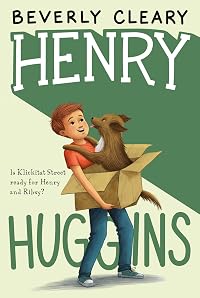
When Henry adopts Ribsy, a dog of no particular breed, humorous adventures follow.Tags
Recommendations

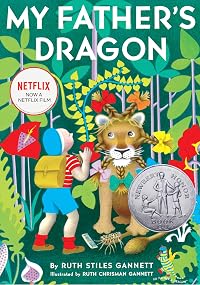

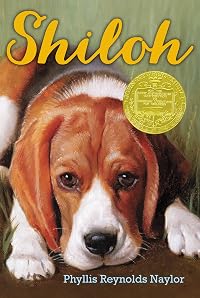
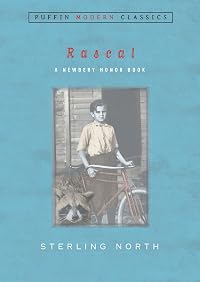
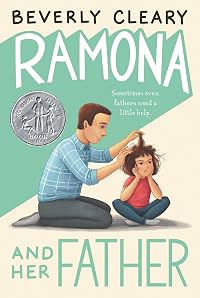
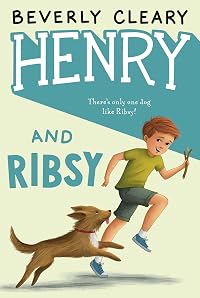
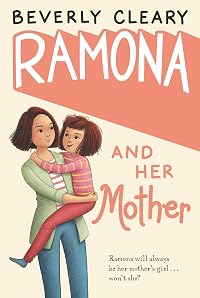
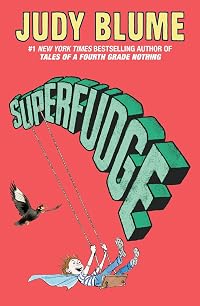
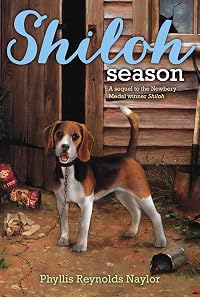
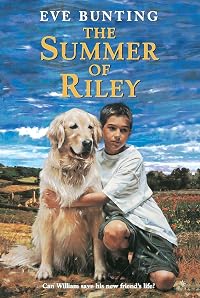



Member Recommendations

Member Reviews
Henry Huggins is a middle-grade, children’s chapter book and the first in Beverly Cleary’s series of the same name. Henry thinks that nothing exciting ever happens in his life until the day he finds a dog. The dog is skinny and scruffy, so Henry names him Ribsy. After getting his parents’ permission, he embarks on an adventure trying to get Ribsy home. Once he has Ribsy, things start to get more interesting. Henry uses his birthday money to buy a pair of guppies, but they keep reproducing until his entire room is crammed with bowls, jars, and other containers of fish. After accidentally throwing his friend’s new football into the back seat of a moving car, Henry must figure out a way to earn the money to buy a new one and it show more involves worms. Henry doesn’t want to be a part of the school’s Christmas play, even though he’s been cast as the main character, but thanks to Ribsy causing a little mayhem, Henry just might get out of it. Then Henry enters Ribsy into a dog show, hoping to win the silver cup, but Ribsy has his own idea of how the show is going to go. This results in Henry and Ribsy getting their picture in the local paper, which leads Ribsy’s former owner right to Henry’s door. Henry doesn’t want to give up the dog he’s come to love so much, but can they work out a solution?
I have fond memories of a couple of Beverly Cleary’s books being among my childhood favorites. Those two were on my personal bookshelf during my formative years, but I’m sure I read others that were borrowed from the library. I can’t recall for certain if I’d previously read any of the Henry Huggins books, but as I was reading this one, parts of it seemed vaguely familiar. In any case, it was a fun story. It’s written more like a series of vignettes, although there is the through line of Henry finding Ribsy in the first chapter and Ribsy’s former owner showing up in the last one, leading to a touch of suspense about whether Henry will be able to keep his dog. I was impressed with Beverly Cleary’s ability to write the perspective of a typical third-grade boy so convincingly and I was even more impressed when I discovered that this was her first published book.
I found Henry to be a good role model. He’s very responsible, calling his parents and asking permission before bringing Ribsy home. He also takes excellent care of Ribsy and all the fish he ends up with. When he accidentally loses his friend’s football, he takes on the responsibility for earning the money to buy a new one. While he may be typical for his age, he’s also a really great kid. In addition to Henry and Ribsy, there’s a wonderful cast of supporting characters, including some that crossover with the author’s Ramona Quimby series, mainly Beezus, who is a classmate of Henry’s, but Ramona shows up once, too. The two families live on the same street. Since the book was first published in 1950, there are a few things that are a bit dated (eg. a nickle for an ice cream cone or Henry using a pay phone), but in general, I think it should still be pretty relatable to kids today. There’s a reason it and pretty much all of Beverly Cleary’s works have become modern classics. Overall, Henry Huggins was a very enjoyable read and a nice reintroduction to the author that has left me excited to continue the series and share the books with my grandkids. show less
I have fond memories of a couple of Beverly Cleary’s books being among my childhood favorites. Those two were on my personal bookshelf during my formative years, but I’m sure I read others that were borrowed from the library. I can’t recall for certain if I’d previously read any of the Henry Huggins books, but as I was reading this one, parts of it seemed vaguely familiar. In any case, it was a fun story. It’s written more like a series of vignettes, although there is the through line of Henry finding Ribsy in the first chapter and Ribsy’s former owner showing up in the last one, leading to a touch of suspense about whether Henry will be able to keep his dog. I was impressed with Beverly Cleary’s ability to write the perspective of a typical third-grade boy so convincingly and I was even more impressed when I discovered that this was her first published book.
I found Henry to be a good role model. He’s very responsible, calling his parents and asking permission before bringing Ribsy home. He also takes excellent care of Ribsy and all the fish he ends up with. When he accidentally loses his friend’s football, he takes on the responsibility for earning the money to buy a new one. While he may be typical for his age, he’s also a really great kid. In addition to Henry and Ribsy, there’s a wonderful cast of supporting characters, including some that crossover with the author’s Ramona Quimby series, mainly Beezus, who is a classmate of Henry’s, but Ramona shows up once, too. The two families live on the same street. Since the book was first published in 1950, there are a few things that are a bit dated (eg. a nickle for an ice cream cone or Henry using a pay phone), but in general, I think it should still be pretty relatable to kids today. There’s a reason it and pretty much all of Beverly Cleary’s works have become modern classics. Overall, Henry Huggins was a very enjoyable read and a nice reintroduction to the author that has left me excited to continue the series and share the books with my grandkids. show less
Published in 1950, this book takes you back to a time when an ice cream cone cost a nickel, kids bought horse meat for their dogs at the pet store, and a third-grader could run all over Portland by himself.
Henry is just an average kid with a tendency to get himself into interesting situations. He finds a skinny mutt and, after checking with his mom, brings him home on the city bus. Chaos ensues. He buys two guppies at the pet shop and ends up with a bedroom full of canning jars filled with guppies. And then his mom needs her canning jars back. He accidentally loses another kid's expensive football and has to earn the money collecting nightcrawlers. His teacher gives him the lead role in the school Christmas play as a "little boy" show more because he's the shortest boy in his 4th grade class, but his dog and a bucket of green paint get him out of it. He decides to enter his dog in the local kids' dog show, but a series of events lead to his dog being light pink...and winning a prize. It's all normal stuff -- no superheroes, no magic -- but Cleary is such a fantastic writer that she doesn't need any of that. And her characters are realistic, mischievous, and hilarious, without being obnoxious.
As a mom, I really like how each chapter is a self-contained story, instead of cliff-hanger chapters like [b:Runaway Ralph|13168|Runaway Ralph (Ralph, #2)|Beverly Cleary|http://d202m5krfqbpi5.cloudfront.net/books/1327883411s/13168.jpg|1245146] and [b:Ralph S. Mouse|762101|Ralph S. Mouse|Beverly Cleary|http://d202m5krfqbpi5.cloudfront.net/books/1349039248s/762101.jpg|21983016]. It makes for easier bedtime reading.
This is the third Beverly Cleary book I've read to my boys (ages 4 & 6), but the first one featuring a human main character. We all really enjoyed it and I plan to read the rest of the series to them. (Hopefully, we won't lose steam like we did on the [b:The Wonderful Wizard of Oz|236093|The Wonderful Wizard of Oz|L. Frank Baum|http://d202m5krfqbpi5.cloudfront.net/books/1327894516s/236093.jpg|1993810] series or [a:Elizabeth Enright|3420|Elizabeth Enright|http://d202m5krfqbpi5.cloudfront.net/authors/1196262204p2/3420.jpg]'s Melendy Family series. show less
Henry is just an average kid with a tendency to get himself into interesting situations. He finds a skinny mutt and, after checking with his mom, brings him home on the city bus. Chaos ensues. He buys two guppies at the pet shop and ends up with a bedroom full of canning jars filled with guppies. And then his mom needs her canning jars back. He accidentally loses another kid's expensive football and has to earn the money collecting nightcrawlers. His teacher gives him the lead role in the school Christmas play as a "little boy" show more because he's the shortest boy in his 4th grade class, but his dog and a bucket of green paint get him out of it. He decides to enter his dog in the local kids' dog show, but a series of events lead to his dog being light pink...and winning a prize. It's all normal stuff -- no superheroes, no magic -- but Cleary is such a fantastic writer that she doesn't need any of that. And her characters are realistic, mischievous, and hilarious, without being obnoxious.
As a mom, I really like how each chapter is a self-contained story, instead of cliff-hanger chapters like [b:Runaway Ralph|13168|Runaway Ralph (Ralph, #2)|Beverly Cleary|http://d202m5krfqbpi5.cloudfront.net/books/1327883411s/13168.jpg|1245146] and [b:Ralph S. Mouse|762101|Ralph S. Mouse|Beverly Cleary|http://d202m5krfqbpi5.cloudfront.net/books/1349039248s/762101.jpg|21983016]. It makes for easier bedtime reading.
This is the third Beverly Cleary book I've read to my boys (ages 4 & 6), but the first one featuring a human main character. We all really enjoyed it and I plan to read the rest of the series to them. (Hopefully, we won't lose steam like we did on the [b:The Wonderful Wizard of Oz|236093|The Wonderful Wizard of Oz|L. Frank Baum|http://d202m5krfqbpi5.cloudfront.net/books/1327894516s/236093.jpg|1993810] series or [a:Elizabeth Enright|3420|Elizabeth Enright|http://d202m5krfqbpi5.cloudfront.net/authors/1196262204p2/3420.jpg]'s Melendy Family series. show less
Henry Huggins was Beverly Cleary's first book, written after she spent years as a librarian struggling to find books to recommend to young boys. The book recounts the adventures of Henry Huggins, an eight year old boy living in an unnamed town in the Pacific Northwest as he, among other things, finds a dog, has an unexpected fish explosion, catches worms to pay off a debt, and tries to clean up his messy pet for a dog show. This book doesn't chronicle big events that change the world or recount pivotal moments in people's lives. It is simply stories about an ordinary boy with an ordinary dog living on an ordinary suburban street doing ordinary things. It is also wonderful.
The format of the book is fairly straightforward. There are six show more chapters. In each chapter, Henry finds himself confronted with a problem that might plausibly face an eight-year-old boy living on Klickitat Street and he solves it in a reasonably plausible yet humorous manner using little boy logic. Sometimes he gets a little help from his friends, and other times he gets a little help from his parents. Each chapter is more or less self-contained - this book isn't really a novel, but is rather a series of sequential short stories that use many of the same characters and the same setting but are only loosely connected otherwise.
The six chapters are Henry and Ribs, where Henry finds a stray dog and has to figure out how to get him home from his trip downtown on the municipal bus. The complication is that the municipal bus doesn't allow dogs and Henry has to get home before dinner. In chapter two, Gallons of Guppies, Henry buys a pair of guppies that soon turn into a half dozen guppies, and eventually hundreds, ultimately occupying pretty much all of the jars Henry's mother intended to use for canning fruits and vegetables. Pretty soon produce comes into season and Henry has to figure out what to do with hundreds of guppies now that his mother needs her jars back. In chapter three, Henry and the Night Crawlers, Henry loses his neighbor's football and has to figure out how to get the money to get him a new one, and sets about industriously capturing worms for another neighbor who wants to go on a fishing trip.
One interesting element to the book is that Ribsy becomes more important to the stories the further one gets into it. He's the focus of the first chapter, but in the second and third chapters he's not really all that important to the story. In the fourth chapter, The Green Christmas, Ribsy is responsible for the accident that gets Henry out of an unwanted role in Henry's school's annual Christmas pageant. The fifth and sixth chapters - The Pale Pink Dog and Finders Keepers - are pretty much all about Ribsy. In The Pale Pink Dog, Henry enters Ribsy in a dog show and after Ribsy gets dirty in the middle of the show, Henry resorts to some rather humorous means of trying to cover up the mud. In Finders Keepers an older boy shows up, having seen Ribsy in a picture from the dog show of the previous chapter, and says that Ribsy is actually named Dizzy and that before Henry found him in the drugstore in the first chapter, he had belonged to the boy and he had come to get him back. Essentially, as the book progresses, Ribsy becomes a more integral part of each chapter, which serves as a subtle means of showing how the dog becomes progressively more ingrained in Henry's life.
The other notable element of this book is that it now serves as a somewhat unintentional snapshot of the world of 1950 America, which made it more interesting for me, but may serve to make it somewhat less than engaging for younger readers. The most obvious marker is the technology in the book - early in the book Henry must make a telephone call to his mother using a pay phone and he has to stand on a box so he can speak into the wall-mounted transmitter, a situation that would probably be almost entirely alien to any child born in the last decade. The other plot element that makes the stories show their age is the comparatively extreme freedom that Henry is given by his parents. In the opening chapter, the eight-year-old Henry has taken the municipal bus downtown after school so he could swim at the YMCA and has stopped off to buy himself an ice cream cone before he takes the bus back home. Henry makes this expedition on his own, and the reader is informed that this is a weekly practice for him. While tweens using a bus to get around is probably still commonplace, children as young as Henry is supposed to be almost certainly do not any more. Throughout the book, Henry's parents practice what can more or less be described as benign neglect when it comes to supervising Henry, allowing him the freedom to get himself into trouble on a regular basis, and then expecting him to solve whatever problem he has created for himself pretty much on his own. It is almost impossible to imagine that any suburban middle-class American child of today being given as much free reign, as much responsibility, and as much leeway to work his way out of difficulties as Henry is given in this book.
Despite its somewhat dated nature, or possibly because of this, Henry Huggins remains a delightful book. Originally intended as a book about an ordinary boy doing ordinary boy things and written for ordinary boys to read, age has made it into a snapshot of the Americana of a bygone era as idealized by time and distance. Regardless of its unintentional time capsule status, this book remains a perfect way to introduce children to Beverly Cleary's world of books, and is an almost must read for a complete childhood.
This review has also been posted to my blog Dreaming About Other Worlds. show less
The format of the book is fairly straightforward. There are six show more chapters. In each chapter, Henry finds himself confronted with a problem that might plausibly face an eight-year-old boy living on Klickitat Street and he solves it in a reasonably plausible yet humorous manner using little boy logic. Sometimes he gets a little help from his friends, and other times he gets a little help from his parents. Each chapter is more or less self-contained - this book isn't really a novel, but is rather a series of sequential short stories that use many of the same characters and the same setting but are only loosely connected otherwise.
The six chapters are Henry and Ribs, where Henry finds a stray dog and has to figure out how to get him home from his trip downtown on the municipal bus. The complication is that the municipal bus doesn't allow dogs and Henry has to get home before dinner. In chapter two, Gallons of Guppies, Henry buys a pair of guppies that soon turn into a half dozen guppies, and eventually hundreds, ultimately occupying pretty much all of the jars Henry's mother intended to use for canning fruits and vegetables. Pretty soon produce comes into season and Henry has to figure out what to do with hundreds of guppies now that his mother needs her jars back. In chapter three, Henry and the Night Crawlers, Henry loses his neighbor's football and has to figure out how to get the money to get him a new one, and sets about industriously capturing worms for another neighbor who wants to go on a fishing trip.
One interesting element to the book is that Ribsy becomes more important to the stories the further one gets into it. He's the focus of the first chapter, but in the second and third chapters he's not really all that important to the story. In the fourth chapter, The Green Christmas, Ribsy is responsible for the accident that gets Henry out of an unwanted role in Henry's school's annual Christmas pageant. The fifth and sixth chapters - The Pale Pink Dog and Finders Keepers - are pretty much all about Ribsy. In The Pale Pink Dog, Henry enters Ribsy in a dog show and after Ribsy gets dirty in the middle of the show, Henry resorts to some rather humorous means of trying to cover up the mud. In Finders Keepers an older boy shows up, having seen Ribsy in a picture from the dog show of the previous chapter, and says that Ribsy is actually named Dizzy and that before Henry found him in the drugstore in the first chapter, he had belonged to the boy and he had come to get him back. Essentially, as the book progresses, Ribsy becomes a more integral part of each chapter, which serves as a subtle means of showing how the dog becomes progressively more ingrained in Henry's life.
The other notable element of this book is that it now serves as a somewhat unintentional snapshot of the world of 1950 America, which made it more interesting for me, but may serve to make it somewhat less than engaging for younger readers. The most obvious marker is the technology in the book - early in the book Henry must make a telephone call to his mother using a pay phone and he has to stand on a box so he can speak into the wall-mounted transmitter, a situation that would probably be almost entirely alien to any child born in the last decade. The other plot element that makes the stories show their age is the comparatively extreme freedom that Henry is given by his parents. In the opening chapter, the eight-year-old Henry has taken the municipal bus downtown after school so he could swim at the YMCA and has stopped off to buy himself an ice cream cone before he takes the bus back home. Henry makes this expedition on his own, and the reader is informed that this is a weekly practice for him. While tweens using a bus to get around is probably still commonplace, children as young as Henry is supposed to be almost certainly do not any more. Throughout the book, Henry's parents practice what can more or less be described as benign neglect when it comes to supervising Henry, allowing him the freedom to get himself into trouble on a regular basis, and then expecting him to solve whatever problem he has created for himself pretty much on his own. It is almost impossible to imagine that any suburban middle-class American child of today being given as much free reign, as much responsibility, and as much leeway to work his way out of difficulties as Henry is given in this book.
Despite its somewhat dated nature, or possibly because of this, Henry Huggins remains a delightful book. Originally intended as a book about an ordinary boy doing ordinary boy things and written for ordinary boys to read, age has made it into a snapshot of the Americana of a bygone era as idealized by time and distance. Regardless of its unintentional time capsule status, this book remains a perfect way to introduce children to Beverly Cleary's world of books, and is an almost must read for a complete childhood.
This review has also been posted to my blog Dreaming About Other Worlds. show less
This is a fun book, copyright 1950, but the name of the book doesn't clue you in that it is a 'dog' book. A later book, Henry and Ribsy does, so I guess I will have to read that one too.
I hope kids today are still reading some of the old books. They have a nice and different perspective.
In this one there are some familiar themes with dogs, like when you find a dog, and then get you and the dogs picture in the newspaper....
Henry finds the dog when he is eating an ice cream cone and decides to take him home. Fortunately, as I always say, 'Every kid should have a dog, and a mom who will let them have it.' His mom says he must bring him home with him on the bus, which presents some challenges.
“Golly, Mom, I didn’t do anything. I just show more brought my dog home on the bus like you said.”
The dog is thin, showing his ribs so the name:
“Come on, Ribsey. Come on, Ribs, old boy. I’m going to call you Ribsy because you’re so thin.”
Good people were thinking of dog rescue then.
Each story has some thing that seems to get out of hand and are fun. One chapter has him going to the pet store:
On Friday’s, however, they walked home the long way round past the Rose City Drugstore, the Supermarket, the Ideal Barber Shop, and the Lucky Dog Pet Shop. At the pet store they stopped while Henry bought two pounds of horse meat from Mr. Pennycuff.
I don't really like to think of them selling horse meat.. but there he sees:
SPECIAL OFFER
1 pair of guppies
Fish bowl
1 snail
Aquatic plant
Package of fish food
ALL FOR 79¢
If i was reading this to a kid, it would be fun to talk about inflation here and what current prices are. Old books are good for those discussions. Then we can start them early knowing how to fight over if it is wasteful and socialist policies of the Democrats, or just greedy large corporations that are causing inflation.
Another story deals with having to replace a lost football. He finds he can make money by catching earthworms at a penny each. His parents eventually help so he doesn't stay out so late:
So Henry and his mother and father bent and pounced together. Henry felt a little uncomfortable to see his mother catching worms, but he was very, very glad when the one thousand three hundred and thirty-five worm was put in the jar. He took his jars of worms to Mr. Grumbie, who paid him thirteen dollars and thirty-five cents.
There are clever endings for all the stories. The dog has a good part in most of them. Definitely a book I would recommend. show less
I hope kids today are still reading some of the old books. They have a nice and different perspective.
In this one there are some familiar themes with dogs, like when you find a dog, and then get you and the dogs picture in the newspaper....
Henry finds the dog when he is eating an ice cream cone and decides to take him home. Fortunately, as I always say, 'Every kid should have a dog, and a mom who will let them have it.' His mom says he must bring him home with him on the bus, which presents some challenges.
“Golly, Mom, I didn’t do anything. I just show more brought my dog home on the bus like you said.”
The dog is thin, showing his ribs so the name:
“Come on, Ribsey. Come on, Ribs, old boy. I’m going to call you Ribsy because you’re so thin.”
Good people were thinking of dog rescue then.
Each story has some thing that seems to get out of hand and are fun. One chapter has him going to the pet store:
On Friday’s, however, they walked home the long way round past the Rose City Drugstore, the Supermarket, the Ideal Barber Shop, and the Lucky Dog Pet Shop. At the pet store they stopped while Henry bought two pounds of horse meat from Mr. Pennycuff.
I don't really like to think of them selling horse meat.. but there he sees:
SPECIAL OFFER
1 pair of guppies
Fish bowl
1 snail
Aquatic plant
Package of fish food
ALL FOR 79¢
If i was reading this to a kid, it would be fun to talk about inflation here and what current prices are. Old books are good for those discussions. Then we can start them early knowing how to fight over if it is wasteful and socialist policies of the Democrats, or just greedy large corporations that are causing inflation.
Another story deals with having to replace a lost football. He finds he can make money by catching earthworms at a penny each. His parents eventually help so he doesn't stay out so late:
So Henry and his mother and father bent and pounced together. Henry felt a little uncomfortable to see his mother catching worms, but he was very, very glad when the one thousand three hundred and thirty-five worm was put in the jar. He took his jars of worms to Mr. Grumbie, who paid him thirteen dollars and thirty-five cents.
There are clever endings for all the stories. The dog has a good part in most of them. Definitely a book I would recommend. show less
(ISBN was reused, my HC from 1978 has boy leaning against bus stop obelisk, Ribsy peeking out of bag.)
Only the innocence and the prices date this, imo. There's no reason children today can't get a kick out of the pair's adventures with riding the bus, guppies, the school Christmas 'operetta,' and more. Then there's the very special ending which still chokes me up. And Louis Darling's illustrations are perfect. Read it aloud with your family. If your kids are grown, read it to your dog, your fish, or your inner child. ;)
Only the innocence and the prices date this, imo. There's no reason children today can't get a kick out of the pair's adventures with riding the bus, guppies, the school Christmas 'operetta,' and more. Then there's the very special ending which still chokes me up. And Louis Darling's illustrations are perfect. Read it aloud with your family. If your kids are grown, read it to your dog, your fish, or your inner child. ;)
I never did read much Cleary growing up...but since the Girl is having some trouble getting into book, I thought this might be a good one for her...and I was right, she absolutely LOVED it. Henry Huggins (like How to Eat Fried Worms) is a bit dated, since it was written in 1949, but the overall feel and character of the story is pretty much timeless. We are presented with a typical neighborhood, family, kids, neighbors of the time that, despite the way we live life today, is presented in a way that is still accessible to kids today (even those not living in suburban neighborhoods. Henry is a typical boy who wants a bit of excitement in his life...and finds it while browsing at the local convenience store, in the form of Ribsy as skinny show more mutt who he decides to take home (with his mother's permission of course)...on the BUS! This is first of 5 adventures that Henry and Ribsy encounter as they go on through the book (we also get raising guppies, catching thousands of night crawlers, a charming look at Christmas pageants and snow from a 9 year olds perspective, the dog show, and the prospect of Henry having to give up Ribsy). Each is charming and still endearing more than 50 years after it was originally written. We are presented with stories that show Henry as honest and hard working, we learn to have compassion for others and that doing the right thing is always important...all in a humorous and realistic way that doesn't feel like the message is being shoved down our throats! I give it a solid A, even after 50+ years, Henry Huggins is fine reading for 8-10 year olds! show less
From page one, with his gloomy outlook on life and case of third grade ennui, you can't help but love Henry Huggins. His extreme propensity for accidents, combined with complete obliviousness, firmly cement Henry as one of the most memorable characters from children's lit... at least as far as I'm concerned. I remember reading about him in grade school, wishing I had a friend like him, and asking my mom for pet guppies. She said no. Fast forward a few years and now I'm a mother identifying with my own and Henry's (I giggled every time the poor woman said, "Oh, Henry." and Henry asked, "What? It was an accident..."). I was so happy when I discovered there are a total of six books about Henry and Ribsy, a couple of which I haven't read. I show more can't wait to read them with my son soon, and again when he's old enough to ask for pet guppies. I already know what I'm going to say. show less
Members
- Recently Added By
Lists

Top-Rated Children's Books
87 works; 16 members

Childhood Favorites
427 works; 24 members

Sonlight Books
1,487 works; 25 members

Books with a Character's Name as the Title
129 works; 9 members

Honey For a Child's Heart
1,152 works; 25 members

Best First Ever Read Alouds
7 works; 1 member

4th Grade Books
312 works; 5 members

CCE 1000 Good Books List
1,033 works; 12 members

Romalda Spalding's Writing Road To Reading
213 works; 3 members

Recommended Reading List
219 works; 1 member

Books Read in 2022
5,166 works; 112 members

One Book, Many Authors
441 works; 40 members

Books Read in 2015
3,299 works; 126 members

Fiction with Men's Given Names in the Title
302 works; 11 members

1950s
340 works; 22 members

Books Read in 2012 (Numbered)
168 works; 6 members

Best Dog Stories
109 works; 13 members

Books About Boys
175 works; 15 members

Two faces on cover -- children's/young adult fiction
120 works; 2 members

Dogs -- children's/young adult fiction
1,317 works; 9 members

EGBERTINA'S List of childhood books worthy of merit or unspeakable delight
155 works; 6 members
Author Information

164+ Works 163,060 Members
Beverly Cleary was born on April 12, 1916. Her family lived on a small farm in McMinnville, Oregon, before moving to Portland. Ironically, this internationally known author of children's books struggled to learn how to read when she entered school. Before long however Cleary had learned to love books, and as a child she spent a good deal of her show more time in the public library. Cleary attended Chaffey Junior College in Ontario, Ca. and went on to earned her first B.A. in 1938 from the University of California at Berkeley. Her second degree, a B.A. in library science, was bestowed by the University of Washington in Seattle in 1939. She worked for a short time as Children's Librarian in Yakima, Washington, before moving to California. Cleary began her writing career in her early thirties. Her first book, Henry Huggins, was published in 1950. Her stories and especially her characters, Henry Huggins and Ramona Quimby, have proven popular with young readers. Her books have been translated into twenty languages and are available in over twenty countries. Some of her best-known titles are Ellen Tebbits (1951), Henry and the Paper Route (1957), Runaway Ralph (1970), and Dear Mr. Henshaw (1983). Several television programs have been produced from the Henry Huggins and Ramona stories. She also wrote two memoirs, A Girl from Yamhill (1988) and My Own Two Feet (1995). Cleary has won many awards for her contributions to children's literature, including the American Library Association's Laura Ingalls Wilder Award in 1975, the Catholic Library Association's Regina Medal in 1980, the John Newbery Medal in 1984 and the National Medal of Arts in 2003. Beverly Cleary died on March 25, 2021 in Carmel, California. She was 104 year old. (Bowker Author Biography) show less
Some Editions
Awards and Honors
Series

Work Relationships
Is contained in
Beezus and Ramona / Henry and Beezus / Henry Huggins / Ramona and Her Father / Ramona and Her Mother / Ramona Quimby, Age 8 by Beverly Cleary
Has as a teacher's guide
Common Knowledge
- Canonical title
- Henry Huggins
- Original title
- Henry Huggins
- Original publication date
- 1950
- People/Characters
- Henry Huggins; Beatrice "Beezus" Quimby; Ramona Quimby; Ribsy (dog); Scooter McCarthy; Mr. Huggins (show all 8); Mrs. Huggins; Mr. Pennycuff
- Important places
- Klickitat Street, Portland, Oregon, USA; Portland, Oregon, USA
- First words
- Henry Huggins was in the third grade.
- Last words
- (Click to show. Warning: May contain spoilers.)"Now that Ribsy is Henry's for keeps, let's think of something we all can play."
- Original language
- English
Classifications
Statistics
- Members
- 6,793
- Popularity
- 1,767
- Reviews
- 52
- Rating
- (3.95)
- Languages
- 5 — Dutch, English, Finnish, Spanish, Swedish
- Media
- Paper, Audiobook, Ebook
- ISBNs
- 56
- UPCs
- 1
- ASINs
- 38