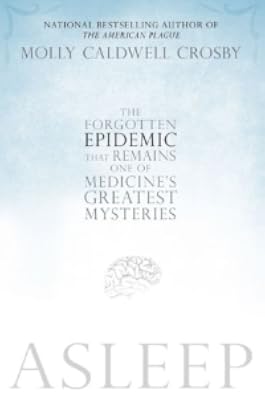
Asleep: The Forgotten Epidemic that Remains One of Medicine's Greatest Mysteries
by Molly Caldwell Crosby
On This Page
Description
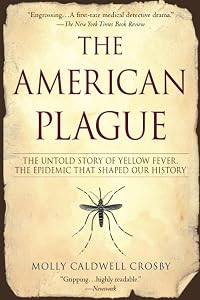
Crosby, acclaimed author of "The American Plague," explores the frightening history of a long forgotten disease--sleeping sickness--and details the frantic effort to conquer it before it strikes again.Tags
Recommendations

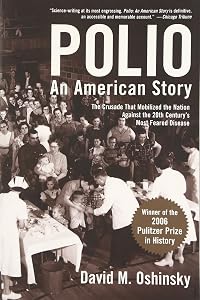
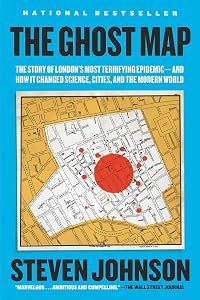

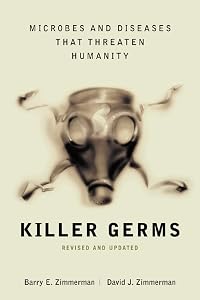
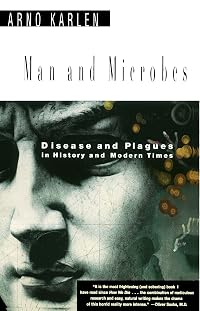
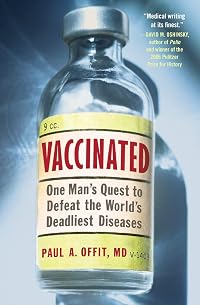


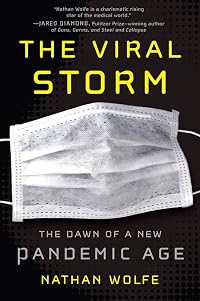



Member Recommendations

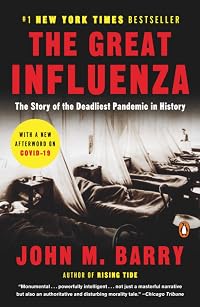
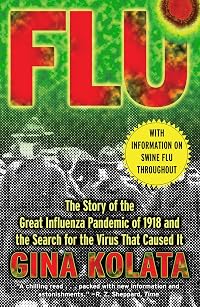
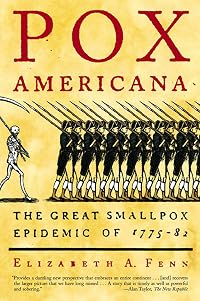
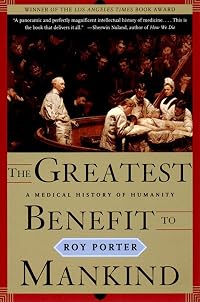
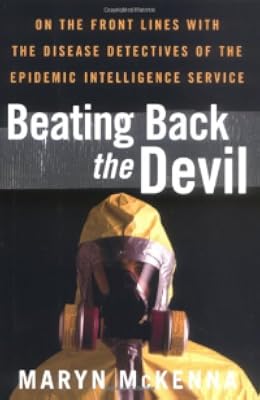
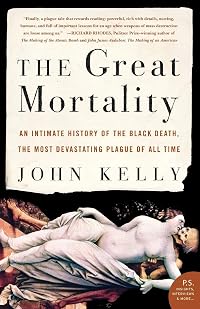
meggyweg Another deadly but forgotten pandemic.
Member Reviews
Alongside the 1918 flu pandemic, there was another epidemic, and epidemic of sleeping sickness. Over a period of years, it affected more than 5 million people, killing about one-third of its victims during its acute phase and leaving about one-third more to die inch by inch, minute by minute over a period of years. Since the epidemic ended in the 1930's, it has reappeared only sporadically around the world. However, we still do not know what causes the disease, nor do we know how to treat it. We also do not know whether or when it may recur in its epidemic form.
This could have been a very good and informative work on an important topic. However, it is instead disjointed and full of irrelevancies. Crosby has organized the book around show more "case studies" of victims of the disease (one of them being the wife of J. P. Morgan), and research and findings about the disease are presented in a haphazard manner, with earlier conclusions later being repudiated and vice versa. I ended up not being clear on where our knowledge of this disease stands today.
My main complaint about the book, though, is that it is full of entirely extraneous and irrelevant material, and becomes more of a social history than a scientific book. For example, describing one of the doctors walking through Penn Station on the way to see a patient in 1925, she goes into a description of the magazine covers on the newsstand: Ladies Home Journal--color picture of a bride and groom; Good Housekeeping--mother reading to her daughter; Field and Stream--man and woman on a picnic beside a stream; Saturday Evening Post--a Norman Rockwell drawing; she even notes a brand-new weekly--the New Yorker. A few pages later, the NYC skyline is sighted: it has "inspired many." "In The Great Gatsby, Fitzgerald (blah, blah, blah)""; "Ezra Pound described (blah, blah, blah)"; "Ayn Rand saw (blah, blah blah)"; "And Frank Lloyd Wright (blah, blah, blah)". I could give pages of examples like these. They really grated on me.
A couple of interesting speculations on her part jumped out at me. Woodrow Wilson in Europe shortly after the end of World War I suffered a case of flu, and apparently experienced major personality changes as well as a mental decline and physical handicaps afterwards which were kept secret from the public, which she speculates may have been the result of the sleeping sickness. (And which ultimately led to changes in the disability laws regarding the presidency.) She also speculates that some of Hitler's aberrant personality traits may have been the result of sleeping sickness, as he too suffered from a case of the flu around the time of World War I. (There are some intriguing studies mentioned regarding the connection between influenza and this form of sleeping sickness, but whether the connection is merely coincidental or meaningful is never fully clarified).
Apparently, Oliver Saks's book Awakenings covers this same topic, and in a much more cohesive way. I have placed it on my Kindle. show less
This could have been a very good and informative work on an important topic. However, it is instead disjointed and full of irrelevancies. Crosby has organized the book around show more "case studies" of victims of the disease (one of them being the wife of J. P. Morgan), and research and findings about the disease are presented in a haphazard manner, with earlier conclusions later being repudiated and vice versa. I ended up not being clear on where our knowledge of this disease stands today.
My main complaint about the book, though, is that it is full of entirely extraneous and irrelevant material, and becomes more of a social history than a scientific book. For example, describing one of the doctors walking through Penn Station on the way to see a patient in 1925, she goes into a description of the magazine covers on the newsstand: Ladies Home Journal--color picture of a bride and groom; Good Housekeeping--mother reading to her daughter; Field and Stream--man and woman on a picnic beside a stream; Saturday Evening Post--a Norman Rockwell drawing; she even notes a brand-new weekly--the New Yorker. A few pages later, the NYC skyline is sighted: it has "inspired many." "In The Great Gatsby, Fitzgerald (blah, blah, blah)""; "Ezra Pound described (blah, blah, blah)"; "Ayn Rand saw (blah, blah blah)"; "And Frank Lloyd Wright (blah, blah, blah)". I could give pages of examples like these. They really grated on me.
A couple of interesting speculations on her part jumped out at me. Woodrow Wilson in Europe shortly after the end of World War I suffered a case of flu, and apparently experienced major personality changes as well as a mental decline and physical handicaps afterwards which were kept secret from the public, which she speculates may have been the result of the sleeping sickness. (And which ultimately led to changes in the disability laws regarding the presidency.) She also speculates that some of Hitler's aberrant personality traits may have been the result of sleeping sickness, as he too suffered from a case of the flu around the time of World War I. (There are some intriguing studies mentioned regarding the connection between influenza and this form of sleeping sickness, but whether the connection is merely coincidental or meaningful is never fully clarified).
Apparently, Oliver Saks's book Awakenings covers this same topic, and in a much more cohesive way. I have placed it on my Kindle. show less
An interesting examination of both the time period and the disease, but it was strange reading a medical mystery where no answers were ever given and every case study ended in tragedy. I think possibly a different narrative structure might have suited this book better.
I just finished listening to the audio version of this book and came away quite a bit more pleased with it than I was with the text version. The narrator read well, with good pacing, tone and few mispronunciations, but more than that, the lush descriptions that were a bit tedious as text came alive in the audio format. I found myself appreciating Crosby's knowledge of New York and her attention to details like what the weather was like on the dates from the case study notes.
Of course the absence of pictures in an audiobook did lead me to go online several times to try to chase down either specific or similar images to go along with Crosby's descriptions.
An interesting book, worth listening to .
Of course the absence of pictures in an audiobook did lead me to go online several times to try to chase down either specific or similar images to go along with Crosby's descriptions.
An interesting book, worth listening to .
The speed at which I finished this book (I was surprised when it was over) suggested that there was something shallow about it. Either that or the author chose a subject that needed so much dressing that it came out too insubstantial. Which is an unfortunate departure from the author's previous book, which got my attention and kept it.
An unqualified "in the end, we don't know a thing" is an unsatisfying conclusion. I'd have liked to see more than the fluffed-out accounts of five case studies. Surely more knowledge came out of poking around at all those basal ganglia. I'd have liked to see some cellular-level speculation about the causes. Unfortunately the hard science and physiology in this book does not even approach the level of the show more first four weeks of an introductory neuroscience course. The narrative is not what this reader came for. The narrative is all the reader came away with. show less
An unqualified "in the end, we don't know a thing" is an unsatisfying conclusion. I'd have liked to see more than the fluffed-out accounts of five case studies. Surely more knowledge came out of poking around at all those basal ganglia. I'd have liked to see some cellular-level speculation about the causes. Unfortunately the hard science and physiology in this book does not even approach the level of the show more first four weeks of an introductory neuroscience course. The narrative is not what this reader came for. The narrative is all the reader came away with. show less
It's hard to write a history of a disease for which there is no ending. This work isn't a happily ever after tale, but an ongoing mystery even in our world today.
Ms. Crosby writes well but includes a lot of information to write a story narrative that I thought was just thrown in there. Though I'm interested in the doctors who worked on the disease, writing about their childhoods seemed a little excessive. She also seems to love New York with a passion and gives us a lot of history of the city in the book.
Ms. Crosby writes well but includes a lot of information to write a story narrative that I thought was just thrown in there. Though I'm interested in the doctors who worked on the disease, writing about their childhoods seemed a little excessive. She also seems to love New York with a passion and gives us a lot of history of the city in the book.
Meh...really felt like this book let me down at the end. I just felt like the buildup of the story didn’t match the conclusion...as if the author seemed to be grasping for ideas to fill the pages. The writing was good, so there’s that.
Fascinating topic, an epidemic I didn't know much about. But the writing is a bit slow with a lot of extraneous information.
Members
- Recently Added By
Lists

Best Books About Plagues and Epidemics
99 works; 17 members

The r/AskScience Reading List
159 works; 3 members

Club Read's Recommended Nonfiction Written by Women
618 works; 30 members
Author Information

4 Works 1,448 Members
Molly Caldwell Crosby's first book, The American Plague: The Untold Story of Yellow Fever, the Epidemic That Shaped Our History, has been nominated for several awards. Crosby holds a master of arts degree in nonfiction and science writing from Johns Hopkins University and previously worked for National Geographic magazine. Her writing has appeared show more in Newsweek, Health, and USA Today, among others, and she has covered topics ranging from the Spanish flu to kidney stones and Lyme disease. She lives in Memphis, Tennessee, with her family. show less
Common Knowledge
- Original publication date
- 2010-03
- People/Characters
- Jean Rene Cruchet; Constantin von Economo; Dr. Frederick Tilney; Ruth; Adam; Smith Ely Jelliffe (show all 18); Dr. Everett Jessup; Jane Morgan; J.P. Morgan; Charles Rothschild; Rosie; Dr. Goodhart; William J. Matheson; Dr. Josephine B. Neal; Sylvia Williams; Dr. Kate Constable; Oliver Sacks; Philip
- Important places
- New York, New York, USA; Wagner-Jauregg Clinic; Kings Park Asylum, Kings Park, New York, USA; Mt. Sinai Hospital, New York, New York, USA
- Important events
- Influenza Pandemic (1917 | 1918)
- Epigraph
- Though cases have become rarer within the last few years it is unlikely that it will ever again vanish from medical memory. - Dr. Constantin von Economo, 1931
Such forgettings are as dangerous as they are mysterious. - Dr. Oliver Sacks, 1973 - Dedication
- For Andrew, Morgan and Keller
- First words
- My grandmother was sixteen when she fell asleep. What she remembered most from those weeks was the whiteness and the emptiness.
- Last words
- (Click to show. Warning: May contain spoilers.)I also tried to find some connection ,something to keep and remember - but there was only the hallow place sleeping sickness had left behind.
- Blurbers
- Sacks, Oliver
Classifications
- Genres
- Nonfiction, General Nonfiction, Science & Nature, History
- DDC/MDS
- 362.19684980094 — Society, government, & culture Social problems and social services Social Welfare People with physical illnesses Services to people with specific conditions Diseases Diseases of nervous system and mental disorders
- LCC
- RA644 .E52 .C76 — Medicine Public aspects of medicine Public aspects of medicine Public health. Hygiene. Preventive medicine Disease (Communicable and noninfectious) and public
- BISAC
Statistics
- Members
- 305
- Popularity
- 105,084
- Reviews
- 11
- Rating
- (3.66)
- Languages
- English
- Media
- Paper, Audiobook, Ebook
- ISBNs
- 4
- ASINs
- 5