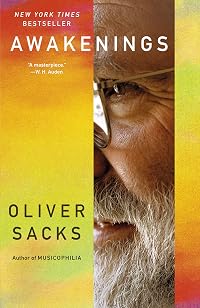
Awakenings
by Oliver Sacks
On This Page
Description
The remarkable story of a group of patients who contracted sleeping-sickness during the great epidemic just after World War I. Frozen for decades in a trance-like state, these men and women were given up as hopeless until 1969, when Dr. Oliver Sacks gave them the then-new drug L-DOPA, which had an astonishing, explosive, "awakening" effect. Dr. Sacks recounts the moving case histories of his patients, their lives, and the extraordinary transformations which went with their reintroduction to show more a changed world. show lessTags
Recommendations







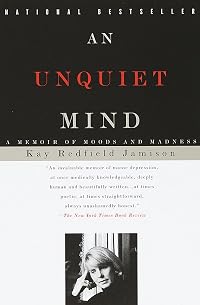
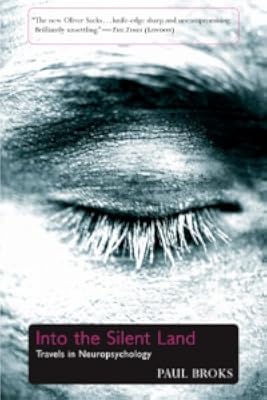

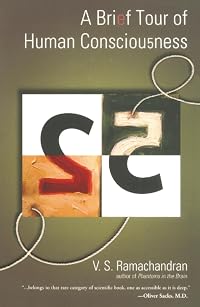
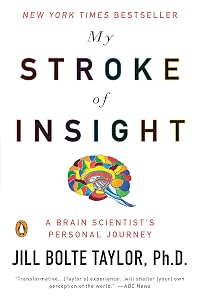








Member Recommendations
Member Reviews
In the years after WWI, an epidemic of encephalitis swept the world. Many people died but others seemed to recover only to suffer from a kind of Parkinson's which led to their permanent hospitalisation years or decades later. Often they were shunted off into side wards and forgotten about. In 1969 Oliver Sacks decided to try them on a new drug called L-Dopamine.
The core of the book is the stories of some of the patients and how L-Dopamine benefitted them until reactions to it took over. Extended introductions give background information about Parkinson's and the epidemic of encephalitis and its aftermath. An epilogue and postscript to later editions give updates on the patients, while appendices explore some of the themes of how the show more patients experience the world, later medical understandings, and the various dramatisations of the book.
The book can be a bit heavy-going in places if you don't have a medical background, but through it all Dr. Sack's human compassion for the patients and the patients' own resources of courage and character shine through. Dr. Sacks argues for a medicine that does not just focus on scientific puzzles and cases but also on the care of human beings. A wonderful book. show less
The core of the book is the stories of some of the patients and how L-Dopamine benefitted them until reactions to it took over. Extended introductions give background information about Parkinson's and the epidemic of encephalitis and its aftermath. An epilogue and postscript to later editions give updates on the patients, while appendices explore some of the themes of how the show more patients experience the world, later medical understandings, and the various dramatisations of the book.
The book can be a bit heavy-going in places if you don't have a medical background, but through it all Dr. Sack's human compassion for the patients and the patients' own resources of courage and character shine through. Dr. Sacks argues for a medicine that does not just focus on scientific puzzles and cases but also on the care of human beings. A wonderful book. show less
Awakenings - amazing and incredible. The spanish influenza was long before my time as was the attack of "sleepy sickness" that followed closely on its heels. I've heard of the former, but other than knowing the movie inspired by the book exists, I had no idea of the latter. That's the first amazing part. The second amazing part is the stories about those affected by the disease and getting some insight into the incredible mysteries of the human mind.
That's not to say the book was without problems. On a moral level, a few patients actually benefited in the long term from treatment. But most ended up worse off. In one case, Sacks (the author of the book and the doctor conducting the experiments/research) actually hid dosage of the show more treatment drug in a patient's food because the patient didn't want to try the treatment. Repeatedly throughout the book, he makes note of saying he felt treatment might be a bad idea, yet does it anyway. That's troubling to me. Did he have the patients best interests in mind or was he just trying to make a name for himself at the expense of the defenseless?
Beyond that, the writing style was dull, so when the anecdotes about the patients started to seem a little repetitive, it bogged down. I only read about half the epilogue because it was diverging into literally a page of footnotes for a page of actual main text and I also couldn't deal with Sacks writing another "thus" to start a sentence.
Still, if you're not familiar with a pandemic that killed or crippled tens of thousands of people across the world early last century, it's a fascinating read. show less
That's not to say the book was without problems. On a moral level, a few patients actually benefited in the long term from treatment. But most ended up worse off. In one case, Sacks (the author of the book and the doctor conducting the experiments/research) actually hid dosage of the show more treatment drug in a patient's food because the patient didn't want to try the treatment. Repeatedly throughout the book, he makes note of saying he felt treatment might be a bad idea, yet does it anyway. That's troubling to me. Did he have the patients best interests in mind or was he just trying to make a name for himself at the expense of the defenseless?
Beyond that, the writing style was dull, so when the anecdotes about the patients started to seem a little repetitive, it bogged down. I only read about half the epilogue because it was diverging into literally a page of footnotes for a page of actual main text and I also couldn't deal with Sacks writing another "thus" to start a sentence.
Still, if you're not familiar with a pandemic that killed or crippled tens of thousands of people across the world early last century, it's a fascinating read. show less
2.5 stars
Some positives: the writing in Awakenings is significantly better than in The Man Who Mistook His Wife For A Hat . I particularly enjoyed reading the case histories. Sacks has a humane approach to every patient and their stories are remarkable. I was also pleased to see there was a glossary (unlike in The Man... ) - especially when first reading it, the glossary was very helpful.
I was, however, a bit disappointed with the editing. For one, the prologue and epilogue/appendices take up a lot of space. The case histories only take up 45% of the book (yes, I calculated it). The rest of the book consists of essays, Sacks' perspectives and the history of the drug L-DOPA and Parkinsonism in general. I personally wasn't really show more interested in those scientific essays, and thought they were unnecessary for the most part. Sacks also really loves his footnotes; in total there are 175 (!) in my edition (1990) - these footnotes were long and as a result made the book less readable.
Despite my complaints, I am grateful Sacks gave these post-encephalitic patients a voice and I'm glad I got to read their stories.
Also, I thought this passage in one of the appendices (A History of the Sleeping-Sickness) was relevant to the situation we're currently in: "Pandemics of viral diseases, as Lederberg points out, are a natural and almost predictable phenomenom (Culliton, 1990), and there is certainly no reason to think that encephalitis lethargica is extinct. Our best protection, as von Economo stressed, is a continuing vigilance, so that we are never again, as in 1918, taken unawares." show less
Some positives: the writing in Awakenings is significantly better than in The Man Who Mistook His Wife For A Hat . I particularly enjoyed reading the case histories. Sacks has a humane approach to every patient and their stories are remarkable. I was also pleased to see there was a glossary (unlike in The Man... ) - especially when first reading it, the glossary was very helpful.
I was, however, a bit disappointed with the editing. For one, the prologue and epilogue/appendices take up a lot of space. The case histories only take up 45% of the book (yes, I calculated it). The rest of the book consists of essays, Sacks' perspectives and the history of the drug L-DOPA and Parkinsonism in general. I personally wasn't really show more interested in those scientific essays, and thought they were unnecessary for the most part. Sacks also really loves his footnotes; in total there are 175 (!) in my edition (1990) - these footnotes were long and as a result made the book less readable.
Despite my complaints, I am grateful Sacks gave these post-encephalitic patients a voice and I'm glad I got to read their stories.
Also, I thought this passage in one of the appendices (A History of the Sleeping-Sickness) was relevant to the situation we're currently in: "Pandemics of viral diseases, as Lederberg points out, are a natural and almost predictable phenomenom (Culliton, 1990), and there is certainly no reason to think that encephalitis lethargica is extinct. Our best protection, as von Economo stressed, is a continuing vigilance, so that we are never again, as in 1918, taken unawares." show less
The crux of the book is the work Sacks began in the mid-1960s with dozens of post-encephalitic patients at Bronx's Beth Abraham hospital, then called the Bronx Home for Incurables and disguised here as Mount Carmel. These patients were infected in 1918 by the encephalitis lethargica virus, or sleepy sickness. (Not to be confused with the worldwide influenza pandemic of that same year.) Those who survived were able afterwards to lead normal lives for years and sometimes decades until they were stricken with Parkinson's disease-like symptoms: locked and rigid postures that turned them into living statuary (akinesia), hurrying gait (festination), frozen skewed gaze (oculogyyric crises), and so on. These patients did not have Parkinson's show more disease proper, but because the encephalitis reduced the neurotransmitter dopamine in the part of their brain known as the substantia nigra they experienced identical, if somewhat more severe symptoms than actual Parkinson's patients. They were to become know as post-encephalitics.
In 1969 L-DOPA's cost came down sufficiently that Dr. Sacks began to prescribe it for his post-encephalitic patients. The results were at once miraculous and disastrous. In a matter of weeks, sometimes overnight, Sacks's patients were "awakened" from what for many had been decades of immobility, incommunicability, and dependence on high levels of nursing care. Suddenly these frozen figures were walking and talking, their personalities, in hiatus for so long, perfectly preserved. Dr. Sacks reviews the cases here of 20 such patients, from their often sudden awakening to the onset and growing severity of side effects. Awakenings is in the final analysis a tragedy. Few of Sacks patients could tolerate the long term effects of L-DOPA. Not a few regretted ever being treated with it. For a handful it provided a vastly improved quality of life. They became social again, needed far less nursing care, but the effects of the drug were highly unstable.
In an appendix added to the 1990 edition, Sacks and a colleague analyze patient responses to L-DOPA using the then emerging discipline of chaos theory. This appears only in the 1990 edition since the discipline did not exist when Sacks and his patients began their trials of the levodopa in '69. Dr. Sacks never met a footnote he didn't love. The book is chockful of them. Those too long to fit alongside the text are included as appendices. Ninety-five percent of them seem to me indispensable. Sacks is a great thinker of immense erudition who possesses a highly readable prose style. The primary text provides straightforward exposition, but when read in conjunction with the footnotes--where much of the real meat of the book resides--it can at times take on an almost fiction-like discursiveness.
Of Sacks's dozen or so books, I've read all but three. Awakenings is his magnum opus, his manifesto and policy declaration. In it he lays out his positions on the then current neurology of the day (Awakenings was first published in 1973) which he lambastes as coldly empirical and lacking a complementary metaphysical component. In America, and no doubt much of the West, these were the last years of the Physician as God. There was little public knowledge of medicine then, unlike today, and the doctor's role in a crisis was usually unquestioned. Today second opinions are sought with regularity, "integrative" approaches to healing more readily embraced, and there is a vast industry based on purveying medical knowledge to the general public. You can see this great change perhaps best in the way pharmaceutical companies now advertise directly to the public in a way they never did during the Awakenings period. Sacks is here an articulate proponent for a more human, less coldly analytical medicine, and his endorsement for such an approach, which includes close interpersonal relationships with patients, is a clarion call. Fascinating, meticulous, and highly recommended.
One appendix is devoted to the many dramatizations of Awakenings on stage and screen. There's Harold Pinter's one-act play "A Kind of Alaska," an original documentary film, and the feature film, which retained Sacks as a consultant. I found his descriptions here of DeNiro preparing for his role as Leonard L. fascinating. show less
In 1969 L-DOPA's cost came down sufficiently that Dr. Sacks began to prescribe it for his post-encephalitic patients. The results were at once miraculous and disastrous. In a matter of weeks, sometimes overnight, Sacks's patients were "awakened" from what for many had been decades of immobility, incommunicability, and dependence on high levels of nursing care. Suddenly these frozen figures were walking and talking, their personalities, in hiatus for so long, perfectly preserved. Dr. Sacks reviews the cases here of 20 such patients, from their often sudden awakening to the onset and growing severity of side effects. Awakenings is in the final analysis a tragedy. Few of Sacks patients could tolerate the long term effects of L-DOPA. Not a few regretted ever being treated with it. For a handful it provided a vastly improved quality of life. They became social again, needed far less nursing care, but the effects of the drug were highly unstable.
In an appendix added to the 1990 edition, Sacks and a colleague analyze patient responses to L-DOPA using the then emerging discipline of chaos theory. This appears only in the 1990 edition since the discipline did not exist when Sacks and his patients began their trials of the levodopa in '69. Dr. Sacks never met a footnote he didn't love. The book is chockful of them. Those too long to fit alongside the text are included as appendices. Ninety-five percent of them seem to me indispensable. Sacks is a great thinker of immense erudition who possesses a highly readable prose style. The primary text provides straightforward exposition, but when read in conjunction with the footnotes--where much of the real meat of the book resides--it can at times take on an almost fiction-like discursiveness.
Of Sacks's dozen or so books, I've read all but three. Awakenings is his magnum opus, his manifesto and policy declaration. In it he lays out his positions on the then current neurology of the day (Awakenings was first published in 1973) which he lambastes as coldly empirical and lacking a complementary metaphysical component. In America, and no doubt much of the West, these were the last years of the Physician as God. There was little public knowledge of medicine then, unlike today, and the doctor's role in a crisis was usually unquestioned. Today second opinions are sought with regularity, "integrative" approaches to healing more readily embraced, and there is a vast industry based on purveying medical knowledge to the general public. You can see this great change perhaps best in the way pharmaceutical companies now advertise directly to the public in a way they never did during the Awakenings period. Sacks is here an articulate proponent for a more human, less coldly analytical medicine, and his endorsement for such an approach, which includes close interpersonal relationships with patients, is a clarion call. Fascinating, meticulous, and highly recommended.
One appendix is devoted to the many dramatizations of Awakenings on stage and screen. There's Harold Pinter's one-act play "A Kind of Alaska," an original documentary film, and the feature film, which retained Sacks as a consultant. I found his descriptions here of DeNiro preparing for his role as Leonard L. fascinating. show less
I was not able to find Awakenings in a traditional print format so this review is based on the audiobook.
Having finished Hallucinations recently, I thought it would be interesting to read Sacks's first book, Awakenings, based on his treatment of post-encephalitis lethargica patients in the late sixties/early seventies. Known as "sleepy sickness", encephalitis lethargica spread around the world between 1915 to the late 1920's. The disease left its victims motionless and speechless, very similar to certain forms of Parkinsonism. Awakenings is a collection of treatment notes for twenty or so patients, covering their treatment prior to, during, and often after, the appearance of the then "wonder" drug, L-dopamine.
The stories are absolutely show more gut-wrenching, touching on everything from the loss of self to the abasement of patients in long-term care facilities. I have no expertise in neuroscience so I cannot review with that perspective. I found Awakenings profoundly moving and although I do not normally recommend science books in audio format, I think this worked particularly well in this case. show less
Having finished Hallucinations recently, I thought it would be interesting to read Sacks's first book, Awakenings, based on his treatment of post-encephalitis lethargica patients in the late sixties/early seventies. Known as "sleepy sickness", encephalitis lethargica spread around the world between 1915 to the late 1920's. The disease left its victims motionless and speechless, very similar to certain forms of Parkinsonism. Awakenings is a collection of treatment notes for twenty or so patients, covering their treatment prior to, during, and often after, the appearance of the then "wonder" drug, L-dopamine.
The stories are absolutely show more gut-wrenching, touching on everything from the loss of self to the abasement of patients in long-term care facilities. I have no expertise in neuroscience so I cannot review with that perspective. I found Awakenings profoundly moving and although I do not normally recommend science books in audio format, I think this worked particularly well in this case. show less
I have had this book on my shelves for years; the edges of the pages are browned, and the binding is fragile. It is interesting to read it as a practicing neurologist; the case histories are much different from what I would write, having far more detail about the patient’s reactions and emotions, and less detail about examination and measurement. I recall the days of levodopa, prior to carbidopa-levodopa made dosing easier. I do not recall the severe and rapid excitations and complications of levodopa described by Sacks. I know of hallucinations and nausea, on-off effects, and chorea, but the general excitement and emotional reactions are not familiar. It is possible, as it occurred with Charcot, that the patients demonstrated what show more was expected of them in the milieu of the Mt. Carmel Hospital (I recall meeting Oliver Sacks as a medical student at Beth Abraham in the Bronx, about 1974, and it seemed he had been there for a long time; perhaps the Mt. Carmel name was a disguise). I found his musings about the quantum effects of the drug, and the general need for emotional engagement with patients, not based in the reality of daily practice. He lived with a limited number of patients available for daily observation on a chronic disease ward. I see 1200 new outpatient consults per year; a completely different experience. show less
This is my first Oliver Sacks book. I have listened to podcasts about him and with him. Even one where he read excerpts of short essays. However I was not enthralled by [b:Awakenings|14456|Awakenings|Oliver Sacks|https://images.gr-assets.com/books/1388274053s/14456.jpg|2755549].
Have you ever seen the movie Awakenings with Robin Williams and Robert De Niro? It is based off of Oliver Sacks and his experience with post-encephalitis Parkinson patients. During the late 60 and 70s, he administered L-DOPA to these patients that created "Awakenings" or back to normal or near normal.
This book is really more a list of case studies. It was very interesting to learn how this medicine could "awaken" these patients from an extreme lethargy and hear show more how they felt when they were unable to move or even think. Its something that can't even be imagined. The part I wished to hear was Sacks poetic pros and wonderful art of turning clinical studies into stories. You get this a bit, but not like what Oliver Sacks is known for today.
I read the updated version where Sacks adds perspective after further years of treating and watching these patients as well as the different adaptations of his experience such as the well known movie, a play, dramatic readings, and a documentary. In this part you get the the poetic pros and fine story telling.
This will not deter me from reading more Oliver Sack. In fact I look forward to it. It was just a bit boring. show less
Have you ever seen the movie Awakenings with Robin Williams and Robert De Niro? It is based off of Oliver Sacks and his experience with post-encephalitis Parkinson patients. During the late 60 and 70s, he administered L-DOPA to these patients that created "Awakenings" or back to normal or near normal.
This book is really more a list of case studies. It was very interesting to learn how this medicine could "awaken" these patients from an extreme lethargy and hear show more how they felt when they were unable to move or even think. Its something that can't even be imagined. The part I wished to hear was Sacks poetic pros and wonderful art of turning clinical studies into stories. You get this a bit, but not like what Oliver Sacks is known for today.
I read the updated version where Sacks adds perspective after further years of treating and watching these patients as well as the different adaptations of his experience such as the well known movie, a play, dramatic readings, and a documentary. In this part you get the the poetic pros and fine story telling.
This will not deter me from reading more Oliver Sack. In fact I look forward to it. It was just a bit boring. show less
Members
- Recently Added By
Lists

Best Medical Nonfiction
79 works; 29 members

Best Books About Plagues and Epidemics
99 works; 17 members

To Read - Medicine
18 works; 1 member

Top Five Books of 2015
811 works; 241 members

Jordan B. Peterson's Recommended Books
104 works; 5 members

Favourite Books
1,819 works; 316 members

Watched the Movie, Probably Won't Read the Book
185 works; 34 members

Allie's Wishlist
217 works; 2 members

The r/AskScience Reading List
159 works; 3 members

neurology
2 works; 1 member

psychology
12 works; 1 member
Author Information

66+ Works 43,672 Members
Oliver Sacks was born in London, England on July 9, 1933. He received a medical degree from Queen's College, Oxford University and performed his internship at Middlesex Hospital in London and Mount Zion Hospital in San Francisco. He completed his residency at UCLA. In 1965, he became a clinical neurologist to the Little Sisters of the Poor and show more Beth Abraham Hospital. His work in a Bronx charity hospital led him to write the book Awakenings in 1973. The book inspired a play by Harold Pinter and became a film starring Robert De Niro and Robin Williams. His other works included An Anthropologist on Mars, The Mind's Eye, The Man Who Mistook His Wife for a Hat, Uncle Tungsten, Musicophilia, A Leg to Stand On, On the Move: A Life, and Gratitude. In 2007, he ended his 42-year relationship with the Albert Einstein College of Medicine to accept an interdisciplinary teaching position at Columbia. In 2012, he returned to the New York University School of Medicine as a professor of neurology. He died of cancer on August 30, 2015 at the age of 82. (Bowker Author Biography) show less
Some Editions
Awards and Honors
Awards
Notable Lists
Work Relationships
Common Knowledge
- Canonical title
- Awakenings
- Original title
- Awakenings
- Original publication date
- 1973
- Related movies
- Awakenings (1990 | IMDb)
- Dedication
- To the memory of W.H. Auden and A.R. Luria
- First words
- Prologue
PARKINSON’S DISEASE AND PARKINSONISM
In 1817, Dr James Parkinson – a London physician – published his famous Essay on the Shaking Palsy, in which he portrayed, with a vividness and insight th... (show all)at have never been surpassed, the common, important, and singular condition we now know as Parkinson’s disease.
Awakenings
FRANCES D.
Miss D. was born in New York in 1904, the youngest and brightest of four children. She was a brilliant student at high school until her life was cut across, in her fifteenth year, by a seve... (show all)re attack of encephalitis lethargica of the relatively rare hyperkinetic form. - Quotations*
- ... and now, a preternatural birth in returning to life from this sickness / Donne
- Last words
- (Click to show. Warning: May contain spoilers.)And the end of all our exploring
Will be to arrive where we started
And know the place for the first time . . .
ELIOT - Original language
- English
*Some information comes from Common Knowledge in other languages. Click "Edit" for more information.
Classifications
- Genres
- General Nonfiction, Nonfiction, Science & Nature, Biography & Memoir
- DDC/MDS
- 616.832 — Applied science & technology Medicine & health Diseases, Allergies, Skin Conditions Nervous Disorders: Autism, Anorexia, OCD Other organic diseases of central nervous system Encephalitis
- LCC
- RC382 .S23 — Medicine Internal medicine Internal medicine Neurosciences. Biological psychiatry. Neuropsychiatry Neurology. Diseases of the nervous system
- BISAC
Statistics
- Members
- 2,738
- Popularity
- 6,734
- Reviews
- 27
- Rating
- (3.93)
- Languages
- 11 — Dutch, English, French, German, Hungarian, Italian, Polish, Portuguese, Russian, Spanish, Turkish
- Media
- Paper, Audiobook, Ebook
- ISBNs
- 66
- UPCs
- 1
- ASINs
- 26