On This Page
Description
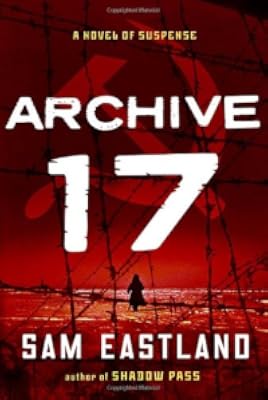
"A triumph! With a canny eye for detail, Eastland re-creates the tragedy of the Romanov dynasty in this intelligent and relentless thriller.". HTML:BONUS: This edition contains an excerpt from Sam Eastland's Shadow Pass.
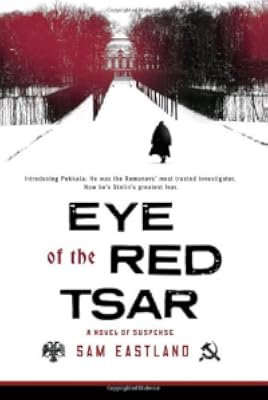
Shortly after midnight on July 17, 1918, the imprisoned family of Tsar Nicholas Romanov was awakened and led down to the basement of the Ipatiev house. There they were summarily executed. Their bodies were hidden away, the location a secret of the Soviet state. A decade show more later, Pekkala, once the most trusted secret agent of the Romanovs, is now Prisoner 4745-P, banished to a forest on the outskirts of humanity. But the state needs Pekkala one last time. His mission: catch the assassins who slaughtered the Romanovs, locate the royal child rumored to be alive, and give Stalin the international coup he craves. Find the bodies, Pekkala is told, and you will find your freedom.
In a land of uneasy alliances and lethal treachery, pursuing clues that have eluded everyone, Pekkala is thrust into the past where he once reigned. There he will meet the man who betrayed him and the woman he loved and lost in the fires of rebellion--and uncover a secret so shocking that it will shake to its core the land he loves.
. show less
Tags
Recommendations





















Member Recommendations

Member Reviews
At one time, Pekkala was The Emerald Eye-- Tsar Nicholas II's most trusted personal investigator. For the past nine years, he has been Prisoner 4745-P in a Siberian prison camp. Given the job of tree marker which carried with it a life expectancy of six months, Pekkala has proven much tougher than anyone expected, and that is a good thing for Stalin.
Human remains have been found in an abandoned mine shaft, and Stalin wants Pekkala to identify them. If they are indeed the bodies of the Romanov family, Stalin wants Pekkala to find the royal family's killers. Even before spending nine years in a Siberian prison camp, Pekkala is no fool, and he knows that Stalin's agenda has more on it than that, but even The Emerald Eye isn't prepared for show more all the twists and turns this investigation will throw at him. All he knows for sure is that he will investigate because Stalin has promised Pekkala his freedom if the case is concluded successfully.
For anyone who loves tsarist Russian history, the beginning of this novel is memorable, and as I read the opening pages, I hoped that this new perspective would mean that I was in for a reading treat. Even so I was surprised by how much I didn't want to stop reading this book. If I could have ignored all obligations, I would've happily read Eye of the Red Tsar in one sitting, proving without doubt that I can be the worst biblio-glutton.
As I learned more about Pekkala's childhood in Finland, as I learned how he met Tsar Nicholas, as I watched him follow each lead and talk to anyone who might have the slightest bit of information, I was in Siberia in 1929. The plot moved quickly and was full of switchbacks, only some of which were easily deduced, and when I read that Eastland's next Inspector Pekkala novel is expected in 2011, I got a huge smile on my face.
Even the thought of another Pekkala novel makes me smile right now. show less
Human remains have been found in an abandoned mine shaft, and Stalin wants Pekkala to identify them. If they are indeed the bodies of the Romanov family, Stalin wants Pekkala to find the royal family's killers. Even before spending nine years in a Siberian prison camp, Pekkala is no fool, and he knows that Stalin's agenda has more on it than that, but even The Emerald Eye isn't prepared for show more all the twists and turns this investigation will throw at him. All he knows for sure is that he will investigate because Stalin has promised Pekkala his freedom if the case is concluded successfully.
For anyone who loves tsarist Russian history, the beginning of this novel is memorable, and as I read the opening pages, I hoped that this new perspective would mean that I was in for a reading treat. Even so I was surprised by how much I didn't want to stop reading this book. If I could have ignored all obligations, I would've happily read Eye of the Red Tsar in one sitting, proving without doubt that I can be the worst biblio-glutton.
As I learned more about Pekkala's childhood in Finland, as I learned how he met Tsar Nicholas, as I watched him follow each lead and talk to anyone who might have the slightest bit of information, I was in Siberia in 1929. The plot moved quickly and was full of switchbacks, only some of which were easily deduced, and when I read that Eastland's next Inspector Pekkala novel is expected in 2011, I got a huge smile on my face.
Even the thought of another Pekkala novel makes me smile right now. show less
Ten years after the Russian Revolution, the Tsar's trusted investigator, Pekkala, is abruptly released from confinement and called into service by the new government. The combination of Pekkala's skills and his knowledge of the Tsar's inner circle uniquely qualifies him to track down the killer(s) of the Tsar and his household.
The author gradually reveals Pekkala's history by interweaving flashbacks with the current investigation. The flashbacks provide essential background information without interrupting the pace of the story. Eastland avoids the mistake made by many other writers who over-tell their stories by including descriptions and scenes that divert the reader's attention from the central thrust of the novel. Eastland's writing show more is focused. He provides just the right amount of detail to build tension and reach a satisfying conclusion within a reasonable number of pages.
Pekkala's re-introduction to society after a decade of isolation wasn't quite convincing. Pekkala seems to quickly shake off his initial awkwardness. I couldn't help comparing him to Dickens's Dr. Manet in A Tale of Two Cities, who was permanently scarred after his time in the Bastille and who suffered a number of relapses during his recovery. I think Dickens's portrayal is probably the more realistic of the two.
Pekkala's background in osteology is an interesting twist for the historical suspense genre. If the author develops that aspect of Pekkala's investigative technique in subsequent books, the series might appeal to quite a few readers who enjoy the forensic novels and television series that are so popular right now. Enthusiastically recommended. show less
The author gradually reveals Pekkala's history by interweaving flashbacks with the current investigation. The flashbacks provide essential background information without interrupting the pace of the story. Eastland avoids the mistake made by many other writers who over-tell their stories by including descriptions and scenes that divert the reader's attention from the central thrust of the novel. Eastland's writing show more is focused. He provides just the right amount of detail to build tension and reach a satisfying conclusion within a reasonable number of pages.
Pekkala's re-introduction to society after a decade of isolation wasn't quite convincing. Pekkala seems to quickly shake off his initial awkwardness. I couldn't help comparing him to Dickens's Dr. Manet in A Tale of Two Cities, who was permanently scarred after his time in the Bastille and who suffered a number of relapses during his recovery. I think Dickens's portrayal is probably the more realistic of the two.
Pekkala's background in osteology is an interesting twist for the historical suspense genre. If the author develops that aspect of Pekkala's investigative technique in subsequent books, the series might appeal to quite a few readers who enjoy the forensic novels and television series that are so popular right now. Enthusiastically recommended. show less
The Emerald Eye is a man known simply as Pekkala. Private investigator to Czar Nicholas, Pekkala gains a reputation among those in the know in Russia, which proves dangerous when the Czar and his family are killed in the Bolshevic Revolution, and Pekkala himself becomes simply Prisoner 4745-P. After years in prison, he is summoned by Josef Stalin to solve a decades-old mystery -- who actually killed the Romanovs, and are there any survivors?
This book starts a bit slowly, but if you stick with it you will be rewarded. By the middle of the book, I couldn't put it down at all, and I finished the last hundred pages faster than I finished the first fifty. The story is suspenseful, and the characters are memorable, even for someone who show more doesn't have Pekkala's famous memory! If you don't know much about pre-Soviet Russia, you will learn a lot from this book without even really realizing it.
Parts of the plot were somewhat obvious, especially if you remember Chekov's Gun, but this is an outstanding introduction to what I hope will become a long-running series. show less
This book starts a bit slowly, but if you stick with it you will be rewarded. By the middle of the book, I couldn't put it down at all, and I finished the last hundred pages faster than I finished the first fifty. The story is suspenseful, and the characters are memorable, even for someone who show more doesn't have Pekkala's famous memory! If you don't know much about pre-Soviet Russia, you will learn a lot from this book without even really realizing it.
Parts of the plot were somewhat obvious, especially if you remember Chekov's Gun, but this is an outstanding introduction to what I hope will become a long-running series. show less
 This review was written for LibraryThing Early Reviewers.
Now this is more like it. A well-written and wonderfully intriguing tale of (just) post-revolutionary Russia. Full of incident and clues and what might be clues and what might not be clues. You never know.
I've no idea if Sam Eastland is in any way part-Russian, but I can imagine after reading this one, he just might be. He really does capture what I can (also) imagine must have been the optimism shot through with (possibly) typical Russian fatalism. Of the promise to the ordinary Russian that the revolution gave, but that became not just a struggle to survive the suspicion, the culls and the secret police informers, but a struggle to survive.
It is presented in rather a nice way, as what are really two stories, running side by side. The show more one, is an investigation into the circumstances surrounding the deaths of the Romanov family, the Tsar of the title and his family, and of course, his treasure - if it exists, if it ever existed - that is taking place in the here and 'now'. Then the other, is flashbacks of the former life of the titular Pelukka, 'The Eye of the Tsar', from his childhood in Finland, when Finland was a part of the Russian empire, his work for and close relationship to Николай II, Николай Александрович Романов, that's Tsar Nikolay II, Nikolay Alexandrovich Romanov, to you and me, to his first 'encounters' with Stalin and his particular brand of Communism in post-Imperial Russia. It's perhaps not giving all that much away, to say Pekkala comes off second best. By a long way. For a long time. Each narrative interweaves and illuminates the other and you really get a good feel for how Russia was and was developing, in the years following the revolution.
'Eye of the Red Tsar' is much better than The Red Coffin, the second one in the series. Which I read first. Though that might have been a fortunate, happy accident - quite possibly the right thing to do. I did feel 'Coffin' was a little lacklustre, and I could well have said 'ok, this is where I stop. I'll get off the Inspector Pekkala train here thanks.' I can well imagine a few people will. However, there was at least enough that was intreguing in 'Red Coffin', to make me search out 'Red Tsar.' Having read this one, I'm ready to reappraise the whole thing and am looking forward to seeing if Sam Eastland can get it back on the rails with 'Siberian Red' and others. show less
I've no idea if Sam Eastland is in any way part-Russian, but I can imagine after reading this one, he just might be. He really does capture what I can (also) imagine must have been the optimism shot through with (possibly) typical Russian fatalism. Of the promise to the ordinary Russian that the revolution gave, but that became not just a struggle to survive the suspicion, the culls and the secret police informers, but a struggle to survive.
It is presented in rather a nice way, as what are really two stories, running side by side. The show more one, is an investigation into the circumstances surrounding the deaths of the Romanov family, the Tsar of the title and his family, and of course, his treasure - if it exists, if it ever existed - that is taking place in the here and 'now'. Then the other, is flashbacks of the former life of the titular Pelukka, 'The Eye of the Tsar', from his childhood in Finland, when Finland was a part of the Russian empire, his work for and close relationship to Николай II, Николай Александрович Романов, that's Tsar Nikolay II, Nikolay Alexandrovich Romanov, to you and me, to his first 'encounters' with Stalin and his particular brand of Communism in post-Imperial Russia. It's perhaps not giving all that much away, to say Pekkala comes off second best. By a long way. For a long time. Each narrative interweaves and illuminates the other and you really get a good feel for how Russia was and was developing, in the years following the revolution.
'Eye of the Red Tsar' is much better than The Red Coffin, the second one in the series. Which I read first. Though that might have been a fortunate, happy accident - quite possibly the right thing to do. I did feel 'Coffin' was a little lacklustre, and I could well have said 'ok, this is where I stop. I'll get off the Inspector Pekkala train here thanks.' I can well imagine a few people will. However, there was at least enough that was intreguing in 'Red Coffin', to make me search out 'Red Tsar.' Having read this one, I'm ready to reappraise the whole thing and am looking forward to seeing if Sam Eastland can get it back on the rails with 'Siberian Red' and others. show less
"The Eye of The Red Tsar" is a masterly written piece of historical fiction. My plan to read just the first few pages changed before I finished the first paragraph. The book was virtually a page turner from the prologue to the last sentence. The story line and characters were expertly developed. The author's voice and pace of piece were perfect. The result, I felt compelled, and did, read the novel in one sitting. If you like mystery, crime, or historical books -- or just a great page turner -- this novel is a must read.
This review was written for LibraryThing Early Reviewers.5.0 out of 5 stars A Fascinating Glimpse into Post-Revolutionary Russia Wrapped in a Murder Mystery!, March 21, 2010
A trusted friend and confidant of Tsar Nicholas II, Pekkala was a detective with unlimited power and unlimited public appeal. But his relationship with the tsar caused him to be imprisoned following the murder of the tsar and his family. Only the lure of untold wealth could have caused the red tsar (Stalin) to bring him back from confinement.
Here's my take on Sam Eastland's first novel:
PROS:
1. For me, this novel was a fascinating introduction to life after the revolution. Although I cannot say I'm surprised, I had no idea that villages were created to give journalists false ideas about conditions in the Soviet Union.
2. The show more character development is excellent. While there's still a lot to be discovered about Pekkala (in Eastland's next novel I suspect), we learn a lot about who and what he is as the novel progresses. We learn how he came to be such a skilled observer of details. We learn about the tragic riff between Pekkala and his brother. We learn what the Emerald Eye means to him, both professionally and emotionally.
Added to this cast of characters is the Tsar himself, and, this is the first time I'd really thought about him as a human being rather than simply as a tragic victim of a revolution he could not see coming until it was too late.
3. Suspense? Here aplenty, as the protagonist leads us into creepy settings and deals with men of less than sterling character. Hints to the final solution are blessedly few and far between.
CONS:
The Eye of the Red Tsar ended before I was ready. I wanted More, More!
OVERALL:
The Product Description was right on target . . . if you're a fan of Gorky Park, or if you, like me, thoroughly enjoyed Child 44, this novel's a great pick for you. I highly recommend it! show less
A trusted friend and confidant of Tsar Nicholas II, Pekkala was a detective with unlimited power and unlimited public appeal. But his relationship with the tsar caused him to be imprisoned following the murder of the tsar and his family. Only the lure of untold wealth could have caused the red tsar (Stalin) to bring him back from confinement.
Here's my take on Sam Eastland's first novel:
PROS:
1. For me, this novel was a fascinating introduction to life after the revolution. Although I cannot say I'm surprised, I had no idea that villages were created to give journalists false ideas about conditions in the Soviet Union.
2. The show more character development is excellent. While there's still a lot to be discovered about Pekkala (in Eastland's next novel I suspect), we learn a lot about who and what he is as the novel progresses. We learn how he came to be such a skilled observer of details. We learn about the tragic riff between Pekkala and his brother. We learn what the Emerald Eye means to him, both professionally and emotionally.
Added to this cast of characters is the Tsar himself, and, this is the first time I'd really thought about him as a human being rather than simply as a tragic victim of a revolution he could not see coming until it was too late.
3. Suspense? Here aplenty, as the protagonist leads us into creepy settings and deals with men of less than sterling character. Hints to the final solution are blessedly few and far between.
CONS:
The Eye of the Red Tsar ended before I was ready. I wanted More, More!
OVERALL:
The Product Description was right on target . . . if you're a fan of Gorky Park, or if you, like me, thoroughly enjoyed Child 44, this novel's a great pick for you. I highly recommend it! show less
This review was written for LibraryThing Early Reviewers.Sam Eastland's thriller, Eye of the Red Tsar, is set in Russia. The protaganist is Pekkala, a Finnish detective who held a prominant position as the most trusted investigator for the Romanov Family. The action alternates between the pre-revolutionary years and 1929, when Pekkala is taken from his Siberian prison to help Stalin's government solve the mystery of the Romanovs' murder, and to find their missing fortune.
The story is fast-paced and absorbing. Details in the setting were fascinating. I was particularly interested reading about the bogus prosperous town set up for the benefit of Western journalists. There were a few times when I was confused by the roles of the numerous characters, but I generally found the story to be show more engaging. Eastland is planning a second book revolving around Detective Pekkala. I will be sure to read it. show less
The story is fast-paced and absorbing. Details in the setting were fascinating. I was particularly interested reading about the bogus prosperous town set up for the benefit of Western journalists. There were a few times when I was confused by the roles of the numerous characters, but I generally found the story to be show more engaging. Eastland is planning a second book revolving around Detective Pekkala. I will be sure to read it. show less
This review was written for LibraryThing Early Reviewers.Members
- Recently Added By
Published Reviews
ThingScore 75
The see-saw narrative is a perfect ploy for a thriller, taking in both the dying embers of the Romanov era and the wake-up call that would follow with the purges and the famines, the assassinations and torture chambers. Pervading this breakneck novel is the sense of an age when personal security was a fallacy, to be trusted no more than the medicinal qualities of the raw vodka knocked back in show more the taverns. This is a country that has thrown itself out of the frying pan and into the fire. show less
added by jlelliott
Author Information

18 Works 2,326 Members
Some Editions
Series

Common Knowledge
- Canonical title
- Eye of the Red Tsar
- Original title
- Eye of the Red Tsar
- Original publication date
- 2010-04-27
- People/Characters
- Pekkala; Kirov
- Important places
- Borodok Labor Camp, USSR; Sverdlovsk, Russia; St. Petersburg, Russia
- Important events
- Russian Civil War
- Dedication
- This book is for P. R.
- First words
- Through blood-dimmed eyes, the Tsar watched the man reload his gun.
- Last words
- (Click to show. Warning: May contain spoilers.)'Tell him', said Pekkala, 'that two eyes are better than one.'
- Blurbers
- Liss, David; Hewson, David
Classifications
Statistics
- Members
- 631
- Popularity
- 46,264
- Reviews
- 126
- Rating
- (3.65)
- Languages
- 8 — Dutch, English, Finnish, French, German, Greek, Hungarian, Italian
- Media
- Paper, Audiobook, Ebook
- ISBNs
- 28
- ASINs
- 11