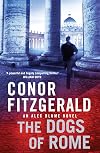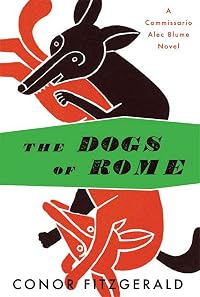
On This Page
Description
Arturo Clemente is sloppily murdered in his Roman apartment by a mysterious slasher. Police inspector Alec Blume has a favorite suspect, but the investigation is already being manipulated by both the Senate and the Fusco crime ring. As the details of the case continue to trickle out, Blume soon realizes he is being watched from on high--and that solving this crime may be the least of his worries. As the mob tightens its grip on the city, and with the killer still at large, Blume's struggle show more for justice may cost more innocent lives. show lessTags
Recommendations

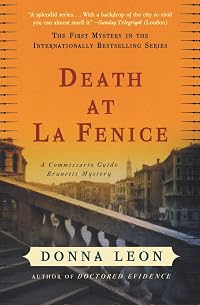



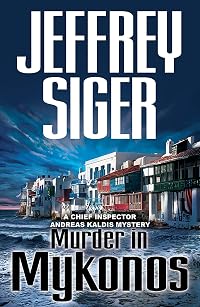
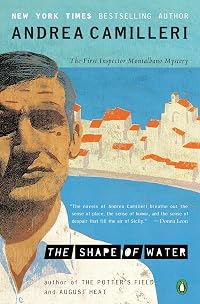
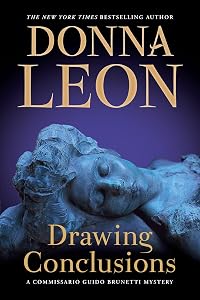
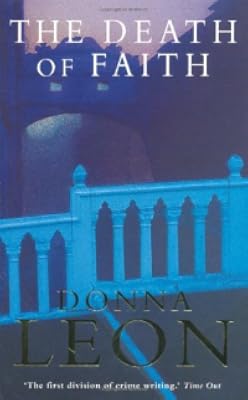
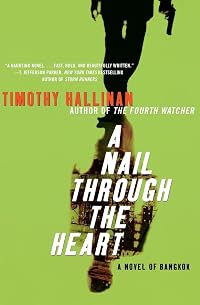


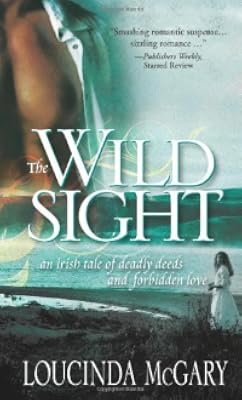
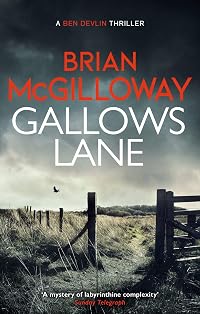

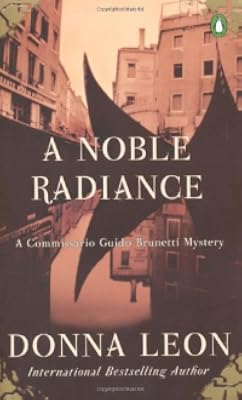





Member Recommendations
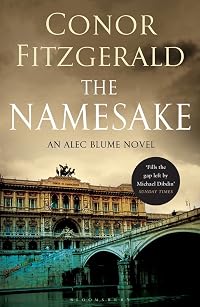
BookshelfMonstrosity Although the Commissario Alec Blume novels take place in Rome while the Guido Brunetti mysteries are set in Venice, both series feature appealing detectives, well-realized settings, and intricate storylines.
Member Reviews
OK, I think this lies somewhere between Dashiell Hammett and Raymond Chandler. (The style, the language make me think of Sam Spade or Phillip Marlowe as modern day cops in Rome.)
I can't say I really hated the book nor can I say I really liked it. But ... but ... 'it just ain't my style'. To say the least.
I am bored to death with the endless grind of police procedurals that work at a snail's pace.
Fitzgerald is deceptively good ... and bad. The first chapter was on fire. All the elements of a good mystery were presented in a fireworks' explosion: disgruntled mistress gets kicked out unceremoniously after a brief liaison; un-attentive lover seems more interested in his groceries than his mistress; and a murderer who seems to have a show more penchant for Nutella and Peanut Butter -- all within the first dozen pages and it is so well written that you are pulled in inexorably.
And then for 400 more pages (or something like it, who's counting??? it could have been 1000 for all I know or care) you are subjected to slow torture by a pathetically inept cop who is equally un-appealing as a human being. I don't like Alec Blume. In fact, I don't like anybody in this mystery. Ok, so I guess that settles it. Giving it two stars is a gift!
I skimmed, and skipped, and skimmed some more. Just couldn't hack Blume. I kept reading, I think, just to catch glimpses of Rome again. show less
I can't say I really hated the book nor can I say I really liked it. But ... but ... 'it just ain't my style'. To say the least.
I am bored to death with the endless grind of police procedurals that work at a snail's pace.
Fitzgerald is deceptively good ... and bad. The first chapter was on fire. All the elements of a good mystery were presented in a fireworks' explosion: disgruntled mistress gets kicked out unceremoniously after a brief liaison; un-attentive lover seems more interested in his groceries than his mistress; and a murderer who seems to have a show more penchant for Nutella and Peanut Butter -- all within the first dozen pages and it is so well written that you are pulled in inexorably.
And then for 400 more pages (or something like it, who's counting??? it could have been 1000 for all I know or care) you are subjected to slow torture by a pathetically inept cop who is equally un-appealing as a human being. I don't like Alec Blume. In fact, I don't like anybody in this mystery. Ok, so I guess that settles it. Giving it two stars is a gift!
I skimmed, and skipped, and skimmed some more. Just couldn't hack Blume. I kept reading, I think, just to catch glimpses of Rome again. show less
In fact, a very good doggie. While a criminal dogfighting operation sets this book in motion, it is a wonderful set of characters that distinguishes this generally low-key crime procedural set in Rome. This is not the Rome of picturesque fountains and palaces. This is the Rome of the streets, populated by shopkeepers and waiters; punks, enforcers, and crime bosses; honest and less-than-honest cops; journalists; and politicians. At the heart of the book is Alec Blume, born in the United States, who moved to Italy with his parents as a child. Now an inspector with the Italian State Police, he finds himself investigating the murder of the husband of a state senator, who is an activist against dogfighting. He also finds himself dealing with show more the byzantine Italian justice system, Italian politics, and his own past. The characters are superbly drawn, the plot leisurely but not lazy, and the suspect a real piece of work. Highly recommended. show less
As an orphaned American expatriate living in Rome, Commissario Alec Blume has no illusions that justice brings closure. After all, his own parents were murdered in a botched bank robbery when he was just seventeen. Years later, as he stared at the gravestone of the man he believed shot them, he felt no sense of justice. So when Blume is called to investigate the brutal, messy murder of animal rights activist Arturo Clemente, he does not pursue his prime suspect to punish him or to bring closure to Clemente’s family or devoted mistress; rather, with dogged determination, he tracts the killer because he knows his job—his real job—is to prevent more victims. This is why he became a policeman, not to punish the guilty but to save the show more innocent.
But Rome has a complex civic culture where politicians, law enforcement, and established criminal organizations have certain understood agreements where a certain amount of give and take is expected from all sides. It's just how things are. Up to now, Blume has managed to remain largely ignorant of the unspoken deals made in the interests of keeping order in the streets. But Clemente’s murder exposes the underbelly of all these intertwined forces that run Rome: Clemente’s wife is a politician who wants to minimize the damage to herself and her son; Clemente’s mistress, the daughter of a feared crime boss, wants an eye for an eye; and Clemente’s superiors want the case closed quickly without repercussions. So, when a small-time dog-fighting operator named Alleva looks good for the crime, Blume is pressured to arrest him and tie up the loose ends. But Blume’s instincts tell him Alleva is all wrong for this crime. It’s too messy. It’s too unprofessional. It’s too NOT Alleva. So Blume pushes back against the powers that be to pursue his own leads and, in the process, learns a lot about his past, his present, and where he wants to go from here, an orphaned American expatriate now pushing forty.
A unique police procedural, Conor Fitzgerald’s The Dogs of Rome introduces a fresh, somewhat hybrid detective. While Alec Blume’s American roots have grown shallow, he doesn’t always feel as embedded in his adopted city as its natives. He’d rather not know what bargains were made to keep the 17-year-old orphan safe until he grew up to become a police detective. Although flawed, Blume is essentially a good man doing an impossible job in an impossible city. Through him, we see Rome as a city of people just trying to make it all work and keep the dogs from running wild in the streets. show less
But Rome has a complex civic culture where politicians, law enforcement, and established criminal organizations have certain understood agreements where a certain amount of give and take is expected from all sides. It's just how things are. Up to now, Blume has managed to remain largely ignorant of the unspoken deals made in the interests of keeping order in the streets. But Clemente’s murder exposes the underbelly of all these intertwined forces that run Rome: Clemente’s wife is a politician who wants to minimize the damage to herself and her son; Clemente’s mistress, the daughter of a feared crime boss, wants an eye for an eye; and Clemente’s superiors want the case closed quickly without repercussions. So, when a small-time dog-fighting operator named Alleva looks good for the crime, Blume is pressured to arrest him and tie up the loose ends. But Blume’s instincts tell him Alleva is all wrong for this crime. It’s too messy. It’s too unprofessional. It’s too NOT Alleva. So Blume pushes back against the powers that be to pursue his own leads and, in the process, learns a lot about his past, his present, and where he wants to go from here, an orphaned American expatriate now pushing forty.
A unique police procedural, Conor Fitzgerald’s The Dogs of Rome introduces a fresh, somewhat hybrid detective. While Alec Blume’s American roots have grown shallow, he doesn’t always feel as embedded in his adopted city as its natives. He’d rather not know what bargains were made to keep the 17-year-old orphan safe until he grew up to become a police detective. Although flawed, Blume is essentially a good man doing an impossible job in an impossible city. Through him, we see Rome as a city of people just trying to make it all work and keep the dogs from running wild in the streets. show less
 This review was written for LibraryThing Early Reviewers.
I love reading detective books from different parts of the world. Currently I'm reading series in Edinburgh (Rebus); Galway, Ireland (Jack Taylor), Quebec (Gamache), Southern France (Bruno Chief of Police) and Yorkshire (Vera Stanhope), so it was fun to find this series set in present day Rome. Commissioner Alec Blume is an American, but he has lived most of his life in Italy. He lost his parents when he was young boy and grew up in the foster system in Rome. He went to college and then joined the Italian police where he is now in charge of the murder squad. Alec is an unlikely hero as he's very human and very aware of his own faults and shortcomings. He also has a very strong sense of justice (which reminded me of John Rebus and Jack show more Taylor). His vulnerability and his natural instincts make Alec Blume a very likable protagonist. This book is not really a whodunit, as the perpetrator is known almost from the start, but it is certainly a lesson in Italian policing and politics as Alec and his team set out to try to catch a psychotic killer. Friendships and loyalties are tested, new ties are made thus assuring us that this series will be around for awhile. The book is graphic in spots and I found that a bit uncomfortable at times, but it's definitely a promising series for me. show less
I liked it. It's a gritty crime thriller set in contemporary Rome, Italy: essentially a police procedural murder mystery whodunnit. There's some gratuitous violence, which for me makes it a noirist thriller rather than a cozy murder mystery. There are a few extraneous side stories that distract from the main storytelling. They are resolved by the end of the book so there's no loose ends. This novel debuts a series and I plan to read sequels to check on how the storytelling progresses.
Fitzgerald writes smoothly - with a penchant for rather disturbing murder scenes. His central character, Alec Blume, an American serving on the Rome police force (how this came to be is interesting, but I won't put in any spoilers) grows on you, but it is difficult to see how he has risen to the level of detective given his performance in this book. Of course, Fitzgerald's take on the whole Roman police force (surprise surprise) is that it is full of all sizes and shapes of corruptions. Fitzgerald does a pretty good job at creating a memorable cast of characters, but frankly there are too many of them and by the end of the book he isn't giving them all the attention they need. Cut down to its violent essence at perhaps a little over 200 show more pages, this book would have been far more effective. As it is, in the tradition of modern detective novels, it just goes on and on and on. Even after the climax, Fitzgerald takes a few more chapters to wrap up all the loose ends. Not much is left to the reader's imagination here; there are few lines to read between. From the opening chapters, I felt like I had read all this before--because indeed I have read it before in so many similar books. Fitzgerald is laying the groundwork for a series here, particularly with Blume's infatuation with an FBI agent serving in the American Embassy, but this is just one of way too many subplots that detract from the forward motion of the novel. Fitzgerald throws in so many things here that you get the feeling he thinks he better say it now or he may not get the chance. On the basis of this book, he does deserve at least one more chance - but next time he should focus a bit more on the main plot. show less
This review was written for LibraryThing Early Reviewers.The Dogs of Rome is a solid first outing for Conor Fitzgerald and Commissioner Alec Blume. Ex-pat Alec Blume (who is occasionally still at odds with his adopted home of Italy) gets called to a case of murder, and worse, the murder of a politician's spouse. In some stories one might say the detective is thrown into the case. After all, there are interviews to be conducted, evidence to be collected, higher ups to be pleased. However, Alec Blume doesn’t seem to be thrown by much of anything. While Fitzgerald’s plot is solid, he masterfully navigates his cast of (many) characters and the subtle dealings of the police hierarchy, for me Blume seemed lethargic for much of the story. His character has a ripe history to draw from, including show more his childhood and his history with his former and current partners. However, at times, it felt like he was just there because there need to be a lead hanging around. It did pick up about two thirds of the way through, and sped along through the satisfying ending. Fitzgerald’s storytelling style is unique. You’ll end where you begin, but you won’t be quite finished. A well-plotted, satisfying mystery; I’ll definitely be looking forward to the next Alec Blume entry. show less
This review was written for LibraryThing Early Reviewers.Members
- Recently Added By
Author Information

8+ Works 710 Members
Some Editions
Awards and Honors
Series

Common Knowledge
- Canonical title
- The Dogs of Rome
- Original publication date
- 2010-03-02
- People/Characters
- Alec Blume; Caterina
- Important places
- Rome, Italy
Classifications
Statistics
- Members
- 388
- Popularity
- 80,912
- Reviews
- 42
- Rating
- (3.50)
- Languages
- Dutch, English
- Media
- Paper, Audiobook, Ebook
- ISBNs
- 16
- ASINs
- 3