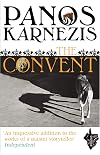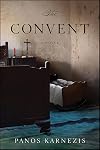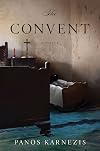
The Convent
by Panos Karnezis
On This Page
Description
The Sisters at Our Lady of Mercy convent on the Spanish sierra find their solitude and silence altered when Mother Superior Maria Ines discovers a baby abandoned in a suitcase at the entrance to their retreat.Tags
Recommendations
















































Member Reviews
The setting for this new novel by Panos Karnezis is a 16th century nunnery in the Spanish Sierra. There are only 6 nuns living at Our Lady of Mercy in the early 1920’s when a newborn baby is left on the steps of the convent. Of the six, only two are eager to keep the baby. The Mother Superior, Sister Maria Ines, believes the baby is God’s way of letting her know that her past sins have been forgiven and that his arrival on their doorstep is a miracle. Sister Beatriz is happy to help Sister Maria Ines with the baby in any way she can. The Mother Superior’s maternal instincts kick into high gear but are accompanied by an increasing paranoia. She begins to see almost everyone and everything as a threat to the precious child she has show more named Renato. It doesn’t help that one of the nuns, Sister Ana, believes the baby was sent by Satan himself. Sister Ana’s suspicions are reinforced as she witnesses the changes in the Mother Superior’s behavior. The mystery of the baby’s parentage and his fate are revealed slowly and deliberately in this sparse novel.
The main character in this novel is certainly Sister Maria Ines. There is very little said about most of the other characters in this story, including the baby. Her obsessive love for the baby, caused by her desperate need to be forgiven, becomes a character of its own. Though the ending doesn’t come as much of a surprise, it is heartbreaking none the less. This is a story of promises made and promises broken, and the price paid for both. show less
The main character in this novel is certainly Sister Maria Ines. There is very little said about most of the other characters in this story, including the baby. Her obsessive love for the baby, caused by her desperate need to be forgiven, becomes a character of its own. Though the ending doesn’t come as much of a surprise, it is heartbreaking none the less. This is a story of promises made and promises broken, and the price paid for both. show less
 This review was written for LibraryThing Early Reviewers.
This book was a delightful surprise for me. It is, at times, a dark and upsetting story—it’s not in any sense a whitewash of the church or of the cloistered life. But it also reveals the beauty and comfort of the cloister, and most important, it shows that the people who live within a convent’s walls are as varied and complex as the people on the outside.
The novel is set sometime after World War I at an isolated convent in Spain. The once bustling site is home to only six nuns—or at least it was until the day Sister Lucia finds a suitcase with a baby inside at the convent door. Mother Superior Maria Ines, who is still grappling with her own heartbreak and sin, accepts the presence of the child as a sign of God’s grace, and she show more becomes obsessed with the child’s care. Other sisters are more skeptical, particularly the ambitious Sister Ana; she comes to believe that the child is sent from the devil himself. Most, however, love the child, even as they worry about Mother Superior’s overprotective attitude and her unwillingness to tell the bishop about the child.
This is exactly the kind of story that could easily devolve into sentiment—you know the story, the presence of a baby warms a bunch of cold hearts and makes them love for the first time (Six Nuns and a Baby, perhaps?) But Karnezis doesn’t go there. The presence of the child actually draws some of the tensions underlying the convent’s life to the surface. Mother Superior Maria Ines’s reaction to the baby shows how even seemingly good impulses can be taken to disturbing levels, given the right circumstances. And this book takes some extraordinarily dark turns. There are some devastatingly unpleasant moments as the tensions within the community, and especially within Maria Ines’s own mind, mount. Karnezis has such an eye for detail that these moments are especially haunting.
There are some times when the characters’ interpretations of events are almost laughably ridiculous. Sister Ana in particular makes some discoveries that lead to an obvious conclusion, but she doesn’t go there. Instead, she builds an elaborate story to support what she wants to believe. I suspect that the success of the book with readers will vary a great deal, depending on whether readers can accept (though not necessarily believe) the characters’ tendency to choose supernatural explanations when natural ones are staring them in the face. I found it fascinating—and revealing of how we do tend to interpret events on the basis of what we want to believe, rather than on what actually is.
Although I could have done with more development of the supporting characters, I liked what Karnezis did with them, given the short length of the book. Most of the sisters are depicted as kind, loving women, but they are not perfect saints, with eyes directed only toward God. Each one has her own little obsessions. At only 214 pages, the book didn’t offer much room for more than a little texture for the supporting characters.
Overall, this book was a wonderful surprise. It’s dark and unsettling, which I love, but I especially love that Karnezis embeds the darkness in the characters’ own psyches, not in the church. People who are overly ambitious, crippled by guilt, or mentally unbalanced bring those qualities with them to the cloister. The closed environment, steeped in spirituality, might affect how these qualities manifest themselves, but is the characters, and not the cloister itself, that are the source of trouble. This is, at heart, a book about people, not a diatribe for or against faith. It is that which makes it a success for this reader.
See a longer version of this review at my blog. show less
The novel is set sometime after World War I at an isolated convent in Spain. The once bustling site is home to only six nuns—or at least it was until the day Sister Lucia finds a suitcase with a baby inside at the convent door. Mother Superior Maria Ines, who is still grappling with her own heartbreak and sin, accepts the presence of the child as a sign of God’s grace, and she show more becomes obsessed with the child’s care. Other sisters are more skeptical, particularly the ambitious Sister Ana; she comes to believe that the child is sent from the devil himself. Most, however, love the child, even as they worry about Mother Superior’s overprotective attitude and her unwillingness to tell the bishop about the child.
This is exactly the kind of story that could easily devolve into sentiment—you know the story, the presence of a baby warms a bunch of cold hearts and makes them love for the first time (Six Nuns and a Baby, perhaps?) But Karnezis doesn’t go there. The presence of the child actually draws some of the tensions underlying the convent’s life to the surface. Mother Superior Maria Ines’s reaction to the baby shows how even seemingly good impulses can be taken to disturbing levels, given the right circumstances. And this book takes some extraordinarily dark turns. There are some devastatingly unpleasant moments as the tensions within the community, and especially within Maria Ines’s own mind, mount. Karnezis has such an eye for detail that these moments are especially haunting.
There are some times when the characters’ interpretations of events are almost laughably ridiculous. Sister Ana in particular makes some discoveries that lead to an obvious conclusion, but she doesn’t go there. Instead, she builds an elaborate story to support what she wants to believe. I suspect that the success of the book with readers will vary a great deal, depending on whether readers can accept (though not necessarily believe) the characters’ tendency to choose supernatural explanations when natural ones are staring them in the face. I found it fascinating—and revealing of how we do tend to interpret events on the basis of what we want to believe, rather than on what actually is.
Although I could have done with more development of the supporting characters, I liked what Karnezis did with them, given the short length of the book. Most of the sisters are depicted as kind, loving women, but they are not perfect saints, with eyes directed only toward God. Each one has her own little obsessions. At only 214 pages, the book didn’t offer much room for more than a little texture for the supporting characters.
Overall, this book was a wonderful surprise. It’s dark and unsettling, which I love, but I especially love that Karnezis embeds the darkness in the characters’ own psyches, not in the church. People who are overly ambitious, crippled by guilt, or mentally unbalanced bring those qualities with them to the cloister. The closed environment, steeped in spirituality, might affect how these qualities manifest themselves, but is the characters, and not the cloister itself, that are the source of trouble. This is, at heart, a book about people, not a diatribe for or against faith. It is that which makes it a success for this reader.
See a longer version of this review at my blog. show less
This review was written for LibraryThing Early Reviewers.The Convent is the story of six nuns who inhabit a decaying convent in a remote region of Spain in the 1930s, and what happens when a baby suddenly turns up on the convent steps. The clue to the narrative is given in the very first line: "Those whom God wishes to destroy he first makes mad." It's a simple story told in 214 pages; but like all good literary fiction, there's a lot more to the novel than meets the eye.
And this is very good literary fiction. The writing is characterized by lightness of touch and a fluid, understated style that pulled me through the story at high speed. The way the psychology of the characters is brought out in a few scattered paragraphs is just beautiful. Panos Karnezis also has a way of starting and ending show more chapters that has me wanting to hang on to this ARC for further study.
I was slightly unsettled by what was going on underneath the story. If this was the author's intention--and he hides himself so well that it's very hard to tell what his intention is--he succeeded completely. I couldn't make up my mind whether he was showing what the introduction of sin could do in a place of good, or whether he was laughing at everything the religious characters stood for. I suspect the latter. The novel is rife with images of decay, corruption, foulness and bestiality, although not once are these themes made explicit. They just sit there, waiting to be discovered; everything that Karnezis describes has a surface and an underneath. And of course there is also the convent's almost total isolation from what we'd call civilization; I'm always attracted by themes like this.
The Convent screams "book club"--it's the sort of novel that will provoke discussion, and yet it's not at all "difficult." An exemplary piece of writing. Recommended. show less
And this is very good literary fiction. The writing is characterized by lightness of touch and a fluid, understated style that pulled me through the story at high speed. The way the psychology of the characters is brought out in a few scattered paragraphs is just beautiful. Panos Karnezis also has a way of starting and ending show more chapters that has me wanting to hang on to this ARC for further study.
I was slightly unsettled by what was going on underneath the story. If this was the author's intention--and he hides himself so well that it's very hard to tell what his intention is--he succeeded completely. I couldn't make up my mind whether he was showing what the introduction of sin could do in a place of good, or whether he was laughing at everything the religious characters stood for. I suspect the latter. The novel is rife with images of decay, corruption, foulness and bestiality, although not once are these themes made explicit. They just sit there, waiting to be discovered; everything that Karnezis describes has a surface and an underneath. And of course there is also the convent's almost total isolation from what we'd call civilization; I'm always attracted by themes like this.
The Convent screams "book club"--it's the sort of novel that will provoke discussion, and yet it's not at all "difficult." An exemplary piece of writing. Recommended. show less
This review was written for LibraryThing Early Reviewers.This book did not have a particularly strong plot but it kept me reading until the final page because I liked the way in which Karnezis described the closed, stifled atmosphere of the convent and the inner turmoil experienced by some of its inhabitants. The turmoil and anguish simmering just beneath the surface of this seemingly quiet and peaceful community of nuns is clear and palpable on each page. The image of the storks who build their nests in the chimneys of the convent and would never dream of abandoning them until the time comes each winter to migrate to a warmer climate contrasts with that of the nuns who are not able to selflessly devote themselves to their own homes and family due to their larger commitment to God and find show more themselves tethered to the cold, ancient convent for an entire lifetime where they have plenty of time to wrestle with their pasts and their present. Finally, I liked the contrast Karnezis makes clear between the Catholic Church as an establishment which claims to be a force for good but with all its dogmas and doctrines, its demands for faithful, unquestioning obedience from its members and its constant need to maintain its image and strength can, in fact, force some of its naturally good and kind representatives, such as the young Father Mateo, to enter into direct conflict with the Church hierarchy if they follow their own conscience and instinct to do good. This is neatly summed up in Father Mateo's comment "Perhaps I'm a bad priest, I see nothing evil in this poor child". show less
This review was written for LibraryThing Early Reviewers.Panos Karnezis’s fourth novel, 'The Convent,' is both beautifully written and deceptively simple. But it is, above all, intriguing.
Set in the 1920’s in an isolated sixteenth century convent in the mountains of southern Spain, the convent is presented as a place neither on earth nor in heaven, but rather it is at the exact midpoint between the two - the place where the sacred and profane meet. And it is the perfect setting for this morality tale.
Six nuns go quietly about their lives, seeking God in their solitude and working at small jobs to support the convent. Their contact with the outside world is usually limited to a once weekly trip into town for supplies and a monthly visit from their confessor, Bishop Estrada.
However, an show more infant boy abandoned on the convent steps acts a catalyst and brings change to the seemingly static convent. The sisters are all too soon divided by the questions his arrival creates. How did he get there? Why was he left at the convent? What should be done with him? Can he stay? Should he go? Is he a gift of God or a temptation sent by the devil?
The reader can easily hazard an answer to several of those questions since the narrator has obligingly provided not so subtle clues to his history. Perhaps the greatest impact of his arrival is on the Mother Superior, Sister Maria Ines, who decides that she must keep the boy in order to earn her own redemption. Or perhaps it’s on the ambitious Sister Ana, who sees the infant as an agent of the devil and is determined to force his removal.
The conflict between the two nuns creates an atmosphere of mutual distrust that spreads throughout the convent as each of the nuns becomes increasingly isolated from the other sisters.
As the omniscient narrator spins the seemingly straightforward tale in a leisurely, assured style a battle between the forces of good and evil, sanity and obsession, plays out. The surface simplicity of the story belies the underlying moral and psychological complexity.
'The Convent' is at once a beautifully written tale and a thought-provoking portrait of the nature of good and evil. show less
Set in the 1920’s in an isolated sixteenth century convent in the mountains of southern Spain, the convent is presented as a place neither on earth nor in heaven, but rather it is at the exact midpoint between the two - the place where the sacred and profane meet. And it is the perfect setting for this morality tale.
Six nuns go quietly about their lives, seeking God in their solitude and working at small jobs to support the convent. Their contact with the outside world is usually limited to a once weekly trip into town for supplies and a monthly visit from their confessor, Bishop Estrada.
However, an show more infant boy abandoned on the convent steps acts a catalyst and brings change to the seemingly static convent. The sisters are all too soon divided by the questions his arrival creates. How did he get there? Why was he left at the convent? What should be done with him? Can he stay? Should he go? Is he a gift of God or a temptation sent by the devil?
The reader can easily hazard an answer to several of those questions since the narrator has obligingly provided not so subtle clues to his history. Perhaps the greatest impact of his arrival is on the Mother Superior, Sister Maria Ines, who decides that she must keep the boy in order to earn her own redemption. Or perhaps it’s on the ambitious Sister Ana, who sees the infant as an agent of the devil and is determined to force his removal.
The conflict between the two nuns creates an atmosphere of mutual distrust that spreads throughout the convent as each of the nuns becomes increasingly isolated from the other sisters.
As the omniscient narrator spins the seemingly straightforward tale in a leisurely, assured style a battle between the forces of good and evil, sanity and obsession, plays out. The surface simplicity of the story belies the underlying moral and psychological complexity.
'The Convent' is at once a beautifully written tale and a thought-provoking portrait of the nature of good and evil. show less
This review was written for LibraryThing Early Reviewers.Panos Karnezis's The Convent--I don't want to give away the plot even though it's pretty apparent where Karnezis' is headed by page 30 of The Convent. Let's just say that when a baby shows up in a suitcase at a convent that's out in the middle of nowhere; its only inhabitants are a handful of nuns; and no one comes to visit or goes to town with much frequency, that sort of narrows the field of likely suspects. Turns out the book really isn't about finding the parents of the baby, which makes more understandable the fact that none of the characters, with one exception, seem even remotely interested in establishing who the biological parents are. It's really about taking "virtue" to the point where it is no longer virtue but something show more else entirely. In it you get to see how two female characters resolve very real moral dilemmas. It's a philosophically driven work that plays on ideas about love, respectability and duty. It is melodramatic in some places but stylistically strong overall. I would recommend it, but it is not a light read. show less
This review was written for LibraryThing Early Reviewers.This book was an absolute treat and a great way to spend a quiet Saturday afternoon. When Mother Superior Maria Ines decides to keep, and raise, the newborn baby discovered in a suitcase on the steps of an isolated Spanish convent we go inside this cloister to learn why the Mother feels this child is a gift from God intended specifically for her. But her decision to keep the child isn't met with unanimous approval by the other nuns in this place and the unimaginable consequences of this seemingly generous act are haunting and human with occasional moments of surprising humor.
I'd never heard of the author, Panos Karnezis, before this book was offered on LTER but I will definitely be looking for more of his work.
I'd never heard of the author, Panos Karnezis, before this book was offered on LTER but I will definitely be looking for more of his work.
This review was written for LibraryThing Early Reviewers.Members
- Recently Added By
Lists

Books featuring monks and/or nuns
166 works; 33 members
Talk Discussions
Past Discussions
The Convent by Panos Karnezis August 2010 LTER in Reviews of Early Reviewers Books (May 2011)
Author Information

7+ Works 594 Members
Awards and Honors
Awards
Common Knowledge
- Canonical title
- The Convent
- Original publication date
- 2010
- People/Characters
- Sister María Inés; Sister Beatriz; Sister Ana; Sister Teresa; Sister Carlota; Sister Lucía (show all 9); Bishop Estrada; Father Mateo; Renato
- First words
- Those whom God wishes to destroy he first makes mad.
- Last words
- (Click to show. Warning: May contain spoilers.)But the driver had already shut the door and the rest of what she said was lost in the noise of the engine and the cloud of exhaust in which the priest also vanished.
Classifications
Statistics
- Members
- 164
- Popularity
- 200,814
- Reviews
- 25
- Rating
- (3.25)
- Languages
- Danish, Dutch, English, Greek
- Media
- Paper, Ebook
- ISBNs
- 12
- ASINs
- 1