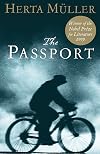
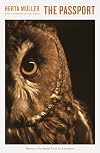
The Passport
by Herta Müller
On This Page
Description
From the winner of the Nobel Prize for Literature 2009'Just as the father in the house in which we live is our father, so Comrade Nicolae Ceausescu is the father of our country. And just as the mother in the house in which we live is our mother, so Comrade Elena Ceausescu is the mother of our country. Comrade Nicolae Ceausescu is the father of our children. All the children love comrade Nicolae and comrade Elena, because they are their parents.'The Passport is a beautiful, haunting novel show more whose subject is a German village in Romania caught between the stifling hopelessness of Ceausescu's dictatorship and the glittering temptations of the West. Stories from the past are woven together with the problems Windisch, the village miller, faces after he applies for permission to migrate to West Germany. Herta M#65533;ller describes with poetic attention the dreams and superstitions, conflicts and oppression of a forgotten region, the Banat, in the Danube Plain. In sparse, lyrical language, Herta M#65533;ller captures the forlorn plight of a trapped people.This edition is translated by Martin Chalmers, with a new foreword by Paul Bailey.Also by Herta M#65533;ller: Nadirs, The Land of Green Plums, The Appointment, and The Hunger Angel. show lessTags
Recommendations








Member Reviews
There is a lot here in this little book. There is the whole dark 20th-century history of the Banat Swabians* hanging in the background, in the shadows, yet overshadowing everything. And there is the story, which involves a desperate effort for emigration passports, and bribery by whoring one’s daughter who is young enough to be bribed herself with a crystal vase. And there is Müller, and her ability to capture this all without exactly saying it.
The words are simple, the sentences are straight-forward except that taken together they are somewhat disjointed, forcing the reader the put things together and to think about the meaning within, between and beyond the text - where things are both profound and complex. There is some pleasure show more in trying to work this out, and that’s what really drew me in. This novel isn’t simply imagery, although there is a lot of that, but something like a picture emerges, like an image where something terrible is happening, but the victims don’t fully grasp the darkest part it, and it’s their obliviousness that is maybe the real horror of the image. Although I’m quite sure that's it; Müller defies my ability to explain, but she’s thought provoking in ways that both fascinating and very dark.
*see Wikipedia for a decent summary of the Banat Swabians. In brief, they were Catholic Germans from various regions recruited to re-populate the Banat region by the Austrian-Hungarian Empire in the 18th-century. In that last century, first Austria-Hungary collapsed, then the Banat Germans allied themselves with Nazi Germany. During later World War II they were heavily recruited to the SS where they gained enough notoriety for crimes against Jews and Serbians during World War II that they had alienated themselves from about everyone. The immediate post-war saw revenge taken against the Banat Swabians, with their property confiscated and with thousands being sent to Russian labor camps or dying in Yugoslavian “Village Camps”. The later 20th-century saw a continual Swabian exodus to Germany, and many dark years under Ceauşescu who turned Ultra-nationalist during his roughly 25-years in power. According the Wikipedia the German population in Romania fell from about roughly 750,000 to about 75,000 today.
2010
http://www.librarything.com/topic/81181#1773561 show less
The words are simple, the sentences are straight-forward except that taken together they are somewhat disjointed, forcing the reader the put things together and to think about the meaning within, between and beyond the text - where things are both profound and complex. There is some pleasure show more in trying to work this out, and that’s what really drew me in. This novel isn’t simply imagery, although there is a lot of that, but something like a picture emerges, like an image where something terrible is happening, but the victims don’t fully grasp the darkest part it, and it’s their obliviousness that is maybe the real horror of the image. Although I’m quite sure that's it; Müller defies my ability to explain, but she’s thought provoking in ways that both fascinating and very dark.
*see Wikipedia for a decent summary of the Banat Swabians. In brief, they were Catholic Germans from various regions recruited to re-populate the Banat region by the Austrian-Hungarian Empire in the 18th-century. In that last century, first Austria-Hungary collapsed, then the Banat Germans allied themselves with Nazi Germany. During later World War II they were heavily recruited to the SS where they gained enough notoriety for crimes against Jews and Serbians during World War II that they had alienated themselves from about everyone. The immediate post-war saw revenge taken against the Banat Swabians, with their property confiscated and with thousands being sent to Russian labor camps or dying in Yugoslavian “Village Camps”. The later 20th-century saw a continual Swabian exodus to Germany, and many dark years under Ceauşescu who turned Ultra-nationalist during his roughly 25-years in power. According the Wikipedia the German population in Romania fell from about roughly 750,000 to about 75,000 today.
2010
http://www.librarything.com/topic/81181#1773561 show less
http://shawjonathan.wordpress.com/2013/05/04/herta-mullers-passport/
This is a very short book, just 92 pages, and it’s made up of short sentences. Here’s a random paragraph:
'The skinner had given the stuffed animals to the town museum as a gift. He didn’t receive any money for them. Two men came. Their car stood in front of the skinner’s house for a whole day. It was white and closed like a room.'
Sentence after sentence. Page after page. It proceeds in that staccato way. It doesn’t quite say what it’s saying. People do things, and say things, and see things. There are snippets of folklore, a bawdy song, symbolic objects, similes and metaphors as odd as the white room in that quote. You have to fill in the gaps, decode the show more descriptions. Only a handful of characters have names, the rest being known only by their professions or relationships. It took me until page 42 to realise I was in the middle of a narrative that I hadn’t been following. I started over. I’m glad I did.
It’s a terrible tale of the German-speaking minority in a village in Ceauçescu’s Romania. Uneducated, superstitious, despised by the Romanian majority, they live lives of quiet desperation and degradation. The village miller sets out to secure from the corrupt system a passport that will enable him, his wife and daughter to leave for West Germany.
I hated a lot of this as I was reading it: I just wanted to be told the story, to have a spade called a spade, rather than a headache being called a grain of sand moving around behind the forehead (at least, I assume that was a headache). But there is something mesmeric about it. I’m amazed that now I intend to immerse myself in that world again – not immediately, but when enough time has passed that I will be revisiting it rather than extending the current visit. show less
This is a very short book, just 92 pages, and it’s made up of short sentences. Here’s a random paragraph:
'The skinner had given the stuffed animals to the town museum as a gift. He didn’t receive any money for them. Two men came. Their car stood in front of the skinner’s house for a whole day. It was white and closed like a room.'
Sentence after sentence. Page after page. It proceeds in that staccato way. It doesn’t quite say what it’s saying. People do things, and say things, and see things. There are snippets of folklore, a bawdy song, symbolic objects, similes and metaphors as odd as the white room in that quote. You have to fill in the gaps, decode the show more descriptions. Only a handful of characters have names, the rest being known only by their professions or relationships. It took me until page 42 to realise I was in the middle of a narrative that I hadn’t been following. I started over. I’m glad I did.
It’s a terrible tale of the German-speaking minority in a village in Ceauçescu’s Romania. Uneducated, superstitious, despised by the Romanian majority, they live lives of quiet desperation and degradation. The village miller sets out to secure from the corrupt system a passport that will enable him, his wife and daughter to leave for West Germany.
I hated a lot of this as I was reading it: I just wanted to be told the story, to have a spade called a spade, rather than a headache being called a grain of sand moving around behind the forehead (at least, I assume that was a headache). But there is something mesmeric about it. I’m amazed that now I intend to immerse myself in that world again – not immediately, but when enough time has passed that I will be revisiting it rather than extending the current visit. show less
http://www.mytwostotinki.com/?p=791
When in 2009 the Nobel Prize Committee awarded the Prize for Literature to Herta Müller, whose opus magnum The Hunger Angel had just appeared in print, I thought that at least this one time the jurors in Stockholm had shown not only that they are able of a decent choice, but that sometimes they have even a sense of timing. Because The Hunger Angel marked the point when Herta Müller got also outside the German-speaking world the attention she deserves. Her first translated work available in English, The Passport, got some favorable reviews but was commercially not a big success.
Müller's works - and The Passport is no exception - are almost exclusively set in Romania, the country in which she was born show more and grew up in a small German village (Nitzschkydorf) during the time of the more and more paranoid dictatorship of Nicolae Ceausescu. Although Romania didn't adopt a policy of ethnic cleansing after WWII against the ethnic Germans living there since centuries like most other Eastern European countries did, the situation for the Banat Swabians (Donauschwaben) and the Saxons in Transsylvania (Siebenbürger Sachsen) was far from comfortable.
Most of them had embraced the Nazi ideology during the war, many enrolled in the SS, and the whole community had to pay a high price after the war for this act of treason as it was seen: a big part of the men and women from the German community were sent as slave workers to Siberia for five years and more. Many of them died there and those who survived came back considerably aged and without any hope or illusion for the future. In Siberia they had seen what they before refused to see: that people are able to do any act of cruelty or moral sordidness for a piece of bread.
This is the historical backdrop of The Passport, a very short book of only 100 pages, with chapters that are short or even very short. But this book is anything but a fast and easy read.
Windisch, the village miller, has decided to apply for a passport for himself and his family. The passport is necessary if you want to travel abroad or emigrate to (Western) Germany, as the Windischs plan. Windisch is already waiting more than two years and a half, but doesn't seem to make any progress with his application, despite the fact that he is bribing the mayor with sacks full of flour. But the flour is not enough, the priest (he has to issue the birth certificates) and the militiaman (his support is crucial for receiving the passports) also need to be bribed.
When Windisch finally understands what these two men want, he is sending his daughter to them...After she sleeps with them, the passport will be finally arranged. In the last chapter we see the Windisch family coming for a visit to their home village after their emigration. While many other Germans emigrated too, a few, like Konrad the night watchman have not. Konrad has even married and intends to stay in Romania, despite all the problems.
Müller arranges her material in a very interesting way. The short chapters have sometimes the character of stand-alone short stories, sometimes they are like vignettes that allow the reader for a moment to catch a glimpse of something that he usually would not see.
One of the most remarkable things in Müller's book is the language. Very simple and short compact sentences full of poetic, sometimes surrealistic metaphors. The German title would be literally translated "A man is nothing but a pheasant in the world", obviously a local saying that is quoted in an early conversation between Windisch and Konrad by the latter. Windisch retorts that a man is strong, stronger as the beasts, but later after his daughter Amalie has slept with the village officials, he is repeating Konrad's sentence as if to remind the reader that he was wrong and too optimistic about the strength of man.
The story of Windisch and his family is intervowen with other stories: the story of Rudi the glass maker who is not right in his head, and his parents; the story of Dieter, Amalie's friend, who is shot dead while obviously attempting to cross the Danube to Yugoslavia; the story of Konrad, the night watchman; the story of the skinner and his wife; the story of the carpenter; and also stories that are told like anecdotes from the past: the story when the king passed by with his train before the war and the village couldn't sing the welcome song because the king was asleep and his entourage insisted on not waking him up for some villagers; and there are even stories about the owl that was seen in the village and that the villagers consider as a sign for something to happen; and most disturbingly the story of the apple tree that was eating his own apples before the war and that had to be burned therefore to drive away all the evil.
There are signs of alienation everywhere. When Windisch passes the church, he wants to go inside to pray. But:
"The church door is locked. Saint Anthony is on the other side of the wall. He is carrying a white lily and a brown book. He is locked in."
There is no hope to be expected in this world from the church, St. Anthony, or even God. Later in the book, when we learn about the disgusting priest, who uses his power position - without birth certificate no emigration - to extort sex from the women he fancies, we understand why.
There is alienation of course between the Romanians and the Germans; the Romanians are contemptuosly called "Wallachians" by the Germans and vice versa the Romanians wonder how, after Hitler, it is possible that there are still Germans in Romania. But it is not only for the Romanians that the Swabians feel contempt, the same goes for their feelings for the Germans in Western Germany, especially the women. "The worst Swabian woman is still better than the best over there."
Children cannot escape this paranoid world of the village where the Securitate, the mighty intelligence network of the secret police is watching over everything. Amalie, who works as a schoolteacher, is instructing the kids:
"Amalie points on the map. "This land is our Fatherland", she says. With her fingertip she searches for the black dots on the map. "These are the towns of the Fatherland," says Amalie. "The towns are the rooms of the big house, our country. Our fathers and mothers live in houses. They are our parents. Every child has its parents. Just as the father in the house in which we live is our father, so Comrade Nicolae Ceausescu is the father of our country. And just as the mother in the house in which we live is our mother, so Comrade Elena Ceausescu is the mother of our country. Comrade Nicolae Ceausecu is the father of all children. And Comrade Elena Ceausescu is the mother of all children. All the children love comrade Nicolae and comrade Elena, because they are their parents." "
(It is rather embarrassing that The Times Literary Supplement (!) claims in its review: "Every such incidence of misdirection is the whole book in miniature, for although Ceausescu is never mentioned, he is central to the story, and cannot be forgotten." - This happens when reviewers don't read the book they are supposed to write about.)
Even worse is the alienation between men and women. Men use their position to get what they want from the women: sex. In Siberia, Amalie's mother was a whore. She was selling her body for food and warm clothes in order to survive, and now Amalie is stepping in her mother's shoes, spreading her legs for the priest and the militaman to get herself and her family out of this place where all the children love the parents of the country so much.
It is revealing that when she was a child and was almost raped by Rudi, her father was blaming her, not Rudi: "Amalie will bring disgrace down on us." The conversation that the drunk Windisch, his wife and his daughter have over lunch after Amalie's visit to the priest and the militiaman, is rather depressing, but it shows exactly how things are between men and women in this village, in this society:
"Windisch's wife sucks the small, white bones. She swallows the short pieces of meat on the chicken's neck. "Keep your eyes open, when you get married," she says. "Drinking is a bad illness." Amalie licks her red fingertips. "And unhealthy," she says. Windisch looks at the dark spider. "Whoring is healthier," he says. Windisch's wife strikes the table with her hand."
The Passport is a difficult, sometimes even depressing read. A paranoid sytem like Romania under Ceausescu is doing the things to people that Herta Müller is describing in this book. It is poisoning even the most private feelings, activities, relationships. It is easy to understand that the author's honest, unvarnished description of German village life in the Banat didn't bring her many friends in her own community. Until recently she was still the target of smear campaigns of former Securitate agents and Danube Swabians who want to paint a nicer picture of their own past - for whatever reasons.
If you look for an easy, fast, superficially enjoyable book - this one is not for you. But if you like to read a beautifully crafted, multi-layered book about the human condition in times like ours, I can heartily recommend The Passport to you. It is also a reminder that there is absolutely nothing to feel nostalgic about for any dictatorship like Ceausescu's Romania was. show less
When in 2009 the Nobel Prize Committee awarded the Prize for Literature to Herta Müller, whose opus magnum The Hunger Angel had just appeared in print, I thought that at least this one time the jurors in Stockholm had shown not only that they are able of a decent choice, but that sometimes they have even a sense of timing. Because The Hunger Angel marked the point when Herta Müller got also outside the German-speaking world the attention she deserves. Her first translated work available in English, The Passport, got some favorable reviews but was commercially not a big success.
Müller's works - and The Passport is no exception - are almost exclusively set in Romania, the country in which she was born show more and grew up in a small German village (Nitzschkydorf) during the time of the more and more paranoid dictatorship of Nicolae Ceausescu. Although Romania didn't adopt a policy of ethnic cleansing after WWII against the ethnic Germans living there since centuries like most other Eastern European countries did, the situation for the Banat Swabians (Donauschwaben) and the Saxons in Transsylvania (Siebenbürger Sachsen) was far from comfortable.
Most of them had embraced the Nazi ideology during the war, many enrolled in the SS, and the whole community had to pay a high price after the war for this act of treason as it was seen: a big part of the men and women from the German community were sent as slave workers to Siberia for five years and more. Many of them died there and those who survived came back considerably aged and without any hope or illusion for the future. In Siberia they had seen what they before refused to see: that people are able to do any act of cruelty or moral sordidness for a piece of bread.
This is the historical backdrop of The Passport, a very short book of only 100 pages, with chapters that are short or even very short. But this book is anything but a fast and easy read.
Windisch, the village miller, has decided to apply for a passport for himself and his family. The passport is necessary if you want to travel abroad or emigrate to (Western) Germany, as the Windischs plan. Windisch is already waiting more than two years and a half, but doesn't seem to make any progress with his application, despite the fact that he is bribing the mayor with sacks full of flour. But the flour is not enough, the priest (he has to issue the birth certificates) and the militiaman (his support is crucial for receiving the passports) also need to be bribed.
When Windisch finally understands what these two men want, he is sending his daughter to them...After she sleeps with them, the passport will be finally arranged. In the last chapter we see the Windisch family coming for a visit to their home village after their emigration. While many other Germans emigrated too, a few, like Konrad the night watchman have not. Konrad has even married and intends to stay in Romania, despite all the problems.
Müller arranges her material in a very interesting way. The short chapters have sometimes the character of stand-alone short stories, sometimes they are like vignettes that allow the reader for a moment to catch a glimpse of something that he usually would not see.
One of the most remarkable things in Müller's book is the language. Very simple and short compact sentences full of poetic, sometimes surrealistic metaphors. The German title would be literally translated "A man is nothing but a pheasant in the world", obviously a local saying that is quoted in an early conversation between Windisch and Konrad by the latter. Windisch retorts that a man is strong, stronger as the beasts, but later after his daughter Amalie has slept with the village officials, he is repeating Konrad's sentence as if to remind the reader that he was wrong and too optimistic about the strength of man.
The story of Windisch and his family is intervowen with other stories: the story of Rudi the glass maker who is not right in his head, and his parents; the story of Dieter, Amalie's friend, who is shot dead while obviously attempting to cross the Danube to Yugoslavia; the story of Konrad, the night watchman; the story of the skinner and his wife; the story of the carpenter; and also stories that are told like anecdotes from the past: the story when the king passed by with his train before the war and the village couldn't sing the welcome song because the king was asleep and his entourage insisted on not waking him up for some villagers; and there are even stories about the owl that was seen in the village and that the villagers consider as a sign for something to happen; and most disturbingly the story of the apple tree that was eating his own apples before the war and that had to be burned therefore to drive away all the evil.
There are signs of alienation everywhere. When Windisch passes the church, he wants to go inside to pray. But:
"The church door is locked. Saint Anthony is on the other side of the wall. He is carrying a white lily and a brown book. He is locked in."
There is no hope to be expected in this world from the church, St. Anthony, or even God. Later in the book, when we learn about the disgusting priest, who uses his power position - without birth certificate no emigration - to extort sex from the women he fancies, we understand why.
There is alienation of course between the Romanians and the Germans; the Romanians are contemptuosly called "Wallachians" by the Germans and vice versa the Romanians wonder how, after Hitler, it is possible that there are still Germans in Romania. But it is not only for the Romanians that the Swabians feel contempt, the same goes for their feelings for the Germans in Western Germany, especially the women. "The worst Swabian woman is still better than the best over there."
Children cannot escape this paranoid world of the village where the Securitate, the mighty intelligence network of the secret police is watching over everything. Amalie, who works as a schoolteacher, is instructing the kids:
"Amalie points on the map. "This land is our Fatherland", she says. With her fingertip she searches for the black dots on the map. "These are the towns of the Fatherland," says Amalie. "The towns are the rooms of the big house, our country. Our fathers and mothers live in houses. They are our parents. Every child has its parents. Just as the father in the house in which we live is our father, so Comrade Nicolae Ceausescu is the father of our country. And just as the mother in the house in which we live is our mother, so Comrade Elena Ceausescu is the mother of our country. Comrade Nicolae Ceausecu is the father of all children. And Comrade Elena Ceausescu is the mother of all children. All the children love comrade Nicolae and comrade Elena, because they are their parents." "
(It is rather embarrassing that The Times Literary Supplement (!) claims in its review: "Every such incidence of misdirection is the whole book in miniature, for although Ceausescu is never mentioned, he is central to the story, and cannot be forgotten." - This happens when reviewers don't read the book they are supposed to write about.)
Even worse is the alienation between men and women. Men use their position to get what they want from the women: sex. In Siberia, Amalie's mother was a whore. She was selling her body for food and warm clothes in order to survive, and now Amalie is stepping in her mother's shoes, spreading her legs for the priest and the militaman to get herself and her family out of this place where all the children love the parents of the country so much.
It is revealing that when she was a child and was almost raped by Rudi, her father was blaming her, not Rudi: "Amalie will bring disgrace down on us." The conversation that the drunk Windisch, his wife and his daughter have over lunch after Amalie's visit to the priest and the militiaman, is rather depressing, but it shows exactly how things are between men and women in this village, in this society:
"Windisch's wife sucks the small, white bones. She swallows the short pieces of meat on the chicken's neck. "Keep your eyes open, when you get married," she says. "Drinking is a bad illness." Amalie licks her red fingertips. "And unhealthy," she says. Windisch looks at the dark spider. "Whoring is healthier," he says. Windisch's wife strikes the table with her hand."
The Passport is a difficult, sometimes even depressing read. A paranoid sytem like Romania under Ceausescu is doing the things to people that Herta Müller is describing in this book. It is poisoning even the most private feelings, activities, relationships. It is easy to understand that the author's honest, unvarnished description of German village life in the Banat didn't bring her many friends in her own community. Until recently she was still the target of smear campaigns of former Securitate agents and Danube Swabians who want to paint a nicer picture of their own past - for whatever reasons.
If you look for an easy, fast, superficially enjoyable book - this one is not for you. But if you like to read a beautifully crafted, multi-layered book about the human condition in times like ours, I can heartily recommend The Passport to you. It is also a reminder that there is absolutely nothing to feel nostalgic about for any dictatorship like Ceausescu's Romania was. show less
Windisch, the village miller, is living with his wife and daughter in a German town in Romania. It is after the war, and Ceausescu is dictator. People are leaving Romania to live in the West where there seems to be hope for a future. But first, they must obtain a passport. Windisch watches as his neighbors pack up and leave, and still he waits for his passport. Despite deliveries of flour and money to town officials, the passport is withheld from him. And then he learns that there is still one thing he can “sell” which will buy a passport – his daughter’s virginity.
The Passport is a dark, symbolic novella by 2009 Nobel Prize winner Herta Muller. Do not let its lean size fool you – it is neither an easy read, nor a quick one. show more Muller writes in what can only be called poetic prose. The novella is dense with symbolism. Stark and at times shocking, the language of the book is almost a puzzle to be teased out and contemplated.
To fully understand Muller’s work, the reader must have some background information about Romania under Ceausescu’s rule, and some understanding of the history of the region including that with Russia. The Communists seized power in Romania in 1947. Gradually Soviet forces were coaxed into retreating from Romania and by 1965, Ceausescu had become Secretary General of the Romanian Communist Party. At this time he declared Romania the Socialist Republic of Romania. Although initially Ceausescu had an open policy with Western Europe and the United States, his rule became more erratic and characterized by a deterioration of the relationship with foreign leaders from 1979 to 1989 when he was finally overthrown by a military coupe and executed.
The Passport is a look at daily existence under the oppressive rule of Ceausescu. Muller’s short, stark sentences evoke a bleakness and hopelessness. She uses metaphor and surreal imagery to paint a picture of of a desperate people. Repeated images include the dark shape of an owl flying over the village, a harbinger of death. Playing on the superstition of the villagers, Muller tracks the owl’s progress through the night as he looks for a roof to light upon…the roof he picks will bring death to someone inside that home.
A bird is flying over the pond. Slow and straight as if drawn along a string. Close to the water. As if it were ground. Windisch follows it with his eyes. “Like a cat,” he says. “An owl,” says the night watchman. He puts his hand to his mouth. “The light at Widow Kroner’s has been burning for three nights.” Windisch pushes his bicycle. “She can’t die,” he says, “the owl hasn’t settled on any roof yet.” - from The Passport, page 11 -
Muller also includes references to the debasement of women who are used for sex or abused by men. Women are portrayed as deceitful, manipulative, and only useful for sex. One of the more moving chapters for me was Muller’s depiction of Windisch’s wife in a Russian prison where she was forced to prostitute herself to survive. Later this becomes even more meaningful when Windisch and his wife use their daughter to get a passport. People are dying every day in the Russian prison, and Windisch’s wife (who spends five years there) is determined not to be one of them. The winters are the hardest when the cold is unbearable and hunger pricks like a hedgehog in her belly.
On top of the mountains there was yet another mountain range of clouds and drifting snow. Frost burned on the truck. Not everyone got off at the mine. Every morning some men and women remained sitting on the benches. They sat with open eyes. They let everyone go past. They were frozen. They were sitting on the other side. – from The Passport, page 74 -
Another repeated theme is that of black vs. white – Muller paints a landscape of black images or starkly white images – there is no gray in this Romanian village. Things are simply black or white. In this village time clicks by slowly, things seem to stand still, and yet time is passing.
Every day when Windisch is jolted by the pot hole, he thinks, “The end is here.” Since Windisch made the decision to emigrate, he sees the end everywhere in the village. And time standing still for those who want to stay. – from The Passport, page 7 -
The Passport is not a light read – it is dark, haunting, and sad. It took me a while to get used to Muller’s language which seemed more suited for poetry than a novella…and yet by midway through the book I found myself strangely compelled to keep reading. Muller’s writing has a symmetry and a rhythm which suits the theme of her book – a story about the desperation of a people under a stifling and cruel dictatorship.
I believe I missed a lot in this little book. I admit I had to look up the history of Romania. I also admit that I have always struggled to tease out the meaning in poems…and so I am sure there is much here I just did not get. This would be a fantastic book to read with a group and discuss. It is also a book which could stand a re-read. I struggled to rate The Passport – how could I assign a rating to a book which I felt I barely understood? And yet, ultimately I had to acknowledge that Muller is a brilliant writer who has written a book which is important. Although her style is not an easy style to understand, most readers who stick with the story will find The Passport a compelling read.
Highly recommended for readers who love literary fiction and books which challenge them intellectually. show less
The Passport is a dark, symbolic novella by 2009 Nobel Prize winner Herta Muller. Do not let its lean size fool you – it is neither an easy read, nor a quick one. show more Muller writes in what can only be called poetic prose. The novella is dense with symbolism. Stark and at times shocking, the language of the book is almost a puzzle to be teased out and contemplated.
To fully understand Muller’s work, the reader must have some background information about Romania under Ceausescu’s rule, and some understanding of the history of the region including that with Russia. The Communists seized power in Romania in 1947. Gradually Soviet forces were coaxed into retreating from Romania and by 1965, Ceausescu had become Secretary General of the Romanian Communist Party. At this time he declared Romania the Socialist Republic of Romania. Although initially Ceausescu had an open policy with Western Europe and the United States, his rule became more erratic and characterized by a deterioration of the relationship with foreign leaders from 1979 to 1989 when he was finally overthrown by a military coupe and executed.
The Passport is a look at daily existence under the oppressive rule of Ceausescu. Muller’s short, stark sentences evoke a bleakness and hopelessness. She uses metaphor and surreal imagery to paint a picture of of a desperate people. Repeated images include the dark shape of an owl flying over the village, a harbinger of death. Playing on the superstition of the villagers, Muller tracks the owl’s progress through the night as he looks for a roof to light upon…the roof he picks will bring death to someone inside that home.
A bird is flying over the pond. Slow and straight as if drawn along a string. Close to the water. As if it were ground. Windisch follows it with his eyes. “Like a cat,” he says. “An owl,” says the night watchman. He puts his hand to his mouth. “The light at Widow Kroner’s has been burning for three nights.” Windisch pushes his bicycle. “She can’t die,” he says, “the owl hasn’t settled on any roof yet.” - from The Passport, page 11 -
Muller also includes references to the debasement of women who are used for sex or abused by men. Women are portrayed as deceitful, manipulative, and only useful for sex. One of the more moving chapters for me was Muller’s depiction of Windisch’s wife in a Russian prison where she was forced to prostitute herself to survive. Later this becomes even more meaningful when Windisch and his wife use their daughter to get a passport. People are dying every day in the Russian prison, and Windisch’s wife (who spends five years there) is determined not to be one of them. The winters are the hardest when the cold is unbearable and hunger pricks like a hedgehog in her belly.
On top of the mountains there was yet another mountain range of clouds and drifting snow. Frost burned on the truck. Not everyone got off at the mine. Every morning some men and women remained sitting on the benches. They sat with open eyes. They let everyone go past. They were frozen. They were sitting on the other side. – from The Passport, page 74 -
Another repeated theme is that of black vs. white – Muller paints a landscape of black images or starkly white images – there is no gray in this Romanian village. Things are simply black or white. In this village time clicks by slowly, things seem to stand still, and yet time is passing.
Every day when Windisch is jolted by the pot hole, he thinks, “The end is here.” Since Windisch made the decision to emigrate, he sees the end everywhere in the village. And time standing still for those who want to stay. – from The Passport, page 7 -
The Passport is not a light read – it is dark, haunting, and sad. It took me a while to get used to Muller’s language which seemed more suited for poetry than a novella…and yet by midway through the book I found myself strangely compelled to keep reading. Muller’s writing has a symmetry and a rhythm which suits the theme of her book – a story about the desperation of a people under a stifling and cruel dictatorship.
I believe I missed a lot in this little book. I admit I had to look up the history of Romania. I also admit that I have always struggled to tease out the meaning in poems…and so I am sure there is much here I just did not get. This would be a fantastic book to read with a group and discuss. It is also a book which could stand a re-read. I struggled to rate The Passport – how could I assign a rating to a book which I felt I barely understood? And yet, ultimately I had to acknowledge that Muller is a brilliant writer who has written a book which is important. Although her style is not an easy style to understand, most readers who stick with the story will find The Passport a compelling read.
Highly recommended for readers who love literary fiction and books which challenge them intellectually. show less
Told as much through images as through action, The Passport tells the story of a miller named Windisch who is waiting for passports for his family to emigrate to Germany from Romania. The process under the Ceausescu's dictatorship is corrupt and Windisch is determined not to play into the corruption.
Like "The Land of Green Plums", it's most interesting to me the way she has chosen to tell her story. The Passport often felt like a folktale because of its village setting, and the imagery, and language of that imagery. Müller's imagery is fantastic in every sense of the word, certainly allegorical at times (an apple tree that eats its own apples!), other times used more for surreal purposes. Sometimes she makes literal things that are show more not. And I could not stop myself from lingering over phrases like, "the night flowed out of the earth and over the village."
Müller also tells her story in relatively short, staccato, simple sentences - barely a conjunction in sight! I couldn't decide what the intended affect was. Sometimes, it seemed she was setting a stage, other times it set a sort of beat going... I'll have to think some more on this.
This is an artform -- story as art. I enjoy seeing how this is done. It's incredible. The sad tale is well told but perhaps not in a vehicle most would enjoy. show less
Like "The Land of Green Plums", it's most interesting to me the way she has chosen to tell her story. The Passport often felt like a folktale because of its village setting, and the imagery, and language of that imagery. Müller's imagery is fantastic in every sense of the word, certainly allegorical at times (an apple tree that eats its own apples!), other times used more for surreal purposes. Sometimes she makes literal things that are show more not. And I could not stop myself from lingering over phrases like, "the night flowed out of the earth and over the village."
Müller also tells her story in relatively short, staccato, simple sentences - barely a conjunction in sight! I couldn't decide what the intended affect was. Sometimes, it seemed she was setting a stage, other times it set a sort of beat going... I'll have to think some more on this.
This is an artform -- story as art. I enjoy seeing how this is done. It's incredible. The sad tale is well told but perhaps not in a vehicle most would enjoy. show less
This short novella, an early work first published in 1986, is set in a German speaking village in Romania under the Ceauşescu dictatorship.
I had read the novella in the original German. As it had made a profound impression on me I was astonished to find a review of the English translation by the writer Tibor Fischer, to be unenthusiastic, in particular about its language. He in fact suspected ‘that something significant is being shed in the rendering’ into English . This awoke my curiosity: What could it be that is lacking in the translation? and what could be the cause of it?
I found that difficulties of translation have their root in H.M.’s very precise use of language in combination with a highly distinctive and personal show more voice. These problems can be traced to the following features:
(i) H. M. uses words for which frequently no satisfactory English word can be found, so they have to be circumscribed by a sentence, substituted by using an inevitably weaker approximation or left out completely;
(ii) she uses and stresses grammatical features for which there is no equivalent in English; as a result, the translation can become weak;
(iii) H.M.’s idiosyncratic use of the German language includes coinage of new words (the latter being easily possible in German by combining two nouns but impossible to reproduce in English);
(iv) finally, I think, at times a more appropriate translation can be found that preserves better what H.M. elsewhere calls ‘der fremde Blick’ (‘the estranged gaze’) of the original.
I will give examples of each. References are by page number (a/b) where a stands for the page number in the German Fischer Taschenbuch (2009) edition and b for the page number in the English Serpent’s Tail (2009) edition (transl.: Martin Chalmers).
To (i): Examples of German words that have no direct equivalent in English:
‘Die Baumkrone’ (36/31), (lit.: tree-crown) translated here as: ‘The crown of the tree’; this is not as strong as the German but better than ‘tree top’ because it preserves the images of the crown, a reference to the king of a later chapter who is here ritually exorcised.
‘fressen’(engl.: to eat): a word that appears many times e.g. ‘Der Apfelbaum fraß Äpfel’ / 'The apple tree ate apples' (32/28); ‘Der Dunst frißt sein Gesicht’ / ‘The steam eats his face’ (49/42); ‘Das Grundwasser frißt’ / ‘water eats’ (57/48); 'Ziegen fraßen’ / ‘goats had eaten’ (59/49); etc. German distinguishes between ‘essen’: humans eat and ‘fressen’: animals eat (or to picture a human eating like an animal), ‘devour’ may be nearer to ‘fressen’ as it expresses the speed and greed of the action but lacks the coarseness of ‘fressen’.
There are similar problems with ‘Maul’ (engl. transl.: ‘mouth’) repeated 5 times (34-35/30); again it is only used for animals or with pejorative meaning.
‘vertrunken’ (adj.) in: ‘Die vertrunkenen Briefe’ / ‘The Letters’, i.e. the adjective has not been translated (50/42). ‘vertrunken’ means: ’spend or squandered on drink’; an association here is with ‘ertrunken’: ‘drowned’; not only are the letters ‘drowned in drink’ but disappear like persons drowned – death never being far away in this novella.
To (ii): grammatical features without English equivalent:
Nouns have no gender in English. This can weaken the image in the case of repeated use of the personal pronoun in a sequence of short sentences that refers to the same noun in a previous sentence. An example (68/56-57) referring to the owl (in German ‘die Eule’ (f): … für sie..., dann wird sie ...., wenn sie ..., etc.; by comparison, the repeated 'it' – ending in a plosive - sounds rigid and dead. The owl is the bringer of death but herself very much alive.
In another case (71/59), the masculine article 'der' introduces 5 consecutive short sentences which conjure up a foreboding and a threat that is lacking in the repeated 'The': ‘Windisch turns round. The …’etc.
The use of the Konjunktiv that is lacking in English: ‘Die Leute sagten, hinter der Kirche stehe ein Mann. Er sehe aus wie der Pfarrer ohne Hut.’ In English: ‘People said that a man was standing behind the church. He looked like the priest without his hat.’ (37/32) Missing in the translation is an undefined threat (taken up again by different means and images, like a set of variations on a theme, in every single sentence in this chapter).
The language differences become important exactly because of H.M.’s distinct and precise use of the German.
To (iii): H.M.’s idiosyncratic use of language:
‘Der Nachtwächter trägt um den Hutrand einen Fransenkranz aus Regenschnüren’ (56/47); both, ‘Fransenkranz’ and ‘Regenschnüre’ are H.M.’s creations, new words she formed by combining two nouns each; they convey a startling and very visual image (‘Kranz’ is a ‘wreath’ in English); the given translation – ‘Rain fringes the brim of the night watchman’s hat.’ – is merely descriptive, it ignores that the night watchman carries a wreath out of strings of rain that fringe the brim of his hat.
In the phrase ‘Der Totenwagen dreht sich …’ – transl. as: ‘The hearse turns …’ (56/47) H.M. makes unusual use of the reflexive verb form. As a result, the verb describes a state in German whereas in English the verb describes an action. In German the image is that of a wheel or merry-go-round turning round and round: the image of the hearse breaks through time and, in doing so, acquires a symbolic dimension which is lost in English.
Later, H.M. coins her own expression for this breaking through time with the phrase ‘die stehende Zeit’, which she uses repeatedly e.g. (110/91): ‘Am Hals des Nachtwächters klopft eine Ader in die stehende Zeit’ which the translation breaks up and renders as two sentences: ‘A vein beats on the night watchman’s neck. Time stands still’. As startling the phrase: ‘die stehende Zeit’, as banal is ‘Time stands still’! The English looses, first, time as a quasi living being, as a mysterious power (the English phrase, by being too familiar, has lost this power); secondly, the invocation of life, the blood beating, exposed to time and with it, death, standing, watching, waiting.
To (iv): some examples of words and phrases for which I propose a more appropriate translation:
‘ihr Atem schnurrte.’ ((18/16) and repeated once again), is translated first by ‘her breath hummed’ then simply by ‘The sound of her breath …’; more precise would be: ‘her breath purred’. The 2nd occurrence (18/17) could be translated as: ‘As if the purr of her breath has reached the end of all things, his own end.’
(34 §3,4/29 §7,8): ‘No one in the village slept. …… The children did not cry.’ The translation omits the repeated definite article. It should - but doesn't - read: ‘The dogs …, The cats …, The people …, The mothers …, The children …’. The definite article underlines that the whole village stays awake. Also, in the first § the translation combines twice two sentences with the result that the English reads smoother than the original. My translation: ‘No one in the village slept. The dogs stood in the streets. They did not bark. The cats sat in the trees. They watched with glowing lantern eyes.’
(55/46): ‘Das Wasser betet auf der Straße.’ / ‘The water lingers on the streets.’ – a mistranslation; it should read: ‘The water prays in the street.’
(56/47): ‘The hem of his black cassock trails in the mud.’: this is a straightforward description but the original sentence is anything but conventional: ‘Die schwarze Kutte geht auf dem Saum im Schlamm.’ –: ‘The black cassock walks on its hem in the mud.’ In this image the cassock becomes a living being; the translation needs to preserve this. Many, perhaps most things come alive in the story, changing into something else. In this it resembles a fairy story. The translation does not always convey this. A few more examples from this chapter:
(55/47): ‘Ein Hortensienblatt zuckt.’ / ‘A hydrangea leaf trembles.’– ‘trembling leafs’ is a conventional expression; better to translate ‘zucken’ more precisely as: ‘to twitch’.
(56/47): ‘Überm Dorf gehn die Dächer wasserwärts’ / ‘Above the village, the roofs are leaning towards the water.’–: better: ‘ … the roofs are walking towards the water.’
(57/48): ‘Windisch sieht seinen Hut durch eine Pfütze gehn.’ / ‘Windisch sees his hat in the puddle.’–: more precise: ‘Windisch sees his hat walking through a puddle.’
(85/71): The chapter heading ‘Der Saugfleck’ is translated here as ‘The love bite’. The common German word is ‘Knutschfleck’ (‘knutschen’: ‘to snog’). The image which the bland and somewhat brutal word ‘Saugfleck’, (lit.: ‘suck-stain’) conveys here is of injury or worse – ‘sucking the life out of her’ - the opposite of ‘love’! A literal translation (‘suck stain’) would have preserved this association as well as a further reference: This chapter heading (‘Der Saugfleck’) alludes to a previous chapter heading ‘Der Todesfleck’ / ‘The Death mark’ (48/41); the translation looses this link.
Lastly, some general comments:
The original title translates as: ‘Man is but a pheasant in the world’. This English edition gives the book an entirely different title: ‘The passport’. The reader’s expectations are mislead: although the hope for a passport so as to be able to escape the village and Romania and start a new life in West Germany, and the steps taken to get one, runs like a thread through the narration, it is not the essence of the story.
The heart of the story lies in the – at first glance very strange – chapter ‘The king is sleeping’. This chapter occupies the core of the book. It is the 26th chapter out of 50 and exactly 53 pages precede and follow it. It ends with the, by far, longest sentence in the entire text.
H.M. presents elsewhere the king who accompanies her already since her childhood, in many disguises and undergoing many changes. A powerful king, an arbitrary king, no mercy is to be expected, but one who keeps discipline who brings order into her life. She says the king is everywhere and lives in all things. She calls the king double-edged: her craving for life amidst fear of death. It is this that permeates the narrative.
This chapter reminds me of a very short parable by Kafka, two sentences only: Auf der Gallerie. In both narratives, the audience claps and both end with a visitor helplessly crying:
Reality - or is it appearance? - breaks up, cracks and holes appear, at any moment one can fall into them. Here, in this sentence, lies hidden the key to the narrative. It is essential that the word order is preserved and the sentence and the chapter ends with ‘… und weinte.’ -: ‘… sat, until the goats had eaten all the bunches of flowers, alone in the waiting room and cried.’
Herta Müller wrote an extraordinary novel. This English translation does not do it justice! (V-10) show less
I had read the novella in the original German. As it had made a profound impression on me I was astonished to find a review of the English translation by the writer Tibor Fischer, to be unenthusiastic, in particular about its language. He in fact suspected ‘that something significant is being shed in the rendering’ into English . This awoke my curiosity: What could it be that is lacking in the translation? and what could be the cause of it?
I found that difficulties of translation have their root in H.M.’s very precise use of language in combination with a highly distinctive and personal show more voice. These problems can be traced to the following features:
(i) H. M. uses words for which frequently no satisfactory English word can be found, so they have to be circumscribed by a sentence, substituted by using an inevitably weaker approximation or left out completely;
(ii) she uses and stresses grammatical features for which there is no equivalent in English; as a result, the translation can become weak;
(iii) H.M.’s idiosyncratic use of the German language includes coinage of new words (the latter being easily possible in German by combining two nouns but impossible to reproduce in English);
(iv) finally, I think, at times a more appropriate translation can be found that preserves better what H.M. elsewhere calls ‘der fremde Blick’ (‘the estranged gaze’) of the original.
I will give examples of each. References are by page number (a/b) where a stands for the page number in the German Fischer Taschenbuch (2009) edition and b for the page number in the English Serpent’s Tail (2009) edition (transl.: Martin Chalmers).
To (i): Examples of German words that have no direct equivalent in English:
‘Die Baumkrone’ (36/31), (lit.: tree-crown) translated here as: ‘The crown of the tree’; this is not as strong as the German but better than ‘tree top’ because it preserves the images of the crown, a reference to the king of a later chapter who is here ritually exorcised.
‘fressen’(engl.: to eat): a word that appears many times e.g. ‘Der Apfelbaum fraß Äpfel’ / 'The apple tree ate apples' (32/28); ‘Der Dunst frißt sein Gesicht’ / ‘The steam eats his face’ (49/42); ‘Das Grundwasser frißt’ / ‘water eats’ (57/48); 'Ziegen fraßen’ / ‘goats had eaten’ (59/49); etc. German distinguishes between ‘essen’: humans eat and ‘fressen’: animals eat (or to picture a human eating like an animal), ‘devour’ may be nearer to ‘fressen’ as it expresses the speed and greed of the action but lacks the coarseness of ‘fressen’.
There are similar problems with ‘Maul’ (engl. transl.: ‘mouth’) repeated 5 times (34-35/30); again it is only used for animals or with pejorative meaning.
‘vertrunken’ (adj.) in: ‘Die vertrunkenen Briefe’ / ‘The Letters’, i.e. the adjective has not been translated (50/42). ‘vertrunken’ means: ’spend or squandered on drink’; an association here is with ‘ertrunken’: ‘drowned’; not only are the letters ‘drowned in drink’ but disappear like persons drowned – death never being far away in this novella.
To (ii): grammatical features without English equivalent:
Nouns have no gender in English. This can weaken the image in the case of repeated use of the personal pronoun in a sequence of short sentences that refers to the same noun in a previous sentence. An example (68/56-57) referring to the owl (in German ‘die Eule’ (f): … für sie..., dann wird sie ...., wenn sie ..., etc.; by comparison, the repeated 'it' – ending in a plosive - sounds rigid and dead. The owl is the bringer of death but herself very much alive.
In another case (71/59), the masculine article 'der' introduces 5 consecutive short sentences which conjure up a foreboding and a threat that is lacking in the repeated 'The': ‘Windisch turns round. The …’etc.
The use of the Konjunktiv that is lacking in English: ‘Die Leute sagten, hinter der Kirche stehe ein Mann. Er sehe aus wie der Pfarrer ohne Hut.’ In English: ‘People said that a man was standing behind the church. He looked like the priest without his hat.’ (37/32) Missing in the translation is an undefined threat (taken up again by different means and images, like a set of variations on a theme, in every single sentence in this chapter).
The language differences become important exactly because of H.M.’s distinct and precise use of the German.
To (iii): H.M.’s idiosyncratic use of language:
‘Der Nachtwächter trägt um den Hutrand einen Fransenkranz aus Regenschnüren’ (56/47); both, ‘Fransenkranz’ and ‘Regenschnüre’ are H.M.’s creations, new words she formed by combining two nouns each; they convey a startling and very visual image (‘Kranz’ is a ‘wreath’ in English); the given translation – ‘Rain fringes the brim of the night watchman’s hat.’ – is merely descriptive, it ignores that the night watchman carries a wreath out of strings of rain that fringe the brim of his hat.
In the phrase ‘Der Totenwagen dreht sich …’ – transl. as: ‘The hearse turns …’ (56/47) H.M. makes unusual use of the reflexive verb form. As a result, the verb describes a state in German whereas in English the verb describes an action. In German the image is that of a wheel or merry-go-round turning round and round: the image of the hearse breaks through time and, in doing so, acquires a symbolic dimension which is lost in English.
Later, H.M. coins her own expression for this breaking through time with the phrase ‘die stehende Zeit’, which she uses repeatedly e.g. (110/91): ‘Am Hals des Nachtwächters klopft eine Ader in die stehende Zeit’ which the translation breaks up and renders as two sentences: ‘A vein beats on the night watchman’s neck. Time stands still’. As startling the phrase: ‘die stehende Zeit’, as banal is ‘Time stands still’! The English looses, first, time as a quasi living being, as a mysterious power (the English phrase, by being too familiar, has lost this power); secondly, the invocation of life, the blood beating, exposed to time and with it, death, standing, watching, waiting.
To (iv): some examples of words and phrases for which I propose a more appropriate translation:
‘ihr Atem schnurrte.’ ((18/16) and repeated once again), is translated first by ‘her breath hummed’ then simply by ‘The sound of her breath …’; more precise would be: ‘her breath purred’. The 2nd occurrence (18/17) could be translated as: ‘As if the purr of her breath has reached the end of all things, his own end.’
(34 §3,4/29 §7,8): ‘No one in the village slept. …… The children did not cry.’ The translation omits the repeated definite article. It should - but doesn't - read: ‘The dogs …, The cats …, The people …, The mothers …, The children …’. The definite article underlines that the whole village stays awake. Also, in the first § the translation combines twice two sentences with the result that the English reads smoother than the original. My translation: ‘No one in the village slept. The dogs stood in the streets. They did not bark. The cats sat in the trees. They watched with glowing lantern eyes.’
(55/46): ‘Das Wasser betet auf der Straße.’ / ‘The water lingers on the streets.’ – a mistranslation; it should read: ‘The water prays in the street.’
(56/47): ‘The hem of his black cassock trails in the mud.’: this is a straightforward description but the original sentence is anything but conventional: ‘Die schwarze Kutte geht auf dem Saum im Schlamm.’ –: ‘The black cassock walks on its hem in the mud.’ In this image the cassock becomes a living being; the translation needs to preserve this. Many, perhaps most things come alive in the story, changing into something else. In this it resembles a fairy story. The translation does not always convey this. A few more examples from this chapter:
(55/47): ‘Ein Hortensienblatt zuckt.’ / ‘A hydrangea leaf trembles.’– ‘trembling leafs’ is a conventional expression; better to translate ‘zucken’ more precisely as: ‘to twitch’.
(56/47): ‘Überm Dorf gehn die Dächer wasserwärts’ / ‘Above the village, the roofs are leaning towards the water.’–: better: ‘ … the roofs are walking towards the water.’
(57/48): ‘Windisch sieht seinen Hut durch eine Pfütze gehn.’ / ‘Windisch sees his hat in the puddle.’–: more precise: ‘Windisch sees his hat walking through a puddle.’
(85/71): The chapter heading ‘Der Saugfleck’ is translated here as ‘The love bite’. The common German word is ‘Knutschfleck’ (‘knutschen’: ‘to snog’). The image which the bland and somewhat brutal word ‘Saugfleck’, (lit.: ‘suck-stain’) conveys here is of injury or worse – ‘sucking the life out of her’ - the opposite of ‘love’! A literal translation (‘suck stain’) would have preserved this association as well as a further reference: This chapter heading (‘Der Saugfleck’) alludes to a previous chapter heading ‘Der Todesfleck’ / ‘The Death mark’ (48/41); the translation looses this link.
Lastly, some general comments:
The original title translates as: ‘Man is but a pheasant in the world’. This English edition gives the book an entirely different title: ‘The passport’. The reader’s expectations are mislead: although the hope for a passport so as to be able to escape the village and Romania and start a new life in West Germany, and the steps taken to get one, runs like a thread through the narration, it is not the essence of the story.
The heart of the story lies in the – at first glance very strange – chapter ‘The king is sleeping’. This chapter occupies the core of the book. It is the 26th chapter out of 50 and exactly 53 pages precede and follow it. It ends with the, by far, longest sentence in the entire text.
H.M. presents elsewhere the king who accompanies her already since her childhood, in many disguises and undergoing many changes. A powerful king, an arbitrary king, no mercy is to be expected, but one who keeps discipline who brings order into her life. She says the king is everywhere and lives in all things. She calls the king double-edged: her craving for life amidst fear of death. It is this that permeates the narrative.
This chapter reminds me of a very short parable by Kafka, two sentences only: Auf der Gallerie. In both narratives, the audience claps and both end with a visitor helplessly crying:
Reality - or is it appearance? - breaks up, cracks and holes appear, at any moment one can fall into them. Here, in this sentence, lies hidden the key to the narrative. It is essential that the word order is preserved and the sentence and the chapter ends with ‘… und weinte.’ -: ‘… sat, until the goats had eaten all the bunches of flowers, alone in the waiting room and cried.’
Herta Müller wrote an extraordinary novel. This English translation does not do it justice! (V-10) show less
A small village in communist Romania is slowly dying. Almost everyone wants to leave for West Germany, but passports are hard to obtain. Those in power in the village, the priest and postmaster, demand bribes and sexual favours for their role in providing an escape to the west. The short novel follows one family's travails in this decaying, corrupt place, before they eventually manage to escape its clutches.
Told in a cold, almost perfectly externalised style, with poetic, rich symbolism throughout, the book is evocatively, subtly surreal, with reality bent towards primitivism, prejudice and fear. The emotions come not from the people, but are reflected instead in the objects around them. Although taking some getting used to, I soon show more found this approach hypnotic and fascinating, even if occasionally I was left a little bewildered as to exactly what Muller was trying to convey. The characterisations were sparse, almost charicatures, and I felt a little dissatisfied by this, even if the heavy, wonderful poetry of the book obscures this well.
To me this was an obviously early book, with moments of brilliance, and an incredibly effective atmosphere of oppression, but ultimately it was not quite as polished as her later works, even if watching her developmental steps is fascinating in itself. show less
Told in a cold, almost perfectly externalised style, with poetic, rich symbolism throughout, the book is evocatively, subtly surreal, with reality bent towards primitivism, prejudice and fear. The emotions come not from the people, but are reflected instead in the objects around them. Although taking some getting used to, I soon show more found this approach hypnotic and fascinating, even if occasionally I was left a little bewildered as to exactly what Muller was trying to convey. The characterisations were sparse, almost charicatures, and I felt a little dissatisfied by this, even if the heavy, wonderful poetry of the book obscures this well.
To me this was an obviously early book, with moments of brilliance, and an incredibly effective atmosphere of oppression, but ultimately it was not quite as polished as her later works, even if watching her developmental steps is fascinating in itself. show less
Members
- Recently Added By
Published Reviews
Mennesket er en stor fasan i verden (P) :
Mølleren Windisch med kone og datter venter på pass. Stedet er en tysk rumensk landsby, nedtynget i savnet av døde og forsvunne efter krigen og krigsfangenskapet.
Skrekkelige og vanlige ting skjer i naturen og kroppene. Windisch, med sitt følsomt registrerende øye og sine knappe, tenksomme kommentarer, er vår veiviser i den lille rumenske show more landsbyen. Som oftest er det hans øyne vi ser med, hans sinn og hans hukommelse former landsbyboernes historie. Han triller sin sykkel til og fra mølla, under himmelens vekslende lys til døgnets forskjellige tider, han samtaler med nattevakten om livets tildragelser, om menneskene i landsbyen og deres historie. Ikke minst er disse aldrende menn opptatt av kvinnenes rolle i dette kronglete livet.
Nåtidsplan og fortid går opp i en mytisk helhet, erindring, drøm og virkelighet. Det gir et overblikk og en suveren, nesten leken distanse som kan sammenlignes med Chagalls bilder.
Samtidig fortelles ramt og direkte om overgrep, misbruk og korrupsjon, like selvfølgelig som om det hørte til naturlovene, på linje med tørke, oversvømmelser, vår og høst, krig, sult, Ceausescu, fødsel og død.
Ugla er i denne kollektivromanen en gjennomgangsfigur. Den flyr i natten og kretser over landsbyens hus. Der den setter seg ned på taket er det noen som skal dø. Om den gamle ugla dør, om noen skyter den, kommer det bare en tåpelig ungfugl fra nabolandsbyen og tar over, en som ikke er kjent i byen og kan sette seg hvor som helst.
Mennesket er en stor fasan i verden er et lite mesterverk. Landsbyens forbannelse får nærmest mytiske dimensjoner i denne "tåre" av en bok show less
Mølleren Windisch med kone og datter venter på pass. Stedet er en tysk rumensk landsby, nedtynget i savnet av døde og forsvunne efter krigen og krigsfangenskapet.
Skrekkelige og vanlige ting skjer i naturen og kroppene. Windisch, med sitt følsomt registrerende øye og sine knappe, tenksomme kommentarer, er vår veiviser i den lille rumenske show more landsbyen. Som oftest er det hans øyne vi ser med, hans sinn og hans hukommelse former landsbyboernes historie. Han triller sin sykkel til og fra mølla, under himmelens vekslende lys til døgnets forskjellige tider, han samtaler med nattevakten om livets tildragelser, om menneskene i landsbyen og deres historie. Ikke minst er disse aldrende menn opptatt av kvinnenes rolle i dette kronglete livet.
Nåtidsplan og fortid går opp i en mytisk helhet, erindring, drøm og virkelighet. Det gir et overblikk og en suveren, nesten leken distanse som kan sammenlignes med Chagalls bilder.
Samtidig fortelles ramt og direkte om overgrep, misbruk og korrupsjon, like selvfølgelig som om det hørte til naturlovene, på linje med tørke, oversvømmelser, vår og høst, krig, sult, Ceausescu, fødsel og død.
Ugla er i denne kollektivromanen en gjennomgangsfigur. Den flyr i natten og kretser over landsbyens hus. Der den setter seg ned på taket er det noen som skal dø. Om den gamle ugla dør, om noen skyter den, kommer det bare en tåpelig ungfugl fra nabolandsbyen og tar over, en som ikke er kjent i byen og kan sette seg hvor som helst.
Mennesket er en stor fasan i verden er et lite mesterverk. Landsbyens forbannelse får nærmest mytiske dimensjoner i denne "tåre" av en bok show less
added by kirstenlund
Lists

German Literature
518 works; 55 members

Nobel Price Winners
222 works; 20 members

Elegant Prose
80 works; 4 members

Books Read in 2017
4,249 works; 129 members

Writers at Risk
106 works; 17 members
Author Information

89+ Works 5,142 Members
Born in Romania in 1953, Herta Müller lost her job as a teacher and suffered repeated threats after refusing to cooperate with Ceausescu's Secret Police. She succeeded in emigrating in 1987 and now lives in Berlin. The recipient of the European Literature Prize, she has also won the International IMPAC Dublin Literary Award for her previous show more novel, The Land of Green Plums. Müller was awarded the Nobel Prize in Literature in 2009. (Publisher Provided) Herta Müller was born in Nitzkydorf, Romania on August 17, 1953 to German parents. She studied German studies and Romanian literature at Timisoara University. While there, she became part of the Aktionsgruppe Banat, a group of idealistic Romanian-German writers seeking freedom of expression under the Ceaucescu dictatorship. After graduation, she worked as a translator in a machine factory, but was fired for refusing to cooperate with the secret police. Her first short story collection, Niederungen, was published in 1982 in a censored form. She immigrated to West Germany in 1987. She is a novelist, poet and essayist whose works depict the harsh conditions of life in Communist Romania under the repressive Nicolae Ceausescu regime. Her works include Herztier or The Land of Green Plums; The Appointment; Der Fuchs War Damals Schon der Jäger or The Passport; and Atemschaukel or Everything I Possess I Carry with Me. She has won numerous awards including the Marieluise-Fleißer Prize in 1990, the Kranichsteiner Literary Prize in 1991, the Kleist Prize in 1994, and the 2009 Nobel Prize in Literature. (Bowker Author Biography) show less
Some Editions
Awards and Honors
Distinctions
Notable Lists
Series
Belongs to Publisher Series
Common Knowledge
- Canonical title*
- De mens is een grote fazant
- Original title
- Der Mensch ist ein großer Fasan auf der Welt
- Original publication date
- 1986 (original German) (original German); 1988 (Dutch translation) (Dutch translation); 1988 (French translation) (French translation); 1989 (English translation) (English translation); 1990 (Finnish translation) (Finnish translation); 1990 (Norwegian translation) (Norwegian translation) (show all 10); 1992 (Spanish translation) (Spanish translation); 1993 (Portuguese translation) (Portuguese translation); 2006 (Polish translation) (Polish translation); 2009 (Danish translation) (Danish translation)
- People/Characters*
- Windisch
- Important places
- Romania
- Epigraph*
- La fenedura palpebral entre l'est i l'oest
mostra el blanc de l'ull.
La pupil·la no es veu.
Ingeborg Bachmann - First words
- Around the war memorial are roses.
- Original language
- German
- Disambiguation notice
- Original title: Der Mensch ist ein großer Fasan auf der Welt
*Some information comes from Common Knowledge in other languages. Click "Edit" for more information.
Classifications
- Genres
- Fiction and Literature, General Fiction
- DDC/MDS
- 833.914 — Literature & rhetoric German & related literatures German fiction 1900- 1900-1990 1945-1990
- LCC
- PT2673 .U29234 .M413 — Language and Literature German, Dutch and Scandinavian literatures German literature Individual authors or works 1961-2000
- BISAC
Statistics
- Members
- 576
- Popularity
- 50,986
- Reviews
- 30
- Rating
- (3.38)
- Languages
- 17 — Catalan, Czech, Danish, Dutch, English, Finnish, French, German, Galician, Italian, Malayalam, Norwegian (Bokmål), Polish, Portuguese, Russian, Spanish, Swedish
- Media
- Paper, Audiobook, Ebook
- ISBNs
- 45
- ASINs
- 8