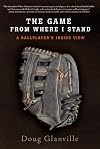
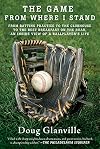
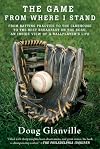
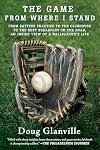
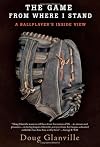
The Game from Where I Stand: A Ballplayer's Inside View
by Doug Glanville
On This Page
Description
An insider's revealing look at the hidden world of major league baseballDoug Glanville, a former major league outfielder and Ivy League graduate, draws on his nine seasons in the big leagues to reveal the human side of the game and of the men who play it.In The Game from Where I Stand, Glanville shows us how players prepare for games, deal with race and family issues, cope with streaks and slumps, respond to trades and injuries, and learn the joyful and painful lessons the game imparts. We show more see the flashpoints that cause misunderstandings and friction between players, and the imaginative ways they work to find common ground. And Glanville tells us with insight and humor what he learned from Jimmy Rollins, Alex Rodriguez, Randy Johnson, Barry Bonds, Curt Schilling, and other legendary and controversial stars.In his professional career, Glanville experienced every aspect of being a player the first-round pick, the prospect, the disappointment, the can't-miss, the cornerstone, the veteran, the traded, the injured, the comeback kid. His eye-opening book gives fans a new level of understanding of day-to-day life in the big leagues." show lessTags
Recommendations


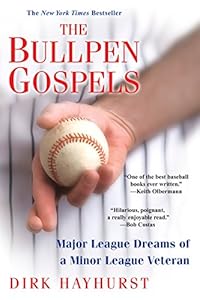




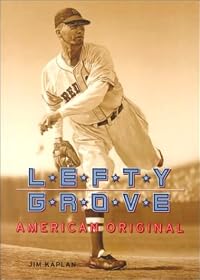
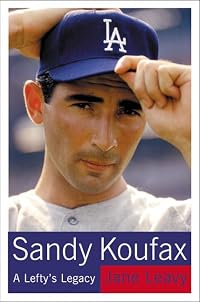
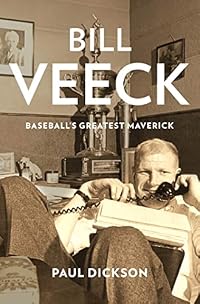








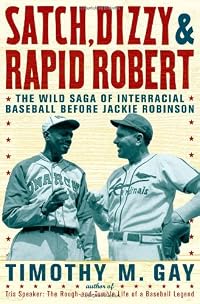
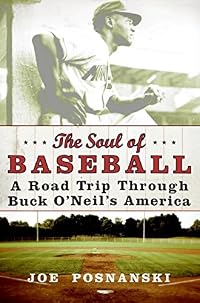

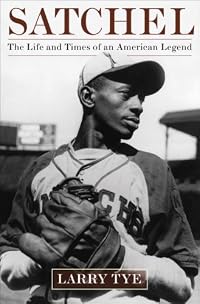



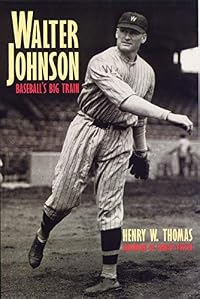


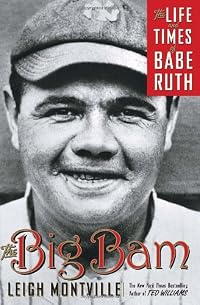

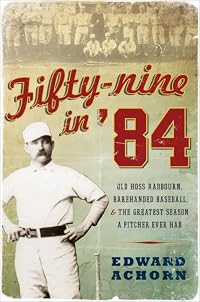



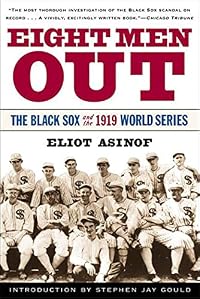

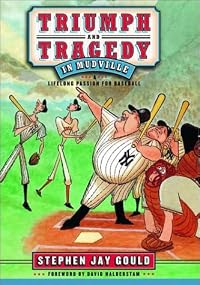


Member Recommendations



Member Reviews
I've read a LOT of baseball books and Doug Glanville's "The Game From Where I Stand" is one of the best I've read.
I was interested in reading this book because I remember Doug Glanville
from his brief stay with the Texas Rangers.
As you might expect he recounts his career in the big leagues but this book is different.
He details many aspects of the game that have rarely been looked into in a book like this.
He talks about getting called up to the majors, the big league clubhouses, how different
players wear their uniforms, how rookies are treated in the clubhouse. He describes the emotions of
the game - before, during and after. He talks about the stresses of the game, dealing with
new found fame and wealth and how hard this is for many show more young players.
He talks about relationships and how players deal with them, not in a "tell-all" fashion but
the pressures of groupies approaching them, the unspoken rules about girlfriends in the
clubhouse.
The diversity in the game is a very important aspect of the game to him and he talks about the
integrity of the game, including the steroids, but it's a different take than you've likely read.
He also describes the end of his career, how it feels to realize you're slowing down.
He tells about finally retiring and the adjustment to not being in the game anymore.
All in all it's a very good read and I highly recommend it not only to a fan of the game but it
would be an enlightening read for players planning and hoping to make it to the big leagues one day. show less
I was interested in reading this book because I remember Doug Glanville
from his brief stay with the Texas Rangers.
As you might expect he recounts his career in the big leagues but this book is different.
He details many aspects of the game that have rarely been looked into in a book like this.
He talks about getting called up to the majors, the big league clubhouses, how different
players wear their uniforms, how rookies are treated in the clubhouse. He describes the emotions of
the game - before, during and after. He talks about the stresses of the game, dealing with
new found fame and wealth and how hard this is for many show more young players.
He talks about relationships and how players deal with them, not in a "tell-all" fashion but
the pressures of groupies approaching them, the unspoken rules about girlfriends in the
clubhouse.
The diversity in the game is a very important aspect of the game to him and he talks about the
integrity of the game, including the steroids, but it's a different take than you've likely read.
He also describes the end of his career, how it feels to realize you're slowing down.
He tells about finally retiring and the adjustment to not being in the game anymore.
All in all it's a very good read and I highly recommend it not only to a fan of the game but it
would be an enlightening read for players planning and hoping to make it to the big leagues one day. show less
 This review was written for LibraryThing Early Reviewers.
A slender but enjoyable book at the life of a ballplayer, from a veteran outfielder. Most baseball books I've read so far focused about strategy, so it was interesting to read more about the trials and tribulations of daily life -- trying to make an impression, going on road trips, starting (or avoiding) relationships, adjusting to becoming a bench player, etc. Sometimes Glanville tries to take a metaphor too far (in one example, he goes from talking about baseball players creating shells around themselves to warning people not to end up as scrambled eggs!), but overall he writes clearly and with a refreshing modesty and honesty about his flaws as well as his accomplishments.
This review was written for LibraryThing Early Reviewers.The title of Doug Glanville’s perceptive book on major league baseball has a double or triple meaning. It refers first to standing at his position out in centerfield, for the Chicago Cubs, Philadelphia Phillies, and Texas Rangers over a nine-year career, and how the game was played. At another level, the title suggests that Glanville was watching more than the coaches’ signs, or the numbers on the scoreboard; he was also taking in the sights and sounds of the stadium, the crowd, the whole spectacle and how it felt to be there. Finally, the title works at an analytical level as well, as Glanville is retired now (not voluntarily; the Yankees released him in 2005 and he could not find another team that would give him a contract) and show more uses the book to search for meaning is this most American of games.
You know that this is not your typical baseball book when it begins with a pleasing poem, dedicated to his late father. But Glanville was not one of your typical baseball players: he has an engineering degree from the University of Pennsylvania and was one of the first ballplayers to lug a laptop from city to city. His father, from Trinidad & Tobago, went to medical school; his mother was a long-time teacher. Post-baseball, he has been writing a sometimes column for the New York Times and appearing on ESPN, sharing his insights on the game.
These insights are spotted throughout the book, which is a good read for the hardiest of long-term fans or those just being introduced to the game. He tells funny stories about major league stars, and comments on the game’s continuing issues (such as racism, inflated salaries, and steroids/other performance-enhancing practices). But he also writes about things not usually covered in the literature of baseball. A nice passage, for example, describes preparation for the game, and explains the system underlying the pre-game drills that teams undergo every day while fans are purchasing their hotdogs or finding their seats. Knowing the logic of these drills makes them more interesting for fans attending games. Glanville devotes a chapter to the structural difficulties professional ballplayers have in establishing relationships; with their team managers, teammates, and the many women who hang around the ballparks. His own experience with a woman known as the Atlanta Stalker is itself a story worth re-telling. And Glanville also explains why many major league players were sad to see the Montreal Expos get moved to Washington, D.C.; apparently Montreal was a great playground for ballplayers and their post-game activities. Finally, fans might not know that major league teams provide “family rooms” for players and their families where fans and others cannot go. These family rooms have a pecking order and rules of acceptable behavior that are established by the wives of the most senior players; woeful are the chances of the young player of staying with the team if he does not learn these rules and abide by them!
This is not your typical baseball book, and this is its charm. Doug Glanville was paying attention during his time in the “bigs,” and his readers will be grateful for it. He hit a homer with this one! show less
You know that this is not your typical baseball book when it begins with a pleasing poem, dedicated to his late father. But Glanville was not one of your typical baseball players: he has an engineering degree from the University of Pennsylvania and was one of the first ballplayers to lug a laptop from city to city. His father, from Trinidad & Tobago, went to medical school; his mother was a long-time teacher. Post-baseball, he has been writing a sometimes column for the New York Times and appearing on ESPN, sharing his insights on the game.
These insights are spotted throughout the book, which is a good read for the hardiest of long-term fans or those just being introduced to the game. He tells funny stories about major league stars, and comments on the game’s continuing issues (such as racism, inflated salaries, and steroids/other performance-enhancing practices). But he also writes about things not usually covered in the literature of baseball. A nice passage, for example, describes preparation for the game, and explains the system underlying the pre-game drills that teams undergo every day while fans are purchasing their hotdogs or finding their seats. Knowing the logic of these drills makes them more interesting for fans attending games. Glanville devotes a chapter to the structural difficulties professional ballplayers have in establishing relationships; with their team managers, teammates, and the many women who hang around the ballparks. His own experience with a woman known as the Atlanta Stalker is itself a story worth re-telling. And Glanville also explains why many major league players were sad to see the Montreal Expos get moved to Washington, D.C.; apparently Montreal was a great playground for ballplayers and their post-game activities. Finally, fans might not know that major league teams provide “family rooms” for players and their families where fans and others cannot go. These family rooms have a pecking order and rules of acceptable behavior that are established by the wives of the most senior players; woeful are the chances of the young player of staying with the team if he does not learn these rules and abide by them!
This is not your typical baseball book, and this is its charm. Doug Glanville was paying attention during his time in the “bigs,” and his readers will be grateful for it. He hit a homer with this one! show less
This review was written for LibraryThing Early Reviewers.Doug Glanville wrote a series of wonderful essays on baseball over the last several years for the New York Times. It was always fun and illuminating to read his take on the game. However what reads crisp and literate in a newspaper column has become treacly and sophomoric in a 304 page book.
A good baseball book needs the grit and the grass stains. The mud and curses and wonder. This book feels like a brand new uniform, never been worn. Glanville is incredibly intelligent, respectful and was a relatively talented ballplayer but this tale of his life in baseball is a touch too ivy league. It needs a little more sweat and passion.
A good baseball book needs the grit and the grass stains. The mud and curses and wonder. This book feels like a brand new uniform, never been worn. Glanville is incredibly intelligent, respectful and was a relatively talented ballplayer but this tale of his life in baseball is a touch too ivy league. It needs a little more sweat and passion.
I read this book hoping to find out something I didn't know about today's game, a game so different from the one I grew up with. Unfortunately, I was to be disappointed in that hope. There was, for me, nothing new in this book. (I must in fairness add, however, that I have many, many baseball books, and, for me, it becomes difficult to read about any undiscovered country in the [former] National Pastime).
The thing which struck me the most forcefully is, even in a book by one of the few baseball players who has ever actually read a book- indeed, a very intelligent and well-educated young man- was the total divorce from the concept of real life and lack of perception or understanding of what its like not to be one of the tarnished gods show more of professional and D-1 sports.
Look- major leaguers get $80 a day for "meal money" (more than a person on minimum wage make in a day for eight hours of thankless and frequently backbreaking labor)- but most major leaguers would never eat in a place where they are not "comped". The "minimum wage" in baseball is $400,000 a year, or ten times what a teacher makes- and teachers work ten hours a day to a players few minutes a day. The average wage in the majors is $4,000,000 a year, or 100 times what a nurse or policeman/woman or an NCO in the service makes. It takes just 43 days (!) to qualify for a pension, and, in a country with fifteen million uninsured, one day (!) on a major league roster qualifies you for full medical coverage for ever.
Look, I didn't set out to write a vitriolic screed, but I am just so tired of mealy-mouthed attempts to justify and/or condone athletes pay, their freedom from responsibility for their actions. i am tired of the "Its us against them" attitude by the most pampered human beings on the face of the earth while they protect liars and cheats and stick up for the Albert Belles, Carl Everetts and Milton Bradleys of the world. To be honest, I was just hoping for more from an Ivy League educated man.
Baseball- heck, all pro sports- was better when the players had to work real jobs in the off-season to make ends meet. The rest of us don't have an "off-season". show less
The thing which struck me the most forcefully is, even in a book by one of the few baseball players who has ever actually read a book- indeed, a very intelligent and well-educated young man- was the total divorce from the concept of real life and lack of perception or understanding of what its like not to be one of the tarnished gods show more of professional and D-1 sports.
Look- major leaguers get $80 a day for "meal money" (more than a person on minimum wage make in a day for eight hours of thankless and frequently backbreaking labor)- but most major leaguers would never eat in a place where they are not "comped". The "minimum wage" in baseball is $400,000 a year, or ten times what a teacher makes- and teachers work ten hours a day to a players few minutes a day. The average wage in the majors is $4,000,000 a year, or 100 times what a nurse or policeman/woman or an NCO in the service makes. It takes just 43 days (!) to qualify for a pension, and, in a country with fifteen million uninsured, one day (!) on a major league roster qualifies you for full medical coverage for ever.
Look, I didn't set out to write a vitriolic screed, but I am just so tired of mealy-mouthed attempts to justify and/or condone athletes pay, their freedom from responsibility for their actions. i am tired of the "Its us against them" attitude by the most pampered human beings on the face of the earth while they protect liars and cheats and stick up for the Albert Belles, Carl Everetts and Milton Bradleys of the world. To be honest, I was just hoping for more from an Ivy League educated man.
Baseball- heck, all pro sports- was better when the players had to work real jobs in the off-season to make ends meet. The rest of us don't have an "off-season". show less
This review was written for LibraryThing Early Reviewers.One of the few books on baseball that provides a player's perspective on the current state of the sport, which offers a level of celebrity and economic reward that far outstrips any other era in its history. Doug Glanville is a sharp guy whose writing would be worth reading even if he'd never picked up a bat, but the real appeal here is his insider's vantage. That said, the book is far from a tell-all--there's insight and frankness regarding both the game on the ground and the motivations of its participants, but little real personal revelation. It's refreshing that he chose not to cap off his playing career with a self-serving expose, instead producing a promising series of essays that suggests not retirement from the field, but the show more beginning of something new. show less
This review was written for LibraryThing Early Reviewers.I first watched Doug Glanville as a raw centerfielder from my season ticket seat watching the Winston-Salem Spirit. After we switched teams, I saw Doug as the wise polished veteran rehabbing from my season ticket seat watching the Oklahoma Redhawks. In between I managed Doug as a platoon CF on my Strat-O-Matic team. I was surprised that the impatient Spirit CF made it to the show (unlike the sure stars Corey Kapano, and while the star Ozzie Timmons made it to the majors, his career was shorter than I predicted). I was surprised that the veteran CF didn't stick around longer. I am more surprised that Doug isn't currently high in a major league front office.
This path of surprises matches The Game From Where I Stand. Doug grows as a show more ballplayer and as a man. Doug was a ballplayer that was aware of his skills and his limitations, and how those fit within the game. This insight is not unusual in a player's baseball book. Doug was also aware of the world outside of baseball and how that world fit around the game. This insight makes this book a step above the usual. show less
This path of surprises matches The Game From Where I Stand. Doug grows as a show more ballplayer and as a man. Doug was a ballplayer that was aware of his skills and his limitations, and how those fit within the game. This insight is not unusual in a player's baseball book. Doug was also aware of the world outside of baseball and how that world fit around the game. This insight makes this book a step above the usual. show less
This review was written for LibraryThing Early Reviewers.Members
- Recently Added By
Published Reviews
ThingScore 75
Unfortunately, Glanville's book is heavy with such detail and light on deeper insights...Where he succeeds is in revealing his own fears and insecurities. He questions his ability to sustain a loving relationship, to deal with the death of his father, to come to grips with the inevitable ending of his career. And he shares the bitterness he felt at losing opportunities (and money) to players show more who cheated with steroids. show less
added by private library
Author Information
1 Work 155 Members
Doug Glanville played outfield for the Philadelphia Phillies, Chicago Cubs, and Texas Rangers from 1996 through 2004. From 2008 to 2010, he wrote an online column for The New York Times and provided baseball analysis for XM Radio. In the spring of 2010 he joined ESPN as a baseball analyst. He serves on the executive board of Athletes Against show more Drugs, and advises high school student athletes as a special consultant to the Baseball Factory. He lives with his family in Chicago. show less
Common Knowledge
- Original publication date
- 2010-05-11
Classifications
- Genres
- Sports and Leisure, Nonfiction, Biography & Memoir, General Nonfiction
- DDC/MDS
- 796.357640973 — Arts & recreation Recreation, sports, and performing arts Sports Ball sports Ball and stick sports Baseball By Type or Level Professional By Region United States
- LCC
- GV867.64 .G58 — Geography, Anthropology and Recreation Recreation. Leisure Recreation. Leisure Sports Ball games: Baseball, football, golf, etc.
- BISAC
Statistics
- Members
- 153
- Popularity
- 210,637
- Reviews
- 15
- Rating
- (3.41)
- Languages
- English
- Media
- Paper, Ebook
- ISBNs
- 3
- ASINs
- 5