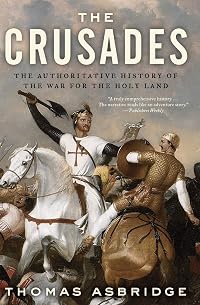
The Crusades: The Authoritative History of the War for the Holy Land
by Thomas Asbridge
On This Page
Description
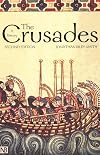
The Crusades is an authoritative, accessible single-volume history of the brutal struggle for the Holy Land in the Middle Ages. Thomas Asbridge-a renowned historian who writes with "maximum vividness" (Joan Acocella, The New Yorker)-covers the years 1095 to 1291 in this big, ambitious, readable account of one of the most fascinating periods in history. From Richard the Lionheart to the mighty Saladin, from the emperors of Byzantium to the Knights Templar, Asbridge's book is a magnificent show more epic of Holy War between the Christian and Islamic worlds, full of adventure, intrigue, and sweeping grandeur. show lessTags
Recommendations







Member Recommendations
Member Reviews
Asbridge’s book was in many ways a welcome contrast to The Crusades by Henry Treece.
Two books. Same title. Same subject matter. Big difference.
Thomas Asbridge has the audacity to subtitle his book “The [! sic ] Authoritative History…”. I have read a few books about the Crusades in the last 60+ years, including Steven Runciman’s 3 volume A History Of The Crusades (published 1951-1954), but none of them were as comprehensive or, for that matter, fair-minded, as Asbridge’s. So as far as I can tell, his apparent hubris is justified.
In contrast, Henry Treece’s The Crusades (1962) is terse, witty, opinionated, dated, a little racist, and full of sweeping generalizations, but still fun to read.
Nowhere do the two books contrast show more more than in their treatment of Saladin, the sultan who did more than anyone else to drive the Christians out of the Holy Land. Asbridge treats Saladin as one of several Muslim leaders who successfully opposed the crusaders. To Asbridge, Saladin is a complex character who may or may not have been deeply religious, but in any event he was an opportunist who could use the religiousness of his followers to his advantage. On the other hand, Treece writes about Saladin the way Trump would write (if he could write) about Putin— all starry-eyed and hero-worshiping.
In any event, the crusades were a multifaceted phenomenon that took place over a period of two centuries. Our memory of that history has reverberations even today. Asbridge concludes by warning against our use of crusading language and tropes. That language can be a potent, alarming, and dangerous and and has been used to describe an "unbroken line of hatred and discord connecting the medieval contest for control of the Holy Land to today's struggles in the Near and Middle East.” To avoid being manipulated for political ends, read Asbridge’s thorough and dispassionate account of that complex series of events.
(JAB) show less
Two books. Same title. Same subject matter. Big difference.
Thomas Asbridge has the audacity to subtitle his book “The [! sic ] Authoritative History…”. I have read a few books about the Crusades in the last 60+ years, including Steven Runciman’s 3 volume A History Of The Crusades (published 1951-1954), but none of them were as comprehensive or, for that matter, fair-minded, as Asbridge’s. So as far as I can tell, his apparent hubris is justified.
In contrast, Henry Treece’s The Crusades (1962) is terse, witty, opinionated, dated, a little racist, and full of sweeping generalizations, but still fun to read.
Nowhere do the two books contrast show more more than in their treatment of Saladin, the sultan who did more than anyone else to drive the Christians out of the Holy Land. Asbridge treats Saladin as one of several Muslim leaders who successfully opposed the crusaders. To Asbridge, Saladin is a complex character who may or may not have been deeply religious, but in any event he was an opportunist who could use the religiousness of his followers to his advantage. On the other hand, Treece writes about Saladin the way Trump would write (if he could write) about Putin— all starry-eyed and hero-worshiping.
In any event, the crusades were a multifaceted phenomenon that took place over a period of two centuries. Our memory of that history has reverberations even today. Asbridge concludes by warning against our use of crusading language and tropes. That language can be a potent, alarming, and dangerous and and has been used to describe an "unbroken line of hatred and discord connecting the medieval contest for control of the Holy Land to today's struggles in the Near and Middle East.” To avoid being manipulated for political ends, read Asbridge’s thorough and dispassionate account of that complex series of events.
(JAB) show less
Signed with the Cross - "The Crusades" by Thomas Asbridge
location: London
mood: impressed
music: Toxic Valentine - All Time Low
I've frequently whinged about the rather dispiriting lack of anything resembling a proper popular cultural history of the Middle Ages. There's loads of great Tudor era material, but not much from earlier. I have my much-loved copy of The Time Traveller's Guide to Medieval England by Ian Mortimer, which is an utter life-saver, but unfortunately it concentrates on the Fourteenth Century, and the character in Sleepwalker is actually from the Thirteenth. Furthermore, he's a Crusader; specifically a Knight Templar.
I had of course done some reading on the Crusades just out of general interest before I started writing show more Sleepwalker (they'd been a matter of personal fascination to me since I'd visited Jerusalem as a student), and I'd particularly enjoyed The New Knighthood by Malcolm Barber, the multi-volume History of the Crusades by Steve Runciman, and also the very populist but no less fun and interesting The Crusades by Alan Ereira and Terry Jones.
So I was happy to get a chance to look at Thomas Asbridge's forthcoming book The Crusades (published by Simon and Schuster, who very kindly set me up with access to an except), and I was very glad I bothered. It proved a fast and yet authoritative read and distinguished itself on two fronts - through the device of giving equal time and consideration to the Muslim view of events (Saladin's tactics are analysed and critiqued - it's clear that Asbridge feels that it's a downhill slide for the Islamic champion after Hattin) and the book also offers more than a passing treatment of what it might actually be like to be fighting in the Siege of Acre.
Though bound to be a straightforward military history by its very nature, it's actually spiked through with lively storytelling and wonderful anecdotes, such as the scandalised Muslim historian reporting on "300 young and lovely Frankish maidens" who arrive to earn a living servicing the Crusaders (and, it is implied, Muslims) besieging Acre, who "brought their silver anklets up to touch their golden earrings [and:] made themselves targets for men’s darts". Ingenious jihadis get a supply ship to the beleaguered city of Acre by shaving their beards off and filling the decks with pigs and crosses, fooling the Christian sailors manning the cordon. An emir caught transporting the hated and feared "Greek Fire" (which features in Sleepwalker, so I was delighted to see it) is captured trying to get into the city, and a Latin knight ‘stretched him out on the ground, emptying the contents of the phial on his private parts, so that his genitals were burned’.
But it's not all (admittedly grisly) fun and games: there is also the horror of starvation, disease, of being surrounded by rotting corpses which are constantly being replenished with fresh ones to the tune of up to 200 a day.
There's also a very human treatment of the main actors - Saladin is passionate, determined, but maybe a little too cautious; Richard the Lionheart is flamboyant, canny, and vain, but capable of ruthless acts of massacre. The use of evidence, historical context, and personal supposition is mingled convincingly and their characterisations drawn with an elegant economy of language. The political history is delivered with the same sprightly verve as the military history, and from the point of view of an interested amateur, this treatment worked well for me.
Apparently the word "crusader" comes from the Latin portmanteau crucesignatus - "signed by the Cross". One can forward social and political reasons that render the Crusades a matter of mere expediency, but those reasons on their own are insufficient - ultimately the genesis of the Crusades is ideological. Sadly, in the last couple of decades, the Crusades and their troubling questions of religious fanaticism and grasping political adventurism are closer in spirit to us than they have ever been. Asbridge's accessible and above all humane take on them is thus an entirely welcome approach to this very topical subject. show less
location: London
mood: impressed
music: Toxic Valentine - All Time Low
I've frequently whinged about the rather dispiriting lack of anything resembling a proper popular cultural history of the Middle Ages. There's loads of great Tudor era material, but not much from earlier. I have my much-loved copy of The Time Traveller's Guide to Medieval England by Ian Mortimer, which is an utter life-saver, but unfortunately it concentrates on the Fourteenth Century, and the character in Sleepwalker is actually from the Thirteenth. Furthermore, he's a Crusader; specifically a Knight Templar.
I had of course done some reading on the Crusades just out of general interest before I started writing show more Sleepwalker (they'd been a matter of personal fascination to me since I'd visited Jerusalem as a student), and I'd particularly enjoyed The New Knighthood by Malcolm Barber, the multi-volume History of the Crusades by Steve Runciman, and also the very populist but no less fun and interesting The Crusades by Alan Ereira and Terry Jones.
So I was happy to get a chance to look at Thomas Asbridge's forthcoming book The Crusades (published by Simon and Schuster, who very kindly set me up with access to an except), and I was very glad I bothered. It proved a fast and yet authoritative read and distinguished itself on two fronts - through the device of giving equal time and consideration to the Muslim view of events (Saladin's tactics are analysed and critiqued - it's clear that Asbridge feels that it's a downhill slide for the Islamic champion after Hattin) and the book also offers more than a passing treatment of what it might actually be like to be fighting in the Siege of Acre.
Though bound to be a straightforward military history by its very nature, it's actually spiked through with lively storytelling and wonderful anecdotes, such as the scandalised Muslim historian reporting on "300 young and lovely Frankish maidens" who arrive to earn a living servicing the Crusaders (and, it is implied, Muslims) besieging Acre, who "brought their silver anklets up to touch their golden earrings [and:] made themselves targets for men’s darts". Ingenious jihadis get a supply ship to the beleaguered city of Acre by shaving their beards off and filling the decks with pigs and crosses, fooling the Christian sailors manning the cordon. An emir caught transporting the hated and feared "Greek Fire" (which features in Sleepwalker, so I was delighted to see it) is captured trying to get into the city, and a Latin knight ‘stretched him out on the ground, emptying the contents of the phial on his private parts, so that his genitals were burned’.
But it's not all (admittedly grisly) fun and games: there is also the horror of starvation, disease, of being surrounded by rotting corpses which are constantly being replenished with fresh ones to the tune of up to 200 a day.
There's also a very human treatment of the main actors - Saladin is passionate, determined, but maybe a little too cautious; Richard the Lionheart is flamboyant, canny, and vain, but capable of ruthless acts of massacre. The use of evidence, historical context, and personal supposition is mingled convincingly and their characterisations drawn with an elegant economy of language. The political history is delivered with the same sprightly verve as the military history, and from the point of view of an interested amateur, this treatment worked well for me.
Apparently the word "crusader" comes from the Latin portmanteau crucesignatus - "signed by the Cross". One can forward social and political reasons that render the Crusades a matter of mere expediency, but those reasons on their own are insufficient - ultimately the genesis of the Crusades is ideological. Sadly, in the last couple of decades, the Crusades and their troubling questions of religious fanaticism and grasping political adventurism are closer in spirit to us than they have ever been. Asbridge's accessible and above all humane take on them is thus an entirely welcome approach to this very topical subject. show less
For over a thousand years inter-religious strife has been focused on the city of Jerusalem and the surrounding areas. Jerusalem is a holy place for the three Abrahamic religions and therefore is a jewel fought over. Conquered by Islamic forces in the 7th century, Christian pilgrims were still able to access the holy places but by the 11th century the papacy felt that Jerusalem should be rules by Christians. Thus began two centuries of warfare for possession of the Holy Land involving the elite of the European nobility and a succession of Muslim rulers.
This is a superb book, meticulously researched and full of detail. What is really important about this book is the fact that it offers a balanced view of the times. Most books focus solely show more on the 'Franks' but Asbridge also considers the muslim situation in depth, neither side was truly focused and both were riven by issues related to leadership. This aspect gives a depth to the history which is refreshing. Asbridge also expands the view to consider the hijacking of the word 'crusade' in modern times. This is a definitive history of a relatively short but violent series of encounters. show less
This is a superb book, meticulously researched and full of detail. What is really important about this book is the fact that it offers a balanced view of the times. Most books focus solely show more on the 'Franks' but Asbridge also considers the muslim situation in depth, neither side was truly focused and both were riven by issues related to leadership. This aspect gives a depth to the history which is refreshing. Asbridge also expands the view to consider the hijacking of the word 'crusade' in modern times. This is a definitive history of a relatively short but violent series of encounters. show less
In a footnote to the intro, Mr. Asbridge states his intention of writing a fact-based book with careful effort to remove bias. I find Mr. Asbridge's single volume history on the Crusades to be remarkably even-handed. The author did not have any apparent anti-Western Western academic bias nor did he show any apparent Western enculturation bias.
The author paid careful attention to the player's motives. While those who enjoy history as enacted by larger-than-life caricatures may be disappointed, I found the portraits painted to be well-rounded and human. Asbridge did not cynically dismiss the players' professed spiritual motivations nor did he neglect other temporal and political motivations. Great players such as Saladin, Baybars, show more Frederick II, and Richard the Lion-Hearted rise and fall on their own merits without help from the historian. Motivations of individuals and groups are well-treated and in the context of their actions and contemporary sources.
Another reviewer stated that Mr. Asbridge's writing tended to be self-congratulatory at the expense of other historians. I did not get this. With a stated intent of clearing distortions and myth, Mr. Asbridge does discuss and challenge other perceptions; however, I believe these were not handled arrogantly.
Because this book is more socio-political, I do not believe the military buff will enjoy this book as much as those looking for a clear overview of the Crusades in the Near East. However, for military buffs just discovering the Crusades, this book provides an excellent springboard and context for more detailed reading.
The extensive notes provide an invaluable reference for further reading and exploration, most of which are considered authoritative in their own right. The writing is clear and the narrative flows well. Mr. Asbridge is clearly an authority on the Crusades; I expect to find this book referenced in many future volumes. show less
The author paid careful attention to the player's motives. While those who enjoy history as enacted by larger-than-life caricatures may be disappointed, I found the portraits painted to be well-rounded and human. Asbridge did not cynically dismiss the players' professed spiritual motivations nor did he neglect other temporal and political motivations. Great players such as Saladin, Baybars, show more Frederick II, and Richard the Lion-Hearted rise and fall on their own merits without help from the historian. Motivations of individuals and groups are well-treated and in the context of their actions and contemporary sources.
Another reviewer stated that Mr. Asbridge's writing tended to be self-congratulatory at the expense of other historians. I did not get this. With a stated intent of clearing distortions and myth, Mr. Asbridge does discuss and challenge other perceptions; however, I believe these were not handled arrogantly.
Because this book is more socio-political, I do not believe the military buff will enjoy this book as much as those looking for a clear overview of the Crusades in the Near East. However, for military buffs just discovering the Crusades, this book provides an excellent springboard and context for more detailed reading.
The extensive notes provide an invaluable reference for further reading and exploration, most of which are considered authoritative in their own right. The writing is clear and the narrative flows well. Mr. Asbridge is clearly an authority on the Crusades; I expect to find this book referenced in many future volumes. show less
This book manages to tie nearly 300 years of history into a cohesive, engaging, authoritative book that is simultaneously informative and a pleasure to read. The author weaves a coherent narrative around numerous actors without creating confusion. I was sad to finish the book. The only critique is that it did not cover the People's Crusade.
One of the most believable volumes on the subject I have read. Mr. Asbridge paints a believable picture and allows the reader to deduce the situation and make their own judgment.
I was surprised at this one. Asbridge writes perfectly clear sentences, the kind of thing I would read in a student's paper and give bonus marks for, while also cautioning them that some thoughts do require something beyond this kind of prose. The good news is that this makes the book perfectly readable; the bad news is that, well, it isn't Gibbon or even D. MacCulloch level prose. But it gets maximum marks for user-friendliness.
Cons: since there's no variation in prose style, the battle narratives get a little tedious. How many times can a leader be indecisive? How many times can they do something that in hindsight isn't really the right thing? Seemingly every time. That's fine, that's what they did; but devoting the same amount of show more time to every single feint and mistake makes this much, much longer than it needs to be. Also, the conclusion is just weird. After saying a bunch of really sensible things (nobody should use the Crusades as ideological fodder for their own idiotic purposes), he then claims that they do have a lesson to teach us: they show how faith and ideology can "elicit violent discord" and that "commercial interests" can "transcend the barriers of conflict." Certainly. But this is just using the Crusades for your own idiotic purposes: different wars will show that commercial interests can elicit violent discord (hello, imperialism) and faith and ideology can transcend the barriers of conflict (see the ecumenical efforts of the twentieth century). In short, commercial interests are just another kind of faith/ideology, and one which revels in destroying traditions and ideals. At least religious and ideological faiths *could* provide us with a way to actually transcend conflict, rather than just transcending it in our own self-interest (hello, corporations who 'transcend' conflict all the time by getting in bed with dictators, tyrants, etc etc...)
As a side note, it's nice to see someone willing to just go balls to the wall and claim that they're written "the authoritative" history of something. So tired of 'a history of...' style, it's all just perspective, I wouldn't want to make any definitive claims nonsense. Bravo. show less
Cons: since there's no variation in prose style, the battle narratives get a little tedious. How many times can a leader be indecisive? How many times can they do something that in hindsight isn't really the right thing? Seemingly every time. That's fine, that's what they did; but devoting the same amount of show more time to every single feint and mistake makes this much, much longer than it needs to be. Also, the conclusion is just weird. After saying a bunch of really sensible things (nobody should use the Crusades as ideological fodder for their own idiotic purposes), he then claims that they do have a lesson to teach us: they show how faith and ideology can "elicit violent discord" and that "commercial interests" can "transcend the barriers of conflict." Certainly. But this is just using the Crusades for your own idiotic purposes: different wars will show that commercial interests can elicit violent discord (hello, imperialism) and faith and ideology can transcend the barriers of conflict (see the ecumenical efforts of the twentieth century). In short, commercial interests are just another kind of faith/ideology, and one which revels in destroying traditions and ideals. At least religious and ideological faiths *could* provide us with a way to actually transcend conflict, rather than just transcending it in our own self-interest (hello, corporations who 'transcend' conflict all the time by getting in bed with dictators, tyrants, etc etc...)
As a side note, it's nice to see someone willing to just go balls to the wall and claim that they're written "the authoritative" history of something. So tired of 'a history of...' style, it's all just perspective, I wouldn't want to make any definitive claims nonsense. Bravo. show less
Members
- Recently Added By
Lists

r/AskHistorians' Recommended Books
1,068 works; 19 members

r/History Recommended Reading List
603 works; 12 members

Library Non-Fiction
164 works; 1 member
Author Information

14+ Works 3,131 Members
Thomas Asbridge is Senior Lecturer in Medieval History at Queen Mary, University of London
Some Editions
Work Relationships
Common Knowledge
- Original title
- The Crusades: The War for the Holy Land
- Alternate titles
- The Crusades: The Authoritative History of the War for the Holy Land
- Original publication date
- 2010
- People/Characters
- Saladin; Richard the Lionheart; al-Adil ibn Ayyub; Baldwin I, King of Jerusalem; Baldwin II, King of Jerusalem; Baybars (show all 23); Bohemond of Taranto; Conrad of Montferrat; Frederick I / Frederick Barbarossa, Holy Roman Emperor; Frederick II, Holy Roman Emperor; Godfrey of Bouillon; Guy of Lusignan, King of Jerusalem; Henry II of England; Ibn al-Athir; Il-ghazi of Mardin; Imad al-Din al-Isfahani; Louis IX of France; Melisende, Queen of Jerusalem; Nur al-Din Mahmud; Philip II Augustus, King of France; Raymond III of Tripoli; Tancred of Hautville; Zangi
- Important places
- Acre; Aleppo; Antioch; Byzantium; Cairo; Constantinople (show all 12); Damascus; Edessa; Jaffa; Jerusalem; Mosul; Tyre
- Important events
- Crusades
- Related movies
- The Crusades (2012 | IMDb)
- First words
- Introduction: Nine hundred years ago the Christians of Europe waged a series of holy wars, or crusades, against the Muslim world, battling for dominion of a region sacred to both faiths - the Holy Land.
- Last words
- (Click to show. Warning: May contain spoilers.)But the crusades must also be placed where they belong: in the past.
- Original language
- English UK
Classifications
Statistics
- Members
- 1,303
- Popularity
- 18,645
- Reviews
- 16
- Rating
- (4.02)
- Languages
- 8 — Danish, Dutch, English, German, Polish, Romanian, Spanish, Turkish
- Media
- Paper, Audiobook, Ebook
- ISBNs
- 27
- ASINs
- 13