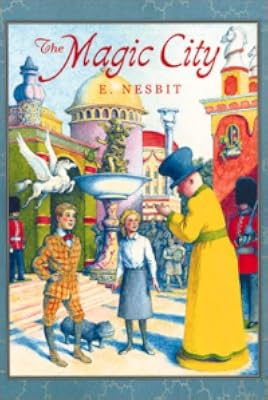
The Magic City
by E. Nesbit
On This Page
Description
An extremely unhappy ten-year-old magically escapes into a city he has built out of books, chessmen, candlesticks, and other household items.Tags
Recommendations
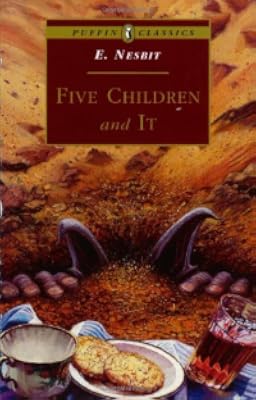
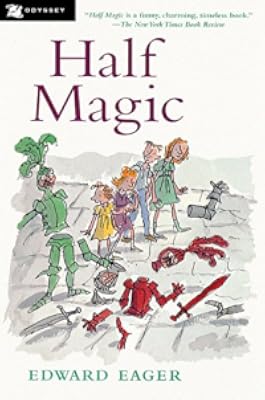
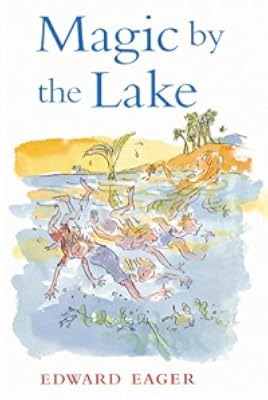
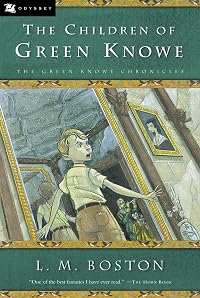
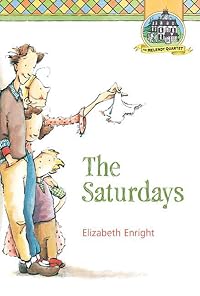

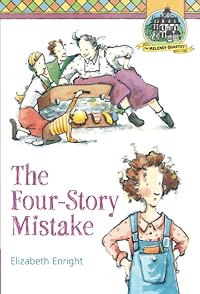
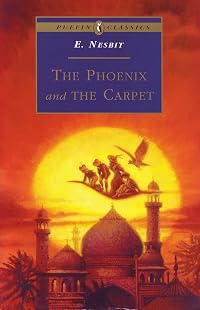
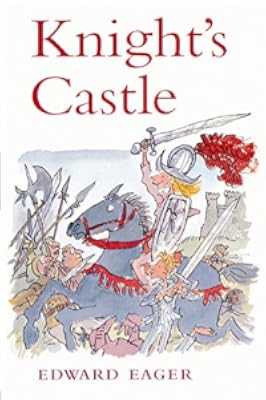




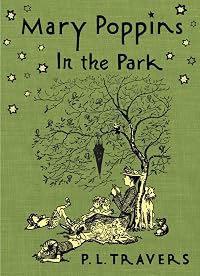
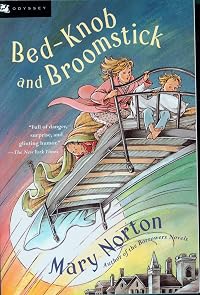
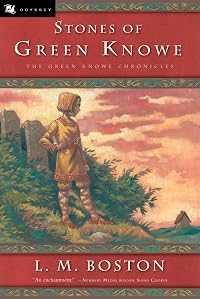
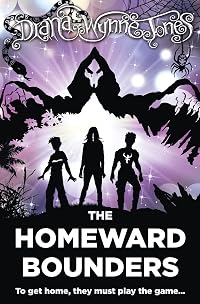




Member Recommendations
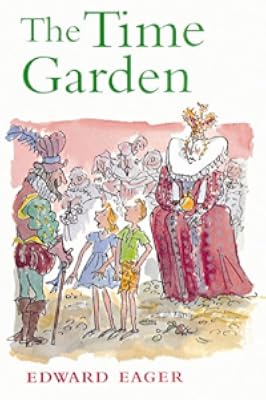
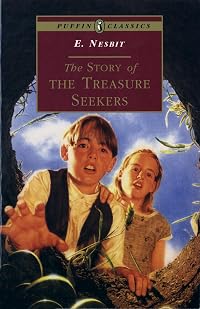
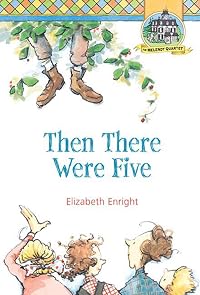
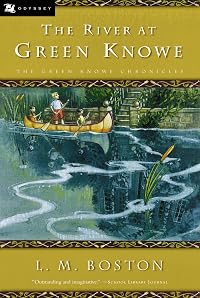
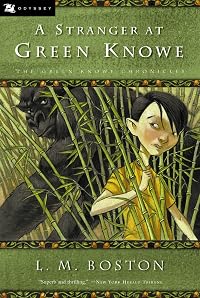
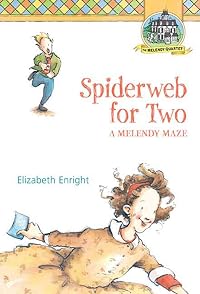
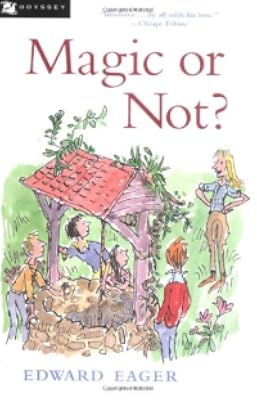
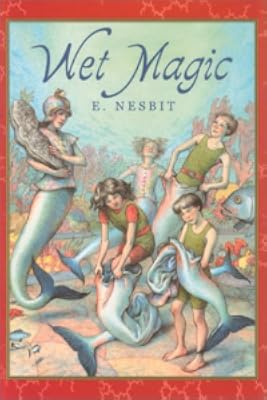
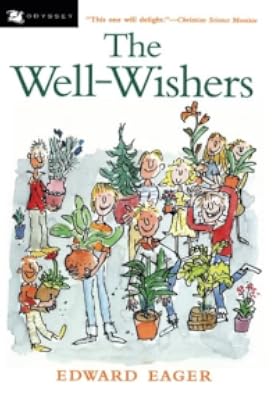
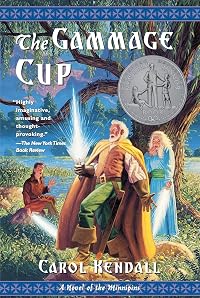
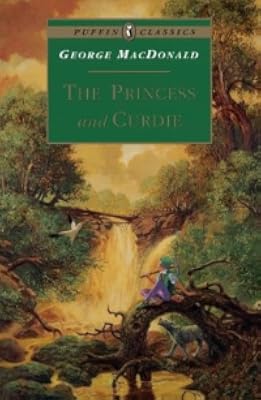
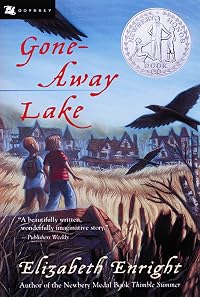
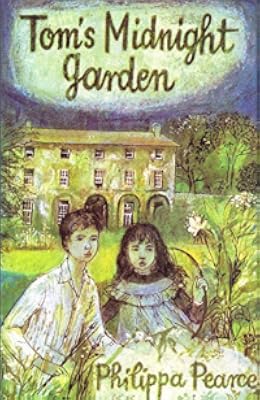
HollyMS Both works are stories that feature children visiting the lands of toys.

muumi The Magic City is a fantasy for children (and former children) about a boy and girl who build a city and enter it. Wings and the Child presents Nesbit's philosophy of childhood and ideas about why that kind of fantasy play is so important -- with photographs of component buildings, and an entire city, built by the author from the remarkable bric-a-brac of a Victorian home. The two books are complementary.
Member Reviews
I read this as a very young child. I remember Philip creating the city out of child's building blocks and other things, and becoming tiny enough to enter it (I always loved miniature things, and still do).The fountain with silver-paper water in particular stayed with me. The people made from Halma counters did too (not that I knew what Halma was), but I was convinced that they were sticky with pineapple juice because in the everyday world Philip had spilt his drink on them, which doesn't actually happen in the novel.
I don't remember any of the other very colourful adventures with Lucy, Mr Noah, etc, which makes me wonder if I in fact read a short story of Nesbit's which was a shortened version?
The magic of the city is really the endless show more inventive ways that Philip makes ornaments, dolls' house furniture, Noah's Ark animals, and many other things, into a whole other world. It captures the "let's pretend" of childhood, and how that becomes real when you're a kid, perfectly. show less
I don't remember any of the other very colourful adventures with Lucy, Mr Noah, etc, which makes me wonder if I in fact read a short story of Nesbit's which was a shortened version?
The magic of the city is really the endless show more inventive ways that Philip makes ornaments, dolls' house furniture, Noah's Ark animals, and many other things, into a whole other world. It captures the "let's pretend" of childhood, and how that becomes real when you're a kid, perfectly. show less
My edition had an introduction by Ann A. Flowers in which she states that the book's only significant flaw is that Helen isn't more kind to Philip when she suddenly gets married and leaves on a honeymoon. Well, Flowers ignores a few points of data. 1 - in those days, children were expected to cope better if given less time to dread (think of all the times you've read of a child suddenly being presented with a newborn sibling - didn't they wonder about the mom's belly?). 2 - Helen was swept up in her own fairy tale dream-come-true, her romance with Lucy's father, and may not have been thinking fully clearly. 3 - Lucy is a very nice girl and Philip a whiny brat who would have been fine (during said honeymoon and after) if he'd simply show more tried to accept her overtures when they first met.
I believe the flaws are racism, sexism, imperialism, and too much topical slang. I just can't fully enjoy a story in which the only two lions of the kingdom are killed (rather than simply avoided), and in which the strong, smart, and brave girl has to constantly prove she's as capable as the bratty boy, and in which there are far too many references to characters as 'brown savages' etc., and in which there are many words that Nesbit meant to be colloquially appealing but are now difficult, such as 'bunked' for 'chickened out.'
Otoh, this story is interesting in that it attempts to be somewhat more plausible, giving it more of a science fiction vibe than a fantasy one. And the explanations are charmingly written. For example: We come here when we're too asleep to dream. You go through the dreams and come out on the other side where everything's real. That's here."" show less
I believe the flaws are racism, sexism, imperialism, and too much topical slang. I just can't fully enjoy a story in which the only two lions of the kingdom are killed (rather than simply avoided), and in which the strong, smart, and brave girl has to constantly prove she's as capable as the bratty boy, and in which there are far too many references to characters as 'brown savages' etc., and in which there are many words that Nesbit meant to be colloquially appealing but are now difficult, such as 'bunked' for 'chickened out.'
Otoh, this story is interesting in that it attempts to be somewhat more plausible, giving it more of a science fiction vibe than a fantasy one. And the explanations are charmingly written. For example: We come here when we're too asleep to dream. You go through the dreams and come out on the other side where everything's real. That's here."" show less
When young Philip Haldane builds a play city out of odds and ends, the fantastic creation comes to life, and he and new stepsister Lucy are magically transported into it. Now they must try to save the Magic City by fulfilling an ancient prophecy--despite a mysterious adversary determined to steal their glory for herself. How Philip and Lucy come to forge a friendship and together triumph over impending disaster makes for a riveting read.
One of my absolutely favorite books as a child, partly because like the hero Philip I loved to build cities not only out of toy bricks but out of anything else available. In this story Philip by magic gets into a city he has build, along with a girl, Lucy (namesake and perhaps inspiration of Queen Lucy of Narnia, since C.S. Lewis said the Narnian children were influenced by Nesbit), and --accidentally-- their odious nursemaid. (Philip comes out of the city and has to choose to go back in by tears "Tears are very strong magic." --a line I have always remembered. It is said by Mr. Noah (originally the Noah in a Noah's Ark set, but animated as a wise guide to the children). The city has prophecies of the coming of two mythic figures, the show more Deliverer and the Destroyer. The Deliverer has a series of deeds to perform to earn the title, which Philip sets out to do, with Lucy's aid (originally they were not friends, but they become so.) The nursemaid also claims the Deliverership, and is known throughout the book as the Pretenderette (to the Claimancy of the Deliverership) , though as is remarked, the Claimancy of the Destroyership is also open.. Spoiler Warning. . Ultimately she calls in the barbarians from Caesar's Gallic Wars (one of the books of which the city is built) to seize power, but is defeated when Philip calls up Caesar himself and his legions. Yet Caesar greets the defeated Pretenderette with respect "I hail, madame, your courage." --part of that ethic of understanding for enemies that runs through Nesbit's work, and impressed me as a child. .
There are a lot of other psychologically sophisticated aspects of the story -- Philip's beloved elder sister Helen had marred Lucy's father, a situation he found hard to accept, but he is able to work through it with an encounter with Helen n an island they had invented together which he is finally able to give away. show less
There are a lot of other psychologically sophisticated aspects of the story -- Philip's beloved elder sister Helen had marred Lucy's father, a situation he found hard to accept, but he is able to work through it with an encounter with Helen n an island they had invented together which he is finally able to give away. show less
One of my favorite books of all time. Read it when I was around 12 and ten years later I still love it. There's so much imagination and adventure. I would recommend this book to people of any age. Yes, it's a children's book, but it's just too good to miss.
While not Edith Nesbit's best children's fantasy book, "The Magic City" has many elements that resonate with today's young readers. Our hero, Philip Haldane, retreats to a fantastic world when the city he has built of odds-&-ends from around his home comes to life. He's running away from a diificult family situation, but his new step-sister Lucy ends up going with him on this magical adventure. The city is in danger and they must perform 7 noble deeds to save the day. There's a nice moralistic tone to the story without being too preachy.
This was a cool book. I liked the ideas in it, and the story was cool.With the exception of /The Book of Dragons/, and her other short fiction, I think I prefer E. Nesbit's fantasy that has a grounding in the real world most. There's a reason for this, though. When she writes in pure fantasy mode, she tends to go faster and introduce more characters more quickly. The adult characters in her pure fantasy stories totally cater to the fantasy settings, as well, and often seem like a part of the child's imagination. The fantasy worlds seem this way, as well—and I guess from what happened, this makes complete sense. This isn't a bad thing necessarily, but it makes it harder for me to follow, and for some reason it doesn't hold my interest show more quite as much in some parts. I don't think it would be quite the same for a kid, though. Anyway, that aside, I can say I really liked the book. Don't let this dissuade you, though—I did really like the book (I just thought it was a little arduous of a listen).Don't confuse this with /The Magic World/, by E. Nesbit—that book is a collection of short stories; this one is not. Speaking of short stories, E. Nesbit wrote a short story that is very similar to this novel. I forgot which one it was, but it doesn't quite surprise me. She does seem to revisit her ideas once in a while (i.e. compare /The Railroad Children/ with /The Treasure Seekers/). At first, I wasn't so sure that I liked this tendency, but I think I appreciate it a lot more, now. show less
Members
- Recently Added By
Lists

Children's Literature 1900 - 1950 in order
413 works; 8 members

Miniature, little, tiny characters -- children's/young adult fiction
278 works; 13 members
Author Information

303+ Works 32,076 Members
E. Nesbit (1858-1924) wrote her first highly successful work for children, The Story of the Treasure Seekers, in 1899. Her many books for young readers, including The Magic City, Wet Magic, The Railway Children, Five Children and It, and The Enchanted Castle, gained her a popularity that has lasted for more than a century Peter Glassman is the show more owner of Books of Wonder, the New York City bookstore and publisher specializing in both new and old imaginative books for children show less
Some Editions
Common Knowledge
- Original publication date
- 1910
- Dedication
- To
BARBARA, MAURICE,
and
STEPHEN CHANT
this book is dedicated
by
E. NESBIT - First words
- Philip Haldane and his sister lived in a little red-roofed house in a little red-roofed town.
- Last words
- (Click to show. Warning: May contain spoilers.)At any rate no one that I know of has ever seen her again anywhere else.
Classifications
- Genres
- Fiction and Literature, Kids, Tween, Children's Books, Fantasy
- DDC/MDS
- 823.8 — Literature & rhetoric English & Old English literatures English fiction 1837-1899
- LCC
- PZ7 .N43777 .M — Language and Literature Fiction and juvenile belles lettres Fiction and juvenile belles lettres Juvenile belles lettres
- BISAC
Statistics
- Members
- 561
- Popularity
- 52,923
- Reviews
- 12
- Rating
- (3.77)
- Languages
- English, German, Spanish, Swedish
- Media
- Paper, Audiobook, Ebook
- ISBNs
- 58
- UPCs
- 2
- ASINs
- 18