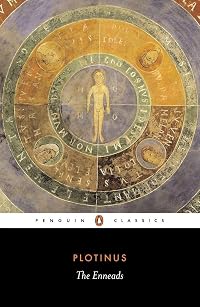
The Enneads: Abridged Edition (Penguin Classics)
by Plotinus, Stephen MacKenna (Translator)
On This Page
Description
Here is a highly original synthesis of Platonism, mystic passion, ideas from Greek philosophy, and variants of the Trinity and other central tenets of Christian doctrine by the brilliant thinker who has had an immense influence on mystics and religious writers. For more than seventy years, Penguin has been the leading publisher of classic literature in the English-speaking world. With more than 1,700 titles, Penguin Classics represents a global bookshelf of the best works throughout history show more and across genres and disciplines. Readers trust the series to provide authoritative texts enhanced by introductions and notes by distinguished scholars and contemporary authors, as well as up-to-date translations by award-winning translators. show lessTags
Recommendations






Member Reviews
the soul is a meteor / a blossom of light / burned by harsh skies. so influential it is the skeleton key to Christian thought and Renaissance Painting, a primary text alike the Timaeus, the Vedas, the Nikayas (which all happen to rhyme), and an indispensable guide to the mystic on how to become One with the Void. scaling up the Ennead of Parmenides 8 1 affirmative/negative to eventually reach the Top, an ineffable meta-principle. the circle of emanation and return is the ultimate story of the stuttering of the One, recoils of shots in the War in Heaven that sparked between the logos and the void that took place before the Fiat Lux, the war was not fought with missiles and spears but axioms of being, propositions and proofs in the show more vacuum. and God won through reflexion: in the Nothing only the tautology of identity is self-supporting. the One is the ultimate meta-tautology, Atum masturbating ouroborically, a self-study in henosis. the main concepts are the arborescent hierarchy of the One-Being-Intellect triad. this fractalizes and is responsible for spirit's descent into matter which one must eventually escape by tracing back up the emanationist ladder one has tragically fell down from. oneness is goodness because individuation commits an object to being an intelligible unity. there can be no distinction between inside and outside within the One, being and center as a dimensionless point, God's being is his centrality and yet also this flickering as its own emanationist contraction and expansion in all its quasi-gnostic contours with theses like the badness of Nature but doesn't quite reach finality. finality as gnosis cannot be voiced or even thematized, yet even a deeper truth is the apophatic non-conceptualization of a negative/unknowable God is yet another capture mechanism, the inclusion of its own negation within the meta-logic in the Game with Being as an internal production of the One, that black hole brain structure you see from time to time: the Demiurge is a donut. the annular repetition of the torus coinciding and retroactively refuting yet clarifying Campbell's monomyth: the Hero's Journey is really an immanentized Spirit's journey. somewhere Plotinus says that the Odyssey is the eternal story of the Journey of the Spirit. spirit always has a story to tell precisely because it's there to tell it, because its being and its telling are one and the same. the One's overflow is the jouissance that fissions into Two. there is no room for a positive Evil in Plotinus only privations just as the monists before him, the Nous for him is Good. the Gnostic co-opts it as the origin of Evil, determination: the Demiurge. the je ne sais quoi, things best left unsaid, the black square as an art piece, or better, a black Sphere. man as a creator is himself co-operating in demiurgy, his art and ornament distractions or reminders to re-member your true Self, like how re-membering the limbs of Osiris is akin to restructuring the estranged Self. Plotinus thought the world-soul was something like a star that radiates Light (internality) everywhere and "adheres" only in that substance given to adhere to it and this mutual relation between ground and issue became the principle of non-contradiction. the One neither is one, nor is. the hierarchy of Spirit is the only hierarchy climbed by its recognition: it is hierarchy as such, of which all others participate in only formally. the chain of being as it should be. symbols speak in rhizomatic bursts of signification. there will come a time you'll read in color. the One overflows because it overflows, yet this statement seems more like an evasion than anything else and perhaps even neoplatonism is yet another root in this meta-intellectual fingertrap of the Demiurge, which is the God creating this material world easily demonized to a being of affect, terror, sense and horror. one question resounds and echoes after all the mysticalization: why did the One plunge himself into nescience?
he who is self-luminous is his own shadow show less
he who is self-luminous is his own shadow show less
Plotinus creates a hierarchical cosmology that unites in the One. Humans (frontier beings) descend instantaneously from the One and strive to unite back with the One by avoiding Matter and Evil. He converses at great length about problems of evil, discusses beauty, and creates a unique and complex cosmology.
An interesting read and not as "profoundly wrong," as one may think and has some valid points. Although I agree that Plotinus errs with the concept of preserving identity, he does make a terrific argument.
An interesting read and not as "profoundly wrong," as one may think and has some valid points. Although I agree that Plotinus errs with the concept of preserving identity, he does make a terrific argument.
A major philosopher of the ancient world in the tradition of Plato. He developed a system of belief based on three principles: The One, The Intellect and The Soul. The composite of these principles is easily to prove the existence of God to most Christians, but it is unlikely that Plotinus meant any such thing - even though our concept of the Trinity seems to borrow an awful lot from him. A very difficult read.
Interesting, but profoundly wrong. For Plotinus: Beauty is Intelligence is Perfection is God is the Good.
Ratings
Members
- Recently Added By
Lists

100 Books to Read in a Lifetime (That Are Older Than 200 Years)
415 works; 176 members
Author Information

258+ Works 3,737 Members
Plotinus studied under Ammonius Sakkas and later moved to Rome, where he continued to develop his views and created a circle of faithful disciples, among them Porphyry the Phoenician (232--304), who edited Plotinus's Enneads and wrote works of his own, including The Life of Plotinus. Plotinus has been recognized as the last representative of Greek show more rationalism and one of the great thinkers of all times, having built a system that includes theories of reality, knowledge, ethics, esthetics, and theology. The main stock of Plotinus's ideas comes from the classical age of Greek philosophy, recast to counter problems that the winds of new doctrines ushered in along with the rising power of religious worship and the spreading expectation for salvation. Plotinus appeals to intellectual purity, an aspect often misunderstood as a concession to mysticism that lacks redeeming logical features. His philosophical system provides two ways to meet the demands of a fulfilled life. The first deals with finding one's place in a universe that is the result of the creative procession from the One, the source of all reality; the second is designed to effect the soul's "return" in a union with the One. Whereas the first way is metaphysical, the latter is ethical. The first brings understanding, the second grants blessedness. Plotinus's insights proved influential, and many of his disciples, chiefly Porphyry, sought to preserve and transmit them to subsequent generations of thinkers in other parts of the Roman world, Syria and Greece in particular. Iamblichus (died c.a.d.330), Syrianus (fl. c.431), and Proclus (410--485) worked out their own versions of Neoplatonism. The schools' activities ended when they were ordered closed in a.d. 529. Still, the ideas had taken on a life of their own and moved in new directions. Many of them already had been taken over by Christian intellectuals who were learning how to respond to the need to strengthen the rational side of their religion. (Bowker Author Biography) show less
All Editions
Work Relationships
Is an abridged version of
Common Knowledge
- Original publication date
- 305 CE
- Publisher's editor
- Keegan, Paul
- Blurbers
- Steiner, George
- Original language
- Ancient Greek
- Disambiguation notice
- This is the Penguin Classics abridgement of The Enneads. It should not be combined with the complete work.
Classifications
Statistics
- Members
- 616
- Popularity
- 47,358
- Reviews
- 4
- Rating
- (4.03)
- Languages
- English
- Media
- Paper, Audiobook, Ebook
- ISBNs
- 4
- ASINs
- 5