On This Page
Description
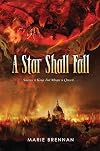
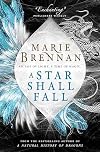
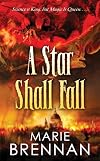
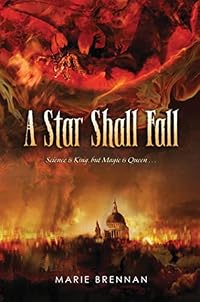
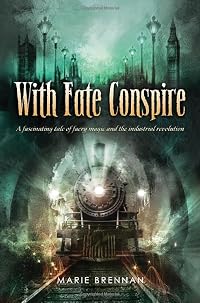
"The Royal Society of London plays home to the greatest minds of England. It has revolutionized philosophy and scientific knowledge. Its fellows map out the laws of the natural world, disproving ancient superstition and ushering in an age of enlightenment. To the fae of the Onyx Court, living in a secret city below London, these scientific developments are less than welcome. Magic is losing its place in the world?and science threatens to expose the court to hostile eyes. In 1666, a Great show more Fire burned four-fifths of London to the ground. The calamity was caused by a great Dragon?an elemental beast of flame. Incapable of destroying something so powerful, the fae of London banished it to a comet moments before the comet?s light disappeared from the sky. Now the calculations of Sir Edmond Halley have predicted its return in 1759. So begins their race against time. Soon the Dragon?s gaze will fall upon London and it will return to the city it ravaged once before. The fae will have to answer the question that defeated them a century before: How can they kill a being more powerful than all their magic combined? It will take both magic and science to save London?but reconciling the two carries its own danger?" --Cover, p. 4. show lessTags
Recommendations


























Member Reviews
This book has a bunch of stuff that I don't normally like - a faerie court, including toxic court politics, a damsel in distress (actually, more than one distressed damsel), plus bothwicked betrayal and a heartbreaking sacrifice . Plus it's chock full of white people (and white faeries) who are generally oblivious to racism, and all but one of the characters of color in the story show up in the context of an awful pseudo-scientific display of curiosities.
But somehow it all worked for me. The racism was actually relevant to the plot, providing a contemporary reader with useful information the characters didn't have (dramatic irony!), and it's a pleasant surprise to have a historical with faeries address the realities of race at all, even show more in the kind of side-on approach found here. The story was unpredictable and satisfying, and the characters were compelling. I think Marie Brennan's later work is stronger, but you can see the themes and approach taking shape here. show less
But somehow it all worked for me. The racism was actually relevant to the plot, providing a contemporary reader with useful information the characters didn't have (dramatic irony!), and it's a pleasant surprise to have a historical with faeries address the realities of race at all, even show more in the kind of side-on approach found here. The story was unpredictable and satisfying, and the characters were compelling. I think Marie Brennan's later work is stronger, but you can see the themes and approach taking shape here. show less
I fell into this series in the middle, so there's an extra star for some benefit of the doubt. The Onyx Court premise is a sort of Fae-in-London alternate history, and Brennan does a good job of tying her story to the place and time and of tying worlds together. The plot has good complexity and pace for the most part, and yet I struggled a bit to want to get to the end. Maybe it's down to characterization--there are interesting, well-motivated characters who nevertheless are all a little bland. If I'd read the other two books, maybe that would have helped me care more, hence the extra star.
Nicely complicated, with interesting characters. Faerie, and alchemy, and natural philosophy mixed up with court intrigue and society manners.
This is probably my favorite book in the Onyx Court series. It’s a much tighter story, and I got the sense of how closely the mortal and Faerie worlds influence one another, even if the monarchs aren’t tied. The ending made me want to read more about the Court and their reactions to the oncoming Industrial Revolution, what happened with Lune and the future of the Onyx Hall and the London fae. I also liked Abd al-Rashir, and the glimpse of non-European fae and their cultural differences. In all, a fun read and I would love to see more from Marie Brennan’s world.
Several years ago, Halley's Comet had passed by earth and the Faeries in London had exiled the dragon that caused the Great Fire to the cold stone never to trouble them again - or so they thought. Now, with the modern science of the 1750s, they know that the comet is returning, and with it, the dragon. They're in a race against time to find a way to defeat it before the comet reaches perihelion, or both their world and London itself may be destroyed.
What I thought was the first in a series is actually the third, so it's possible that I would have had a different reaction had I read the books in order. I felt that the characters of Lune, the Faerie queen under London; Galen, her human Prince of the Stone; and Irrith, a naive knight who show more simply hates politics, were difficult to get to know and figure out their motivations. That being said, it was quite easy for me to follow and from what I understand the other books in the series are set in different time periods. The writing fits the time period and the pacing is deliberate and covers over a year of time, which sometimes counterbalanced the urgency of the characters' attempts to defeat the dragon before its return. The historical details, especially about science and alchemy of that time period, were incorporated believably into the world building of Faerie and London. show less
What I thought was the first in a series is actually the third, so it's possible that I would have had a different reaction had I read the books in order. I felt that the characters of Lune, the Faerie queen under London; Galen, her human Prince of the Stone; and Irrith, a naive knight who show more simply hates politics, were difficult to get to know and figure out their motivations. That being said, it was quite easy for me to follow and from what I understand the other books in the series are set in different time periods. The writing fits the time period and the pacing is deliberate and covers over a year of time, which sometimes counterbalanced the urgency of the characters' attempts to defeat the dragon before its return. The historical details, especially about science and alchemy of that time period, were incorporated believably into the world building of Faerie and London. show less
***May Contain Spoilers For "In Ashes Lie"***
During the London fire of 1666 a powerful Dragon was born. It was first trapped in an iron box, but the box could not contain it so the fae banished it to a passing comet in 1682. However, Sir Edmond Halley of the newly formed Royal Society of London calculated that the comet would return. The Dragon is a hungry creature who wants to consume the Onyx Hall. Lune asks her Prince of the Stone, Galen St. Clair, to join the Royal Society to find a way to destroy it. Can mortal science help them save there court?
This was an enjoyable novel. It reads like a “hero’s journey.” The character of Galen St. Clair is young and untested. The only reason he became Lune’s prince was because he was in show more love with her. He knows that fae can only give their hearts to one person and that Lune’s love is the first Prince of the Stone, Sir Michael Deven, who died years ago. She made Galen Prince because her last consort died suddenly and he was the only London born mortal at hand. He grows and changes throughout the book and truly becomes a hero. The same can be said for the little sprite Irrith. She left the court for 50 years after being manipulated by a fae who wanted to usurp Lune’s throne. Irrith loses her naiveté and learns to care for others.
My only problem with this book is that Lune is not the central figure. She is pushed to the background and used as a symbol for the Onyx Court. I thought for a while that she would be killed and a new fae would become ruler. The Court is fading as London grows and the queen is fading too. Her character still acts like Elizabeth I, which is becoming out dated and shows how the court is becoming a part of the past. Still, her struggles were the focal point of the first two novels and I like the character better than the boyish sprite Irrith who takes center stage with Galen. show less
During the London fire of 1666 a powerful Dragon was born. It was first trapped in an iron box, but the box could not contain it so the fae banished it to a passing comet in 1682. However, Sir Edmond Halley of the newly formed Royal Society of London calculated that the comet would return. The Dragon is a hungry creature who wants to consume the Onyx Hall. Lune asks her Prince of the Stone, Galen St. Clair, to join the Royal Society to find a way to destroy it. Can mortal science help them save there court?
This was an enjoyable novel. It reads like a “hero’s journey.” The character of Galen St. Clair is young and untested. The only reason he became Lune’s prince was because he was in show more love with her. He knows that fae can only give their hearts to one person and that Lune’s love is the first Prince of the Stone, Sir Michael Deven, who died years ago. She made Galen Prince because her last consort died suddenly and he was the only London born mortal at hand. He grows and changes throughout the book and truly becomes a hero. The same can be said for the little sprite Irrith. She left the court for 50 years after being manipulated by a fae who wanted to usurp Lune’s throne. Irrith loses her naiveté and learns to care for others.
My only problem with this book is that Lune is not the central figure. She is pushed to the background and used as a symbol for the Onyx Court. I thought for a while that she would be killed and a new fae would become ruler. The Court is fading as London grows and the queen is fading too. Her character still acts like Elizabeth I, which is becoming out dated and shows how the court is becoming a part of the past. Still, her struggles were the focal point of the first two novels and I like the character better than the boyish sprite Irrith who takes center stage with Galen. show less
Halley's comet is returning and with it the Dragon, exiled there by the fae of the Onyx Court beneath London. For the last fifty years, they have been searching desperately for a way to defeat the Dragon, stop it from returning and consuming London--or perhaps the whole world--in fire. Their young, untried mortal Prince of the Stone, in hopeless love with Queen Lune, may have found the path to an answer, in mortal science or in alchemy. But at what price?
Members
- Recently Added By
Author Information

98+ Works 11,491 Members

Marie Brennan is a LibraryThing Author, an author who lists their personal library on LibraryThing.
Series

Common Knowledge
- Original publication date
- 2010-08-31
- People/Characters
- Galen St. Clair; Dr. Rufus Andrews; Lune; Dame Irrith; Rosamund Goodemeade; Gertrude Goodemeade
- Important places
- London, England, UK
- First words
- The room was a shabby one to contain the intellectual brilliance of England.
Classifications
Statistics
- Members
- 246
- Popularity
- 131,348
- Reviews
- 7
- Rating
- (3.60)
- Languages
- English
- Media
- Paper, Audiobook, Ebook
- ISBNs
- 11
- ASINs
- 5