
On This Page
Description
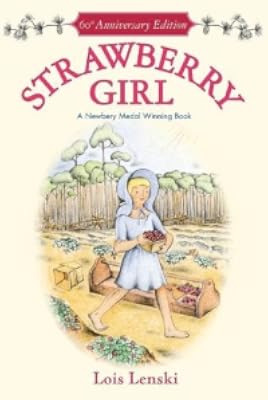
The Newbery Medal–winning childhood classic of life on a Florida farm—part of the Regional series from the author of the Mr. Small picture books.Birdie and her family are trying to build a farm in Florida. But it's not easy with the heat, droughts, and cold snaps—and neighbors that don't believe in fences. But Birdie won't give up on her dream of strawberries, and her family won't let those Slaters drive them from their home!
This Newberry Medal–winning novel presents a realistic show more picture of life on the Florida frontier.
This ebook features an illustrated biography of Lois Lenski including rare images and never-before-seen documents from the author's estate.
. show less
Tags
Recommendations
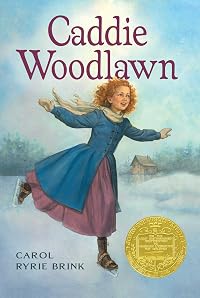

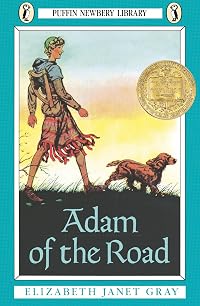


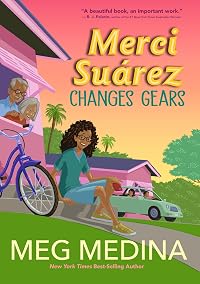
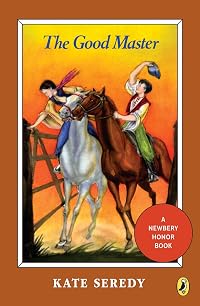





Member Recommendations
Member Reviews
"1984 called, Val. It wants you to read this book again."
And so I did, and what a bittersweet experience it was. I loved every moment of Strawberry Girl. Lois Lenski wrote in a realistic way for children. She did not pander to them in any way, nor did she try to insult their intelligence. What you have here is a story about children who lived lives of hard work, but they also had a connection to family and community. Where there is strife amongst neighbors, there's also the lesson of forgiveness and redemption.
Recommended for the hardy children who cut their teeth on Laura Ingalls Wilder.
(Can we get the rest of Lenski's works back in print please?)
And so I did, and what a bittersweet experience it was. I loved every moment of Strawberry Girl. Lois Lenski wrote in a realistic way for children. She did not pander to them in any way, nor did she try to insult their intelligence. What you have here is a story about children who lived lives of hard work, but they also had a connection to family and community. Where there is strife amongst neighbors, there's also the lesson of forgiveness and redemption.
Recommended for the hardy children who cut their teeth on Laura Ingalls Wilder.
(Can we get the rest of Lenski's works back in print please?)
When I was a kid, I loved Lois Lenski's Indian Captive so much that it got checked out of the library about every three or four trips - and we visited biweekly. I always wanted to read other books of hers, especially Strawberry Girl because it was about a girl growing up in Florida and I have always had a lot of pride in my Floridian heritage, but whenever I got to the shelf with the L's, I always ended up picking Indian Captive again.
I finally had an excuse to read Strawberry Girl last spring for an adolescent literature course assignment, wherein we had to read a Newbery Award winner and give a presentation. I hadn't thought about Lois Lenski in years, but browsing the list of titles, I was reminded by how often I had almost read show more Strawberry Girl as a kid, so I decided to finally do so. I really loved the book, though not as much as I like Indian Captive or another novel set on a Florida farm, Tangerine.
Just the other day, I was picking through my books to give some to a friend's kids and decided to read this one again. It was a quick read, and I managed it during my breaks over only two days, but I feel that I have a much different response to it than when I read it last year. I still like it, but I noticed a lot more that struck me as being very "1940s children's book".
The story can be summed up fairly simply: it's a slice of life sort of plot about two neighboring families in Polk County, Florida (as stated on page 75 in my copy) sometime between 1895 and 1902. The story begins with the Boyers moving into their new home, and it ends about a year later, with them having established a strawberry field and having received the profits from the first crop. The primary conflicts are between the Boyer family and the Slater family, who have lived in the same house for upwards of four generations and who are not very well pleased with the new way of farming that the Slaters have. Of course, at the end of the book, the Slaters have decided to give up their old ways and become more modern/civilized.
I have to admit that both times I've read this book, I got really sad around the end, when the Slaters decide to give up being cowmen and fence in their land, on account of the phosphorous company building fences anyway and destroying the land in order to get to the phosphorous. Even though this is about events a century ago, it's very much like what's going on more recently with the enormous growth in Florida, which is making the wild bits fewer and farther between. I grew up down here and my mom's family were Crackers just like the Boyers and Slaters, and I have such a love for the wild bits of Florida. It's just so dang beautiful, all the Spanish swords and live oaks and gators and armadillos and everything. So the end of the book, with the foreshadowing of the development of the state that was already in full-swing by the time Lois Lenski wrote about it in 1945, just makes my heart near to breaking.
Speaking of the development of Florida that goes on in the book, it's also the people who get civilized. I'm not sure that I'm so pleased with this aspect of the book, because it really plays up the stereotypes of Crackers. Not only do you get a really strong (and possibly off-putting, for some folks) written dialect whenever anyone speaks, but it's the family from up North who brings modernization and cleanliness and change (and even religion, for goodness sake) to the slow, lazy, ornery, and dirty folks from the South - even though the Northern family are poor farmers themselves, hailing from Marion County, Fla., via the Carolinas. One of the opening scenes has Birdie Boyer (the girl through whom the story is told) combing the Slater girls' hair - the Slater girls who had never seen a comb or mirror before in their lives! The final chapter has the schoolteacher correcting the children's speech even, which also bothered me, but then, I relished every use of "fixin" and "ary" and "studyin", because that's how my grandparents and their siblings talk, and though I grew up in a more urban area where the dialect has grown more like the standard US one, I find myself lapsing into those patterns when spending any time with my family.
So I'm not at all happy with the general movement of the story, with the whole colonialization thing, to use one of the words I learned from literary criticism classes. But I love the descriptions of the region, and I love reading the dialect (though many won't), and I love that this is a book about rural Florida. I can't say how many books I read as a kid that took place up North or out West, but I don't think I found hardly any that had the South for their settings, much less Florida. So even though I'm not well pleased with the theme of the plot itself, I love this book, and I think I'm not going to keep it for a while yet.
A note: the illustrations are more creepy than charming, looking through them again. Shoestring's face is so oddly drawn! show less
I finally had an excuse to read Strawberry Girl last spring for an adolescent literature course assignment, wherein we had to read a Newbery Award winner and give a presentation. I hadn't thought about Lois Lenski in years, but browsing the list of titles, I was reminded by how often I had almost read show more Strawberry Girl as a kid, so I decided to finally do so. I really loved the book, though not as much as I like Indian Captive or another novel set on a Florida farm, Tangerine.
Just the other day, I was picking through my books to give some to a friend's kids and decided to read this one again. It was a quick read, and I managed it during my breaks over only two days, but I feel that I have a much different response to it than when I read it last year. I still like it, but I noticed a lot more that struck me as being very "1940s children's book".
The story can be summed up fairly simply: it's a slice of life sort of plot about two neighboring families in Polk County, Florida (as stated on page 75 in my copy) sometime between 1895 and 1902. The story begins with the Boyers moving into their new home, and it ends about a year later, with them having established a strawberry field and having received the profits from the first crop. The primary conflicts are between the Boyer family and the Slater family, who have lived in the same house for upwards of four generations and who are not very well pleased with the new way of farming that the Slaters have. Of course, at the end of the book, the Slaters have decided to give up their old ways and become more modern/civilized.
I have to admit that both times I've read this book, I got really sad around the end, when the Slaters decide to give up being cowmen and fence in their land, on account of the phosphorous company building fences anyway and destroying the land in order to get to the phosphorous. Even though this is about events a century ago, it's very much like what's going on more recently with the enormous growth in Florida, which is making the wild bits fewer and farther between. I grew up down here and my mom's family were Crackers just like the Boyers and Slaters, and I have such a love for the wild bits of Florida. It's just so dang beautiful, all the Spanish swords and live oaks and gators and armadillos and everything. So the end of the book, with the foreshadowing of the development of the state that was already in full-swing by the time Lois Lenski wrote about it in 1945, just makes my heart near to breaking.
Speaking of the development of Florida that goes on in the book, it's also the people who get civilized. I'm not sure that I'm so pleased with this aspect of the book, because it really plays up the stereotypes of Crackers. Not only do you get a really strong (and possibly off-putting, for some folks) written dialect whenever anyone speaks, but it's the family from up North who brings modernization and cleanliness and change (and even religion, for goodness sake) to the slow, lazy, ornery, and dirty folks from the South - even though the Northern family are poor farmers themselves, hailing from Marion County, Fla., via the Carolinas. One of the opening scenes has Birdie Boyer (the girl through whom the story is told) combing the Slater girls' hair - the Slater girls who had never seen a comb or mirror before in their lives! The final chapter has the schoolteacher correcting the children's speech even, which also bothered me, but then, I relished every use of "fixin" and "ary" and "studyin", because that's how my grandparents and their siblings talk, and though I grew up in a more urban area where the dialect has grown more like the standard US one, I find myself lapsing into those patterns when spending any time with my family.
So I'm not at all happy with the general movement of the story, with the whole colonialization thing, to use one of the words I learned from literary criticism classes. But I love the descriptions of the region, and I love reading the dialect (though many won't), and I love that this is a book about rural Florida. I can't say how many books I read as a kid that took place up North or out West, but I don't think I found hardly any that had the South for their settings, much less Florida. So even though I'm not well pleased with the theme of the plot itself, I love this book, and I think I'm not going to keep it for a while yet.
A note: the illustrations are more creepy than charming, looking through them again. Shoestring's face is so oddly drawn! show less
How could a child read this book and complain about her life in 21st century America? The two families in this book suffer from the ravages of grasshoppers, illness, hunger, and jealousy. They argue and fight with each other, eventually going so far as to kill each other’s animals and set fire to the other’s farmhouse. A hardscrabble life complete with rattlesnakes and alligators and swamps. Yet there was also a beauty to this life, of neighbors helping each other, even when they have little for themselves. Some unbelievable elements---an alcoholic dad suddenly stops drinking and a child who never seems to do anything worse than get a little mad now and then---but all in all a worthwhile read.
In some ways, the piney woods of Florida is just as wild as the Wild West. Birdie Boyer's family is determined to make a go of strawberry farming, but they will have trouble not only with the hazards presented by the natural world, but also resistance from a cantankerous neighbor.
This book reminded me strongly of the Little House books, both in content and in writing style. Characters speak in the vernacular, which may present a challenge for some readers. The ending seemed rather deus ex machina to me. Still, I would probably recommend this to readers of all ages who can't get enough frontier fiction.
This book reminded me strongly of the Little House books, both in content and in writing style. Characters speak in the vernacular, which may present a challenge for some readers. The ending seemed rather deus ex machina to me. Still, I would probably recommend this to readers of all ages who can't get enough frontier fiction.
Strawberry Girl was originally published in 1945 and won the 1946 Newbery Medal for the most distinguished contribution to American children's literature. This was the second book in Lois Lenski's American Regionals series, 17 books about the lives of children in different regions of the country, published between 1943 and 1968.
This story takes place in Polk County, Florida (in the center of the state, east of Tampa), in the early 1900s (according to the author in her foreword, although that could mean the first half of the century). It centers on two Cracker neighbor families, the Slaters, squatters who raise cattle on open range, and the Boyers, newly-arrived landowners who want to raise strawberries and oranges. The main characters, show more ten-year-old Berthenia Lou "Birdie" Boyer and twelve-year-old Jefferson Davis "Shoestring" Slater, epitomize the conflicts and (sometimes) cooperation between the two families. The conflicts include killing each others' animals, and setting a fire hoping to burn the neighbor out.
In her Newbery acceptance speech*, Lenski said, "Because these are true-to-life stories, I have included...certain incidents which...authors, perhaps following some unwritten taboos, have not often used in children's books...We have not often put drunken fathers or malicious neighbors into a book for children. I have done this, and I would like to tell you why. These incidents are...true and authentic. They have happened not once but a hundred times in this particular locality, and have been experienced by the children as well as the adults. To leave them out and to pretend that such things never happen would be to present a false picture" (page 284).
Lenski spent two winters in Lakeland, Florida, meeting the people who would become characters in her book, and experiencing their lives. She also did extensive research, as she did with her earlier historical fiction, including Newbery Honor Books Phebe Fairchild (1937) and Indian Captive (1942). Much like the "lightning artist" in her story, Lenski carried her sketchbook with her in Florida. "Always a crowd of children gathered, eager to watch a drawing grow on a sheet of paper - and eager to tell me many things I wanted to know...My drawing helped, as nothing else could, to break down the barriers of suspicion. Drawing is a universal language which everybody understands" (page 281).
Lenski used local dialects in her American Regionals books, to provide
authenticity. Some reviewers, past and present, have criticized this. In her acceptance speech, Lenski said, "Speech is so much more than words--it is poetry, beauty, character, emotion. To give the flavor of a region, to suggest the moods of the people, the atmosphere of the place, speech cannot be overlooked...In the simplest of words, with only a minimum of distortions in spelling, this is what I have tried to convey. There may be some children who will find it difficult reading. But I am willing to make that sacrifice, because of all that those who do read it will gain, in the way of understanding 'the feel' of a different people, and the 'flavor' of a life different from their own" (pages 286-287).
An audiobook is an excellent way to experience this story. Narrator Natalie Ross was outstanding with the dialect, and even did a little singing. In the foreword of The Life I Live, Collected Poems, dated December 1964, Lenski said, "During the writing of the early Regionals, 1943-1949, I made a special study of American folksongs, in which I had long been interested, as well as a study of local dialects, and quoted some of these songs in my books."
The audiobook has two other positive features. At the end, Kathleen Horning, director of the Cooperative Children’s Book Center, "talks about the context in which Strawberry Girl was written, and how the problems and conflicts we see in the book relate to our world today." Also, the audiobook clearly indicates the beginning and end of each disc with banjo music, and even has some overlapping text at each end.
The dialect might be hard for younger children to handle on their own,
so for most elementary students, I'd recommend this book as an audiobook or a read-aloud. Lenski's descriptions are so good that I felt I did not need her illustrations to picture the action and setting in my mind.
I really enjoyed this book. I learned a lot about life in central Florida in the early twentieth century, with its underground lakes, sinkholes, and artesian wells, scrub oaks and pines, and palmettos. Not to mention the variety of critters they eat (like cooters, a soft-shelled water turtle) and encounter (alligators on the road, grasshoppers on the flowers, robins in the strawberries). Daily life on the farm (and the range) is described, as well as life in town - I loved Miss Liddy noting (on page 61) that "the millinery business shore is lively - you got to lend money, tend babies, make wax flowers, and stop dog fights!" And "quarrels did not keep people away from frolics" (page 82) - cane grinding led to candy pulling, while a drunk Sam Slater's shooting off his chickens' heads led to a chicken pilau feast.
The only thing I didn't like was the ending--but I won't spoil it here. I would like to read more of Lenski's American Regionals, and I can certainly see why Strawberry Girl won the Newbery.
© Amanda Pape - 2012
[*Lois Lenski, "Seeing Others as Ourselves," in Newbery Medal Books: 1922-1955, edited by Bertha Mahoney Miller and Elinor Whitney Field, The Horn Book, Inc, 1955, pages 278-287. This book, as well as the Strawberry Girl audiobook and a print copy, were borrowed from and returned to my university library.] show less
This story takes place in Polk County, Florida (in the center of the state, east of Tampa), in the early 1900s (according to the author in her foreword, although that could mean the first half of the century). It centers on two Cracker neighbor families, the Slaters, squatters who raise cattle on open range, and the Boyers, newly-arrived landowners who want to raise strawberries and oranges. The main characters, show more ten-year-old Berthenia Lou "Birdie" Boyer and twelve-year-old Jefferson Davis "Shoestring" Slater, epitomize the conflicts and (sometimes) cooperation between the two families. The conflicts include killing each others' animals, and setting a fire hoping to burn the neighbor out.
In her Newbery acceptance speech*, Lenski said, "Because these are true-to-life stories, I have included...certain incidents which...authors, perhaps following some unwritten taboos, have not often used in children's books...We have not often put drunken fathers or malicious neighbors into a book for children. I have done this, and I would like to tell you why. These incidents are...true and authentic. They have happened not once but a hundred times in this particular locality, and have been experienced by the children as well as the adults. To leave them out and to pretend that such things never happen would be to present a false picture" (page 284).
Lenski spent two winters in Lakeland, Florida, meeting the people who would become characters in her book, and experiencing their lives. She also did extensive research, as she did with her earlier historical fiction, including Newbery Honor Books Phebe Fairchild (1937) and Indian Captive (1942). Much like the "lightning artist" in her story, Lenski carried her sketchbook with her in Florida. "Always a crowd of children gathered, eager to watch a drawing grow on a sheet of paper - and eager to tell me many things I wanted to know...My drawing helped, as nothing else could, to break down the barriers of suspicion. Drawing is a universal language which everybody understands" (page 281).
Lenski used local dialects in her American Regionals books, to provide
authenticity. Some reviewers, past and present, have criticized this. In her acceptance speech, Lenski said, "Speech is so much more than words--it is poetry, beauty, character, emotion. To give the flavor of a region, to suggest the moods of the people, the atmosphere of the place, speech cannot be overlooked...In the simplest of words, with only a minimum of distortions in spelling, this is what I have tried to convey. There may be some children who will find it difficult reading. But I am willing to make that sacrifice, because of all that those who do read it will gain, in the way of understanding 'the feel' of a different people, and the 'flavor' of a life different from their own" (pages 286-287).
An audiobook is an excellent way to experience this story. Narrator Natalie Ross was outstanding with the dialect, and even did a little singing. In the foreword of The Life I Live, Collected Poems, dated December 1964, Lenski said, "During the writing of the early Regionals, 1943-1949, I made a special study of American folksongs, in which I had long been interested, as well as a study of local dialects, and quoted some of these songs in my books."
The audiobook has two other positive features. At the end, Kathleen Horning, director of the Cooperative Children’s Book Center, "talks about the context in which Strawberry Girl was written, and how the problems and conflicts we see in the book relate to our world today." Also, the audiobook clearly indicates the beginning and end of each disc with banjo music, and even has some overlapping text at each end.
The dialect might be hard for younger children to handle on their own,
so for most elementary students, I'd recommend this book as an audiobook or a read-aloud. Lenski's descriptions are so good that I felt I did not need her illustrations to picture the action and setting in my mind.
I really enjoyed this book. I learned a lot about life in central Florida in the early twentieth century, with its underground lakes, sinkholes, and artesian wells, scrub oaks and pines, and palmettos. Not to mention the variety of critters they eat (like cooters, a soft-shelled water turtle) and encounter (alligators on the road, grasshoppers on the flowers, robins in the strawberries). Daily life on the farm (and the range) is described, as well as life in town - I loved Miss Liddy noting (on page 61) that "the millinery business shore is lively - you got to lend money, tend babies, make wax flowers, and stop dog fights!" And "quarrels did not keep people away from frolics" (page 82) - cane grinding led to candy pulling, while a drunk Sam Slater's shooting off his chickens' heads led to a chicken pilau feast.
The only thing I didn't like was the ending--but I won't spoil it here. I would like to read more of Lenski's American Regionals, and I can certainly see why Strawberry Girl won the Newbery.
© Amanda Pape - 2012
[*Lois Lenski, "Seeing Others as Ourselves," in Newbery Medal Books: 1922-1955, edited by Bertha Mahoney Miller and Elinor Whitney Field, The Horn Book, Inc, 1955, pages 278-287. This book, as well as the Strawberry Girl audiobook and a print copy, were borrowed from and returned to my university library.] show less
Near the turn of the 20th century, 10-year-old Birdie Boyer's family buys a vacant farm in Florida's lake district. Birdie's father plans to grow strawberries and ship them north. Each family member must do a share of the work. They face several setbacks, particularly from their antagonistic neighbors, the cattle-raising Slaters. Through her parents' example and her own experience, Birdie learns how to react to adversity, how to manage conflict, how to cooperate toward a common goal, and the importance of values like kindness, hospitality, and forgiveness. I might hesitate to give this book to young readers who struggle with spelling since the story is dialogue heavy in a regional dialect with non-standard spelling. Otherwise, it's an show more inspirational story that will appeal to fans of Laura Ingalls Wilder's Little House books. show less
Not bad - the history was mildly interesting, and so was the ethnography. I would *not* have liked this as a child - much too implausible characterizations and interactions. Work hard, read your bible, avoid strong drink, and get advice from goody-two-shoes neighbors, and you'll be all set no matter what the weather or how many sandrats you get your 'pore' wife to produce. Right.
I will read others by the author and I will recommend other stories in the vein, like [b:Thimble Summer|10835176|Thimble Summer|Elizabeth Enright|https://d202m5krfqbpi5.cloudfront.net/books/1300714259s/10835176.jpg|840256] by [a:Elizabeth Enright|3420|Elizabeth Enright|https://d202m5krfqbpi5.cloudfront.net/authors/1196262204p2/3420.jpg]
Part of the 'American show more Regional' set:
Bayou Suzette.
Strawberry Girl.
Blue Ridge Billy.
Judy's Journey.
Boom Town Boy.
Cotton in My Sack.
Texas Tomboy.
Prairie School.
Corn-Farm Boy.
San Francisco Boy.
Flood Friday.
Houseboat Girl.
Coal Camp Girl.
Shoo-Fly Girl.
To Be a Logger.
Deer Valley Girl. show less
I will read others by the author and I will recommend other stories in the vein, like [b:Thimble Summer|10835176|Thimble Summer|Elizabeth Enright|https://d202m5krfqbpi5.cloudfront.net/books/1300714259s/10835176.jpg|840256] by [a:Elizabeth Enright|3420|Elizabeth Enright|https://d202m5krfqbpi5.cloudfront.net/authors/1196262204p2/3420.jpg]
Part of the 'American show more Regional' set:
Bayou Suzette.
Strawberry Girl.
Blue Ridge Billy.
Judy's Journey.
Boom Town Boy.
Cotton in My Sack.
Texas Tomboy.
Prairie School.
Corn-Farm Boy.
San Francisco Boy.
Flood Friday.
Houseboat Girl.
Coal Camp Girl.
Shoo-Fly Girl.
To Be a Logger.
Deer Valley Girl. show less
Members
- Recently Added By
Lists

Favorite Childhood Books
1,646 works; 517 members

Best Newbery Medal Winners
94 works; 54 members
Mensa for Kids Excellence in Reading Award Program (Grades 4-6)
64 works; 9 members
Honey For a Child's Heart
1,152 works; 25 members

Sonlight Books
1,487 works; 25 members

Children's Chapter Books from 1940s, ...
77 works; 4 members

Newbery Medal Winners - By Year
105 works; 7 members

Books about Frontier Life and Pioneers
55 works; 7 members

4th Grade Books
312 works; 5 members

CCE 1000 Good Books List
1,033 works; 12 members

One-room schools -- children's/young adult fiction
52 works; 5 members
Historical fiction -- children's/young adult fiction
39 works; 2 members

Books whose title names an object usually found in the kitchen
171 works; 14 members
Before Austen Comes Aesop
318 works; 9 members

Children's Literature 1900 - 1950 in order
413 works; 8 members

1970s
657 works; 23 members

Recommended Reading List
219 works; 1 member

Books We Loved As Children
603 works; 252 members

HMS: Make Your Child a Lover of Books, Ages 7-9
52 works; 2 members
Author Information

133+ Works 15,305 Members
Lois Lenski was born in Springfield, Ohio on October 14, 1893. After graduating from Ohio State University, she moved to New York to study art. She continued her studies in London, England and illustrate children's books written by others. She returned to the United States in 1921 and became an author and illustrator. In 1927, she published two show more books about her own childhood entitled Skipping Village and A Little Girl of 1900. She wrote nearly 100 books for children and young adults during her lifetime including the Mr. Small series, Bayou Suzette, Prairie School, Boomtown Boy, Judy's Journey, and High-Rise Secret. She received a Newbery Medal in 1946 for Strawberry Girl. She died on September 11, 1974 at the age of 80. (Bowker Author Biography) show less
Awards and Honors
Distinctions
Series

Work Relationships
Is contained in
Common Knowledge
- Canonical title
- Strawberry Girl
- Original title
- Strawberry Girl
- Original publication date
- 1945
- People/Characters
- Birdie Boyer; Dixie Boyer; Buzz Boyer; Dovey Boyer; Bunny Boyer; Shoestring Slater (Jefferson Davis Slater) (show all 10); Essie Slater; Zephy Slater; Gus Slater; Joe Slater
- Important places
- Florida, USA; Polk County, Florida, USA; USA
- Dedication
- For two little Florida friends, Betty Anne King and Barbara Smith
- First words
- "Thar goes our cow, Pa!" said the little girl.
- Last words
- (Click to show. Warning: May contain spoilers.)Then Ma played a hymn tune and they all crowded round the new organ and sang together:
"O Beulah land, sweet Beulah land,
As on thy highest mount I stand,
I look away across the sea
Where mansions are prepared for me
And view the shining glory-shore:
My heaven, my home forevermore." - Original language
- English
Classifications
- Genres
- Children's Books, Fiction and Literature
- DDC/MDS
- 813.52 — Literature & rhetoric American literature in English American fiction in English 1900-1999 1900-1945
- LCC
- PZ7 .L54 .S — Language and Literature Fiction and juvenile belles lettres Fiction and juvenile belles lettres Juvenile belles lettres
- BISAC
Statistics
- Members
- 3,483
- Popularity
- 4,751
- Reviews
- 48
- Rating
- (3.76)
- Languages
- English, Norwegian (Bokmål)
- Media
- Paper, Audiobook, Ebook
- ISBNs
- 30
- ASINs
- 32