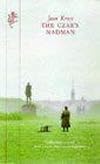
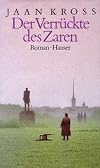
The Czar's Madman
by Jaan Kross
On This Page
Description
Timo von Bock's release by the Czar from nine years' incarceration does not spell the end of the Baron's troubles: he is confined to his Livonian estate to live under the constant eye of police informers planted among his own household, and is subjected to endless humiliations. It is claimed that he is a madman and in need of 'protection': a man would need to be insane, after all, to have taken a Czar at his word when asked for a candid appraisal of the state's infirmities. From the year of show more his release from prison and return to his wife Eeva, a woman of peasant stock to whom, with her brother Jakob, he has given a solid education, the Baron's life is recorded in a secret journal by this same Jakob, a shrewd and observant house-guest. Reconstructing the events leading up to the Baron's incarceration in 1818 and subsequent to his release in 1827, Jakob little by little brings to light mysteries surrounding the 'Czar's madman'. Was his madness genuine? What was the secret understanding between him and his boon companion Czar Alexander I, who committed him to prison? In The Czar's Madman Jaan Kross weaves together the elements of intrigue surrounding those historical characters who survived in post-Napoleonic Russia, and by a skillful shifting of chronology and viewpoints, creates a superbly rich and moving narrative. Winner of France's Best Foreign Book Award. show lessTags
Recommendations

















Member Reviews
This historical novel is based on the life of Timotheus von Bock (1787–1836), an aristocratic landowner in Estonia whose liberal ideals and excessive devotion to honesty led him in 1818 to send Czar Alexander I a sixty-page memorandum setting out what was wrong with absolutist rule in the Russian Empire and proposing a new constitution based on accountability and the rule of law. Possibly not a completely wise move. Alexander seems to have been fond of Timo, who had been his aide-de-camp as a young man, so instead of having him charged with treason he went for the milder option of declaring him insane and locking him up in solitary confinement in a gloomy fortress for nine years (but with a piano in his cell!). After Alexander's show more death, Timo is released into house-arrest on his own estate, but he remains officially insane and therefore legally incompetent.
Timo's liberalism is also manifested in his marriage to Eeva Mättik, an Estonian who was a serf in domestic service when he met her. He has bought the freedom of Eeva's whole family, and sent her and her elder brother Jakob to be educated by a clergyman friend before they marry. Eeva is a very strong character in the novel, resourceful and tireless in her campaigns to prevent Timo from being forgotten about and eventually getting him released.
It is the nosy and cynical Jakob who narrates the story through his secret diary of his life with Timo and Eeva during the period of house-arrest. He takes care to give us the necessary context for Timo's "radical" ideas, which he classes as being almost as progressive as Magna Carta. Timo, after all, is a proud member of a social class that traces its origins back to the Teutonic Knights, and has spent the last six hundred years treating the people of the Baltic region as little better than beasts of burden. (Kross notes in an afterword that in addition to that, Timo almost certainly knew the family tradition that his grandmother was an illegitimate daughter of Peter the Great, and that he would thus consider himself to have more genuine imperial blood in his veins than Alexander.)
Of course, this book was written in the 1970s, and what Jakob tells us about abuses of absolute power, foreign oppression of Estonians, and the misuse of the mental health system to silence dissidents is clearly also meant as covert criticism of the current situation in the Soviet Union, and the Baltic States in particular. What he tells us about Timo's experience of imprisonment and solitary confinement has a very strong sense of personal experience about it.
I found this slightly unsatisfying in narrative terms because Kross is rather reluctant to go beyond the things we have actual historical evidence for, so for instance Jakob's imaginative solution to the mystery of Timo's death is only put forward as a very tentative hypothesis, and not followed up in any way. But it is very strong in giving us a picture of the social situation in Baltic states in the early nineteenth century and in analysing the complicated intersections between protest against an oppressive regime and real or simulated madness. show less
Timo's liberalism is also manifested in his marriage to Eeva Mättik, an Estonian who was a serf in domestic service when he met her. He has bought the freedom of Eeva's whole family, and sent her and her elder brother Jakob to be educated by a clergyman friend before they marry. Eeva is a very strong character in the novel, resourceful and tireless in her campaigns to prevent Timo from being forgotten about and eventually getting him released.
It is the nosy and cynical Jakob who narrates the story through his secret diary of his life with Timo and Eeva during the period of house-arrest. He takes care to give us the necessary context for Timo's "radical" ideas, which he classes as being almost as progressive as Magna Carta. Timo, after all, is a proud member of a social class that traces its origins back to the Teutonic Knights, and has spent the last six hundred years treating the people of the Baltic region as little better than beasts of burden. (Kross notes in an afterword that in addition to that, Timo almost certainly knew the family tradition that his grandmother was an illegitimate daughter of Peter the Great, and that he would thus consider himself to have more genuine imperial blood in his veins than Alexander.)
Of course, this book was written in the 1970s, and what Jakob tells us about abuses of absolute power, foreign oppression of Estonians, and the misuse of the mental health system to silence dissidents is clearly also meant as covert criticism of the current situation in the Soviet Union, and the Baltic States in particular. What he tells us about Timo's experience of imprisonment and solitary confinement has a very strong sense of personal experience about it.
I found this slightly unsatisfying in narrative terms because Kross is rather reluctant to go beyond the things we have actual historical evidence for, so for instance Jakob's imaginative solution to the mystery of Timo's death is only put forward as a very tentative hypothesis, and not followed up in any way. But it is very strong in giving us a picture of the social situation in Baltic states in the early nineteenth century and in analysing the complicated intersections between protest against an oppressive regime and real or simulated madness. show less
A strange departure for me knowing next to nothing about Estonian history in any kind of detail, but Kross gives a fascinating insight into an Estonian spirit of gentle struggle, displacement, irony and compromise. http://www.guardian.co.uk/books/2003/jul/05/featuresreviews.guardianreview4 has given me more information, and I can't pad out what was going on in his writing better than this article can. The narrator is an unreliable one, which is always fun, and as a character, he grew on me towards the end, as he matured.
A historical novel translated from Estonian, set in 19th century Livonia which belonged to the Russian Empire at the time. It is written as a diary and tells the story of Timotheus von Bock through the eyes of his brother-in-law. Bock was imprisoned under Alexander I and released under Nicholas I, but had to remain on his own estate under supervision. The story is fascinating and the fact that most of the protagonists are real persons makes it even more fascinating. Timo was adjutant to the Czar, fought in the campaigns against Napoleon and was smitten with the ideas of the French revolution. He was a member of the German-speaking aristocracy descended from the Teutonic Knights who ruled the country in the Middle Ages, he chose his wife show more from the ranks of the Estonian peasants and had to buy her and her family from serfdom first. He provided a first-rate education for her and her brother Jakob, the diarist. They had to convert to Russian Orthodoxy before they could be married, and Eeva had to change her name. And barely a year after the marriage Timo is arrested and vanishes into one of the Czar's dungeons. Eeva/Katharina never stops trying to find him and finally, the new Czar Nicholas agrees to release him.
The book is full of little details that bring the country and its history to life: the snobbishness of the other aristocrats, the intellectual life (Heinrich Heine's poems arrive in Livonia a year after publication), the harsh winters, the first attempts at manufacturing. People are defined by their language, Estonian is "peasant speak", the native language of the aristocracy is German, but at court and among themselves they speak French, and of course the language of the state and of power is Russian.
The translation is excellent, as far as I can tell. It provides translations for the many French and Russian phrases scattered throughout the book, and also gives brief descriptions of the many historical persons mentioned. show less
The book is full of little details that bring the country and its history to life: the snobbishness of the other aristocrats, the intellectual life (Heinrich Heine's poems arrive in Livonia a year after publication), the harsh winters, the first attempts at manufacturing. People are defined by their language, Estonian is "peasant speak", the native language of the aristocracy is German, but at court and among themselves they speak French, and of course the language of the state and of power is Russian.
The translation is excellent, as far as I can tell. It provides translations for the many French and Russian phrases scattered throughout the book, and also gives brief descriptions of the many historical persons mentioned. show less
don't worry: no spoilers here
First, let me say that I would recommend this book to readers who enjoy historical fiction, and not what often passes for historical fiction; i.e., romantic novels set in an historical period. The Czar's Madman is not an easy read and demands patience and thorough reading, so if you're looking for light historical fiction this isn't the book for you. Otherwise, if, like myself, you enjoy fiction set during the Czarist period in Russia (which lasted, actually, through 1917), then don't miss this one.
The author assumes that the reader is going to have some basic knowledge of Russian history, and I did find that a basic understanding was helpful. I had to go to the Internet a few times to set myself straight on show more a few things, but then again, I'm weird -- I can't read something like this unless I have a vague knowledge of the setting of the story.
The book is done as a journal kept by Jakob Mattik over the span of some 30 or so years. Jakob is the brother-in-law of Timotheus von Bock, the main character of the story, the so-called Czar's Madman. It is set in post-Napoleonic Russia, during the reigns of Alexander I and Nicholas I. Von Bock was a trusted general and confidant to Alexander I; after the Napoleonic Wars, he returned to his native Livonia (modern-day Estonia) and decided that he would take a wife. Rather than going the normal route of marrying within his class or station, he decided to take a peasant woman as a wife, as part of his plan to "prove the equality of all human beings before God, nature and his ideals." (9) So after three weeks of knowing Eeva (Jakob's sister, later to be known as Katharina/Kitty), who was 13 or 14 at the time they became engaged, he proposed to her and had Eeva and Jakob sent off to a private school -- Eeva to learn the skills needed to become one of the nobility; Jakob to keep Eeva company during her time there. By age 19, Eeva's education was complete and she and Von Bock married and returned to Livonia to settle. But VonBock, a man with a conscience, is soon arrested and taken away to be held prisoner at a high-security prison, because he sent Czar Alexander a letter describing everything that was wrong with his rule and with Russia under the Czar's tyranny. As the novel opens, VonBock is being released because he has been found to be "insane," and is sent home to Livonia to live out his years under surveillance. But the question absorbing Jakob's time focuses on the truth of VonBock's insanity -- was he really crazy, or as Jakob notes: did VonBock's "madness lie in his sense of honor?" (141)
That's just the beginning...the rest of Jakob's diary is a look at life in Livonia at the time, and the reach that the Czar had in the Balkans. It is also a look at Russia under the reign of the Czars, society and the hopes held for the future.
A really outstanding read, one I have no problems recommending. show less
First, let me say that I would recommend this book to readers who enjoy historical fiction, and not what often passes for historical fiction; i.e., romantic novels set in an historical period. The Czar's Madman is not an easy read and demands patience and thorough reading, so if you're looking for light historical fiction this isn't the book for you. Otherwise, if, like myself, you enjoy fiction set during the Czarist period in Russia (which lasted, actually, through 1917), then don't miss this one.
The author assumes that the reader is going to have some basic knowledge of Russian history, and I did find that a basic understanding was helpful. I had to go to the Internet a few times to set myself straight on show more a few things, but then again, I'm weird -- I can't read something like this unless I have a vague knowledge of the setting of the story.
The book is done as a journal kept by Jakob Mattik over the span of some 30 or so years. Jakob is the brother-in-law of Timotheus von Bock, the main character of the story, the so-called Czar's Madman. It is set in post-Napoleonic Russia, during the reigns of Alexander I and Nicholas I. Von Bock was a trusted general and confidant to Alexander I; after the Napoleonic Wars, he returned to his native Livonia (modern-day Estonia) and decided that he would take a wife. Rather than going the normal route of marrying within his class or station, he decided to take a peasant woman as a wife, as part of his plan to "prove the equality of all human beings before God, nature and his ideals." (9) So after three weeks of knowing Eeva (Jakob's sister, later to be known as Katharina/Kitty), who was 13 or 14 at the time they became engaged, he proposed to her and had Eeva and Jakob sent off to a private school -- Eeva to learn the skills needed to become one of the nobility; Jakob to keep Eeva company during her time there. By age 19, Eeva's education was complete and she and Von Bock married and returned to Livonia to settle. But VonBock, a man with a conscience, is soon arrested and taken away to be held prisoner at a high-security prison, because he sent Czar Alexander a letter describing everything that was wrong with his rule and with Russia under the Czar's tyranny. As the novel opens, VonBock is being released because he has been found to be "insane," and is sent home to Livonia to live out his years under surveillance. But the question absorbing Jakob's time focuses on the truth of VonBock's insanity -- was he really crazy, or as Jakob notes: did VonBock's "madness lie in his sense of honor?" (141)
That's just the beginning...the rest of Jakob's diary is a look at life in Livonia at the time, and the reach that the Czar had in the Balkans. It is also a look at Russia under the reign of the Czars, society and the hopes held for the future.
A really outstanding read, one I have no problems recommending. show less
Jakob's sister Eeva marries Timo van Bock, the "madman." Jakob's life becomes intertwined with that of Timo and Eeva, now going by the name Katarina. The setting spans about 20 years, beginning in the 1810s. Timo wrote a letter to the czar which sent him to prison for awhile. He's eventually released because of his "madness." The narrative is written in the form of Jakob's diary. There are a couple of places in which there is untranslated Russian text, making it awkward for English readers who don't know the Russian language. While the narrative may be more engaging the in the language in which it was originally written, it failed to capture my attention. Knowing more about life and government in the Baltic Republics during the period show more in which this novel was set, particularly Estonia where this is mostly set, would have been advantageous. The book is a fictionalized account based upon real persons who lived at that time. The book may work better for those with a background in Eastern European studies. show less
Meisterlikult kirjutatud ajalooline draama. Uskumatu, et tegelikult ajalooline fiktsioon, mis kirja pandud 20.-l sajandi teisel poolel, ehk ikkagi kaasajal, mitte 19.-l sajandil, mil romaani tegevus toimub, ja et see päriselt ei põhinegi tol ajal elanud Jakob Mättik'u päevaraamatu märkmetel. Või siiski põhineb? Päevaraamatu kirjutamise laad on lihtsalt nii usutav. Kerge on kujutleda end samasse ajastusse ja nähtamatuna tegelaste keskele.
Ei ütleks, et romaaniks vormitud päevaraamat sisaldaks ülemäära palju sündmusi ja väga kirjusid elulugusid, aga kõik sündmused kui väikesed tahes, on esitatud kaasahaaravalt, ja mis ehk peamine, tähendusrikkalt ning jutustaja rollis arutlevalt.
See romaan süvendas kindlasti minu show more ajaloohuvi ning konkreetsemalt huvi 19.-sajandi alguse ja keskpaiga sündmuste ja inimeste vastu, millest ma ülemäära palju ei tea.
Ühtlasi kinnitas see lugu arusaama, et suured sündmused ja muutused saavad teoks läbi tõearmastuse, aususe, tahte- ja meelekindluse ning tugeva vaimu. Et isegi üks on lahinguväljal sõdur, peab ilmselt paika. Keegi aga ei suuda end lõpuni realiseerida ilma tõelise toetuse ja ennekõike armastuseta. show less
Ei ütleks, et romaaniks vormitud päevaraamat sisaldaks ülemäära palju sündmusi ja väga kirjusid elulugusid, aga kõik sündmused kui väikesed tahes, on esitatud kaasahaaravalt, ja mis ehk peamine, tähendusrikkalt ning jutustaja rollis arutlevalt.
See romaan süvendas kindlasti minu show more ajaloohuvi ning konkreetsemalt huvi 19.-sajandi alguse ja keskpaiga sündmuste ja inimeste vastu, millest ma ülemäära palju ei tea.
Ühtlasi kinnitas see lugu arusaama, et suured sündmused ja muutused saavad teoks läbi tõearmastuse, aususe, tahte- ja meelekindluse ning tugeva vaimu. Et isegi üks on lahinguväljal sõdur, peab ilmselt paika. Keegi aga ei suuda end lõpuni realiseerida ilma tõelise toetuse ja ennekõike armastuseta. show less
Jun 11, 2010Estonian
Ratings
Members
- Recently Added By
Lists

EU Fiction: 1950-2022
223 works; 68 members

Books That Made Us Cry
278 works; 145 members

Canon de la narrativa universal del s. XX (cicutadry)
499 works; 3 members

Favorite Books in Translation
320 works; 133 members
Author Information

72+ Works 1,298 Members
Some Editions
Awards and Honors
Awards
Distinctions
Series
Belongs to Publisher Series
Common Knowledge
- Canonical title
- The Czar's Madman
- Original title
- Keisri hull
- Original publication date
- 1978 (Estonian) (Estonian)
- People/Characters
- Timotheus von Bock
- Important places
- Estonia; Russia
- Original language
- Estonian
Classifications
- Genres
- Fiction and Literature, General Fiction, Historical Fiction
- DDC/MDS
- 894.54532 — Literature & rhetoric Literatures of other languages Literatures of Altaic, Uralic, Hyperborean, Dravidian languages; literatures of miscellaneous languages of south Asia Finno-Ugric languages Finnic languages Estonian Estonian fiction 1861–1991
- LCC
- PH666.21 .R6 .K413 — Language and Literature Uralic languages. Basque language Uralic. Basque Other Finnic languages and dialects Estonian
- BISAC
Statistics
- Members
- 289
- Popularity
- 111,840
- Reviews
- 6
- Rating
- (3.71)
- Languages
- 12 — Dutch, English, Estonian, Finnish, French, German, Italian, Norwegian, Portuguese, Russian, Spanish, Swedish
- Media
- Paper, Ebook
- ISBNs
- 37
- ASINs
- 2