The Ascent of Rum Doodle
by W. E. Bowman
On This Page
Description
First published in 1956, "The Ascent of Rum Doodle" quickly became a mountaineering classic. As an outrageously funny spoof about the ascent of a peak in the Himalayas, many thought it was inspired by the 1953 conquest of Everest. But Bowman had drawn on the flavor and tone of earlier adventures, of Bill Tilman and his 1937 account of the Nandi Devi expedition. The book's central and unforgettable character, Binder, is one of the finest creations in comic literature.Tags
Recommendations





























Member Recommendations
Stbalbach Rum Doodle (novel; 1956) is a parody of Annapurna (1952)

Member Reviews
I just love it when I come across a novel like The Ascent of Rum Doodle (Vintage) by W.E, Bowman, and cannot imagine how I have avoided it for so long. This is an absolutely wonderful, gem of a book. Written in 1956 it is a hilarious parody of British exploratory expeditions, in this case an assault on the previously unconquered Rum Doodle, which at 40,000 feet is the highest mountain in the world. The romantic idea, so prevalent at the moment, of the gifted amateur winning through with just sheer bravado and a seasoning of spunk is writ large here and the result is laugh out loud funny. Each team member is delightfully characterised with their fragile relationship and ineffectualness put into sharp relief by the professional ease of show more the local porters. The crevasse scene where one by one, armed only with champagne, the team are lowered in to rescue those that went before, will stay with me for a long time. At 171 pages it is a must to tuck away somewhere in your holiday luggage or to content yourself with that you are happiest staying at home. There’s also a lovely 2001 introduction by Bill Bryson which I recommend you read after you have read the actual book - it’s nice to have the reward then as you will definitely want to know more at that point. show less
A semi-forgotten English comic classic, this spoof mountaineering memoir didn't make much impact when it came out in 1956, and it threatened to disappear altogether when the original publisher went bankrupt a few years later. For a long time it was only available in a kind of samizdat edition produced by a specialist climbing publisher, but it gradually turned into a cult classic among mountaineers. Few people had actually seen it, but everyone knew about it and made knowing references to the title and the number "153", which is a kind of leitmotif in the story.
Rum Doodle's return to the mainstream seems to have been partly precipitated by the accident that Bill Bryson ended up with the Times's discarded review copy of the original show more edition, enjoyed it, and chanced to mention it favourably in a column some decades later. Bowman's widow got in touch with him, one thing led to another, and eventually a new mainstream edition came out in 2001 with an introduction by Bryson to make sure it didn't go under again.
The book claims to be a straightforward account of the first ascent of the mountain Rum Doodle, elevation 40,000' 6", in the remote Himalayan region of Yogistan, by a team of seven British climbers and their 3000 Yogistani porters (due to a translation error there are actually 30 000 waiting for them initially, but they manage to pay off the superfluous ones). The narrator, the team-leader "Binder", beautifully captures the essential tone of modest heroism, whilst inadvertently revealing to the reader a history of bumbling, incompetence and selfishness in the finest traditions of Three men in a boat. Binder and his companions, attempting to run away from the much feared camp-cook Pong, somehow end up climbing the subsidiary summit North Doodle (some way south of the main summit), whilst another translation mix-up leads to the porters moving Base Camp and the stretcher-bound expedition doctor, aptly named Prone, to the summit of Rum Doodle itself.
Of course, even though the running joke is that the local porters are far fitter, stronger, and more competent and resourceful than the British team members, and end up doing almost all the useful climbing work, seventy years on it's inevitable that some of the jokes about Yogistanis and their culture will seem in rather poor taste. You can't make fun of imperialist attitudes in this sort of context without implicating the reader in those attitudes at least a little bit. And Bowman is firmly in a tradition of humour that is more Edwardian than 1950s, anyway. But within those limits, this is a book that still has a lot of laughs to offer the 21st century reader. Bowman's style is slow-firing, but it gets under your skin.
153 stars. show less
Rum Doodle's return to the mainstream seems to have been partly precipitated by the accident that Bill Bryson ended up with the Times's discarded review copy of the original show more edition, enjoyed it, and chanced to mention it favourably in a column some decades later. Bowman's widow got in touch with him, one thing led to another, and eventually a new mainstream edition came out in 2001 with an introduction by Bryson to make sure it didn't go under again.
The book claims to be a straightforward account of the first ascent of the mountain Rum Doodle, elevation 40,000' 6", in the remote Himalayan region of Yogistan, by a team of seven British climbers and their 3000 Yogistani porters (due to a translation error there are actually 30 000 waiting for them initially, but they manage to pay off the superfluous ones). The narrator, the team-leader "Binder", beautifully captures the essential tone of modest heroism, whilst inadvertently revealing to the reader a history of bumbling, incompetence and selfishness in the finest traditions of Three men in a boat. Binder and his companions, attempting to run away from the much feared camp-cook Pong, somehow end up climbing the subsidiary summit North Doodle (some way south of the main summit), whilst another translation mix-up leads to the porters moving Base Camp and the stretcher-bound expedition doctor, aptly named Prone, to the summit of Rum Doodle itself.
Of course, even though the running joke is that the local porters are far fitter, stronger, and more competent and resourceful than the British team members, and end up doing almost all the useful climbing work, seventy years on it's inevitable that some of the jokes about Yogistanis and their culture will seem in rather poor taste. You can't make fun of imperialist attitudes in this sort of context without implicating the reader in those attitudes at least a little bit. And Bowman is firmly in a tradition of humour that is more Edwardian than 1950s, anyway. But within those limits, this is a book that still has a lot of laughs to offer the 21st century reader. Bowman's style is slow-firing, but it gets under your skin.
153 stars. show less
It is difficult to sustain parody through the length of a novel, even a short (171 pages) one such as The Ascent of Rum Doodle. Yet W. E. Bowman's subtle humor seldom palls and indeed the book grows funnier the further one reads.
The Ascent of Rum Doodle purports to be a report of a British mountain-climbing expedition, and the tone is perfect. Although it was published not long after the conquest of Everest by Sir Edmund Hillary and Tenzing Norgay, it is said to have been inspired by an earlier account of an expedition that took place in the 1930s, and indeed has more of the flavor of that earlier time. The account of the struggles of the climbers to learn the use of their radio sets, and their arguments about using oxygen, seem to show more belong more to the 30s than the 50s (and are extremely funny as well!)
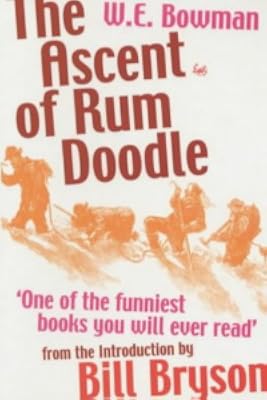
It is not at all necessary to have climbed a mountain or taken part in any sort of expedition to chuckle frequently and occasionally laugh heartily at this book. Bill Bryson, one of the funniest writers working today, says in his Introduction to this edition that it is "one of the funniest books you will ever read," and I can't disagree. It's well deserving of a place in the Comedy category of the Guardian's 1000 Novels Everyone Must Read.
flag show less
The Ascent of Rum Doodle purports to be a report of a British mountain-climbing expedition, and the tone is perfect. Although it was published not long after the conquest of Everest by Sir Edmund Hillary and Tenzing Norgay, it is said to have been inspired by an earlier account of an expedition that took place in the 1930s, and indeed has more of the flavor of that earlier time. The account of the struggles of the climbers to learn the use of their radio sets, and their arguments about using oxygen, seem to show more belong more to the 30s than the 50s (and are extremely funny as well!)
It is not at all necessary to have climbed a mountain or taken part in any sort of expedition to chuckle frequently and occasionally laugh heartily at this book. Bill Bryson, one of the funniest writers working today, says in his Introduction to this edition that it is "one of the funniest books you will ever read," and I can't disagree. It's well deserving of a place in the Comedy category of the Guardian's 1000 Novels Everyone Must Read.
flag show less
It's like Voltaire meets Python. It's occasionally corny and sometimes redundant, but often laugh-out-loud funny with great sardonic British wit. I think it could appeal to all ages, but would make a great gift for anyone 10-16 or so. Also a good read for the beach or traveling.
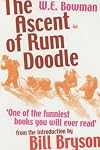
I read an article in Slightly Foxed quarterly recommended this. On receiving it, I was a little annoyed to see Bill Bryson's name larger than the author's on the cover! (Bryson wrote a new introduction.)
That aside, this is a splendid book. The narrator brings together a motley crew of mountaineers and porters to attempt the ascent of an unconquered mountain. I won't spoil the book by giving away the characteristics of the men - part of the joy of the book is finding that out. However, I will state that my favourite parts are those in which the narrator (the leader of the expedition) attempts to engage his fellow mountaineers in conversation about their fiancées or wives. Their stories become more far-fetched as the book goes on. I show more particularly enjoyed the one involving the seal...
You don't need any interest in mountaineering to enjoy the book. It's a quick read, and very much in the same style as Three Men in a Boat (as I believe one of the quotes on the back cover says). show less
That aside, this is a splendid book. The narrator brings together a motley crew of mountaineers and porters to attempt the ascent of an unconquered mountain. I won't spoil the book by giving away the characteristics of the men - part of the joy of the book is finding that out. However, I will state that my favourite parts are those in which the narrator (the leader of the expedition) attempts to engage his fellow mountaineers in conversation about their fiancées or wives. Their stories become more far-fetched as the book goes on. I show more particularly enjoyed the one involving the seal...
You don't need any interest in mountaineering to enjoy the book. It's a quick read, and very much in the same style as Three Men in a Boat (as I believe one of the quotes on the back cover says). show less
You can't call yourself a mountaineer unless you've read this book. It's "the" classic spoof of Himalayan climbing in the siege era of the 30s through 50s.
It's like Voltaire meets Python. It's occasionally corny and sometimes redundant, but often laugh-out-loud funny with great sardonic British wit. I think it could appeal to all ages, but would make a great gift for anyone 10-16 or so. Also a good read for the beach or traveling.
Members
- Recently Added By
Lists

The Guardian's 1000 Novels Everyone Must Read
1,005 works; 547 members

Top Five Books of 2013
1,562 works; 721 members

Books Read in 2023
5,547 works; 145 members

in the name of the game ~ sport novels
23 works; 2 members

Mustich's 1000 Books to Read Before You Die: A Life Changing List
1,001 works; 19 members

Books mentioned in The Diary of a Bookseller
26 works; 1 member
Author Information

4 Works 733 Members
Some Editions
Awards and Honors
Series
Belongs to Publisher Series
Work Relationships
Is contained in
Common Knowledge
- Canonical title
- The Ascent of Rum Doodle
- Original title
- The Ascent of Rum Doodle
- Original publication date
- 1956
- Dedication
- To George and Margot
- First words
- It is with pleasure as well as with a sense of privilege that I associate myself with this account of the climbing of the world's highest mountain.
- Quotations
- I scribbled a message: 'Please tell me what to do.' I wrapped this around the neck of a champagne bottle, tied the line round it and lowered it into the crevasse. I gave them five minutes to reply and hauled up the line. The ... (show all)message read: 'Send down another bottle.'
- Last words
- (Click to show. Warning: May contain spoilers.)Burley put his hand on my shoulder, and together we made our way through gathering darkness to our halting-place in the valley.
Classifications
Statistics
- Members
- 674
- Popularity
- 42,577
- Reviews
- 30
- Rating
- (3.65)
- Languages
- 5 — English, French, German, Italian, Spanish
- Media
- Paper, Audiobook, Ebook
- ISBNs
- 27
- ASINs
- 15