
A. Alvarez (1929–2019)
Author of The Savage God: A Study of Suicide
About the Author
A. Alvarez is the author of the acclaimed Where Did It Go All Right: A Memoir as well as the classic The Savage God: A Study of Suicide, The Biggest Game in Town, and several other works. His work has long appeared in The New Yorker and the New York Review of Books
Image credit: Credit: walnut whippet (Flickr user), 2006
Series
Works by A. Alvarez
Associated Works
A Sentimental Journey Through France and Italy (1768) — Introduction, some editions — 1,955 copies, 27 reviews
Penguin Modern European Poets : Miroslav Holub : selected poems (1967) — Advisory editor, Introduction — 58 copies
Penguin Modern European Poets : Paavo Haavikko and Tomas Tranströmer : selected poems (1974) — Advisory editor — 24 copies
Tagged
Common Knowledge
- Legal name
- Alvarez, Alfred
- Birthdate
- 1929-08-05
- Date of death
- 2019-09-23
- Gender
- male
- Education
- University of Oxford (Corpus Christi College)
- Occupations
- poet
writer
critic - Organizations
- The Observer
Climbers' Club
New York Review of Books - Awards and honors
- Vachel Lindsay Prize for Poetry (1961)
- Relationships
- Plath, Sylvia (friend)
- Nationality
- UK
- Birthplace
- London, England, UK
- Place of death
- London, England, UK
- Associated Place (for map)
- London, England, UK
Members
Reviews

This book has been around for fifty years; the copy I borrowed from the library looks its age. The black cloth spine has faded to gray, and the covers have strips to match after being shelved between two books not as tall. It shows signs of use—-I estimate it's been read about ten times, or once every five years or so.
I'm immersing myself in Sylvia Plath at the moment, and I saw this referenced. A second reason I'm glad I came across it is that I recently read a well-meaning but ultimately show more unsatisfying anti-suicide tract disguised as a novel. The Savage God (the title is from Yeats, number three on the list of book title sources, after the Bible and Shakespeare) is a more substantial treatment of the topic.
Alvarez knew Sylvia Plath and her husband, Ted Hughes. The book opens with his memoir of their friendship and of Plath's suicide, which is why it appeared listed among further reading at the end of a reference article on her. Alvarez, too, attempted suicide. His account of that episode closes the book, a counterpart to the opening memoir.
The book's main body is divided into three parts of unequal length, with Part Three slightly longer than the first two parts combined. Part One, The Background, briefly traces the history of attitudes toward suicide, from pagan abhorrence to the Stoic embrace of the act. I felt Alvarez did an excellent job of tracing the varying Christian attitude. Both Old and New Testaments record acts of taking one's own like, but not polemically. Augustine had a significant role in the church's condemnation of it. Alvarez points out that this was when martyrdom was becoming rare; until then, it was superfluous to take one's own life since there was ample opportunity to die for one's faith. From the early middle ages to modern times, anyone who committed suicide was made to suffer severe post-mortem dishonor (exclusion from cemeteries, desecration of the corpse, forfeit of his estate to the state).
In Part Two, Alvarez describes six common fallacies about suicide, theories about it in sociology and psychology, and what Alvarez calls feelings about suicide (the complex motives of those who attempt it).
All of this is preliminary to the focus of Alvarez's inquiry: suicide and literature. This is not primarily about how suicide is treated in literature (Goethe's Werther does come up, but Emma Bovary, Anna Karenina, and others do not). Instead, Alvarez investigates suicide reflected in the life and attitudes of writers, beginning with Dante. From him, Alvarez turns to John Donne, the first to write a defense of taking one's own life, then to Thomas Chatterton, who became the prototype of the poet as tragic martyr to his art, a pattern for the Romantic age that followed. Kierkegaard and Dostoevsky are emblematic of the transition to the twentieth century. Then the absurd carnage of World War One laid the groundwork for Dada, in which suicide became stylized as a work of art. In the final chapter, with the same title as the book, Alvarez sums up his thesis with a survey of literature in the half-century between the Great War and the time of this book's writing, beginning with Wilfried Owen. Owen did not commit suicide but returned to the trenches even though he needn't have. But he felt impelled to witness and record the "blindfold look" of those he served alongside, the response to senseless slaughter.
This numbness is characteristic, for Alvarez, of the modern world. "Under the energy, appetite, and constant diversity of the moderns arts," he writes, "is that obdurate core of blankness and insentience which no amount of creative optimism and effort can wholly break down or remove." Alvarez posits two ways in which art has responded to this. One he calls Totalitarian Art, which is not, he notes, the same as traditional art in a totalitarian society. Rather, it is minimal art, stripped of all that traditionally marks the production of creative individuals, since such creators are of no use to the totalitarian state. The opposite is what Alvarez calls Extremist Art. Not nihilist, as Dada was, nor solely confessional, as the Beats are, this is produced by those who have studied and absorbed the forms of technical mastery T. S. Eliot and others of the prior generation, yet confronts the "violent confusions" of its time. Alvarez names as the leading exponents of this style in English-language poetry Robert Lowell, John Berryman, Ted Hughes, and Sylvia Plath. Theirs is poetry that reveals the poet's life; nevertheless, it's the work that is important. The breakdown of one or the suicide of another "adds nothing to the work and proves nothing about it."
In the case of Plath, Alvarez is convinced that her death was the result of a miscalculation. Whereas an attempt ten years earlier was meticulously planned and seemingly insulated against discovery, this one seemed ambivalent (next to her body was a note with the name and telephone number of her doctor). "Her calculation went wrong and she lost," he writes, adding that she wouldn't have approved readers coming to her work because her death had somehow validated the writing.
Alvarez researched his topic extensively, and the result is not light reading. Instead, it is challenging, both in its thesis and prose (which some readers might find dense, although I admired it). In the end, the book can either be viewed as using the lives of writers to illustrate changing attitudes toward suicide or as a work of literary criticism that employs the topos of suicide to dissect and analyze literary trends. I thought it was an ambitious work, well worth reading. show less
I'm immersing myself in Sylvia Plath at the moment, and I saw this referenced. A second reason I'm glad I came across it is that I recently read a well-meaning but ultimately show more unsatisfying anti-suicide tract disguised as a novel. The Savage God (the title is from Yeats, number three on the list of book title sources, after the Bible and Shakespeare) is a more substantial treatment of the topic.
Alvarez knew Sylvia Plath and her husband, Ted Hughes. The book opens with his memoir of their friendship and of Plath's suicide, which is why it appeared listed among further reading at the end of a reference article on her. Alvarez, too, attempted suicide. His account of that episode closes the book, a counterpart to the opening memoir.
The book's main body is divided into three parts of unequal length, with Part Three slightly longer than the first two parts combined. Part One, The Background, briefly traces the history of attitudes toward suicide, from pagan abhorrence to the Stoic embrace of the act. I felt Alvarez did an excellent job of tracing the varying Christian attitude. Both Old and New Testaments record acts of taking one's own like, but not polemically. Augustine had a significant role in the church's condemnation of it. Alvarez points out that this was when martyrdom was becoming rare; until then, it was superfluous to take one's own life since there was ample opportunity to die for one's faith. From the early middle ages to modern times, anyone who committed suicide was made to suffer severe post-mortem dishonor (exclusion from cemeteries, desecration of the corpse, forfeit of his estate to the state).
In Part Two, Alvarez describes six common fallacies about suicide, theories about it in sociology and psychology, and what Alvarez calls feelings about suicide (the complex motives of those who attempt it).
All of this is preliminary to the focus of Alvarez's inquiry: suicide and literature. This is not primarily about how suicide is treated in literature (Goethe's Werther does come up, but Emma Bovary, Anna Karenina, and others do not). Instead, Alvarez investigates suicide reflected in the life and attitudes of writers, beginning with Dante. From him, Alvarez turns to John Donne, the first to write a defense of taking one's own life, then to Thomas Chatterton, who became the prototype of the poet as tragic martyr to his art, a pattern for the Romantic age that followed. Kierkegaard and Dostoevsky are emblematic of the transition to the twentieth century. Then the absurd carnage of World War One laid the groundwork for Dada, in which suicide became stylized as a work of art. In the final chapter, with the same title as the book, Alvarez sums up his thesis with a survey of literature in the half-century between the Great War and the time of this book's writing, beginning with Wilfried Owen. Owen did not commit suicide but returned to the trenches even though he needn't have. But he felt impelled to witness and record the "blindfold look" of those he served alongside, the response to senseless slaughter.
This numbness is characteristic, for Alvarez, of the modern world. "Under the energy, appetite, and constant diversity of the moderns arts," he writes, "is that obdurate core of blankness and insentience which no amount of creative optimism and effort can wholly break down or remove." Alvarez posits two ways in which art has responded to this. One he calls Totalitarian Art, which is not, he notes, the same as traditional art in a totalitarian society. Rather, it is minimal art, stripped of all that traditionally marks the production of creative individuals, since such creators are of no use to the totalitarian state. The opposite is what Alvarez calls Extremist Art. Not nihilist, as Dada was, nor solely confessional, as the Beats are, this is produced by those who have studied and absorbed the forms of technical mastery T. S. Eliot and others of the prior generation, yet confronts the "violent confusions" of its time. Alvarez names as the leading exponents of this style in English-language poetry Robert Lowell, John Berryman, Ted Hughes, and Sylvia Plath. Theirs is poetry that reveals the poet's life; nevertheless, it's the work that is important. The breakdown of one or the suicide of another "adds nothing to the work and proves nothing about it."
In the case of Plath, Alvarez is convinced that her death was the result of a miscalculation. Whereas an attempt ten years earlier was meticulously planned and seemingly insulated against discovery, this one seemed ambivalent (next to her body was a note with the name and telephone number of her doctor). "Her calculation went wrong and she lost," he writes, adding that she wouldn't have approved readers coming to her work because her death had somehow validated the writing.
Alvarez researched his topic extensively, and the result is not light reading. Instead, it is challenging, both in its thesis and prose (which some readers might find dense, although I admired it). In the end, the book can either be viewed as using the lives of writers to illustrate changing attitudes toward suicide or as a work of literary criticism that employs the topos of suicide to dissect and analyze literary trends. I thought it was an ambitious work, well worth reading. show less
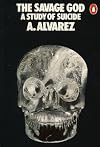
As one of the few holistic discussions of what is perhaps the one remaining taboo in our permissive society, Al Alvarez's book on suicide, The Savage God, is welcome even if just for its mere existence. Alvarez writes well and with compassion, particularly in the bookend chapters when he addresses the suicide of his friend Sylvia Plath and his own attempted suicide. In these chapters the book is an honest and erudite memoir, and very readable.
In between, however, are Marmite chapters show more addressing suicide more abstractly. Alvarez largely ignores the perhaps more fruitful psychological and philosophical discussion on self-slaughter in favour of the dense approach of literary criticism (the title of the book comes from a poem by Yeats). He looks into how suicide has been tackled in Western culture from Dante in the Middle Ages through to the modern, post-Nietzschean 'God is dead' West we are still trying to navigate nearly fifty years after Alvarez published his book. "Suicide has permeated western culture like a dye that cannot be washed out," he asserts on page 235, and like many others he struggles to isolate it from the fabric in order to understand it. At times it seems like there's so much to say about it that there's nothing to say about it.
The best that can be hoped for, it seems, are moments of "temporary clarity" much like the ones that even the most confused of suicides find when they make their choice (pg. 107). If there is, in life, only an "uneasy and perilous freedom" as an alternative to the artifices of religion, science and politics (pg. 150), then it is freedom nonetheless. This sort of cultural diagnosis may be off-putting for some, and certainly Alvarez's book becomes too focused on the suicidal and depressed artists and creatives ("the aristocrats of death," he quotes Daniel Stern on page 165, "God's graduate students, acting out their theses") rather than all the regular people who also commit suicide for many different reasons. This distorts his analysis, even if it is sometimes more interesting, but many people will have lost their way in the often dry literary criticism long before Alvarez starts talking about 'Arnoldian concepts' (pg. 275) like an academic monograph.
Nevertheless, he is always honest and compassionate – and, importantly, seeking. His observations are astute and his conclusion, insofar as he has one, hints at the problem of trying to be too definitive about the topic. Those who talk about it as a disease, he writes on page 307, are as puzzling as those who previously called it a sin; the closest thing that can be said with any proportionality is that it is a "terrible but utterly natural reaction to the strained, narrow, unnatural necessities we sometimes create for ourselves". Perhaps when this lucid (and daunting) diagnosis is more widely accepted in our culture – which still seems trapped in the 'mental illness' whirligig (gotta keep those pill companies solvent, young men of the West!) – perhaps then we finally begin to discuss, cleanly and honestly, our last great taboo. show less
In between, however, are Marmite chapters show more addressing suicide more abstractly. Alvarez largely ignores the perhaps more fruitful psychological and philosophical discussion on self-slaughter in favour of the dense approach of literary criticism (the title of the book comes from a poem by Yeats). He looks into how suicide has been tackled in Western culture from Dante in the Middle Ages through to the modern, post-Nietzschean 'God is dead' West we are still trying to navigate nearly fifty years after Alvarez published his book. "Suicide has permeated western culture like a dye that cannot be washed out," he asserts on page 235, and like many others he struggles to isolate it from the fabric in order to understand it. At times it seems like there's so much to say about it that there's nothing to say about it.
The best that can be hoped for, it seems, are moments of "temporary clarity" much like the ones that even the most confused of suicides find when they make their choice (pg. 107). If there is, in life, only an "uneasy and perilous freedom" as an alternative to the artifices of religion, science and politics (pg. 150), then it is freedom nonetheless. This sort of cultural diagnosis may be off-putting for some, and certainly Alvarez's book becomes too focused on the suicidal and depressed artists and creatives ("the aristocrats of death," he quotes Daniel Stern on page 165, "God's graduate students, acting out their theses") rather than all the regular people who also commit suicide for many different reasons. This distorts his analysis, even if it is sometimes more interesting, but many people will have lost their way in the often dry literary criticism long before Alvarez starts talking about 'Arnoldian concepts' (pg. 275) like an academic monograph.
Nevertheless, he is always honest and compassionate – and, importantly, seeking. His observations are astute and his conclusion, insofar as he has one, hints at the problem of trying to be too definitive about the topic. Those who talk about it as a disease, he writes on page 307, are as puzzling as those who previously called it a sin; the closest thing that can be said with any proportionality is that it is a "terrible but utterly natural reaction to the strained, narrow, unnatural necessities we sometimes create for ourselves". Perhaps when this lucid (and daunting) diagnosis is more widely accepted in our culture – which still seems trapped in the 'mental illness' whirligig (gotta keep those pill companies solvent, young men of the West!) – perhaps then we finally begin to discuss, cleanly and honestly, our last great taboo. show less
Objetivamente es un libro imperfecto, lo suficientemente riguroso para ser un ensayo al que darle pelota y tener pretensiones de seriedad. Subjetivamente me encantó, me hizo recordar sueños recurrentes y me dejó lleno del tipo de preguntas que solo se contestan cuando alguna experiencia te tira la respuesta a la cara.
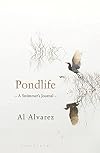
You wouldn’t believe that our capital city, London, can co-exist with the natural world any more. But it can. In Hampstead Heath there are three ponds that are used extensively by wildlife and also by swimmers. They are open all year round and regardless of weather, Alverez has swum in them almost daily.
Better know as a poet and literary critic, in the past he has been an athlete and rock climber and has played quite a bit of poker too. This journal documents every time he swam from 2002 show more up to 2011. In each entry he has recorded the water temperature, the people and friends he sees there most days as well as the wildlife he encounters whilst swimming around. As he grows older, and suffers a multitude of health issues, the swimming becomes less frequent, and even getting there can be troublesome at times.
It is a brutally honest memoir too. You sense his frustrations with his declining health, his anger at dealing with petty bureaucrats and his writing commitments. What comes across almost every time he swims is the pure pleasure he gets from taking a dip, preferring the cooler months when the water ebbs away his aches and pains. He is keen observer too, noticing the tiniest details in the sky, the colour of the water and the way that the seasons move relentlessly on, as he slips into the water and glides slowly round the pond. The writing is sparse, beautiful, and almost metronomic at times, as he writes about his habitual daily swim. It was a real pleasure to read too. show less
Better know as a poet and literary critic, in the past he has been an athlete and rock climber and has played quite a bit of poker too. This journal documents every time he swam from 2002 show more up to 2011. In each entry he has recorded the water temperature, the people and friends he sees there most days as well as the wildlife he encounters whilst swimming around. As he grows older, and suffers a multitude of health issues, the swimming becomes less frequent, and even getting there can be troublesome at times.
It is a brutally honest memoir too. You sense his frustrations with his declining health, his anger at dealing with petty bureaucrats and his writing commitments. What comes across almost every time he swims is the pure pleasure he gets from taking a dip, preferring the cooler months when the water ebbs away his aches and pains. He is keen observer too, noticing the tiniest details in the sky, the colour of the water and the way that the seasons move relentlessly on, as he slips into the water and glides slowly round the pond. The writing is sparse, beautiful, and almost metronomic at times, as he writes about his habitual daily swim. It was a real pleasure to read too. show less
Lists
Awards


You May Also Like


Associated Authors
Statistics
- Works
- 37
- Also by
- 17
- Members
- 2,123
- Popularity
- #12,120
- Rating
- 3.8
- Reviews
- 30
- ISBNs
- 137
- Languages
- 12
- Favorited
- 1