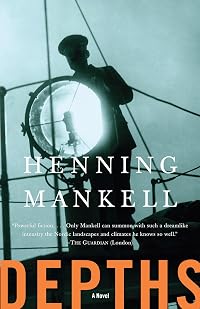
Depths
by Henning Mankell
On This Page
Description
Sent on a mission to take covert depth readings around the Stockholm archipelago, World War I Swedish naval officer Lars Tobiasson-Svartman finds himself attracted to a young widow whose wild nature is in total contrast to his wife's reserved personality.Tags
Recommendations













































Member Recommendations


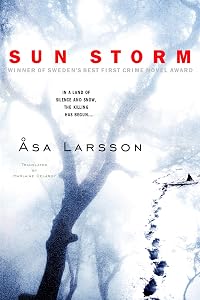
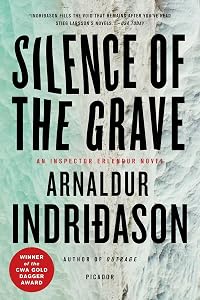
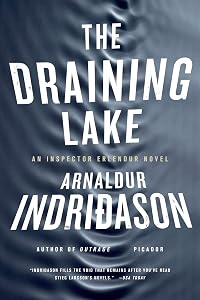
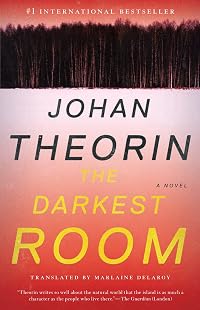
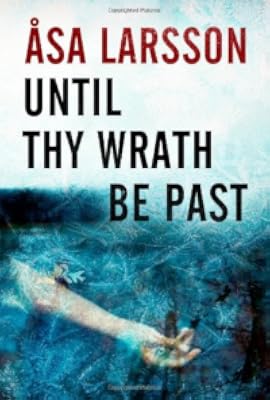
alalba Two thrillers located in icy landscapes, both very gripping!


Member Reviews
Set in Sweden during the first years of World War 1, this is the tale of Lars Tobiasson-Svartman, a naval officer who specialises in charting navigable channels in the Baltic Sea. He is fascinated by the measurement of distances and depths, but the novel is not only about soundings in the sea, but also Lars’ distance from other people and the depths to which he can sink when under pressure. His marriage to Kristina seems sound enough at first, if rather lacking in passion. But when on a mission to sound a new passage through the Ostergotland Archipelago, he discovers a lone woman (Sara Fredrika) living in a hut on an otherwise uninhabited skerry (rocky islet). He takes every opportunity to row ashore and spy on the woman, until one show more day he engineers his being caught on the island during a storm and Sara gives him shelter. In the following months he invents reasons to return to Sara, and he tells her his wife and daughter are dead. His invented stories to both Kristina and Sara, and to his naval superiors, become more and more complex, and he is revealed to have a vicious temper, which leads to an attack on his father-in-law, and the murder of a German deserter who finds his way to Sara’s island.
Finally, in this bleak and atmospheric novel, both Kristina and Sara discover the extent of his deceptions and both abandon him on the island. It is a fascinating and disturbing novel, convincingly depicting Sweden’s harsh winters and Lars’ frailties of character. show less
Finally, in this bleak and atmospheric novel, both Kristina and Sara discover the extent of his deceptions and both abandon him on the island. It is a fascinating and disturbing novel, convincingly depicting Sweden’s harsh winters and Lars’ frailties of character. show less
This should have been called Deceptions instead of Depths, or maybe Depths of Deceptions.
What a horrible book. It's not that it is poorly written or anything, it is that there is nothing that is written that is worth reading. I don't understand why it was written in the first place as it is a horrible story. And I am not entirely sure why I read the entire thing other than wondering if there would be, at some point before it ended, something about the story that made it worth reading. There wasn't.
I found nothing of value, and it somewhat angers me that it was a complete waste of time. It's a loathsome book about a loathsome character. And because it wasn't engrossing in any way it made for a long, long read; it took me forever to show more finish.
I know Wallander is always miserable and dark, but Mankell makes me think that this really is what Sweden and Scandinavia in general is really like. That the fictional Nazis of Stieg Larsson and the real ones like Anders Breivik, what (hopefully) most people would consider to be pure evil, are around every corner. I mean, seriously, I might have to reconsider my thinking on giants like Fridtjof Nansen and Roald Amundsen; what were those guys REALLY like???
The only remotely interesting thing was the story of the hydrographic soundings. In that you could envision all the anonymous and unsung heroes that make the modern world work: astronomers, geologists, geographers, cartographers, biologists, agronomists, chemists, all the engineers and scientists, and the people who charted the oceans and bays of the world. show less
What a horrible book. It's not that it is poorly written or anything, it is that there is nothing that is written that is worth reading. I don't understand why it was written in the first place as it is a horrible story. And I am not entirely sure why I read the entire thing other than wondering if there would be, at some point before it ended, something about the story that made it worth reading. There wasn't.
I found nothing of value, and it somewhat angers me that it was a complete waste of time. It's a loathsome book about a loathsome character. And because it wasn't engrossing in any way it made for a long, long read; it took me forever to show more finish.
I know Wallander is always miserable and dark, but Mankell makes me think that this really is what Sweden and Scandinavia in general is really like. That the fictional Nazis of Stieg Larsson and the real ones like Anders Breivik, what (hopefully) most people would consider to be pure evil, are around every corner. I mean, seriously, I might have to reconsider my thinking on giants like Fridtjof Nansen and Roald Amundsen; what were those guys REALLY like???
The only remotely interesting thing was the story of the hydrographic soundings. In that you could envision all the anonymous and unsung heroes that make the modern world work: astronomers, geologists, geographers, cartographers, biologists, agronomists, chemists, all the engineers and scientists, and the people who charted the oceans and bays of the world. show less
Henning Mankell never fails to intrigue me with his writing, whether it's the children's books he's authored or the Wallender series, or the standalone novels.
I am amazed by the reviewers who dislike this novel because the protagonist is "not nice." So much classic literature is based on characters who are "not nice," perhaps actually evil in intent, that this story fits nicely into that realm of reading.
This is a slow, painstaking study of a man for whom life is simply not much more than his measurements of the world around him. He lies, he cheats, he kills, and he is always puzzled by those who think he is doing something wrong.
I highly recommend this book.
I am amazed by the reviewers who dislike this novel because the protagonist is "not nice." So much classic literature is based on characters who are "not nice," perhaps actually evil in intent, that this story fits nicely into that realm of reading.
This is a slow, painstaking study of a man for whom life is simply not much more than his measurements of the world around him. He lies, he cheats, he kills, and he is always puzzled by those who think he is doing something wrong.
I highly recommend this book.
Austere and unusual book, very different from Mankell's Wallander novels. Tells the story of a naval officer's slow descent into madness. Unnervingly, it is possible to discern aspects of oneself in this portrayal. As the author explains, he has somewhat altered the setting in Sweden from reality, but you feel its essential truth and hardness remain. The format (it is in parts, totalling 206 short chapters) make it easy to read quickly or slowly according to choice. As usual with Mankell's books, very well translated..
It is difficult to classify this book, it could be a thriller, but is 'slow' and it seems to lack some of the characteristics of the genre; there is a crime, but it is not a detective story and the plot is not driven for the need to uncover the killer; it is set during WWI, but it is not a 'war' novel; the best way to describe it, which fit with some of the characterizations in the reviews on the back cover is as book of 'suspense'.
The main character is an officer in the Swedish navy, expert in measuring the depth of the sea in order to draw navigation charts. He is sent on a mission in the course of which he will meet Sara, a woman living on his own in an island. This meeting will challenge his marriage to Kristina.
Mankell has show more written a very atmospheric book in which is almost possible to feel the cold, the sea and the hardship of living in a solitary island. The characters are not particularly likeable, but they are engaging. They develop during the story and we get to know different aspects of them, but we never get a full picture of their motivations. This could be because the narration focuses on Lars (the main character) and his inability to relate to others fully. He never understands who they are and focuses on very shallow details of their character (his wife liking porcelain figurines, for instance). Although he is obsessed with the concept of depth his relationships are very superficial, he never engages properly with any of the two women in his life, or with his colleagues. He is unable to read others well, due to his self absorption, but most of the people that he encounter are able to see through him, and they find that they cannot trust him and feel that he will not keep his word. Everybody did, except his wife. This was a surprise. show less
The main character is an officer in the Swedish navy, expert in measuring the depth of the sea in order to draw navigation charts. He is sent on a mission in the course of which he will meet Sara, a woman living on his own in an island. This meeting will challenge his marriage to Kristina.
Mankell has show more written a very atmospheric book in which is almost possible to feel the cold, the sea and the hardship of living in a solitary island. The characters are not particularly likeable, but they are engaging. They develop during the story and we get to know different aspects of them, but we never get a full picture of their motivations. This could be because the narration focuses on Lars (the main character) and his inability to relate to others fully. He never understands who they are and focuses on very shallow details of their character (his wife liking porcelain figurines, for instance). Although he is obsessed with the concept of depth his relationships are very superficial, he never engages properly with any of the two women in his life, or with his colleagues. He is unable to read others well, due to his self absorption, but most of the people that he encounter are able to see through him, and they find that they cannot trust him and feel that he will not keep his word. Everybody did, except his wife. This was a surprise. show less
Senza speranza
Un uomo, due donne. Primi anni del '900. Navi militari in missione nei mari del Nord ed un uomo che misura i fondali. La guerra è vicina, ed il suo compito è di tracciare con certezza le linee batimetriche di quei mari per permettere alle navi di solcare rotte alternative. L'uomo è sposato e lascia sulla terraferma la sua donna. Che cos'è per lui? Dentro di sè nessuna domanda. Solo automatismi. L'unica forza che lo muove è quella di allontanarsi verso l'orizzonte, l'unico suo fedele amico, il suo batimetro. Durante una missione scova su uno scoglio sperduto una donna sola. Ne è attratto? Ma anche questa è una domanda cui non sa rispondere. Il freddo, il paesaggio ostile, la vita di città, gli orizzonti lontani, show more la guerra e l'orrore. Un uomo solo, sconvolto che invece di cercare vicinanze non fa altro che costruire separazioni fino al punto più estremo del buio in cui precipita. Una scrittura tagliente e scarna che ben proietta l'ambiente in cui si svolge il racconto mostrando una solitudine senza ritorno, un'incapacità di comunicazione, un buio della mente che uccide ogni speranza. show less
Un uomo, due donne. Primi anni del '900. Navi militari in missione nei mari del Nord ed un uomo che misura i fondali. La guerra è vicina, ed il suo compito è di tracciare con certezza le linee batimetriche di quei mari per permettere alle navi di solcare rotte alternative. L'uomo è sposato e lascia sulla terraferma la sua donna. Che cos'è per lui? Dentro di sè nessuna domanda. Solo automatismi. L'unica forza che lo muove è quella di allontanarsi verso l'orizzonte, l'unico suo fedele amico, il suo batimetro. Durante una missione scova su uno scoglio sperduto una donna sola. Ne è attratto? Ma anche questa è una domanda cui non sa rispondere. Il freddo, il paesaggio ostile, la vita di città, gli orizzonti lontani, show more la guerra e l'orrore. Un uomo solo, sconvolto che invece di cercare vicinanze non fa altro che costruire separazioni fino al punto più estremo del buio in cui precipita. Una scrittura tagliente e scarna che ben proietta l'ambiente in cui si svolge il racconto mostrando una solitudine senza ritorno, un'incapacità di comunicazione, un buio della mente che uccide ogni speranza. show less
Read this for one of my book groups. I really wish I had not wasted my time or my brain power on this dark depressing tale. It's only getting 1 and 1/2 stars because some of the imagery of the sea in Winter was hauntingly beautiful. The rest? Yuck.
Members
- Recently Added By
Author Information

146+ Works 53,913 Members
Henning Mankell was born in Stockholm, Sweden on February 3, 1948. He left secondary school at the age of 16 and worked as a merchant seaman. While working as a stagehand, he wrote his first play, The Amusement Park. His first novel, The Stone Blaster, was released in 1973. His other works included The Prison Colony that Disappeared, Daisy show more Sisters, The Eye of the Leopard, The Man from Beijing, Secrets in the Fire, The Chronicler of the Wind, Depths, and I Die, But My Memory Lives On. He also wrote the Kurt Wallander series, which have been adapted for film and television, and the Joel Gustafson Stories series. A Bridge to the Stars won the Rabén and Sjögren award for best children's book of the year. He was committed to the fight against AIDS. He helped build a village for orphaned children and devoted much of his spare time to his "memory books" project, where parents dying from AIDS are encouraged to record their life stories in words and pictures. He was also among the activists who were attacked and arrested by Israeli forces as they tried to sail to the Gaza strip with humanitarian supplies in June 2010. He died from cancer on October 5, 2015 at the age of 67. (Bowker Author Biography) show less
Some Editions
Series
Belongs to Publisher Series
Common Knowledge
- Canonical title
- Depths
- Original title
- Djup
- Original publication date
- 2004 (original) (original); 2006 (English) (English)
- People/Characters
- Lars Tobiasson-Svartman; Sara Fredrika; Kristina Tacker; Anders Höckert; Lieutenant Sundfeldt; Captain von Sidenbahn (show all 8); Captain Rake; Lieutenant Jakobsson
- Important places
- Stockholm, Sweden; Östergötland archipelago, Sweden; Baltic Sea; Halsskär, Sweden
- Important events
- World War I (1914 | 1918)
- First words
- They used to say that when there was no wind the cries of the lunatics could be heard on the other side of the lake.
- Quotations*
- Le traducteur est maître du récit.
Mais il cherchait secrètement quelque chose de complètement différent... Un point où la ligne de sonde cesserait d'être un instrument technique pour se transformer en outil poétique. - Last words
- (Click to show. Warning: May contain spoilers.)The ice covered all the sea graves in the winter of 1916.
- Original language
- Swedish
*Some information comes from Common Knowledge in other languages. Click "Edit" for more information.
Classifications
- Genres
- Fiction and Literature, General Fiction, Mystery
- DDC/MDS
- 839.7374 — Literature & rhetoric German & related literatures Other Germanic literatures Swedish literature Swedish fiction 1900-1999 1945-1999
- LCC
- PT9876.23 .A49 .D5913 — Language and Literature German, Dutch and Scandinavian literatures Swedish literature Individual authors or works 1961-2000
- BISAC
Statistics
- Members
- 1,146
- Popularity
- 22,008
- Reviews
- 30
- Rating
- (3.29)
- Languages
- 12 — Catalan, Danish, Dutch, English, Finnish, French, German, Italian, Norwegian (Bokmål), Norwegian, Spanish, Swedish
- Media
- Paper, Audiobook, Ebook
- ISBNs
- 69
- ASINs
- 15