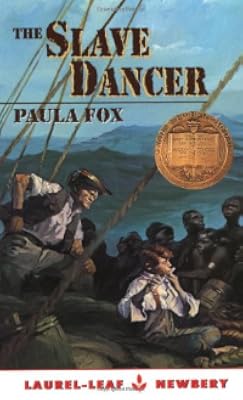
The Slave Dancer
by Paula Fox
On This Page
Description
Kidnapped by the crew of an Africa-bound ship, a thirteen-year-old boy discovers to his horror that he is on a slaver and his job is to play music for the exercise periods of the human cargo.Tags
Recommendations













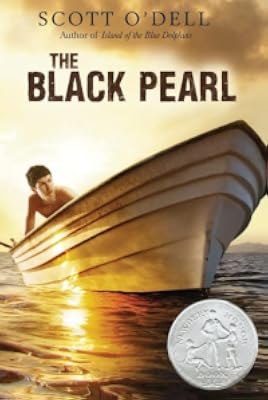
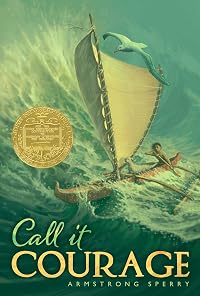
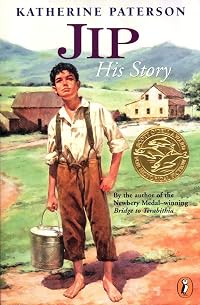







Member Recommendations
Member Reviews
This1974 Newbery Medal award winning book is by far the most compelling, graphic and intensely dark Newbery I've read. Having said this, you may wonder why I highly recommend this dark tale full of vivid, violent details.
The answer is simply this: Slavery was abhorrently wrong and this book captures the gruesomeness of the slave trade without stopping to the real temptation of pounding home a truth to the point wherein the reader closes the pages. Never exploiting the power of the evil, but honestly capturing the horror, Paula Fox did a marvelous job of addressing man's inhumanity to man. In 152 short pages the author accomplished what many writers cannot do with 500 pages of text.
In 1840 Jessie Bollier lives in New Orleans with his show more hardworking seamstress mother and his lovable sister. Veering off the path when returning from his Aunt's house, he is kidnapped and taken aboard a slave ship. He is a young 13 year old white male who, while aware of the dirty business of slavery, had no idea what was in store for him or the slaves.
Playing the fife during the day to earn extra money to help his mother renders him a target of the nasty traders who capture him and stow him on the ship. His job is to play for the slaves when they are allowed a bit of sunshine on deck. Providing sunshine is not done as a kind deed, rather the precious cargo is forced to dance in order to provide stronger muscle tone when they are sold at the final destination of Cuba. As Jessie witnesses the injustice, his notes become disjointed and shrill and he is beaten if he does not earn his keep.
Jessie witnesses fights, treachery and hostility between ship mates. As the ship travels to Africa and then to Cuba, the author's excellent writing, provides clear, crisp images that anchor the reader while the ship is tempest tossed and hell bent toward finishing their destination The journey becomes darker and deeper as evil resides above the deck and 98 slaves witness terror below.
When Jessie asserts that if the slaves are not treated properly there will not be more trading with the salves all gone, the response of a crew mate is simply stated as "The slaves are never gone!' All of Africa is a bottomless sack of blacks." Thus, with one sentence the author captured the incredible evil misconception that life does not matter...that it does not matter at all!!!!!
Another example of excellent writing are these paragraph:
For some time after the sun had set, the sky remained the color of rope. The ship lay steady on the glass-lie surface of the water which was pricked, now and then, into small ripples when a seabird struck its surface.
A few lanterns were strung up to give us light. They made a mystery of the ship -- we floated like a live ember in a great bowl of darkness.
This is anything but a light, easy-breezy YA book. It is nonetheless a part of history that cries to be told with bitter, angry tears of righteous indignation. And, if as the final page is turned, the reader does not come away with the brutality of American slavery, then there is something dramatically wrong with our society.
This is an author I'll be sure to read again.
FIVE big stars! show less
The answer is simply this: Slavery was abhorrently wrong and this book captures the gruesomeness of the slave trade without stopping to the real temptation of pounding home a truth to the point wherein the reader closes the pages. Never exploiting the power of the evil, but honestly capturing the horror, Paula Fox did a marvelous job of addressing man's inhumanity to man. In 152 short pages the author accomplished what many writers cannot do with 500 pages of text.
In 1840 Jessie Bollier lives in New Orleans with his show more hardworking seamstress mother and his lovable sister. Veering off the path when returning from his Aunt's house, he is kidnapped and taken aboard a slave ship. He is a young 13 year old white male who, while aware of the dirty business of slavery, had no idea what was in store for him or the slaves.
Playing the fife during the day to earn extra money to help his mother renders him a target of the nasty traders who capture him and stow him on the ship. His job is to play for the slaves when they are allowed a bit of sunshine on deck. Providing sunshine is not done as a kind deed, rather the precious cargo is forced to dance in order to provide stronger muscle tone when they are sold at the final destination of Cuba. As Jessie witnesses the injustice, his notes become disjointed and shrill and he is beaten if he does not earn his keep.
Jessie witnesses fights, treachery and hostility between ship mates. As the ship travels to Africa and then to Cuba, the author's excellent writing, provides clear, crisp images that anchor the reader while the ship is tempest tossed and hell bent toward finishing their destination The journey becomes darker and deeper as evil resides above the deck and 98 slaves witness terror below.
When Jessie asserts that if the slaves are not treated properly there will not be more trading with the salves all gone, the response of a crew mate is simply stated as "The slaves are never gone!' All of Africa is a bottomless sack of blacks." Thus, with one sentence the author captured the incredible evil misconception that life does not matter...that it does not matter at all!!!!!
Another example of excellent writing are these paragraph:
For some time after the sun had set, the sky remained the color of rope. The ship lay steady on the glass-lie surface of the water which was pricked, now and then, into small ripples when a seabird struck its surface.
A few lanterns were strung up to give us light. They made a mystery of the ship -- we floated like a live ember in a great bowl of darkness.
This is anything but a light, easy-breezy YA book. It is nonetheless a part of history that cries to be told with bitter, angry tears of righteous indignation. And, if as the final page is turned, the reader does not come away with the brutality of American slavery, then there is something dramatically wrong with our society.
This is an author I'll be sure to read again.
FIVE big stars! show less
Ron DeSantis and those who are afraid to have white children traumatized by the slave trade will try to go back in time and and ban this, but it is a chilling tale deserving of its Newbery Medal awarded in 1974. While playing his fife in New Orleans in the 1840's, an impoverished thirteen year old boy, Jessie, is kidnapped and brought aboard an American slave ship, The Moonlight, and forced to play music to keep the captured African men, women, and children from Benin in motion. Most of the sailors hate their lives and the officers aboard the ship, and when all hands but Jessie and Ras, an African boy his age, drown in a shipwreck, the reader will feel little remorse. The book is based upon actual historical documents and is probably show more best suited for 6th graders and up, and should be incorporated into a school lesson. show less
This is one of the most disturbing children's books I have ever read. It would even rank up there with disturbing adult books. It is about a thirteen year old white boy who is kidnapped from New Orleans and forced to work on a slave ship. He helps with general ship activity, but his main job is to play his fife for the slaves so they dance, both to entertain the ship's crew and so they get exercise so they are worth more at market. The boy is subjected to physical and emotional abuse at the hands of the crew as he is forced to watch and participate in many horrific events. I felt physically ill while reading much of the book. It is always odd to give a book like this four stars, but it was well-written and evoked powerful emotions about show more a very real historical topic. The 1974 Newberry winner, but I wouldn't recommend it for children. show less
I read this as a kid once, a few years back, and I remember I hadn't liked it. I had found the writing to be dry and boring, and I couldn't understand much of what was happening, yet somehow it was particularly memorable. Thus, I decided to pick it up again.
It was a much better experience this time round. The author clearly did her research, and put in effort in to give us a glimpse of the horrors of slave trade through the eyes of Jessie. The writing was good, and it set the atmosphere for the story, a kind of realness and sadness that lasted throughout the book.
What I liked about The Slave Dancer was that it was shown through the eyes of a white boy. We saw the struggles he had as he tried to understand the sailors' conflicting show more nature of their actions, and as he saw the horrors of what happened on slave ships. It amplified the gruesomeness felt by the reader, in a way, to be a spectator like he was.
It was interesting, though no less depressing, how the sailors continued to follow the Captain's orders, despite their misgivings about him and the whole trade.They'd give the African children portions of their own rationed water and make toys to play with them, yet when their ship was being pursued by the Americans and the Captain yelled at them to toss the Africans overboard, they didn't hesitate to do so.
It left me confused as to what I should feel for some of the characters, probably much like how Jessie had felt. I keep hoping for a kind of clarity for their actions and words, but there was never really one.Especially for Ben Stout. I'd known he'd be getting what he deserved in the end, but I'd been so sure that there'd be a moment when Jessie saw a reason for his cruelty, and why he always spoke so seemingly kindly to him at the start. And the Captain. Why the hell did he give Jessie those biscuits? What was the point of showing us that? It feels like there's supposed to be one, but I can't get it.
Nevertheless, these strange actions made them seem human, or at least, become more than just characters in a book. And I liked that, for some inexplicable reason. It made me continue to be glued to the book, and it didn't cross my mind once to give up reading it.
However, there were times where I couldn't really picture what the protagonist was describing. I know I would've been very confused over the point of the slaves dancing, had I not watched Twelve Years A Slave before and had an idea of what it was like. It was only with some prior knowledge of the circumstances and setting of the story - that I hadn't had when I first read the book - did I fully manage to appreciate the story.
So yes, The Slave Dancer was enjoyable, memorable, and worth rereading. I'd recommend it to anyone, though it might be more suited to young adults instead of children, based on my previous experience. And I'll definitely be on the lookout for Ms Fox's other works. show less
It was a much better experience this time round. The author clearly did her research, and put in effort in to give us a glimpse of the horrors of slave trade through the eyes of Jessie. The writing was good, and it set the atmosphere for the story, a kind of realness and sadness that lasted throughout the book.
What I liked about The Slave Dancer was that it was shown through the eyes of a white boy. We saw the struggles he had as he tried to understand the sailors' conflicting show more nature of their actions, and as he saw the horrors of what happened on slave ships. It amplified the gruesomeness felt by the reader, in a way, to be a spectator like he was.
It was interesting, though no less depressing, how the sailors continued to follow the Captain's orders, despite their misgivings about him and the whole trade.
It left me confused as to what I should feel for some of the characters, probably much like how Jessie had felt. I keep hoping for a kind of clarity for their actions and words, but there was never really one.
Nevertheless, these strange actions made them seem human, or at least, become more than just characters in a book. And I liked that, for some inexplicable reason. It made me continue to be glued to the book, and it didn't cross my mind once to give up reading it.
However, there were times where I couldn't really picture what the protagonist was describing. I know I would've been very confused over the point of the slaves dancing, had I not watched Twelve Years A Slave before and had an idea of what it was like. It was only with some prior knowledge of the circumstances and setting of the story - that I hadn't had when I first read the book - did I fully manage to appreciate the story.
So yes, The Slave Dancer was enjoyable, memorable, and worth rereading. I'd recommend it to anyone, though it might be more suited to young adults instead of children, based on my previous experience. And I'll definitely be on the lookout for Ms Fox's other works. show less
Jessie Bollier is a 13yo boy in 1840 New Orleans, kidnapped into service on a slave transport ship because he knows how to play a fife. As he gets his sea legs, Jessie gets to know the crew, and in the process begins to see his first glimmer of how complex human nature and relations are. Purvis, who kidnapped him, is funny and helpful with advice. Another man, Stout, is superficially kind, but inconsistent. Once the ship reaches Africa and takes on its live cargo of slaves, Jessie's awareness is pushed even further, as he's forced to play his fife to "dance" the slaves as they get periodic exercise on the ship.
The slimness of the book belies the heavy themes it holds. Fox's clear, spare writing conveys Jessie's terror, horror and show more dawning knowledge of the depths of human cruelty. There are certain things--the occasional kindness of others to Jessie, beautiful days at sea, moments of connection with others--that keep the reader from drowning utterly in the frequently gruesome history this book relates. Highly recommended for adults and older children. show less
The slimness of the book belies the heavy themes it holds. Fox's clear, spare writing conveys Jessie's terror, horror and show more dawning knowledge of the depths of human cruelty. There are certain things--the occasional kindness of others to Jessie, beautiful days at sea, moments of connection with others--that keep the reader from drowning utterly in the frequently gruesome history this book relates. Highly recommended for adults and older children. show less
Thirteen-year-old Jessie is snatched from his home in New Orleans and brought aboard a slave ship, The Moonlight, to play his fife to keep the slaves' muscles strong. While aboard the ship he experiences the cruelty of his almost mad captain and the treachery of the one man who attempts to befriend him as well as witnessing the horrors of the slave trade.
The book clearly shows the idiosyncracies and superstitions of the sailors and their prejudices against the people that constituted their cargo, and it exposes some of the horrible effects and treatment of the slave traders aboard ship who were interested only in making the largest profit off of their human wares. But for all of its good points, it still falls flat. Jessie evoked show more little sympathy - he seems perpetually in a sulk. And for all that he was the most sympathetic observer on the ship, he seems too detached for the reader to feel connected to his story or to the plight of the slaves on board. And though the author claims to have written the story based on a true shipwreck, that part of the story feels unreal and untrue.
As with most books that I've read that receive literary awards, I was unimpressed. What do they BASE these awards on? show less
The book clearly shows the idiosyncracies and superstitions of the sailors and their prejudices against the people that constituted their cargo, and it exposes some of the horrible effects and treatment of the slave traders aboard ship who were interested only in making the largest profit off of their human wares. But for all of its good points, it still falls flat. Jessie evoked show more little sympathy - he seems perpetually in a sulk. And for all that he was the most sympathetic observer on the ship, he seems too detached for the reader to feel connected to his story or to the plight of the slaves on board. And though the author claims to have written the story based on a true shipwreck, that part of the story feels unreal and untrue.
As with most books that I've read that receive literary awards, I was unimpressed. What do they BASE these awards on? show less
The Slave Dancer was absolutely my favorite book for a period during my childhood. I must have read it 15 times or more, and I still think about it occasionally. Bracing and bleak.
Members
- Recently Added By
Published Reviews
ThingScore 75
Toni Buzzeo (Audiofile, March 1997)
In a tale at once fascinating and horrible, young Jessie suffers capture and indenture on a slave ship. His job is to "dance" the slaves by playing his fife while they're forced to engage in daily movement. Actor Peter MacNicol delivers a powerful reading of this horrific tale. His Captain Cawthorn, terrifying in volume and attitude, creates in the listener show more the same tension that Jessie feels throughout the journey. Masterfully, MacNicol allows Shipmate Stout's obsequiousness to creep slowly upon the listener while simultaneously revealing the affection behind Shipmate Pervis's defiant gruffness. Packed with emotion, MacNicol's first-person narration in Jessie's voice is moving and believable. Judiciously employed symphonic music and the notes of a lone fife heighten the tension throughout. T.B. Winner of AUDIOFILE Earphones Award (c)AudioFile, Portland, Maine 1996 (Orig. 1973), Random House Audio, Four cassetes, 3 hrs., Retail pak, $18.99. show less
In a tale at once fascinating and horrible, young Jessie suffers capture and indenture on a slave ship. His job is to "dance" the slaves by playing his fife while they're forced to engage in daily movement. Actor Peter MacNicol delivers a powerful reading of this horrific tale. His Captain Cawthorn, terrifying in volume and attitude, creates in the listener show more the same tension that Jessie feels throughout the journey. Masterfully, MacNicol allows Shipmate Stout's obsequiousness to creep slowly upon the listener while simultaneously revealing the affection behind Shipmate Pervis's defiant gruffness. Packed with emotion, MacNicol's first-person narration in Jessie's voice is moving and believable. Judiciously employed symphonic music and the notes of a lone fife heighten the tension throughout. T.B. Winner of AUDIOFILE Earphones Award (c)AudioFile, Portland, Maine 1996 (Orig. 1973), Random House Audio, Four cassetes, 3 hrs., Retail pak, $18.99. show less
added by kthomp25
Lists

Best Newbery Medal Winners
97 works; 54 members

1001 Children's Books You Must Read Before You Grow Up
774 works; 100 members
Honey For a Child's Heart
1,152 works; 25 members

Satori Smiles Children's Book List
262 works; 7 members

Newbery Medal Winners - By Year
105 works; 7 members

Children's Literature, Briefly Historical Fiction Reading List
44 works; 4 members

Kidnapping -- children's/young adult fiction
598 works; 3 members

Books About Boys
175 works; 15 members

Swinging Seventies
255 works; 18 members

Books Read in 2017
4,249 works; 130 members

Books Read in 2021
5,361 works; 114 members

HMS: Make Your Child a Lover of Books, Ages 9 & up
111 works; 2 members

The Playful Pioneers
166 works; 1 member
Author Information

47+ Works 8,947 Members
Paula Fox was born in Manhattan, New York on April 22, 1923. She briefly studied piano at the Juilliard School and spent 3 years at Columbia University but didn't graduate. Before becoming a writer, she worked as a salesgirl, a model, a worker in a rivet-sorting shop, a lathe operator at Bethlehem Steel, and a teacher of troubled children. She show more wrote books for children and adults. Her children's books included Maurice's Room, Traces, Blowfish Live in the Sea, One-Eyed Cat, and The Eagle Kite. She received the Newbery Medal for The Slave Dancer in 1974 and the Hans Christian Andersen Award for her body of children's work in 1978. Her books for adults include Poor George, The Widow's Children, A Servant's Tale, and The God of Nightmares. Desperate Characters was adapted into a film starring Shirley MacLaine and Kenneth Mars. She also wrote two memoirs entitled Borrowed Finery and The Coldest Winter: A Stringer in Liberated Europe. She died on March 1, 2017 at the age of 93. (Bowker Author Biography) show less
All Editions
Awards and Honors
Awards
Work Relationships
Is contained in
Has as a student's study guide
Common Knowledge
- Canonical title
- The Slave Dancer
- Original title
- The slave dancer
- Original publication date
- 1973
- People/Characters
- Captain Cawthorne; Jessie Bollier; Benjamin Stout; Clay Purvis; Ras; Daniel
- Important places
- The Moonlight (ship); New Orleans, Louisiana, USA; Cuba; Mississippi, USA
- Important events
- Antebellum South; 19th century; 1840s
- Dedication
- For Shauneille and Don Ryder and their daughters, Lorraine and Natalie. Wiith thanks to Willard Wallace, Professor of History , Wesleynn University, for reading my manuscript.
- First words
- In a hinged wooden box upon the top of which was carved a winged fish, my mother kept the tools of her trade.
- Last words
- (Click to show. Warning: May contain spoilers.)For at the first note of a tune or of a song, I would see once again as though they'd never ceased their dancing in my mind, black men and women and children lifting their tormented limbs in time to a reedy martial air, the dust rising from their joyless thumping, the sound of the fifte finally drowned beneath the clanging of their chains.
- Original language
- English
Classifications
Statistics
- Members
- 2,822
- Popularity
- 6,457
- Reviews
- 43
- Rating
- (3.68)
- Languages
- 8 — Czech, Dutch, English, Finnish, French, German, Italian, Spanish
- Media
- Paper, Audiobook, Ebook
- ISBNs
- 63
- ASINs
- 28