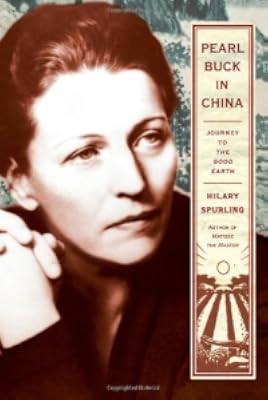
Burying The Bones: Pearl Buck in China
by Hilary Spurling
On This Page
Description
An engrossing biography of Buck, a woman whose fascinating life gave her a unique outlook on the plight of women and the suffering of China's rural poor.Tags
Recommendations













Member Recommendations
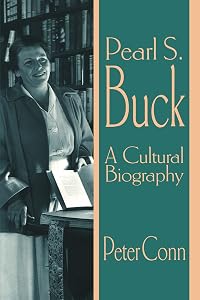
susanbooks Conn's book has much less editorializing & feels more like a serious biography than Spurling's Orientalist fan-fic.
Member Reviews
This is a beautifully written biography, full of haunting images which capture the strange and exotic childhood of Pearl Buck in China. Agains the backdrop of China's tumultuous history in the last century, Buck's strength and resolve shines throughout. She overcomes the loss of her siblings, the pain of placing her disabled daughter in a home, and the stigma of divorce. Spurling takes a hard look at the relationship of Buck's parents and the many ways Buck's own marriage mirrored theirs.
Relentlessly positive portrayal. While Spurling is good for info on Buck's first marriage, don't rely on this biography alone if you want an idea of the actual, rounded person -- indeed, for the actual, rounded anything. Spurling needs to read up on Orientalism; some of this is just embarrassing (when it's not infuriating). Also, Buck's writing about poverty does not automatically make her work Dickensian. Spurling is a good researcher here (on Buck; clueless about China), provides useful background --with several other texts -- for teaching The Good Earth, but I'd never read this for fun and as a biographer she's kind of a hack.
Pearl Buck's "The Good Earth" is one of those 10 or 12 books that had a really big impact on me in my youth. I read several other books by Buck, and although they were good, they weren't quite as amazing as "The Good Earth". Years ago I read her autobiography (of a sort), "My Several Worlds", and liked it a lot, although it was clearly a selective memoir. When I re-read "The Good Earth" recently as well as the follow-up "Sons", I was reminded of how good those stories were and of Buck's gifts as a writer.
I was rather amazed to see two books on Pearl Buck come out this year, Hilary Spurling's "Pearl Buck in China" and the other being "Pearl of China" by Anchee Min, a fictionalized work that seems to have attracted the greater attention show more in the United States. However, I picked up Hilary Spurling's "Pearl Buck in China" as fast as I could.
"Pearl Buck in China" is a rather whirlwind of a book, and Spurling takes a rather aggressive and at times dense approach to presenting Buck's life. Clearly Spurling has done her research and immersed herself in Buck's life and books. I came out of this book knowing much more about Pearl Buck and her times than I would have expected. It is a testament to her strength as a person that she came through life at all. Most of her siblings died very young in China and yet Pearl survived and in an odd way thrived amongst the turmoil. What she saw and lived in her early days would fuel her writings for her lifetime.
Spurling's biography of Buck is much more of an academic work than a conventional "slick" biography. The style, honestly, put me off a bit at times, but I could not deny the research and intensity behind this book. I think the depth of this book would be lost on someone who isn't already fairly familiar with Buck's work. This is because Spurling has interwoven so much of the history with Buck's books. I learned a tremendous amount from this book - both about Buck and events in China. Recommended, with some reservations concerning the style. I kept thinking this could have been written in a more accessible manner. show less
I was rather amazed to see two books on Pearl Buck come out this year, Hilary Spurling's "Pearl Buck in China" and the other being "Pearl of China" by Anchee Min, a fictionalized work that seems to have attracted the greater attention show more in the United States. However, I picked up Hilary Spurling's "Pearl Buck in China" as fast as I could.
"Pearl Buck in China" is a rather whirlwind of a book, and Spurling takes a rather aggressive and at times dense approach to presenting Buck's life. Clearly Spurling has done her research and immersed herself in Buck's life and books. I came out of this book knowing much more about Pearl Buck and her times than I would have expected. It is a testament to her strength as a person that she came through life at all. Most of her siblings died very young in China and yet Pearl survived and in an odd way thrived amongst the turmoil. What she saw and lived in her early days would fuel her writings for her lifetime.
Spurling's biography of Buck is much more of an academic work than a conventional "slick" biography. The style, honestly, put me off a bit at times, but I could not deny the research and intensity behind this book. I think the depth of this book would be lost on someone who isn't already fairly familiar with Buck's work. This is because Spurling has interwoven so much of the history with Buck's books. I learned a tremendous amount from this book - both about Buck and events in China. Recommended, with some reservations concerning the style. I kept thinking this could have been written in a more accessible manner. show less
As the title suggests, this is a biography of Pearl Buck, author of The Good Earth. I found it very enjoyable.
Pearl Buck was an American born and raised in China by missionaries. She grew up interacting with Chinese children - speaking the language and learning the stories. She was so comfortable in China that she never really identified with America when she visited there or when she ended up living there in the second half of her life. The book does an interesting job of weaving Chinese history into Buck's life and showing how it influenced and formed her. Also discussed at length is her relationships with her mother, father, and husbands and her complete rejection of the missionary philosophy as practiced in China by her father and show more others.
Her writing is discussed quite a bit as well, particularly because so many of the dozens of books and stories she wrote had considerable portions of autobiographical content or obvious ties to her friends, family, and experiences. I had no idea Pearl Buck had written so prodigiously, but I also have to say I'm not interested in reading much further than a reread of The Good Earth and possibly continuing on with the 2 books that complete the series. Buck's writing was written for the masses and it doesn't seem from this biography's description that most of them were the quality that you'd expect from the author of [The Good Earth]. I did find it interesting that she wrote by crafting the words in Chinese in her mind and translating to English as she typed the manuscript, at least for The Good Earth.
I thought this was a very readable and interesting biography of a fascinating woman. show less
Pearl Buck was an American born and raised in China by missionaries. She grew up interacting with Chinese children - speaking the language and learning the stories. She was so comfortable in China that she never really identified with America when she visited there or when she ended up living there in the second half of her life. The book does an interesting job of weaving Chinese history into Buck's life and showing how it influenced and formed her. Also discussed at length is her relationships with her mother, father, and husbands and her complete rejection of the missionary philosophy as practiced in China by her father and show more others.
Her writing is discussed quite a bit as well, particularly because so many of the dozens of books and stories she wrote had considerable portions of autobiographical content or obvious ties to her friends, family, and experiences. I had no idea Pearl Buck had written so prodigiously, but I also have to say I'm not interested in reading much further than a reread of The Good Earth and possibly continuing on with the 2 books that complete the series. Buck's writing was written for the masses and it doesn't seem from this biography's description that most of them were the quality that you'd expect from the author of [The Good Earth]. I did find it interesting that she wrote by crafting the words in Chinese in her mind and translating to English as she typed the manuscript, at least for The Good Earth.
I thought this was a very readable and interesting biography of a fascinating woman. show less
This is an extremely well written and researched book about Pearl Buck, a woman who blazed trails, was a many-layered individual and, I think, born before her time. Her writing did a great deal to raise consciousness about the plight of the millions of Chinese peasants both before and after WWII, among many other causes that she focused on. Hilary Spurling takes advantage of the mounds of letters written by and to Pearl Buck and the host of other materials which encompassed her life and weaves it into a rich, very readable book.
Another audiobook serendipity, riveting and eye-opening. Loses some of its vivid intensity after Buck gets married and the author no longer has the source material of Buck's biographies of her parents, with the emotional truth of Buck's marriage somewhat unclear (perhaps obscured by lack of reliable source material) and her later life just sad and vague. But this book is subtitled "Journey to the Good Earth" not "A Life" and it fully tells the story of that journey. Now that I understand how thoroughly Buck knew the peasant life of which she wrote, I am looking forward to reading The Good Earth, knowing that it will be as authentic as possible, considering the challenges of a literate outsider writing from the point of view of show more illiterate peasants. Hilary Spurling establishes how Pearl's life experiences gave her both the empathy and the knowledge to write authentically about a culture not her own. I was also very touched by the story of Pearl's devotion to her disabled daughter Carol, but a little disturbed by her need to keep adopting new babies later in life, since it seems she did it just to be surrounded by children, not to actually parent them.
(The author reads the audiobook and does a great job.) show less
(The author reads the audiobook and does a great job.) show less
Peal Buck, the 5th of 7 children, was born in 1892 to American missionary parents working in China, where she was then brought up. She learned Chinese before she learned English, and only realised that she was considered a foreigner when anti-foreigner riots known to as the Boxer Rebellion in 1900 forced the family out of her childhood home. Later she became famous for her novels and short stories set in China, especially The Good Earth. She won America's most famous literary prize, the Pulitzer, in 1932, and the Nobel Prize for Literature in 1938. Yet her work is mostly forgotten in the US and Europe, and in the country she loved, her books were banned by Mao's regime after they came to power in 1949.
In Burying the Bones, Hilary show more Spurling presents a fascinating and accessible account of the life of this writer, with all its troubles and contradictions. She has drawn on Buck's own writings and those of some of her friends and family. Spurling is the author of many biographies, but is not an expert on China and found that her research was much more restricted for this book than for others, with just six weeks in China and very limited access to research materials not available outside that country. She acknowledges clearly these limitations, which were clearly very frustrating for this professional biographer, but has skilfully read between the lines of Buck's own writings and those of people close to her. She has also had the support of two of her subject's surviving children.
More than a third of the book is about Pearl Buck's parents and her childhood, up to her first return to the US to go to college. Spurling is clearly interested in women's history and writes from a feminist perspective, and she has plenty of material to draw on including Buck's own writings. Buck's mother Carie tragically lost her first 4 children to illness and malnutrition, and then stood up to her husband, insisting that she and the remaining offspring needed a proper home, not to travel around after him. Later, her determination that her daughter should have a university education must have been a rarity in 1910, although from Spurling's account of her years at Randolph-Macon in Virginia, and from other books I've read, American women's educational opportunities were far ahead of those offered in Britain at the time. Buck often wrote about young people struggling to adapt to a move between cultures, between Asia and America.
Buck initially returned to China to see and look after her sick mother in 1914, but stayed for another 20 years, in which she married, wrote her most famous book and several others, had a child who had various learning and physical disabilities, divorced and remarried. She left China with her new husband for various reasons including arrangements for Carol's education and care, and her pariah status among China's ex-pat community (mostly missionaries) as a divorcee. Although the first half of her life, that spent in China, inspired most of her work, and she left the country she loved so much very reluctantly, there is plenty more about her later life back in the US – though this must have been very difficult and sad at times, it was clearly never boring. With Richard, she adopted 7 babies within just a few years, intending that they would look after their brood on their own, and she continued her own writing career, bits of this made me feel tired just reading them.
Although the subtitle of the book is Pearl Buck in China, Spurling actually covers the whole of her subject's life, up until her death aged 80 in 1973, quite comprehensively. There are detailed endnotes in the book though many of them just clarify which book a quotation comes from and I think it's not really necessary to look at all the references in the way I did. There is a very comprehensive index. More interestingly for the general reader, there are 16 pages of black and white photographs of Pearl Buck and most of the significant people in her life in the middle of the book. There is a map of 'Pearl Buck's China' showing the significant places in her and her family's life at the start of the book. I do think that one extra addition to this book would have been useful – a bibliography of Pearl Buck's many novels, short stories and non-fiction writings.
Burying the Bones is a very readable account of an interesting life, which has made me want to sample some of Pearl Buck's own work.
This review was originally written for http://www.thebookbag.co.uk https://www.thebookbag.co.uk/reviews/Burying_the_Bones:_Pearl_Buck_in_China_by_H... show less
In Burying the Bones, Hilary show more Spurling presents a fascinating and accessible account of the life of this writer, with all its troubles and contradictions. She has drawn on Buck's own writings and those of some of her friends and family. Spurling is the author of many biographies, but is not an expert on China and found that her research was much more restricted for this book than for others, with just six weeks in China and very limited access to research materials not available outside that country. She acknowledges clearly these limitations, which were clearly very frustrating for this professional biographer, but has skilfully read between the lines of Buck's own writings and those of people close to her. She has also had the support of two of her subject's surviving children.
More than a third of the book is about Pearl Buck's parents and her childhood, up to her first return to the US to go to college. Spurling is clearly interested in women's history and writes from a feminist perspective, and she has plenty of material to draw on including Buck's own writings. Buck's mother Carie tragically lost her first 4 children to illness and malnutrition, and then stood up to her husband, insisting that she and the remaining offspring needed a proper home, not to travel around after him. Later, her determination that her daughter should have a university education must have been a rarity in 1910, although from Spurling's account of her years at Randolph-Macon in Virginia, and from other books I've read, American women's educational opportunities were far ahead of those offered in Britain at the time. Buck often wrote about young people struggling to adapt to a move between cultures, between Asia and America.
Buck initially returned to China to see and look after her sick mother in 1914, but stayed for another 20 years, in which she married, wrote her most famous book and several others, had a child who had various learning and physical disabilities, divorced and remarried. She left China with her new husband for various reasons including arrangements for Carol's education and care, and her pariah status among China's ex-pat community (mostly missionaries) as a divorcee. Although the first half of her life, that spent in China, inspired most of her work, and she left the country she loved so much very reluctantly, there is plenty more about her later life back in the US – though this must have been very difficult and sad at times, it was clearly never boring. With Richard, she adopted 7 babies within just a few years, intending that they would look after their brood on their own, and she continued her own writing career, bits of this made me feel tired just reading them.
Although the subtitle of the book is Pearl Buck in China, Spurling actually covers the whole of her subject's life, up until her death aged 80 in 1973, quite comprehensively. There are detailed endnotes in the book though many of them just clarify which book a quotation comes from and I think it's not really necessary to look at all the references in the way I did. There is a very comprehensive index. More interestingly for the general reader, there are 16 pages of black and white photographs of Pearl Buck and most of the significant people in her life in the middle of the book. There is a map of 'Pearl Buck's China' showing the significant places in her and her family's life at the start of the book. I do think that one extra addition to this book would have been useful – a bibliography of Pearl Buck's many novels, short stories and non-fiction writings.
Burying the Bones is a very readable account of an interesting life, which has made me want to sample some of Pearl Buck's own work.
This review was originally written for http://www.thebookbag.co.uk https://www.thebookbag.co.uk/reviews/Burying_the_Bones:_Pearl_Buck_in_China_by_H... show less
Members
- Recently Added By
Published Reviews
ThingScore 88
Hilary Spurling’s magnetic new biography, “Burying the Bones,” suffers no romantic delusion about the China that shaped American novelist Pearl Buck: It was a harsh land where brides were sold into slavery and newborn girls were strangled and left out for the dogs.
The title alludes to how Buck as a little girl gathered the babies’ bones -- hands, limbs, even a head -- in a string bag show more and buried them. Four of her siblings also died young, carried off by dysentery, cholera, malaria and diphtheria. ... show less
The title alludes to how Buck as a little girl gathered the babies’ bones -- hands, limbs, even a head -- in a string bag show more and buried them. Four of her siblings also died young, carried off by dysentery, cholera, malaria and diphtheria. ... show less
added by RBeffa
Pearl Buck in China [is a] vivid biography of the early years of the now mostly forgotten novelist who was once America's most celebrated writer. Buck's heyday was in the 1930s. Those whose memories don't stretch back that far can be forgiven if they ask: Pearl who? Her books are little read today—though an endorsement from Oprah Winfrey spawned a recent mini-revival. . . .
Ms. Spurling is an show more exquisite writer, and "Pearl Buck in China" is beautifully paced. One unfortunate omission, however, is a discussion of the effect of Buck's Christianity on her life and work. . . . Ms. Spurling is more interested in psychoanalyzing Buck's relations with her parents and cheering her feminist break-out from her first marriage. show less
Ms. Spurling is an show more exquisite writer, and "Pearl Buck in China" is beautifully paced. One unfortunate omission, however, is a discussion of the effect of Buck's Christianity on her life and work. . . . Ms. Spurling is more interested in psychoanalyzing Buck's relations with her parents and cheering her feminist break-out from her first marriage. show less
added by TomVeal
Author Information

24+ Works 1,977 Members
Hilary Spurling was born in 1940 in Stockport England. She attended Somerville College in Oxford. She bacame the arts and theater critic for The Spectator during the 1960's. She was also the reviewer for The Observer and The Daily Telegraph. She has written several biographies including Pearl Buck in China and Matisse the Master: The Conquest of show more Colour 1909-1954, which won the 2005 Whitebread Book of the Year Award and the Los Angeles Book Prize for Biography in 2006. (Bowker Author Biography) show less
Awards and Honors
Common Knowledge
- Canonical title
- Burying The Bones: Pearl Buck in China
- Alternate titles
- Pearl Buck in China: Journey to The Good Earth
- People/Characters
- Pearl S. Buck
- Important places
- Virginia, USA; China; Nanking, China
- Epigraph
- Fiction never lies; it reveals the writer totally. -V.S. Naipaul
- Dedication
- To the memory of Diana Middlebrook who saw the point of this book from the beginning.
- Blurbers
- Chang, Jung; Pakula, Hannah; Conant, Jennet; Showalter, Elaine; Conn, Peter; Wagner, Erica
Classifications
Statistics
- Members
- 357
- Popularity
- 88,739
- Reviews
- 20
- Rating
- (3.71)
- Languages
- English
- Media
- Paper, Audiobook, Ebook
- ISBNs
- 12
- ASINs
- 7