On This Page
Description
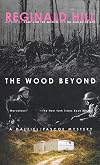
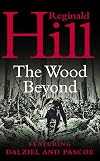
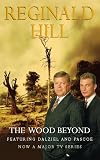
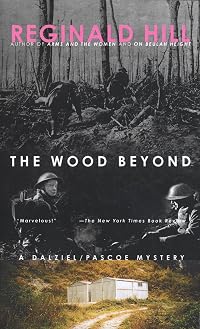
A ravaged, cratered wood, a man in uniform long dead - this is not a World War One battlefield, but Wanwood House, a pharmaceutical research centre.Away to the south, Peter Pascoe is attending his grandmother's funeral, and scattering her ashes leads him too into war-ravaged woods in search of his great-grandfather who fought and died in the Passchendaele campaign.Seeing the wood for the trees is a problem for Andy Dalziel and Edgar Wield, the latter in his investigation into the bones found show more at Wanwood, and the former in his involvement with an animal rights activist, despite her possible complicity in a murderous assault and her appalling taste in whisky. show lessTags
Recommendations









Member Reviews
Hill is enjoying himself here, as ever. A summary of this book could easily make it sound as though it brings in just about every cliché of detective fiction (indeed, the TV version of this book did just that), but Hill cunningly interweaves the modern narrative with the First World War horror so that we are never quite sure when we start a new chapter whether what we are reading is part of the modern crime story, a document Pascoe has unearthed about the Great War, or a nightmare. There is humour here, but it is sardonic and sometimes quite deeply buried. We are cunningly misled into expecting propaganda about "Big Pharma" and animal experiments, but Hill outmanoeuvres us by never putting himself in a position where he has to take an show more ethical stand on this (though his aesthetic standpoint is made clear). The heavy ammunition, however, has all been kept in reserve for an attack on the cruelty and wastefulness of war. Writing in 1995, Hill gives his villains names lifted out of Mrs Thatcher's cabinets: no doubt there would have been a villain called Blair if he'd written this one a few years later... show less
Following his grandmother’s death, Chief Inspector Pascoe is looking for a place to scatter her ashes according to her instructions; a difficult task as the place she wanted them to go doesn’t exist anymore. Furthermore, she has left behind her father’s journals, describing his life during World War I, which lead Pascoe to an unexpected piece of family history. Meantime, Superintendent Dalziel is attracted to a woman who may or may not be involved in several animal liberation actions, one of which resulted in the death of a young security guard, and Sergeant Wield is coming to terms with the idea that he might finally be happy…. I read "The Wood Beyond" immediately after finishing the previous novel in the series, "Pictures of show more Perfection," mostly because I wanted to know what happened with Sergeant Wield, but also because I’m enjoying Mr. Hill’s writing more and more, as I get further into these books. Great stuff; recommended! show less
These days, I get the feeling that I'm reading Dalziel and Pascoe mysteries just for the characters. I love the contrast of their personalities and family lives and their interactions with the entire CID team as they solve cases. The cases themselves, though, have left me feeling so muddled that I just plod along through the story, chuckling at the dialogue and waiting for the "all will be revealed" chapters at the end. It's frustrating because Hill writes well and often has interesting frame stories or underlying plots: in this case, World War One and the battle of Passchendaele. I guess I will keep visiting my favourite Yorkshire detectives, but I won't be keeping the books on the shelves permanently.
Reginald Hill continues to amaze me. The Wood Beyond is truly wonderful. This is startling because Hill writes thrillers under the pseudonym of Patrick Rule that are just not terribly interesting. The Wood Beyond concerns a group of animal rights activists who discover a body while on a nocturnal visit to an animal experimentation laboratory. The leader of the group, Cap Marvel, a woman to warm the heart if not the cockles of Andy Dalziel, and built with peaks resembling a famous mountain range, invites Andy over for lunch. She admires his efficient technique: “There was no impression of gluttony, no overfilling of or over-spilling from the mouth which would indeed have been difficult given the cetacean dimension of that maw, just a show more simple procession of food through the marble portals of his teeth, short rhythmic manducation, and a quick swallow which hardly registered on the massy column of his esophagus. The pie vanished save for the small wedge she had taken.” “He said, ‘You going to eat or just watch?’ “She began to nibble at the pastry crust, still observing with awe as he split one of the baguettes in half, expertly lined it with cheese, crisps, salad, and pickled onions, replaced the lid, and holding the esculent torpedo in both hands, raised it to his lips.”
It gets better yet. Cap goes on to decipher the origin of her nickname “Cap.” Andy explains why he doesn't want to be informal. “Ah well, I try not to get too friendly wi’ folk I might have to bang up.” She replies, “I take it your idiom is penal rather than penile, Superintendent?”
A subplot concerns Pascoe’s grandmother’s funeral. She had always wanted her ashes buried or scattered around the military outfit her husband had belonged to when he was killed during the First World War. A chance encounter with the custodian of the regimental history reveals that his grandfather had been shot for cowardice. Pascoe digs deeper and soon many names begin to surface. All is not what it seems. show less
It gets better yet. Cap goes on to decipher the origin of her nickname “Cap.” Andy explains why he doesn't want to be informal. “Ah well, I try not to get too friendly wi’ folk I might have to bang up.” She replies, “I take it your idiom is penal rather than penile, Superintendent?”
A subplot concerns Pascoe’s grandmother’s funeral. She had always wanted her ashes buried or scattered around the military outfit her husband had belonged to when he was killed during the First World War. A chance encounter with the custodian of the regimental history reveals that his grandfather had been shot for cowardice. Pascoe digs deeper and soon many names begin to surface. All is not what it seems. show less
Although this is the 15th book in the series, this is the first one I have read, but I watched the TV series so had some idea of the characters. I wasn't sure at first if I liked it, but the story drew me in, especially the parallel historical story of Pascoe's great grandfather in WW I. The modern mystery was also intriguing, with ties to the past, and involving drug companies and animal rights protesters. I plan to read the other books in the series that the library still has on its shelves. The best part is the excellent portrayal of the very human characters in the story.
The old trick of splitting a central character into two very different parts and using the tension to create literary sparks has worked for writers as diverse as Rex Stout (Nero Wolfe and Archie Goodwin) and Patrick O'Brian (Jack Aubrey and Stephen Maturin).
Nobody in the mystery field does it better these days than Hill, whose down-and-dirty Inspector Dalziel (pronounced Dah-eel in the A&E TV series) jigs and jousts wonderfully with his smart, sensitive sidekick Pascoe.
Their latest outing is one of the best in the series, with Pascoe digging up some old bones and family secrets from his own past
A ravaged wood, a man in uniform long dead -- this is not a World War One battlefield, but Wanwood House, a pharmaceutical research centre. show more Peter Pascoe attends his grandmother's funeral, and scattering her ashes leads him too into wartorn woods in search of his great-grandfather who fought and died in Passchendaele. Seeing the wood for the trees is the problem for Andy Dalziel when he finds himself fancying an animal rights activist, depite her possible complicity in a murderous assault and her appalling taste in whisky. A mind-bending puzzle leading us on the wild side of the pastoral.
Convoluted story line, shifting between the first world war and the present day, mixed in with desertion, cowardice, and bent ex coppers being involved in animal experiments. I found this to be a so-so story, and not in a rush to read another show less
Nobody in the mystery field does it better these days than Hill, whose down-and-dirty Inspector Dalziel (pronounced Dah-eel in the A&E TV series) jigs and jousts wonderfully with his smart, sensitive sidekick Pascoe.
Their latest outing is one of the best in the series, with Pascoe digging up some old bones and family secrets from his own past
A ravaged wood, a man in uniform long dead -- this is not a World War One battlefield, but Wanwood House, a pharmaceutical research centre. show more Peter Pascoe attends his grandmother's funeral, and scattering her ashes leads him too into wartorn woods in search of his great-grandfather who fought and died in Passchendaele. Seeing the wood for the trees is the problem for Andy Dalziel when he finds himself fancying an animal rights activist, depite her possible complicity in a murderous assault and her appalling taste in whisky. A mind-bending puzzle leading us on the wild side of the pastoral.
Convoluted story line, shifting between the first world war and the present day, mixed in with desertion, cowardice, and bent ex coppers being involved in animal experiments. I found this to be a so-so story, and not in a rush to read another show less
Mr Hill in sombre mood. There are not too many laughs in this convoluted story linking a WW I court martial and twentieth century skulduggery. It is, none the less, a good read and Hill makes the implausible sound believable by dint of his expert story telling technique.
The tale surrounds Pascoe's great grandfather being shot as a deserter and the death of a security guard at an animal testing laboratory.
Needless to say, the passing of the year's does not prevent Peter from proving his ancestor's innocence and tarnishing the good name of the guilty family is a less sweet reward when he finds that he is a bastard member of the clan.
The tale surrounds Pascoe's great grandfather being shot as a deserter and the death of a security guard at an animal testing laboratory.
Needless to say, the passing of the year's does not prevent Peter from proving his ancestor's innocence and tarnishing the good name of the guilty family is a less sweet reward when he finds that he is a bastard member of the clan.
Members
- Recently Added By
Lists

Library Books/Loans
37 works; 1 member

Books Read in 2018
4,360 works; 110 members

#MysteryBingo2023Silver(Original)
36 works; 1 member
#MysteryBingo2023Silver(Revised)
36 works; 1 member
#JustTheFacts2023Silver
60 works; 1 member

Must Read Detective Stories (Nick Fuller)
278 works; 2 members
Author Information

84+ Works 18,501 Members
Reginald Hill has received Britain's most coveted mystery writers award, the Cartier Diamond Dagger Award, as well as the Golden Dagger, for his Dalziel/Pascoe series. (Publisher Provided) Reginald Hill was born in Hartlepool, England on April 3, 1936. He received an English degree from St. Catherine's College, Oxford University and worked as a show more teacher until 1980, when he retired to become a full-time writer. His first novel, A Clubbable Woman, was published in 1970. During his lifetime, he wrote over 50 books that range from historical novels to science fiction including Fell of Dark, No Man's Land, The Spy's Wife, and The Woodcutter. He was best known for the Dalziel and Pascoe series and the Joe Sixsmith series. He also wrote under the pseudonyms of Patrick Ruell, Dick Morland, and Charles Underhill. He received the 1990 Golden Dagger Award for Best Crime Novel of the Year for Bones and Silence and the 1995 Cartier Diamond Dagger Award for lifetime achievement. He died from a brain tumor on January 12, 2012 at the age of 75. (Bowker Author Biography) show less
Awards and Honors
Awards
Series

Common Knowledge
- Canonical title
- The Wood Beyond
- Original publication date
- 1995
- People/Characters
- Peter Pascoe; Andrew Dalziel; Edgar Wield; Ellie Pascoe; Amanda Marvell
- Important places
- Yorkshire, England, UK
- Related movies
- Dalziel and Pascoe (1996 | IMDb)
- First words
- Montag morgen, Beginn einer neuen Woche, Luft so funkelnd wie Eis in einem Kristallglas, eine wermutgoldene Sonne am delfterblauen Himmel, das alte Farnkraut glühend auf den sanft sich wölbenden Mooren, gesprenkelte Bäume,... (show all) deren Blätter noch nicht vom Wind versprengt sind, die Weiden noch grün, ohne schlammiges Gras, als der Oktober in den November übergeht in der Meinung, es sei noch September.
Monday morning, start of a new week, air bright as ice in a crystal glass, brandy-gold sun pouring from delft-blue sky, the old bracken glowing on the rolling moors, the trees still pied with their unblasted leaves, the pastu... (show all)res still green with their unmuddied grass, as October runs into November and thinks it's September still. - Last words
- (Click to show. Warning: May contain spoilers.)And on Sunday morning, which also happened to be Armistice Day, as the bugles sounded the Last Post over the cenotaphs of Western Europe, the transporter bound for that distant slaughterhouse crossed over the border into Flanders.
Classifications
Statistics
- Members
- 574
- Popularity
- 51,381
- Reviews
- 10
- Rating
- (3.70)
- Languages
- English, French, German, Swedish
- Media
- Paper, Audiobook, Ebook
- ISBNs
- 23
- ASINs
- 5