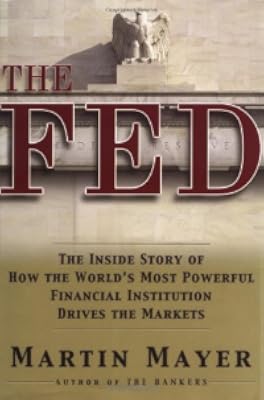
The Fed: The Inside Story of How the World's Most Powerful Financial Institution Drives the Markets
by Martin Mayer
On This Page
Description
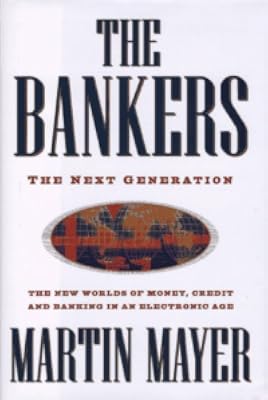
The Fed has entered a new era, and hardly anyone understands the rules of its game. Where once it could control the economy by controlling what the banks did, it now must push directly on the markets. But how? Why do interest-rate changes sometimes move the markets as expected, and sometimes fail to have any effect? What else is the Fed doing that might affect asset prices and growth rates? The links between Fed decisions and market reactions have become far more complicated and confused show more than ever before. What is an investor to make of it? In The Fed, one of the world's best financial journalists offers a major new explanation of how the Fed works and how its world has changed. Martin Mayer is the bestselling author of The Bankers and The Bankers: The Next Generation, among many other books. He knows more about the banking system, the markets, and the Federal Reserve than anyone else writing today. The Fed is the first book to explain why all the old rules for Fed watchers are no longer operative, and what it is that investors must know to understand the Fed today. For anyone who wants to know why Alan Greenspan is hailed as the second most powerful man in the United States, The Fed is essential reading. Mayer offers many behind-the-scenes stories from past and present Fed administrations, and he explains the overlooked significance of recent dramatic expansions in the Fed's powers and perks. Why does the Fed care about the difference between 30-year and 29-year bond yields? Why and how did the Fed join with its district banks in organizing the bailout of Long Term Capital Management? How was the age-old war between the Fed and the Comptroller of the Currency finally resolved in 1999? Why has the increased "sunshine" of announcing market interventions and posting proceedings of the Federal Open Market Committee not led to greater market stability? Why did Greenspan make the key decision of the Clinton boom years -- to let the good times roll while unemployment sank to record lows -- despite all historical evidence that it would be inflationary? These are just some of the questions answered in this wide-ranging, sharp, and entertaining book. show lessTags
Recommendations






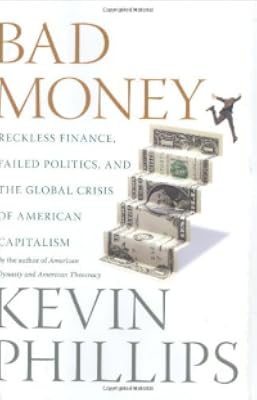
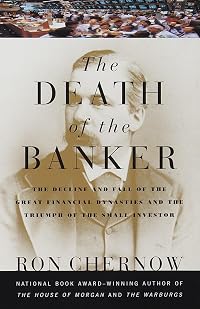
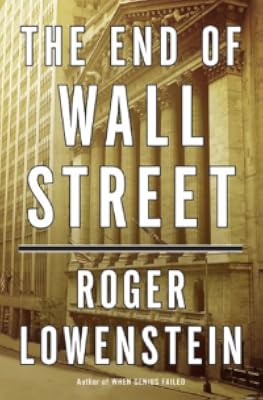
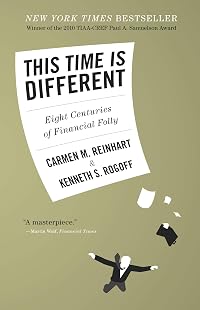

Member Reviews
Interesting, if somewhat disorganized book. Very prescient in places, and author frequently worries about the lack of transparency in the derivatives markets that caused so many problems in the 2008 crash. He explores an interesting idea about the economy and monetary policy being "banker driven" versus "market driven"; the book could have used a deeper exploration of those ideas.
Some material is now dated, but it is still very interesting, provided you have some prior knowledge of the Federal Reserve and monetary policy.
Some material is now dated, but it is still very interesting, provided you have some prior knowledge of the Federal Reserve and monetary policy.
What Martin Mayer doesn't know about our banking and financial system is not worth knowing. This book is demanding of the reader, as are all Mayer's books, but it is a superb introduction to the Federal Reserve System.
Federal Reserve (Subject)
Ratings
Members
- Recently Added By
Author Information
52+ Works 906 Members
Martin Mayer was an author, journalist and critic who wrote more than 40 books and hundreds of articles for laymen that demystified lawyers, banking, and thorny school problems. He started out as an old-time freelancer, writing 1,000 words a night. Then for a half-century, Mr. Mayer was a Renaissance man of letters, taking readers on show more behind-the-scene tours of Wall Street, Madison Avenue, the practice of law, and the tangles of a racially divisive New York City teachers strike. He wrote three novels; columns for Esquire magazine; was a music critic for a British journal; wrote for The New York Times, The Wall Street Journal, composed reports for the Ford, Carnegie and Kettering Foundations; and served on White House panels in the Kennedy and Reagan administrations. After graduating from Harvard he edited a scholarly labor publication, a pulp detective magazine and paperback Westerns. Landing at Esquire in 1951, he edited fiction, wrote articles and finished his first novel, "The Experts". Many of his books examined familiar professions and institutions, with titles like Madison Avenue, U.S.A. (1958), Wall Street: Men and Money (1960), The Schools (1961), The Lawyers (1967), About Television (1972), The Bankers (1974), The Builders: Houses, People, Neighborhoods, Governments, Money (1978) and The Diplomats (1983). Martin Prager Mayer was born in Manhattan on Jan. 14, 1928, the only child of Henry and Ruby (Prager) Mayer. In 1949, Mr. Mayer married Ellen Moers, an author and professor of literature. She died in 1979. In 1980, Mr. Mayer married Karin Lissakers, a Swedish-born writer and former State Department official who subsequently became the United States executive director of the International Monetary Fund. Martin Mayer passed away on August 1, 2019 at the age of 91 due to complications of Parkinson's disease. (Bowker Author Biography) show less
Common Knowledge
- Blurbers
- Smith, Adam; Litan, Robert
Classifications
Statistics
- Members
- 98
- Popularity
- 329,843
- Reviews
- 3
- Rating
- (3.70)
- Languages
- English, Spanish
- Media
- Paper, Ebook
- ISBNs
- 5
- ASINs
- 2