On This Page
Description
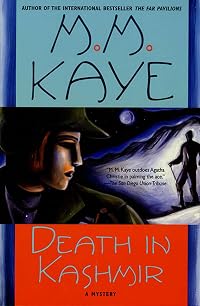
When young Sarah Parrish takes a skiing vacation to Gulmarg, a resort nestled in the mountains above the fabled Vale of Kashmir, she anticipates an entertaining but uneventful stay. But when she discovers that the deaths of two in her party are the reuslt of foul play, she finds herself entrusted with a mission of unforseen importance. And when she leaves the ski slopes for the Waterwitch, a private houseboat on the placid shores of the Dal Lake near Srinagar, she discovers to her horror show more that the killer will stop at nothing to prevent Sarah from piecing the puzzle together. show lessTags
Recommendations
























Member Reviews
Sarah Parrish just wants to enjoy her relaxing holiday at a ski hotel in Kashmir, but her vacation takes an unpleasant turn when one of the other hotel patrons is found dead. Everyone believes that Mrs. Matthews’ death was an accident, until Sarah discovers that another hotel guest, Janet Rushton, is actually a British Intelligence agent – and that she and Mrs. Matthews were working together. When Janet herself dies “accidentally” shortly thereafter, Sarah is plunged into a mysterious network of criminal intrigue and espionage. But the more she learns about the sinister plot that Janet had uncovered, the more dangerous her own search becomes.
This was my first book by M. M. Kaye, but it definitely won’t be my last. Death in show more Kashmir is an entertaining cozy mystery set a year before India gained its independence from Britain – so, in addition to the mystery plot, the book documents a significant cultural shift from the perspective of the British occupants. And since M. M. Kaye actually did live in Kashmir for a while, her descriptions of the country are (most likely) accurate! The mystery was well done also; there was a comfortable number of suspects, and I didn’t discover who the villain was until Sarah did. Overall, the novel reminded me strongly of Agatha Christie’s books, and I think anyone who likes Christie will like M. M. Kaye as well. I’ll have to go find Death in Berlin now! show less
This was my first book by M. M. Kaye, but it definitely won’t be my last. Death in show more Kashmir is an entertaining cozy mystery set a year before India gained its independence from Britain – so, in addition to the mystery plot, the book documents a significant cultural shift from the perspective of the British occupants. And since M. M. Kaye actually did live in Kashmir for a while, her descriptions of the country are (most likely) accurate! The mystery was well done also; there was a comfortable number of suspects, and I didn’t discover who the villain was until Sarah did. Overall, the novel reminded me strongly of Agatha Christie’s books, and I think anyone who likes Christie will like M. M. Kaye as well. I’ll have to go find Death in Berlin now! show less
While on a visit to South Asia in the last days of the Raj, Sarah Parrish gets caught up in life or death intrigue. Two women have died on a ski club trip in the mountains of Kashmir. Before the second woman’s death, Sarah is entrusted with instructions for completing a mission. However, Sarah is left in the dark as to the nature of the mission or the source of danger. She can’t trust anyone. After her return to Peshawar, Sarah keeps running into the handsome but aloof Charles Mallory. When Mallory shows up again in Srinagar, Sarah is tempted to trust him when there is no one else to turn to.
I first read M. M. Kaye’s Death in… series in my college years at a time when romantic suspense was my favorite genre. I loved the sense of show more mystery and adventure in an exotic setting. This was long enough ago that I had forgotten everything about this book, so it was like experiencing it for the first time. Kaye spent the early part of her life in India, so the characters and setting feel authentic. The mystery plot is satisfying and plausible. And there is a dog who plays an important role in the plot! It’s a perfect vacation read. show less
I first read M. M. Kaye’s Death in… series in my college years at a time when romantic suspense was my favorite genre. I loved the sense of show more mystery and adventure in an exotic setting. This was long enough ago that I had forgotten everything about this book, so it was like experiencing it for the first time. Kaye spent the early part of her life in India, so the characters and setting feel authentic. The mystery plot is satisfying and plausible. And there is a dog who plays an important role in the plot! It’s a perfect vacation read. show less
M. M. Kaye's Death in Kashmir attempts to combine a murder mystery with international intrigue. Agatha Christie's foray into mystery + international intrigue was not successful (see Passenger to Frankfurt), and I was a little dubious about Kaye's ability to shine where Christie had faltered. Though the international intrigue element is probably the weakest part of the plot, it wasn't bad enough to make me put the book down.
Sarah Parrish is a young woman who served as a WRAF in World War II. Now that the war is over, she is at loose ends; her parents are dead and she is on her own. It's 1946 and India is shortly to be emancipated from British rule after a century and a half. While skiing with a party in Kashmir, Sarah is unexpectedly show more pulled into the confidence of Janet, a Secret Service person with something terribly important to protect. When Janet is killed — accidentally, as it looks, though Sarah knows it is murder — Sarah is left with the only clue to Janet's secret. But how can she do anything when she doesn't even know what the secret is about — and when the opposition is so skilled at arranging convenient deaths as needed?
We get a wonderful snapshot of life in India just before its emancipation, by a person who was really there. Kaye spent her childhood and early married life in India, where her grandfather, father, brother, and husband all served the British Raj (or "reign") there. Her attention to detail, down to the pronunciation of the various Indian terms and place names, is commendable and adds greatly to the verisimilitude of the setting. Kaye's deep love for India is apparent in the descriptions of its beauty and culture.
The dialogue in this mystery is wickedly witty and funny. Major Hugo Creed and his wife Fudge are such fun. His speeches are my favorite:
"I know of few more invigorating pastimes than watching one's fellow man earnestly endeavoring to remain upright while sliding down a snow slope of one-in-one with six feet of planking strapped to his boots." (p. 33)
"You will undoubtedly meet the lady at the binge tomorrow, and be able to judge for yourself. Speaking for myself, she fascinates me, and I cannot help regretting that upon her demise it will not be practicable to have her stuffed and placed in some public museum." (p. 101)
Sarah is also fun to listen to; her conversation is peppered with literary allusions and quotes, and she has a lively sense of humor. Lady Candera — perhaps so named because of her alarming candor — is also hilarious (though perhaps less fun if one were to meet her in real life). The narrative voice is fairly distinctive, subtly clever and occasionally reflective. Kaye writes in the introduction of "man's compulsive and indefatigable efforts to destroy what is beautiful." I'm not so sure she's wrong.
But despite all the good things, there were some flaws in the story. The international intrigue was a bit of a stretch, and even at the end it was vague. Still, it could have been worse. The romance was predictable, and Charles a rather one-dimensional character. A nice one-dimensional character (of admirable dimensions too, I understand!) but something about that fell flat for me. Maybe because it was so perfect? All the women for miles around try their wiles on him, Sarah included, because he is such a paragon of good looks and manners — and he conveniently turns out to be, well, what he is, and ends up with Sarah? I don't want to give too much away, but it's just too neat. The characters also spill things on themselves and others quite a bit, I noticed. It got rather funny as it kept happening.
Oh, I remembered one other thing I didn't like. Charles and Sarah are discussing a mutual acquaintance and Sarah says, "This is the Atom Age—more's the pity—and anyone as spineless as Meril Forbes should be dumped straight back into a Brontë novel where she belongs" (p. 186). Excuse me? The heroines of Brontë novels are anything but spineless, thank you very much! I'm not sure why Kaye made that dig, but it was annoying — enough to lop off that extra half-star I couldn't decide if I should give it. Off it comes.
There are red herrings aplenty, but I had my suspicions about the criminal right from the start. Though I suspected some other people too along the way, I was never quite fooled by the blind Kaye puts up. I'm not sure what I like better: figuring it out beforehand or having the wool pulled thoroughly over my eyes. Both are fun when it comes to murder mysteries!
Death in Kashmir is the first Kaye book I've read, and I will certainly be looking for more of her work. The characters are fun, the dialogue witty, the mystery passable, and the historical setting believable. Recommended! show less
Sarah Parrish is a young woman who served as a WRAF in World War II. Now that the war is over, she is at loose ends; her parents are dead and she is on her own. It's 1946 and India is shortly to be emancipated from British rule after a century and a half. While skiing with a party in Kashmir, Sarah is unexpectedly show more pulled into the confidence of Janet, a Secret Service person with something terribly important to protect. When Janet is killed — accidentally, as it looks, though Sarah knows it is murder — Sarah is left with the only clue to Janet's secret. But how can she do anything when she doesn't even know what the secret is about — and when the opposition is so skilled at arranging convenient deaths as needed?
We get a wonderful snapshot of life in India just before its emancipation, by a person who was really there. Kaye spent her childhood and early married life in India, where her grandfather, father, brother, and husband all served the British Raj (or "reign") there. Her attention to detail, down to the pronunciation of the various Indian terms and place names, is commendable and adds greatly to the verisimilitude of the setting. Kaye's deep love for India is apparent in the descriptions of its beauty and culture.
The dialogue in this mystery is wickedly witty and funny. Major Hugo Creed and his wife Fudge are such fun. His speeches are my favorite:
"I know of few more invigorating pastimes than watching one's fellow man earnestly endeavoring to remain upright while sliding down a snow slope of one-in-one with six feet of planking strapped to his boots." (p. 33)
"You will undoubtedly meet the lady at the binge tomorrow, and be able to judge for yourself. Speaking for myself, she fascinates me, and I cannot help regretting that upon her demise it will not be practicable to have her stuffed and placed in some public museum." (p. 101)
Sarah is also fun to listen to; her conversation is peppered with literary allusions and quotes, and she has a lively sense of humor. Lady Candera — perhaps so named because of her alarming candor — is also hilarious (though perhaps less fun if one were to meet her in real life). The narrative voice is fairly distinctive, subtly clever and occasionally reflective. Kaye writes in the introduction of "man's compulsive and indefatigable efforts to destroy what is beautiful." I'm not so sure she's wrong.
But despite all the good things, there were some flaws in the story. The international intrigue was a bit of a stretch, and even at the end it was vague. Still, it could have been worse. The romance was predictable, and Charles a rather one-dimensional character. A nice one-dimensional character (of admirable dimensions too, I understand!) but something about that fell flat for me. Maybe because it was so perfect? All the women for miles around try their wiles on him, Sarah included, because he is such a paragon of good looks and manners — and he conveniently turns out to be, well, what he is, and ends up with Sarah? I don't want to give too much away, but it's just too neat. The characters also spill things on themselves and others quite a bit, I noticed. It got rather funny as it kept happening.
Oh, I remembered one other thing I didn't like. Charles and Sarah are discussing a mutual acquaintance and Sarah says, "This is the Atom Age—more's the pity—and anyone as spineless as Meril Forbes should be dumped straight back into a Brontë novel where she belongs" (p. 186). Excuse me? The heroines of Brontë novels are anything but spineless, thank you very much! I'm not sure why Kaye made that dig, but it was annoying — enough to lop off that extra half-star I couldn't decide if I should give it. Off it comes.
There are red herrings aplenty, but I had my suspicions about the criminal right from the start. Though I suspected some other people too along the way, I was never quite fooled by the blind Kaye puts up. I'm not sure what I like better: figuring it out beforehand or having the wool pulled thoroughly over my eyes. Both are fun when it comes to murder mysteries!
Death in Kashmir is the first Kaye book I've read, and I will certainly be looking for more of her work. The characters are fun, the dialogue witty, the mystery passable, and the historical setting believable. Recommended! show less
The best of the series so far, less of the standard formula the others suffer from. That being said the heroine, Sarah, is fairly slow figuring out clues but does have a certain level of foolhardy courage that helps her out of some crazy messes. The end somewhat falls apart the way Death in Zanzibar did, in hopelessly outdated jingoism. However, a quick and fun read.
Finished! I am really impressed. This is the first book by M.M. Kaye that I have read, and I am grateful that this was a choice for a group read of the Retro Reads group.
The mystery was interesting, and believeable, and the creepiness factor was turned up high! M.M. Kaye really writes suspense well! Without being gory or super violent.
I loved the description of Kashmir, the mustards and lilacs and saffrons, and the birds playing such a great part in the scenery.
I did not like Charles too much, he seemed a bit too much, acting as if everything belonged to him. And all the cigarettes being lit, and then at the end he flicks a butt carelessly into the lake, errrrrrrrrrrrrrrrrrrrgh that steamed me up! I guess for a person to be that type of employment, he would have to be certain of his right to everything.
Do you think that Major McKay, 'advancing cautiously to the rescue,' rescued Meril? Although their characters were painted as awkward, I found them quite endearing.
Overall, this was a great book, one of the few mysteries that I could see myself re-reading. show less
The mystery was interesting, and believeable, and the creepiness factor was turned up high! M.M. Kaye really writes suspense well! Without being gory or super violent.
I loved the description of Kashmir, the mustards and lilacs and saffrons, and the birds playing such a great part in the scenery.
I did not like Charles too much, he seemed a bit too much, acting as if everything belonged to him. And all the cigarettes being lit, and then at the end he flicks a butt carelessly into the lake, errrrrrrrrrrrrrrrrrrrgh that steamed me up! I guess for a person to be that type
Do you think that Major McKay, 'advancing cautiously to the rescue,' rescued Meril? Although their characters were painted as awkward, I found them quite endearing.
Overall, this was a great book, one of the few mysteries that I could see myself re-reading. show less
Wonderful, for what it is - a light-hearted whodunit with a clever, complex and suspenseful mystery, interesting and rich historical context (politically, culturally and scenically), a charming heroine and a romantic plot (and hero!) which never fails to amuse...
Sarah's holiday in late-1940s India, hijacked by suspense and intrigue makes for gripping entertainment.
Sarah's holiday in late-1940s India, hijacked by suspense and intrigue makes for gripping entertainment.
Sarah parrish,our protagonist, is an independently wealthy English young person who lives in india, at least until partition, which is supposed to happen in the next year.
The book starts out with her going to a ski club meet-up in the vale of Kashmir, high up in the mountains surrounding. She's staying in a hotel with other members of the ski club, but they plan to go higher up and stay in a ski Hut, in order to access the best runs. Her "bearer," is unhappy with the idea, because he says that the ski Hut is dangerous. The reason is because there are avalanches in the area. But this part of the book struck me:
"The ski hut, said bulaki, was damp and insecure. It was also a place of evil omen, for had not the first ski-Hut been buried by show more an avalanche -- and with no less than three young sahibs within it at the time? He himself has spoken with a man who had helped to dig out the bodies of those same sahibs, and... At which point Sarah had cut him short with some haste, and having repeated her intention to spend the night in the khilanmarg hut, requested him to pack what she would need for the expedition while she was at breakfast."
Hello? Is she a cripple, that she can't pack for herself? show less
The book starts out with her going to a ski club meet-up in the vale of Kashmir, high up in the mountains surrounding. She's staying in a hotel with other members of the ski club, but they plan to go higher up and stay in a ski Hut, in order to access the best runs. Her "bearer," is unhappy with the idea, because he says that the ski Hut is dangerous. The reason is because there are avalanches in the area. But this part of the book struck me:
"The ski hut, said bulaki, was damp and insecure. It was also a place of evil omen, for had not the first ski-Hut been buried by show more an avalanche -- and with no less than three young sahibs within it at the time? He himself has spoken with a man who had helped to dig out the bodies of those same sahibs, and... At which point Sarah had cut him short with some haste, and having repeated her intention to spend the night in the khilanmarg hut, requested him to pack what she would need for the expedition while she was at breakfast."
Hello? Is she a cripple, that she can't pack for herself? show less
Members
- Recently Added By
Lists

Survey of Mysteries and Crime Fiction
96 works; 17 members

Books I've Read More Than Once
602 works; 49 members
Comfort Reads
221 works; 41 members

Female Author
1,235 works; 65 members

Murder Mysteries
57 works; 11 members
Detective Stories
343 works; 5 members

Favourite Books
1,819 works; 316 members

My TBR list
38 works; 1 member

Alphabetical Books
211 works; 3 members

Books Read in 2018
4,360 works; 110 members

Nifty Fifties
129 works; 14 members

Books With Place Names in the Title
215 works; 10 members
Author Information

30+ Works 9,018 Members
M. M. Kaye was born on August 21, 1908 in Simla, India to British parents. She wrote numerous books during her lifetime including Death Walks in Kashmir, Later than You Think, Shadow of the Moon, Trade Wind, The Far Pavilions, The Sun in the Morning, Golden Afternoon, and Enchanted Evening. She also wrote and illustrated children's books including show more The Ordinary Princess. She died on January 29, 2004 at the age of 95. (Bowker Author Biography) show less
Some Editions
Series

Work Relationships
Common Knowledge
- Canonical title*
- Kuolema kulki Kashmirissa
- Original title
- Death Walked in Kashmir
- Alternate titles
- Death in Kashmir
- Original publication date
- 1953
- People/Characters
- Sarah Parrish; Janet Rushton; Major Hugo Creed; Antonia "Fudge" Creed; Lady Candera; Charles Mallory
- Important places
- Gulmarg, Kashmir, India; Khilanmarg, Kashmir, India; Dal Lake, Kashmir, India; Srinagar, Kashmir, India; Peshawar, Pakistan
- First words
- Afterwards, Sarah could never be quite sure whether it was the moonlight or that soft, furtive sound that had awakened her.
- Last words
- (Click to show. Warning: May contain spoilers.)It is indeed! And getting smaller every day.
- Disambiguation notice
- Originally published as "Death Walked in Kashmir"
*Some information comes from Common Knowledge in other languages. Click "Edit" for more information.
Classifications
Statistics
- Members
- 447
- Popularity
- 68,398
- Reviews
- 11
- Rating
- (3.81)
- Languages
- 9 — English, Finnish, French, German, Lithuanian, Norwegian, Serbian, Spanish, Swedish
- Media
- Paper, Audiobook, Ebook
- ISBNs
- 24
- ASINs
- 13