On This Page
Description
The Quantum Thief is a Kirkus Reviews Best of 2011 Science Fiction & Fantasy title. One of Library Journal's Best SF/Fantasy Books of 2011Jean le Flambeur is a post-human criminal, mind burglar, confidence artist, and trickster. His origins are shrouded in mystery, but his exploits are known throughout the Heterarchy- from breaking into the vast Zeusbrains of the Inner System to stealing rare Earth antiques from the aristocrats of Mars. Now he's confined inside the Dilemma Prison, where show more every day he has to get up and kill himself before his other self can kill him.
Rescued by the mysterious Mieli and her flirtatious spacecraft, Jean is taken to the Oubliette, the Moving City of Mars, where time is currency, memories are treasures, and a moon-turnedsingularity lights the night. What Mieli offers is the chance to win back his freedom and the powers of his old self-in exchange for finishing the one heist he never quite managed.
As Jean undertakes a series of capers on behalf of Mieli and her mysterious masters, elsewhere in the Oubliette investigator Isidore Beautrelet is called in to investigate the murder of a chocolatier, and finds himself on the trail of an arch-criminal, a man named le Flambeur....
Hannu Rajaniemi's The Quantum Thief is a crazy joyride through the solar system several centuries hence, a world of marching cities, ubiquitous public-key encryption, people communicating by sharing memories, and a race of hyper-advanced humans who originated as MMORPG guild members. But for all its wonders, it is also a story powered by very human motives of betrayal, revenge, and jealousy. It is a stunning debut.
. show less
Tags
Recommendations











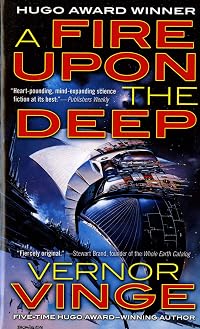



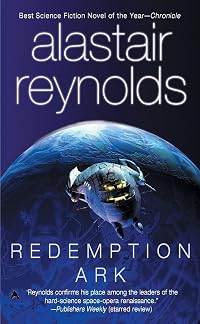
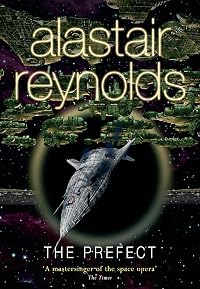

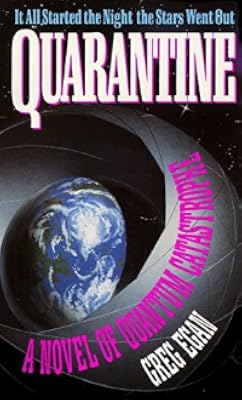








Member Recommendations

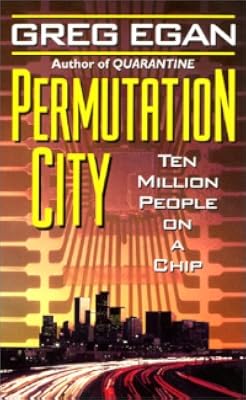
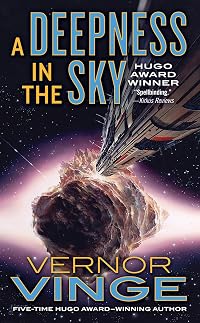
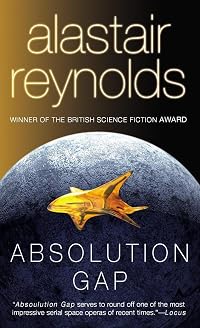
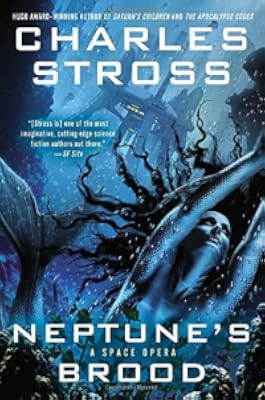
ianturton A similar world of interchangeable bodies/minds
Member Reviews
Felt like giving this a re-read. It's very very good! A little hard to follow, and my firm conclusion, on revisiting it, is that the Oubliette (a city on Mars) and its citizens are 100 times more interesting than the titular thief and the larger plot. The way the consensus-reality works is really intriguing from a social media standpoint, "the Quiet" are a great concept (the potentially-immortal citizens must periodically spend a life as mute robots who build, protect, and serve the city), and the little urban details and exotic intrigues are wonderful.
This one is just about perfect. An excellent combination of questions about objective reality and questions about what it means to be human (objective humanity, as it were).
This compares best to [a:Charles Stross|8794|Charles Stross|http://photo.goodreads.com/authors/1218218373p2/8794.jpg]'s [b:Accelerando|17863|Accelerando|Charles Stross|http://photo.goodreads.com/books/1309198110s/17863.jpg|930555], but is better written and overall a better read. (As a side note, this is one of the very few hard sci-fi books where I prefer the American cover to the British one.)
The inner portions of the solar system, inside the orbit of Mars, are controlled by the Founders - massively parallel transhumans based off human templates, they are the show more current incarnations of a small number of brilliant engineers from old Earth. There are indications that they were important, central figures in some sort of technological singularity, but memories have been heavily edited and the reader is left unsure of the objective truth (if such a thing can be said to exist). They are now churning away inside giant crystalline picotech processing palaces the size of small planets, drawing vast amounts of power from the sun.
They are not an important part of this book, but they are probably an important part of the trilogy. Something was stolen from them, and the thief who did it spends the entirety of this book reassembling himself from memory stores that were hidden on Mars.
I don't want to say anything else for fear of spoiling this book. Suffice it to say that the characters are excellent, the world building is phenomenal, the writing style is a pleasure to read, and the editing is tolerable. (I always cringe at editing mistakes in printed books, but there are only half a dozen or so in the British softcover edition.)
You should read it if you have any interest in hard sci-fi, or questions of humanity and reality. show less
This compares best to [a:Charles Stross|8794|Charles Stross|http://photo.goodreads.com/authors/1218218373p2/8794.jpg]'s [b:Accelerando|17863|Accelerando|Charles Stross|http://photo.goodreads.com/books/1309198110s/17863.jpg|930555], but is better written and overall a better read. (As a side note, this is one of the very few hard sci-fi books where I prefer the American cover to the British one.)
The inner portions of the solar system, inside the orbit of Mars, are controlled by the Founders - massively parallel transhumans based off human templates, they are the show more current incarnations of a small number of brilliant engineers from old Earth. There are indications that they were important, central figures in some sort of technological singularity, but memories have been heavily edited and the reader is left unsure of the objective truth (if such a thing can be said to exist). They are now churning away inside giant crystalline picotech processing palaces the size of small planets, drawing vast amounts of power from the sun.
They are not an important part of this book, but they are probably an important part of the trilogy. Something was stolen from them, and the thief who did it spends the entirety of this book reassembling himself from memory stores that were hidden on Mars.
I don't want to say anything else for fear of spoiling this book. Suffice it to say that the characters are excellent, the world building is phenomenal, the writing style is a pleasure to read, and the editing is tolerable. (I always cringe at editing mistakes in printed books, but there are only half a dozen or so in the British softcover edition.)
You should read it if you have any interest in hard sci-fi, or questions of humanity and reality. show less
The conceptual ambition of this book is striking and the world-building, genuinely impressive. It has ideas about memory, identity, and post-human society that are among the most inventive in modern sci-fi. Unfortunately, that intellectual core is undercut by an unnecessary predilection for theatrics. What could have been a truly great work of hard sci-fi often reads as if it were written to be pitched as a Hollywood action thriller.
The action sequences are overwrought and frequently strain internal plausibility! It is difficult to accept that a single offworlder can smuggle in enough weaponry to overpower forces that an entire Martian city supposedly cannot counter on its own. More frustrating still is how often the plot relies on show more characters making implausibly foolish decisions for sexual or romantic motives, despite the setting’s premise of highly digitized, cognitively sophisticated humans.
If the narrative discipline and restraint matched the brilliance of the underlying ideas, this could have been an exceptional novel. show less
The action sequences are overwrought and frequently strain internal plausibility! It is difficult to accept that a single offworlder can smuggle in enough weaponry to overpower forces that an entire Martian city supposedly cannot counter on its own. More frustrating still is how often the plot relies on show more characters making implausibly foolish decisions for sexual or romantic motives, despite the setting’s premise of highly digitized, cognitively sophisticated humans.
If the narrative discipline and restraint matched the brilliance of the underlying ideas, this could have been an exceptional novel. show less
Think of this as a post-Singularity heist story. The main character is modeled after Arsène Lupin, a gentleman thief from a series of stories by Maurice Leblanc. You don't need to know Lupin (or Lupin the Third) to appreciate the story—I certainly didn't.
Rajaniemmi does a superb job imagining what life could be like for our digital descendants. While there are several "interludes" that assist the reader in understanding this world, Rajaniemmi throws the reader in the deep end of the pool from the start, forcing us to gather the meanings of new words from context in order to swim through the story. I'd imagine that plenty of readers have drowned along the way.
The story starts with our hero, the gentleman thief, in a dilemma prison. show more Shortly thereafter, he's busted out of said prison, for a price, and whisked off to Mars to retrieve his memories. His rescuer/employer is Mieli, a woman who needs him to pull off a heist to rescue her lover, a secret she keeps hidden from him. The other major character is Isidore, a promising young detective in the mobile city of Oubilette on Mars. He starts off as a bit of a puppy dog, trying to please the tzadikkim, a group of highly respected vigilantes in the city, but gradually comes into his own.
While some futurists will have you believe that the Singularity will bring paradise, Rajaniemmi posits a future where that certainly isn't the case. Equality is a lie. Some of those responsible for forging Creation 2.0 have granted themselves far greater powers for their uplifted minds than others. Rajaniemmi's new gods are just as capricious as the ancient ones, and their struggle for power always leaves mere mortals as collateral damage.
The malleability of memory is an important theme running through the book. It seems that our digital descendants have a harder time with memory than our analog selves. While memories can be shared, it appears that they can be forged as well. While we've been struggling with disinformation on the internet the last few years, at least there's a way to uncover the truth. That doesn't seem so easy here when collective memories can be overwritten. The truth has never been so fragile.
There are many interesting elements that I'm not going into such as time as currency, personality pirates, multi-level privacy shields, matter shaped by thought, death as a time of public service, and so on. Recommended for sci-fi fans looking for something challenging and different. I found myself re-reading parts to figure things out. show less
Rajaniemmi does a superb job imagining what life could be like for our digital descendants. While there are several "interludes" that assist the reader in understanding this world, Rajaniemmi throws the reader in the deep end of the pool from the start, forcing us to gather the meanings of new words from context in order to swim through the story. I'd imagine that plenty of readers have drowned along the way.
The story starts with our hero, the gentleman thief, in a dilemma prison. show more Shortly thereafter, he's busted out of said prison, for a price, and whisked off to Mars to retrieve his memories. His rescuer/employer is Mieli, a woman who needs him to pull off a heist to rescue her lover, a secret she keeps hidden from him. The other major character is Isidore, a promising young detective in the mobile city of Oubilette on Mars. He starts off as a bit of a puppy dog, trying to please the tzadikkim, a group of highly respected vigilantes in the city, but gradually comes into his own.
While some futurists will have you believe that the Singularity will bring paradise, Rajaniemmi posits a future where that certainly isn't the case. Equality is a lie. Some of those responsible for forging Creation 2.0 have granted themselves far greater powers for their uplifted minds than others. Rajaniemmi's new gods are just as capricious as the ancient ones, and their struggle for power always leaves mere mortals as collateral damage.
The malleability of memory is an important theme running through the book. It seems that our digital descendants have a harder time with memory than our analog selves. While memories can be shared, it appears that they can be forged as well. While we've been struggling with disinformation on the internet the last few years, at least there's a way to uncover the truth. That doesn't seem so easy here when collective memories can be overwritten. The truth has never been so fragile.
There are many interesting elements that I'm not going into such as time as currency, personality pirates, multi-level privacy shields, matter shaped by thought, death as a time of public service, and so on. Recommended for sci-fi fans looking for something challenging and different. I found myself re-reading parts to figure things out. show less
One of my favourite thought experiments is to stand slightly back, look at our present-day world, and wonder "How would I explain this to a person from the 16th Century?" Because so much of our lives today would be incomprehensible to even a reasonably well-educated (by the standards of the day) person, I find this an intriguing exercise. And so I looked at the utter weirdness of so much of the setting of 'The Quantum Thief' and I felt like that 16th Century person.
Still, that's what I started reading science fiction for, and so I wasn't disappointed. Most of what Rajaniemi puts into the book becomes clear with time; what doesn't come clear is most likely a setup for the next novel in the series. What we have here is a post-human heist show more caper, mainly set in a mobile city on the surface of Mars. A lot of the city's style and habits seem lifted from 19th Century Paris, but there are elements of Russian folklore and a few nods to the author's own Finnish heritage as well. The story switches between Jean le Flambeur, the thief of the title, and a detective, Isidore Beautrelet, whose stories become interlinked; it moves along at a fair pace, although about three quarters of the way in, a new character was introduced almost out of nowhere and I did stumble slightly. But the pace soon picked up again, and we were led to a spectacular, if slightly confusing, climax. (Well, confusing if you haven't been paying attention, or weren't aware of the meaning of words like 'panopticon' or 'oubliette'...)
It's not a book that will be to everyone's taste, but I enjoyed it. show less
Still, that's what I started reading science fiction for, and so I wasn't disappointed. Most of what Rajaniemi puts into the book becomes clear with time; what doesn't come clear is most likely a setup for the next novel in the series. What we have here is a post-human heist show more caper, mainly set in a mobile city on the surface of Mars. A lot of the city's style and habits seem lifted from 19th Century Paris, but there are elements of Russian folklore and a few nods to the author's own Finnish heritage as well. The story switches between Jean le Flambeur, the thief of the title, and a detective, Isidore Beautrelet, whose stories become interlinked; it moves along at a fair pace, although about three quarters of the way in, a new character was introduced almost out of nowhere and I did stumble slightly. But the pace soon picked up again, and we were led to a spectacular, if slightly confusing, climax. (Well, confusing if you haven't been paying attention, or weren't aware of the meaning of words like 'panopticon' or 'oubliette'...)
It's not a book that will be to everyone's taste, but I enjoyed it. show less
This is not a novel that will please everyone. I found it fun, although possibly tries to be a bit too clever, and I'm not sure the conclusion is quite supported by the preceding work. But I did enjoy it nethertheless. There has been a few charismatic thief based fantasy novels in the last year or two, but this is the first I've come across in an SF setting.
As with many SF novels the backstory isn't explained and you're left to try an piece it together from the fragments referred to too infrequently. The basics seem to be that a paradigm sift happened on Earth allowing conciousness uploading to a major new technologies, but only some people had control over it, and there were divisions in the ranks. The story starts with our hero -one show more Jean Flambeau incarcerated in a distant prison playing Prisoner's Dilemma for real over and over again. Then, just as he's about to lose for the last time he is rescued by someone who needs his specific thief skills for a quest that is never specified. First he has to regain his thieving skills by finding where he hid them. Or maybe where a copy of him might have hidden them - digital personalities being what they are. This is likely to have been on Mars where there is a privacy obsessed society that mediates every personal interaction through a nanotech AI, allowing you to forget you've ever seen someone if both parties agree, or just prevent yourself from being seen to start with. Here we meet the other key character one Isodore, a member of this society and also somewhat of a detective, investigating anomalies in the exomemory. The game is afoot.
The focus switches between three main characters- Jean, Meili his rescuer and Isodore. However only Jean is a first person voice, both Isodore and Meili take third person, which makes the switches very obvious to identify, if occasionally a little bit stilted. On the whole I preferred this technique over other multiple POV novels which generally irritate me with unclear character jumps. Much of the plot remains deliberately opaque with quantum level re-writing of the past histories and memories possible, and then merged into multiple copies of a character. The Author does a very good job of keeping this clear! and you always know which characters are involved. The world building is very clever, and well used - a lot of thought has gone into the details of what has happened in the past and how that's effected what is experienced - even if the actual science is left unexplained. But you have to pay attention and have some degree of understanding about cryptology and standard SF tropes at the very least.
I'm very interested to see where the sequel takes us. show less
As with many SF novels the backstory isn't explained and you're left to try an piece it together from the fragments referred to too infrequently. The basics seem to be that a paradigm sift happened on Earth allowing conciousness uploading to a major new technologies, but only some people had control over it, and there were divisions in the ranks. The story starts with our hero -one show more Jean Flambeau incarcerated in a distant prison playing Prisoner's Dilemma for real over and over again. Then, just as he's about to lose for the last time he is rescued by someone who needs his specific thief skills for a quest that is never specified. First he has to regain his thieving skills by finding where he hid them. Or maybe where a copy of him might have hidden them - digital personalities being what they are. This is likely to have been on Mars where there is a privacy obsessed society that mediates every personal interaction through a nanotech AI, allowing you to forget you've ever seen someone if both parties agree, or just prevent yourself from being seen to start with. Here we meet the other key character one Isodore, a member of this society and also somewhat of a detective, investigating anomalies in the exomemory. The game is afoot.
The focus switches between three main characters- Jean, Meili his rescuer and Isodore. However only Jean is a first person voice, both Isodore and Meili take third person, which makes the switches very obvious to identify, if occasionally a little bit stilted. On the whole I preferred this technique over other multiple POV novels which generally irritate me with unclear character jumps. Much of the plot remains deliberately opaque with quantum level re-writing of the past histories and memories possible, and then merged into multiple copies of a character. The Author does a very good job of keeping this clear! and you always know which characters are involved. The world building is very clever, and well used - a lot of thought has gone into the details of what has happened in the past and how that's effected what is experienced - even if the actual science is left unexplained. But you have to pay attention and have some degree of understanding about cryptology and standard SF tropes at the very least.
I'm very interested to see where the sequel takes us. show less
Oh, this book was frustrating.
It's in a sub-genre of scifi that I don't get on very well with in the first place: that sort of in-between "hard" and "soft" that tries to blind the reader with buzzwords and technology but hasn't done the work that goes into hard scifi of actually figuring out what all these things will actually be and how they'll work. I almost dropped it after the first few chapters, between fatigue at "smart" this and "q-" that, and a deep discomfort at the ways it uses Jewish culture. In the author's defence it came out well before the last few years' surge of anti-semitism, but at best the use of "gevulot" and "tzaddikim" feels appropriative, and reading it this winter it just felt creepy.
So why did I keep reading? I show more did enjoy the wild inventiveness of the book. Not the casually name-dropped technology (WTF does a "smart wheel" _do_, Mr. Rajaniemi?), but the layering and interweaving of the plot itself. And I enjoyed the appreciation of craft, be it the thief's, the detective's, the watchmaker's, and so on.
But in the end the plot felt like a con at the reader's expense, and all the other characters just felt like foils for the insufferably smug thief, and random violence just happened to rip the sexy warrior lady's toga at least one time too many, and there are so many better books out there. show less
It's in a sub-genre of scifi that I don't get on very well with in the first place: that sort of in-between "hard" and "soft" that tries to blind the reader with buzzwords and technology but hasn't done the work that goes into hard scifi of actually figuring out what all these things will actually be and how they'll work. I almost dropped it after the first few chapters, between fatigue at "smart" this and "q-" that, and a deep discomfort at the ways it uses Jewish culture. In the author's defence it came out well before the last few years' surge of anti-semitism, but at best the use of "gevulot" and "tzaddikim" feels appropriative, and reading it this winter it just felt creepy.
So why did I keep reading? I show more did enjoy the wild inventiveness of the book. Not the casually name-dropped technology (WTF does a "smart wheel" _do_, Mr. Rajaniemi?), but the layering and interweaving of the plot itself. And I enjoyed the appreciation of craft, be it the thief's, the detective's, the watchmaker's, and so on.
But in the end the plot felt like a con at the reader's expense, and all the other characters just felt like foils for the insufferably smug thief, and random violence just happened to rip the sexy warrior lady's toga at least one time too many, and there are so many better books out there. show less
Members
- Recently Added By
Published Reviews
ThingScore 75
Rajaniemi’s pacy debut novel is set in a far future where both Jupiter and Phobos have been turned into suns in the aftermath of a war between the godlike Sobornost, who control most of the inner solar system, and the Zoku, now exiled to Mars from their Saturnian home.
On Mars all off-world tech is proscribed. The city called the Oubliette is constantly on the move, built on platforms which show more change their relative position as it is carried across Hellas Basin on vast articulated legs. Rajaniemi does not fetishise this creation as many another author would. Far from being almost a character in its own right the city is merely an exotic backdrop for his story, not its focus.
In the Oubliette, interactions between people (and buildings) are mediated by technology known as exomemory which captures every thought, dream and action. A filtering system known as gevulot acts as a privacy screen but is opened for speech and donation of information packets called co-memories.
The city’s inhabitants all carry Watches which store the Time they use as money. When your Time runs out, death follows. Resurrection Men decant memories and implant them in a new body in which to serve the city as one of the Quiet till enough credit has been accrued to live normally again. On occasion criminals dubbed gogol pirates deliberately kill in order to steal the deceased’s memories and enslave the minds. This is anathema to anyone from the Oubliette (but philosophically it surely differs from being Quiet only in degree.) Tzadikkim, a vigilante-type group with enhanced powers, act as an informal police.
The narrative is shared between the first person account of Jean le Flambeur, the quantum thief of the title, and the third person viewpoints of an Oortian, Mieli, who kicks the novel off by springing Jean from an unusual prison round Saturn, and the somewhat too intuitive detective Isodore Beautrelet. Both Jean and Mieli have (rarely used) Sobornost enhancements. In addition, several Interludes fill in backstory and -ground.
The text can be dense at times. Rajaniemi deploys technological terminology with a flourish; qdots, ghostguns, qupting, Bose-Einstein Condensate ammunition, quantum entanglement rings, qubits, but these can be allowed to wash over any technophobic reader prepared to follow the flow.
By implication Rajaniemi emphasises the importance of memory, not only in the idea of exomemory or the uploading/decanting of personality but also as a component of individual identity. Jean le Flambeur has hidden his past from himself and has no recall of it until others restore it bit by bit via gevulot exchanges.
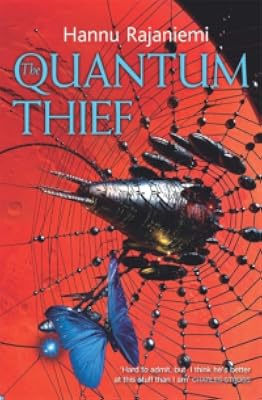
Rajaniemi’s Finnish origins are most revealed by some of the names he uses. Mieli’s spidership is called Perhonen - butterfly - and he slips in a Finnish expletive in the guise of an Oortian god. There are also borrowings from Japanese, Hebrew and Russian and a subtle Sherlock Holmes reference.
“The Quantum Thief” is bursting with ideas and there are sufficient action/battle scenes to slake any thirst for vicarious violence but sometimes it seems as if incidents are present in order to fill in background rather than being necessary to the plot. The motivations of some of the characters are obscure and despite the prominence of gevulot in the Oubliette, conversations and interactions seem to be more or less unaltered in comparison to our familiar world, though had Rajaniemi presented them otherwise they may have been unintelligible.
The denouement brings all the threads together satisfyingly while the final Interlude sheds additional light on the proceedings and sets up possible scenarios for sequels - for which there will likely be an avid audience. show less
added by jackdeighton
Lists

ALA The Reading List
490 works; 28 members

Jean's Sci Fi/Fantasy Reading list
189 works; 12 members

Singularity
12 works; 1 member

Schisms in transhumanity - SF
34 works; 1 member

LGBTQ+ Speculative Fiction
821 works; 51 members

io9 Book Club
70 works; 4 members

Cryptology - non-fiction and fiction
57 works; 4 members

SantaThing 2014 Gifts
299 works; 17 members

KayStJ's to-read list
1,616 works; 11 members

Broderick and Di Filippo's Science Fiction: The 101 Best Novels 1985-2010
103 works; 7 members

Sentient ships
20 works; 3 members

LIBROS DE CIENCIA FICCIÓN Y FANTASIA
60 works; 1 member

Books Read in 2025
4,128 works; 98 members

The "A" List
67 works; 8 members
Author Information

23+ Works 5,070 Members

Hannu Rajaniemi is a LibraryThing Author, an author who lists their personal library on LibraryThing.
Some Editions
Awards and Honors
Series

Work Relationships
Common Knowledge
- Canonical title*
- Kvanttivaras
- Original title
- Kvanttivaras; The Quantum Thief
- Alternate titles*
- Kvantumtolvaj
- Original publication date
- 2010-09-30
- People/Characters
- Jean le Flambeur; Mieli; Perhonen; Isidore Beautrelet; Raymonde; Christian Unruh
- Important places
- The Oubliette, Mars
- Epigraph
- `... there comes a time when you cease to know yourself amid all these changes, and that is very sad. I feel at present as the man must have felt who lost his shadow ...'
Maurice Leblanc, The Escape of Arsène Lupin - Dedication
- This is for Nana
- First words
- As always, before the warmind and I shoot each other, I try to make small talk.
- Last words
- (Click to show. Warning: May contain spoilers.)Joséphine Pellegrini smiles, and whispers a name in the Hunter's ear.
- Blurbers
- Stross, Charles
- Original language
- English
*Some information comes from Common Knowledge in other languages. Click "Edit" for more information.
Classifications
Statistics
- Members
- 2,631
- Popularity
- 7,171
- Reviews
- 118
- Rating
- (3.71)
- Languages
- 9 — Czech, English, Finnish, French, German, Hungarian, Polish, Romanian, Spanish
- Media
- Paper, Audiobook, Ebook
- ISBNs
- 24
- ASINs
- 17