On This Page
Description
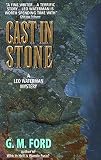
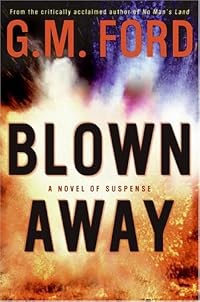
When an old gangster friend of Leo's father makes a request he "can't refuse," Leo and his band of drunks, delve into the world of environmental politics in search of Caroline Nobel, a spoiled brat, without the sense God gave a gopher. With the help of "the Boys"--a group of aging winos who are his modern day "Baker Street Irregulars"--Leo fights Native American tribal politics, industrial pollution, and psychotic grannies to fulfill his obligation to a friend.Tags
Recommendations












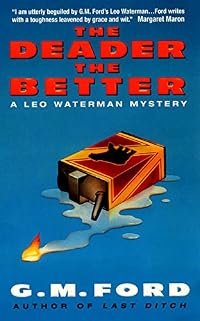




Member Reviews
I realize I've come late to the Leo Waterman, P. I. party, but since G. M. Ford, the author, is quite good, his books will stay in print and his popularity will continue to rise. And so there will be more people arriving at the party even later than I am; hence, this review. As I was reading Who the Hell is Wanda Fuca I kept thinking of Robert B. Parker's Spencer, another hard-boiled P.I. and I kept hearing his terse, matter-of-fact voice. Leo has a lot in common with Spenser, both in character and in style. It 's not just the pithy one-liners and grin-inducing comebacks that Leo comes up with, rapid-fire; like Spencer, he doesn't have a lot of interior monologue going on, at least that the reader gets to hear. There's almost no show more moralizing or second guessing. He just takes the situation he finds himself in and cooly tries to tackle one small piece of it - picking at the Gordian Knot until it starts to unravel. His reputation lies in his dependability, his perseverance and his 'take no prisoners' attitude when he is threatened.
When the situation calls for more than one person can deal with, Leo calls on his own band of Baker Street Irregulars, the homeless, drunken bums of Seattle. Ford captures a real sense of place in Wanda Fuca. The story is set in Seattle (as are the seven other Leo Waterman books published at this writing) and covers the city, the suburbs and an Indian reservation, all described succinctly and lucidly. The characters, rooted in the soil of their neighborhoods, are what makes Ford stand out from the crowd. We learn about tribal government, about country nurseries and farms and about city alleys and underpasses and the people who inhabit them, about crime and local jurisdictions. The people in these various places don't differ markedly, nor are their various cultures given much of a focus - they are ordinary people (including the bums) who have interesting stories in their lives and who are focused on surviving the circumstances they find themselves in. These characters are the important focus of the story. They are what Ford works hardest at delineating and what the reader will remember after the story ends.
Plot is not given short shrift. As in the Spencer novels, action moves swiftly and occasionally violently. In Wanda Fuca, the willful granddaughter of an organized crime boss gets involved with a hyper-radical ecological group who kill and burn and blow things up to make their points. The crime boss hires Leo to find her and extricate her. And the reader discovers at that point that she cannot put the book down anymore, that she is compelled to find out what happens on the next page … and the next and the next. I think I have found a new favorite author! Compelling action, interesting setting and colorful characters - what more could one ask? show less
When the situation calls for more than one person can deal with, Leo calls on his own band of Baker Street Irregulars, the homeless, drunken bums of Seattle. Ford captures a real sense of place in Wanda Fuca. The story is set in Seattle (as are the seven other Leo Waterman books published at this writing) and covers the city, the suburbs and an Indian reservation, all described succinctly and lucidly. The characters, rooted in the soil of their neighborhoods, are what makes Ford stand out from the crowd. We learn about tribal government, about country nurseries and farms and about city alleys and underpasses and the people who inhabit them, about crime and local jurisdictions. The people in these various places don't differ markedly, nor are their various cultures given much of a focus - they are ordinary people (including the bums) who have interesting stories in their lives and who are focused on surviving the circumstances they find themselves in. These characters are the important focus of the story. They are what Ford works hardest at delineating and what the reader will remember after the story ends.
Plot is not given short shrift. As in the Spencer novels, action moves swiftly and occasionally violently. In Wanda Fuca, the willful granddaughter of an organized crime boss gets involved with a hyper-radical ecological group who kill and burn and blow things up to make their points. The crime boss hires Leo to find her and extricate her. And the reader discovers at that point that she cannot put the book down anymore, that she is compelled to find out what happens on the next page … and the next and the next. I think I have found a new favorite author! Compelling action, interesting setting and colorful characters - what more could one ask? show less
Sherlock Holmes had his Baker Street Irregulars, bright street urchins who were his eyes and ears on cases. Private eye Leo Waterman his own group of assistants, but they are the opposite of the Baker Street Irregulars: “The Boys,” as Waterman calls them, are four drunks who can barely keep it together. But like the Baker Street Irregulars, the Boys are loyal, and Waterman is loyal to them.
A semi-retired Seattle crime boss summons Waterman and hires him — not that Waterman had much say in the matter — to rescue his granddaughter from her latest crusade: environmental terrorism. The granddaughter, the entitled, headstrong Caroline Nobel, proves a difficult capture. At the same time, Waterman stumbles onto a large-scale racket show more worth killing over. Author G.M. Ford weaves a taut novel readers will love.
A deus ex machina helps to bring this book to a satisfying conclusion, but readers won’t care after having spent their time on this fun, suspenseful rollercoaster of a novel. It’s the first of a series, and I can’t wait to read the sequels. show less
A semi-retired Seattle crime boss summons Waterman and hires him — not that Waterman had much say in the matter — to rescue his granddaughter from her latest crusade: environmental terrorism. The granddaughter, the entitled, headstrong Caroline Nobel, proves a difficult capture. At the same time, Waterman stumbles onto a large-scale racket show more worth killing over. Author G.M. Ford weaves a taut novel readers will love.
A deus ex machina helps to bring this book to a satisfying conclusion, but readers won’t care after having spent their time on this fun, suspenseful rollercoaster of a novel. It’s the first of a series, and I can’t wait to read the sequels. show less
I don't normally read detective novels but the Northwest setting attracted me. Leo Waterman is a rumpled PI assisted by a motley crew of drunks and homeless after a mafioso-like elder seeks his help in getting his niece out of a terrorist environmental group. The setting is 1995 Seattle but Ford's descriptions make it seem more like the scrappy 1970s. Entertaining and colorful.
A great beginning of a series I discovered over ten years ago. A tightly written book with an interesting plot line and with lots of fun in the writing too! Our hero is Leo Waterman – a refugee from the sixties…” Over the years I’d been part of a couple of ugly scenes that had played out here in my apartment building. Most of my neighbors already looked at me with a jaundiced eye. To my knowledge, I was the only resident who’d ever actually shot anyone on the premises.” You can feel the northwest in the story, the fog of Seattle, the rain plus the history of a raucous western town that come along way down the PC path.
“You’re wanted Waterman”
“Always nice to feel wanted,” I said
“A guy named Buddy Knox been working show more for you?”
“My stomach rose up and fluttered within my body. My extremities got instantly cold. In that instant, I experienced the same feeling that I’d had when each of my parents had passed away. A feeling of moving one step closer to being absolutely alone. One more of the illusions of connectedness was gone. It didn’t matter that Buddy was just an old drunk who worked for me. He was part of the complicate superstructure of relationships which gave me a sense of time and place and kept me getting out of bed every morning. Getting up tomorrow was going to be harder than it had been today.”
Again the writer strikes a cord with the reality of life. Well the reality of my life. The link between the generations. Actually knowing a great grandmother… a grandmother who never drove and rode a carriage… to get someone not for fun…who was a young “flapper” who saw a man on the moon…Grandfathers who loved to dance, drink and laugh… well you know the Irish and Germans… As a writer he speaks to me, makes me laugh and I appreciate the gentle kindness of his character in an imperfect world. Trying to find a little light in the darkness. This book has environmental issues that are relevant today, Native American insights as well. The book and the rest of the series are well worth the trip. show less
“You’re wanted Waterman”
“Always nice to feel wanted,” I said
“A guy named Buddy Knox been working show more for you?”
“My stomach rose up and fluttered within my body. My extremities got instantly cold. In that instant, I experienced the same feeling that I’d had when each of my parents had passed away. A feeling of moving one step closer to being absolutely alone. One more of the illusions of connectedness was gone. It didn’t matter that Buddy was just an old drunk who worked for me. He was part of the complicate superstructure of relationships which gave me a sense of time and place and kept me getting out of bed every morning. Getting up tomorrow was going to be harder than it had been today.”
Again the writer strikes a cord with the reality of life. Well the reality of my life. The link between the generations. Actually knowing a great grandmother… a grandmother who never drove and rode a carriage… to get someone not for fun…who was a young “flapper” who saw a man on the moon…Grandfathers who loved to dance, drink and laugh… well you know the Irish and Germans… As a writer he speaks to me, makes me laugh and I appreciate the gentle kindness of his character in an imperfect world. Trying to find a little light in the darkness. This book has environmental issues that are relevant today, Native American insights as well. The book and the rest of the series are well worth the trip. show less
This first in a series is about PI Leo Waterman, hired to find the difficult daughter of a very rich and very dangerous man. So Leo hires his band of likable, almost homeless drunks to help. How can that be a good move?
This mystery is funny and touching and does have some sadistic, rather disturbing scenes, but mostly, it is just a fun story. There are environmental vigilantes and poor decisions and generally chaos and mayhem.
And yes, there is a reference to Wanda Fuca, and it was amusing but easily missed if you are not paying attention. As a hint, don't look for a lot of Wanda in this story.
I borrowed this book through Kindle Unlimited.
This mystery is funny and touching and does have some sadistic, rather disturbing scenes, but mostly, it is just a fun story. There are environmental vigilantes and poor decisions and generally chaos and mayhem.
And yes, there is a reference to Wanda Fuca, and it was amusing but easily missed if you are not paying attention. As a hint, don't look for a lot of Wanda in this story.
I borrowed this book through Kindle Unlimited.
Leo Waterman is a small time PI in Seattle Washington. When an old "friend" of his father contacts him asking for help to find his granddaughter, Leo takes the job.
What follows is chaos and mayhem. There are killings, explosions, fires, and more than one beating.
While I enjoyed the story the violence level was a lot higher than most of what I normally read. The book was recommended on DorothyL, so while I probably won't read any more by Ford, it was a very well written book.
What follows is chaos and mayhem. There are killings, explosions, fires, and more than one beating.
While I enjoyed the story the violence level was a lot higher than most of what I normally read. The book was recommended on DorothyL, so while I probably won't read any more by Ford, it was a very well written book.
ford spins a nice yarn. being new the the pnw, his book was helpful in getting to know the area and for getting a glimpse ino the people's and area's ethos.
Members
- Recently Added By
Lists

Majkia's Mystery/ Thriller TBR
86 works; 3 members

Maybe This Year? Books to Look Forward To
409 works; 9 members
Author Information

24+ Works 2,620 Members
Gerald M. Ford was born on July 9, 1945, in Everett, Massachusetts. He received his B.A. from Hawthorne College, a M.A. in English from Adelphi University, and a second M.A., this one in political science, from the University of Washington. Ford taught English and communications at colleges in Oregon and Washington for twenty years. He often show more thought he would like to write a detective story himself. In 1995, his first mystery, Who in Hell Is Wanda Fuca?, part of his Leo Waterman Series, was published, and since then he has also written Cast in Stone (1996), The Bum's Rush (1997), Last Ditch, and Slow Burn. Ford is also the author of the Frank Corso Series. Ford has been nominated for the Anthony Award, the Shaumus Award, and the Lefty Dilys Award. (Bowker Author Biography) show less
Awards and Honors
Series

Common Knowledge
- Canonical title
- Who the Hell is Wanda Fuca?
- Original publication date
- 1995
- People/Characters
- Leo Waterman; Buddy; "The Boys"
- Important places
- Seattle, Washington, USA; Pacific Northwest, USA
- First words
- "Leave me alone, will you?" he pleaded.
- Last words
- (Click to show. Warning: May contain spoilers.)Buddy had been right. I was back.
- Blurbers
- Jance, J. A.
Classifications
Statistics
- Members
- 304
- Popularity
- 104,954
- Reviews
- 14
- Rating
- (3.51)
- Languages
- English
- Media
- Paper, Audiobook, Ebook
- ISBNs
- 11
- ASINs
- 3