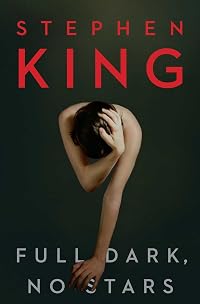
Full Dark, No Stars
by Stephen King
On This Page
Description
Prolific author Stephen King presents a collection of four new novellas. In the story 1922, a man plunges into the depths of madness when his wife attempts to sell off the family home. A mystery writer, who was beaten and raped while driving home from her book club, plots her revenge in Big Driver. Diagnosed with a deadly cancer, a man makes a deal with the devil in Fair Extension. And in A Good Marriage, a woman discovers her husband's darker side while he is away on a business trip.Tags
Recommendations





Member Recommendations
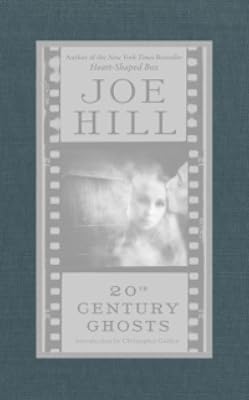
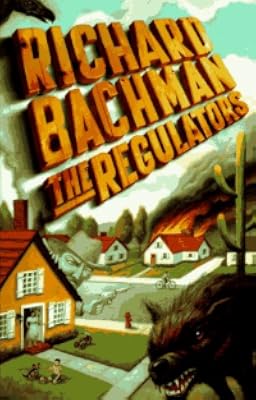
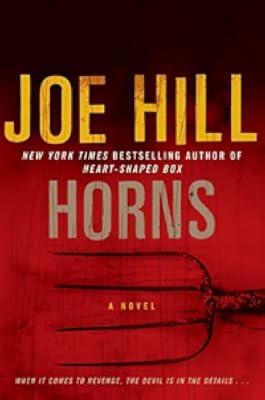
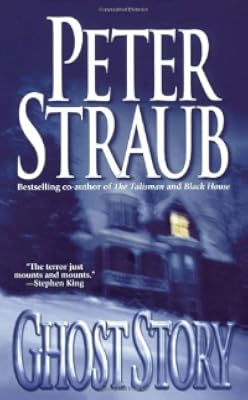
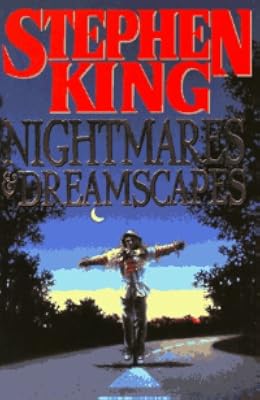
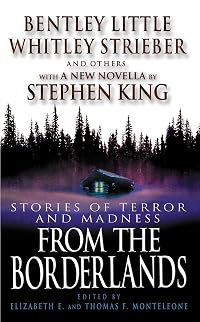
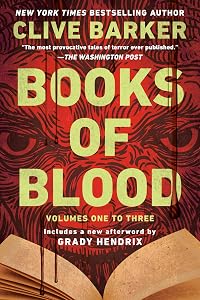
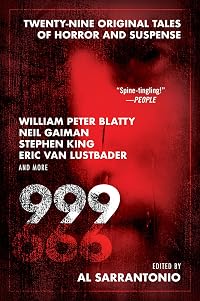
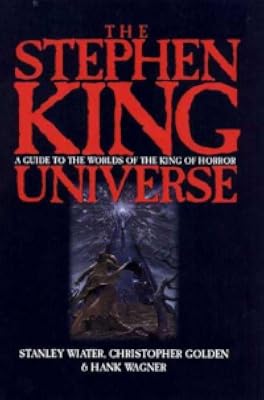
BookshelfMonstrosity The darkness of the human heart is the territory explored in 'The museum of Dr. Moses' and 'Full dark, no stars.' Guilt, revenge, troubled marriages, and the family life of serial killers are some of the subjects in these story collections.
BookshelfMonstrosity Ordinary people and atmospheres thick with menace characterize 'Ghosts and grisly things' and 'Full dark, no stars.' These stories range from the supernatural to the psychological thriller, exploring themes of revenge and murder, leavened with occasional dark humor.
Member Reviews
A collection of four stories, mostly somewhere in the novella range, plus a short bonus one tacked on at the end, for some reason I'm not entirely clear on. "1922" is about a man who enlists his teenage son to help murder his wife, then suffers for it forever after despite having technically gotten away with it. "Big Driver" features a detective story writer who, after being beaten and raped, goes looking for revenge on her assailant. "Fair Extension" shows us a man dying of cancer who makes a deal for a little more time, at a price he's entirely too willing to pay. "A Good Marriage" is about a couple who have precisely that, until the wife finds evidence of her husband's deep, dark secret in the garage. And the bonus story, "Under the show more Weather" is about a man whose wife is just a little sick, really... no matter how much his nightmares are telling him otherwise.
Holy crap, is this book aptly titled. This stuff is dark. We're not talking about pleasantly scary little horror stories for Halloween here. With the exception of "Under the Weather," which is a little creepy but mostly just horribly sad, these stories are brutal. And I use that word deliberately, because they really are mostly about human beings being incredibly brutal and callous and horrible to other human beings, and most particularly men being brutal and callous and horrible towards women. They're really good stories, mind you. Well-written, strangely compelling, and populated with characters who often feel painfully real even when they're doing terrible and unlikely things. But, man, they're depressing. Which is clearly exactly what they're meant to be. show less
Holy crap, is this book aptly titled. This stuff is dark. We're not talking about pleasantly scary little horror stories for Halloween here. With the exception of "Under the Weather," which is a little creepy but mostly just horribly sad, these stories are brutal. And I use that word deliberately, because they really are mostly about human beings being incredibly brutal and callous and horrible to other human beings, and most particularly men being brutal and callous and horrible towards women. They're really good stories, mind you. Well-written, strangely compelling, and populated with characters who often feel painfully real even when they're doing terrible and unlikely things. But, man, they're depressing. Which is clearly exactly what they're meant to be. show less
Malice, murder, torture, rape. I must say that King tried to live up to his book title with four grim tales of human nature at its worst. A lot of his works are better classified as adventure thrillers, but I wouldn’t recommend this to anyone who isn’t prepared for straight-up psychological horror.
What always makes King interesting to me, though, is that his stories exist in a moral universe adjacent to my own. Some of the more ghastly examples of modern horror are thoroughly nihilistic: evil exists without cause or purpose, and bad things happen. The end.
King is different in that at his New England core, he retains the ancient Puritan sense of a sovereign and severe justice. Even at his darkest (e.g., “Pet Sematary”), the bad show more things that happen are a just consequence of choosing a bad path.
The opening novella of this anthology, “1922,” illustrates this well. Set in rural Nebraska in the titular year, King spins a ghost story of a vindictive wife with a taste for vengeance from beyond the grave. But is the murderous husband actually haunted by undying malevolence, or is he driven mad by guilt?
I sense here a hint of Poe’s insane protagonist in “The Tell-Tale Heart,” and even echoes of Hawthorne’s Reverend Dimmesdale of “The Scarlet Letter.” Despite the prairie setting, King seems to continue the tradition of New England literature that sin carries its own judgment.
Even the story I found most unsettling, “Fair Extension,” is closer to this moral sense than it might appear at first. The tale ends at the apogee of the protagonist’s malicious triumph, and at first feels like a complete subversion of justice. I’ll admit the story left me feeling defeated and unhappy.
But on reflection, if you know your Bible and understand that Venus is also known as the morning star, I think King’s closing paragraph hints at justice yet to come. It seems likely that King’s unspoken moral is that those who choose the devil’s path will fall into the devil’s error, and experience the devil’s fall.
This anthology is not for the faint of heart: not because it portrays evil without end, but because it portrays evil that ends. Contrary to King’s title, there are indeed stars in the dark; but they are the cold stars of that severe and sovereign justice that spares no one to rebalance the scales. show less
What always makes King interesting to me, though, is that his stories exist in a moral universe adjacent to my own. Some of the more ghastly examples of modern horror are thoroughly nihilistic: evil exists without cause or purpose, and bad things happen. The end.
King is different in that at his New England core, he retains the ancient Puritan sense of a sovereign and severe justice. Even at his darkest (e.g., “Pet Sematary”), the bad show more things that happen are a just consequence of choosing a bad path.
The opening novella of this anthology, “1922,” illustrates this well. Set in rural Nebraska in the titular year, King spins a ghost story of a vindictive wife with a taste for vengeance from beyond the grave. But is the murderous husband actually haunted by undying malevolence, or is he driven mad by guilt?
I sense here a hint of Poe’s insane protagonist in “The Tell-Tale Heart,” and even echoes of Hawthorne’s Reverend Dimmesdale of “The Scarlet Letter.” Despite the prairie setting, King seems to continue the tradition of New England literature that sin carries its own judgment.
Even the story I found most unsettling, “Fair Extension,” is closer to this moral sense than it might appear at first. The tale ends at the apogee of the protagonist’s malicious triumph, and at first feels like a complete subversion of justice. I’ll admit the story left me feeling defeated and unhappy.
But on reflection, if you know your Bible and understand that Venus is also known as the morning star, I think King’s closing paragraph hints at justice yet to come. It seems likely that King’s unspoken moral is that those who choose the devil’s path will fall into the devil’s error, and experience the devil’s fall.
This anthology is not for the faint of heart: not because it portrays evil without end, but because it portrays evil that ends. Contrary to King’s title, there are indeed stars in the dark; but they are the cold stars of that severe and sovereign justice that spares no one to rebalance the scales. show less
A shorter group of stories that might be expected from Kings fan base.
These were written in the late 210s and have largely centred around the terrible aspects of violence towards women. A lot of what makes these stories pertinent and distressing is the pure normality. It is the ability for evil acts to be committed by the most normal of people under some of the most normal circumstances.
However, not only is this message delivered, it is accompanied by kings trademark, folksy style, coupled with brilliant, suspenseful chapters and paragraphs. I recommend these stories as an excellent collection. Not all of them have the resolution one would wish but there is a great understanding of how life can spiral out of control.
These were written in the late 210s and have largely centred around the terrible aspects of violence towards women. A lot of what makes these stories pertinent and distressing is the pure normality. It is the ability for evil acts to be committed by the most normal of people under some of the most normal circumstances.
However, not only is this message delivered, it is accompanied by kings trademark, folksy style, coupled with brilliant, suspenseful chapters and paragraphs. I recommend these stories as an excellent collection. Not all of them have the resolution one would wish but there is a great understanding of how life can spiral out of control.
The Horrors of Misogyny
* Trigger alert for physical and sexual violence. *
“The stories in this book are harsh. You may have found them hard to hear in places. If so, be assured that I found them equally hard to write in places.”
Ostensibly, the novellas contained within these pages – 1922, Big Driver, Fair Extension, and A Good Marriage (the paperback edition contains a fifth title, Under the Weather; but seeing as I “read” the audio version, I’m out of luck there) – revolve around the theme of revenge: a murdered wife haunts her husband/killer from the afterlife; a rape victim left for dead slays her rapist and his accomplices; a man wishes ill on his undeservedly lucky best friend; and, upon discovering that her husband show more is a serial killer, a woman attempts to find justice for his victims (past and future) without destroying her own family in the process. And while retribution is indeed a common thread, it takes a backseat to the more toxic and visceral theme of misogyny.
The men in these stories hate women: those they know, those they don’t know, those they wish they knew. Even mild-mannered Harry Streeter, the protagonist of Fair Extension, exhibits the classic trappings of a Nice Guy (tm) when reminiscing about his first love Norma, “stolen” from him by his supposed best friend Tom. Physical and sexual violence are prevalent, and seen from a variety of perspectives: the perpetrator, the victim, and the perpetrator’s wife. In the strongest of these tales, the women on who war is waged fight back, attaining justice for themselves and others.
1922 – Nebraska, 1922. Wilfred Leland James’s wife Arlette recently inherited 100 acres of farmland from her father upon his passing. Whereas Wilf would like to incorporate this into his own 80-acre homestead, Arlette would rather sell all 180 acres and move to the bubbling metropolis of Omaha. The most obvious solution to the couples’ acrimonious, months-long standstill is divorce (however unlikely that might have been circa 1922), with the couple doing as they choose with their respective parcels of land. Complicating matters is that the most likely buyer for Arlette’s property – located upstream of Wilf’s - is the Farrington Company, an early factory farmer of pigs, which would pollute the air with the sounds of dying hogs and fill the river with their discarded blood and guts. An unabashed consumer of animal products (including pork), Wilf is the ultimate “not in my backyard” carnist. His consternation is understandable, yet hardly worthy of sympathy.
While Arlette recruits lawyers from the Farrington Co. to “nudge” Wilf in the right direction, her aggrieved husband settles on a different solution. He decides to murder Arlette – and convinces their 16-year-old son, Henry, to help him do it. The plan goes off with only the slightest of hitches (turns out that slitting a person’s throat is a pretty messy business!), thanks in part to a conservative Christian sheriff who’s reluctant to investigate Arlette’s disappearance – a woman being, as per the Bible, her husband’s business. But Arlette won’t go quietly: Wilf becomes convinced that she and her rat minions are haunting him from beyond the grave. Whether supernatural or merely psychological, the events awaiting Wilf in the decade following Arlette’s murder are undeniably tragic. Though it’s nice to see Wilf get his, Henry and his girlfriend Shannon hardly deserve to get caught in the crossfire as they do. In this case revenge is swift, but not altogether just.
1922 is by far the most difficult story to sit through, narrated as it is by such a loathsome human being. The ending is satisfying, but not quite worth listening to hours of Wilf’s misogynist ravings. In his reading, Craig Wasson really brings Wilf to life – not altogether a good thing. Inspired by Wisconsin Death Trip, now on my wishlist. 3/5 stars.
Big Driver – “$1,500 was more than fair. Of course, when she was lying in a culvert, coughing up blood from her swollen mouth and nose, it didn’t seem fair at all. But would 2,000 have been any fairer? Or two million? Whether or not you could put a price tag on pain, rape, and terror was a question the Kitting Society ladies had never taken up.”
When Tessa Jean’s rape is foreshadowed in the first chapters of Big Driver, I rolled my eyes and had to fight the urge to skip right past the story. We live in a culture saturated with rape: rape is in the news (Steubenville, Rehtaeh Parsons, Edgar Gonzalez and Joan Toribio), a plot point in your favorite television shows (everything from the obvious – Law & Order: SVU – to the fantastical – Game of Thrones, Supernatural, The Walking Dead), on the big screen in shocking, larger-than-life detail (Evil Dead, The Hills Have Eyes); rape is even used to sell a variety of products, from cars to alcohol, and is frequently invoked as a joke or metaphor by guys (and not a few gals) between the ages of twelve and ninety-nine (e.g., “I RAPED YOU in Halo!”; Seth Macfarlane’s now-famous “We saw Jodie Foster’s boobs in The Accused!”). Rape isn’t entertaining; it shouldn’t be used as entertainment. In fact, given the statistics – 1 out of 6 U.S. women will experience an attempted or completed rape in her lifetime - the prevalence of rape in books, television, and movies can be downright traumatic for the millions of survivors out there. My first thought upon reading the sentence quoted above (and in spite of my love for Kill Bill)? “Can we place have a moratorium on men writing about rape, PLEASE? That ought to cut it down by at least 75%.”
Thankfully, the rape scene in Big Driver is brief and not especially salacious. The bulk of the story deals with its aftermath, as Tessa Jean - a “small woman with an elfin face, a shy smile, and a job writing cozy mysteries” – decides to take revenge upon her rapist and his two accomplices.
On her way home from a speaking engagement, Tessa takes a rural shortcut recommended by Ramona Norville, the librarian who contracted her at the last minute. There Tess falls into a trap: boards filled with jutting nails litter the road and flatten one of her tires. The seemingly kind giant (nicknamed “Big Driver,” as she’ll later learn) who stops to help Tess instead attacks her, beats her unconscious, rapes her, and leaves her for dead in a nearby culvert. Nor is she Big Driver’s only victim: lying in the culvert with her are the corpses of at least two other women. Tess manages to survive by playing dead. Rather than report her rape to the police and let them handle it (“but what’s in it for me?” she repeatedly wonders), Tess hunts down her assailant(s) on her own.
Some readers might find Tess’s course of action questionable – immoral, even – but King eloquently elucidates the fears that keep many women from reporting their assaults. A minor celebrity, Tess is horrified at the thought that her private trauma will become public fodder – an item of entertainment and gossip. Though her rape is of the most “acceptable” or “legitimate” kind - a stranger rape, perpetrated on a “respectable” 30-something white woman, involving violent physical force and culminating in a murder attempt – Tess worries that the public will find a way to blame her for the attack. Cue images of revealing outfits she was photographed wearing in public a decade plus ago. Worst of all, Tess is terrified that this brutal incident will come to define her in the public eye; her career and life will be over if she reports.
Coupled with A Good Marriage, Big Driver is the reason behind my 5/5 star rating, even though I wasn’t especially impressed with 1922 or Fair Extension. A satisfying – if draining – story of revenge, I dare you not to root for Tessa Jean, or to take solace in the sisterhood she finds in a fellow rape victim who helps Tessa cover up her own crimes. Sure, it’d be nice if we could count on the justice system to mete out fair and swift punishments; but given the abysmal conviction rate for the crime of rape, it’s hard to fault a woman for taking matters into her own hands. 5/5 stars.
Fair Extension is the only novella that doesn’t quite seem to fit with the other three, no matter the overarching theme: Harry’s “retribution” hardly feels righteous, and whatever misogynist ideas he harbors are dwarfed by his hatred of Tom. In fact, those not versed in “Nice Guy” logic might just miss the misogyny altogether.
Harry Streeter has always resented his best friend Tom – handsome Tom, athletic Tom, smart Tom who cheated his way through high school nonetheless; charming Tom who “stole” Harry’s girlfriend Norma, only to impregnate and (gasp!) marry her; ne’er do well Tom who’s a millionaire thanks in part to a loan Harry the banker approved to fund Tom’s garbage disposal business; Tom who, now in his 50s, is happy and successful and, most importantly, cancer-free. Unlike Harry, whose doctors tell him that he has but mere months left to live. When a mysterious stranger doing business on the Harris Avenue Extension offers him a “fair extension” of his life, he’s understandably skeptical; but upon learning that his bad luck will be passed on to someone he hates, Harry’s all too eager to unleash a tirade against his old pal Tom.
An interesting enough read, but nothing special. 3/5 stars.
A Good Marriage – Stumbling around their garage in search of spare AA batteries for the remote control, Darcy Anderson literally trips over her husband’s secret life: bondage, torture, rape, and murder. For several decades, Bob’s lived a double life as the “Beedee Killer,” a serial murderer who rapes, tortures, and mutilates his victims. (In the afterward, King points to Dennis Rader, the “BTK Killer,” as his real-life inspiration for the story.) Though his crime spree stopped for the first sixteen years of their marriage (now on year twenty-seven), Bob recently resumed his old “hobby” – and with a vengeance. Upon learning of her discovery, Bob promises Darcy that he’ll keep “BD” under wraps, if only she can keep his secret. Torn between her responsibility to Bob’s victims, past and future, and her maternal impulse to shield her children from the knowledge that the father they idolize is in fact a monster, Darcy tentatively agrees – or, rather, becomes rooted in a state of indecision. That is, until she devises a solution that she believes will resolve both problems.
As with Big Driver, the story is dicey in some areas but eventually culminates in a deeply satisfying conclusion. Like Tess, Darcy fears – somewhat understandably – that she’ll be blamed for the misdeeds of another: after all, how could she share a home – a bed! – with an infamous serial killer and not at least suspect that something is amiss? Also like Tess, Darcy finds comfort and support in a kindred spirit – in this case, Holt Ramsey, a semi-retired detective who’s harbored his own suspicions about Bob Anderson from the early days of the Beedee investigation.
And, just as Big Driver’s hatred of women was laid bare during the rape scene (he calls Tess a “whiny bitch” and dances around her unconscious, half-naked body), Bob’s misogyny is also evident: he blames his victims for their murder, calling them “snoots” who are happy to flirt with him but never put out. The stories he tells Darcy are later revealed as the self-serving lies they are – the same drivel spouted by men who think they have the right to women’s bodies, and those who inevitably rush to their defense. This is misogyny. This is rape culture. And it is indeed horrific. 5/5 stars.
http://www.easyvegan.info/2013/05/08/full-dark-no-stars-by-stephen-king/ show less
* Trigger alert for physical and sexual violence. *
“The stories in this book are harsh. You may have found them hard to hear in places. If so, be assured that I found them equally hard to write in places.”
Ostensibly, the novellas contained within these pages – 1922, Big Driver, Fair Extension, and A Good Marriage (the paperback edition contains a fifth title, Under the Weather; but seeing as I “read” the audio version, I’m out of luck there) – revolve around the theme of revenge: a murdered wife haunts her husband/killer from the afterlife; a rape victim left for dead slays her rapist and his accomplices; a man wishes ill on his undeservedly lucky best friend; and, upon discovering that her husband show more is a serial killer, a woman attempts to find justice for his victims (past and future) without destroying her own family in the process. And while retribution is indeed a common thread, it takes a backseat to the more toxic and visceral theme of misogyny.
The men in these stories hate women: those they know, those they don’t know, those they wish they knew. Even mild-mannered Harry Streeter, the protagonist of Fair Extension, exhibits the classic trappings of a Nice Guy (tm) when reminiscing about his first love Norma, “stolen” from him by his supposed best friend Tom. Physical and sexual violence are prevalent, and seen from a variety of perspectives: the perpetrator, the victim, and the perpetrator’s wife. In the strongest of these tales, the women on who war is waged fight back, attaining justice for themselves and others.
1922 – Nebraska, 1922. Wilfred Leland James’s wife Arlette recently inherited 100 acres of farmland from her father upon his passing. Whereas Wilf would like to incorporate this into his own 80-acre homestead, Arlette would rather sell all 180 acres and move to the bubbling metropolis of Omaha. The most obvious solution to the couples’ acrimonious, months-long standstill is divorce (however unlikely that might have been circa 1922), with the couple doing as they choose with their respective parcels of land. Complicating matters is that the most likely buyer for Arlette’s property – located upstream of Wilf’s - is the Farrington Company, an early factory farmer of pigs, which would pollute the air with the sounds of dying hogs and fill the river with their discarded blood and guts. An unabashed consumer of animal products (including pork), Wilf is the ultimate “not in my backyard” carnist. His consternation is understandable, yet hardly worthy of sympathy.
While Arlette recruits lawyers from the Farrington Co. to “nudge” Wilf in the right direction, her aggrieved husband settles on a different solution. He decides to murder Arlette – and convinces their 16-year-old son, Henry, to help him do it. The plan goes off with only the slightest of hitches (turns out that slitting a person’s throat is a pretty messy business!), thanks in part to a conservative Christian sheriff who’s reluctant to investigate Arlette’s disappearance – a woman being, as per the Bible, her husband’s business. But Arlette won’t go quietly: Wilf becomes convinced that she and her rat minions are haunting him from beyond the grave. Whether supernatural or merely psychological, the events awaiting Wilf in the decade following Arlette’s murder are undeniably tragic. Though it’s nice to see Wilf get his, Henry and his girlfriend Shannon hardly deserve to get caught in the crossfire as they do. In this case revenge is swift, but not altogether just.
1922 is by far the most difficult story to sit through, narrated as it is by such a loathsome human being. The ending is satisfying, but not quite worth listening to hours of Wilf’s misogynist ravings. In his reading, Craig Wasson really brings Wilf to life – not altogether a good thing. Inspired by Wisconsin Death Trip, now on my wishlist. 3/5 stars.
Big Driver – “$1,500 was more than fair. Of course, when she was lying in a culvert, coughing up blood from her swollen mouth and nose, it didn’t seem fair at all. But would 2,000 have been any fairer? Or two million? Whether or not you could put a price tag on pain, rape, and terror was a question the Kitting Society ladies had never taken up.”
When Tessa Jean’s rape is foreshadowed in the first chapters of Big Driver, I rolled my eyes and had to fight the urge to skip right past the story. We live in a culture saturated with rape: rape is in the news (Steubenville, Rehtaeh Parsons, Edgar Gonzalez and Joan Toribio), a plot point in your favorite television shows (everything from the obvious – Law & Order: SVU – to the fantastical – Game of Thrones, Supernatural, The Walking Dead), on the big screen in shocking, larger-than-life detail (Evil Dead, The Hills Have Eyes); rape is even used to sell a variety of products, from cars to alcohol, and is frequently invoked as a joke or metaphor by guys (and not a few gals) between the ages of twelve and ninety-nine (e.g., “I RAPED YOU in Halo!”; Seth Macfarlane’s now-famous “We saw Jodie Foster’s boobs in The Accused!”). Rape isn’t entertaining; it shouldn’t be used as entertainment. In fact, given the statistics – 1 out of 6 U.S. women will experience an attempted or completed rape in her lifetime - the prevalence of rape in books, television, and movies can be downright traumatic for the millions of survivors out there. My first thought upon reading the sentence quoted above (and in spite of my love for Kill Bill)? “Can we place have a moratorium on men writing about rape, PLEASE? That ought to cut it down by at least 75%.”
Thankfully, the rape scene in Big Driver is brief and not especially salacious. The bulk of the story deals with its aftermath, as Tessa Jean - a “small woman with an elfin face, a shy smile, and a job writing cozy mysteries” – decides to take revenge upon her rapist and his two accomplices.
On her way home from a speaking engagement, Tessa takes a rural shortcut recommended by Ramona Norville, the librarian who contracted her at the last minute. There Tess falls into a trap: boards filled with jutting nails litter the road and flatten one of her tires. The seemingly kind giant (nicknamed “Big Driver,” as she’ll later learn) who stops to help Tess instead attacks her, beats her unconscious, rapes her, and leaves her for dead in a nearby culvert. Nor is she Big Driver’s only victim: lying in the culvert with her are the corpses of at least two other women. Tess manages to survive by playing dead. Rather than report her rape to the police and let them handle it (“but what’s in it for me?” she repeatedly wonders), Tess hunts down her assailant(s) on her own.
Some readers might find Tess’s course of action questionable – immoral, even – but King eloquently elucidates the fears that keep many women from reporting their assaults. A minor celebrity, Tess is horrified at the thought that her private trauma will become public fodder – an item of entertainment and gossip. Though her rape is of the most “acceptable” or “legitimate” kind - a stranger rape, perpetrated on a “respectable” 30-something white woman, involving violent physical force and culminating in a murder attempt – Tess worries that the public will find a way to blame her for the attack. Cue images of revealing outfits she was photographed wearing in public a decade plus ago. Worst of all, Tess is terrified that this brutal incident will come to define her in the public eye; her career and life will be over if she reports.
Coupled with A Good Marriage, Big Driver is the reason behind my 5/5 star rating, even though I wasn’t especially impressed with 1922 or Fair Extension. A satisfying – if draining – story of revenge, I dare you not to root for Tessa Jean, or to take solace in the sisterhood she finds in a fellow rape victim who helps Tessa cover up her own crimes. Sure, it’d be nice if we could count on the justice system to mete out fair and swift punishments; but given the abysmal conviction rate for the crime of rape, it’s hard to fault a woman for taking matters into her own hands. 5/5 stars.
Fair Extension is the only novella that doesn’t quite seem to fit with the other three, no matter the overarching theme: Harry’s “retribution” hardly feels righteous, and whatever misogynist ideas he harbors are dwarfed by his hatred of Tom. In fact, those not versed in “Nice Guy” logic might just miss the misogyny altogether.
Harry Streeter has always resented his best friend Tom – handsome Tom, athletic Tom, smart Tom who cheated his way through high school nonetheless; charming Tom who “stole” Harry’s girlfriend Norma, only to impregnate and (gasp!) marry her; ne’er do well Tom who’s a millionaire thanks in part to a loan Harry the banker approved to fund Tom’s garbage disposal business; Tom who, now in his 50s, is happy and successful and, most importantly, cancer-free. Unlike Harry, whose doctors tell him that he has but mere months left to live. When a mysterious stranger doing business on the Harris Avenue Extension offers him a “fair extension” of his life, he’s understandably skeptical; but upon learning that his bad luck will be passed on to someone he hates, Harry’s all too eager to unleash a tirade against his old pal Tom.
An interesting enough read, but nothing special. 3/5 stars.
A Good Marriage – Stumbling around their garage in search of spare AA batteries for the remote control, Darcy Anderson literally trips over her husband’s secret life: bondage, torture, rape, and murder. For several decades, Bob’s lived a double life as the “Beedee Killer,” a serial murderer who rapes, tortures, and mutilates his victims. (In the afterward, King points to Dennis Rader, the “BTK Killer,” as his real-life inspiration for the story.) Though his crime spree stopped for the first sixteen years of their marriage (now on year twenty-seven), Bob recently resumed his old “hobby” – and with a vengeance. Upon learning of her discovery, Bob promises Darcy that he’ll keep “BD” under wraps, if only she can keep his secret. Torn between her responsibility to Bob’s victims, past and future, and her maternal impulse to shield her children from the knowledge that the father they idolize is in fact a monster, Darcy tentatively agrees – or, rather, becomes rooted in a state of indecision. That is, until she devises a solution that she believes will resolve both problems.
As with Big Driver, the story is dicey in some areas but eventually culminates in a deeply satisfying conclusion. Like Tess, Darcy fears – somewhat understandably – that she’ll be blamed for the misdeeds of another: after all, how could she share a home – a bed! – with an infamous serial killer and not at least suspect that something is amiss? Also like Tess, Darcy finds comfort and support in a kindred spirit – in this case, Holt Ramsey, a semi-retired detective who’s harbored his own suspicions about Bob Anderson from the early days of the Beedee investigation.
And, just as Big Driver’s hatred of women was laid bare during the rape scene (he calls Tess a “whiny bitch” and dances around her unconscious, half-naked body), Bob’s misogyny is also evident: he blames his victims for their murder, calling them “snoots” who are happy to flirt with him but never put out. The stories he tells Darcy are later revealed as the self-serving lies they are – the same drivel spouted by men who think they have the right to women’s bodies, and those who inevitably rush to their defense. This is misogyny. This is rape culture. And it is indeed horrific. 5/5 stars.
http://www.easyvegan.info/2013/05/08/full-dark-no-stars-by-stephen-king/ show less
Many years ago, I read “The Library Policeman” in a collection of four novellas by Stephen King. Among other things, the story was about a young boy who is molested at a local library. I remember thinking then that King’s real gift is not his ability to scare or shock but his ability to tap into the darkest corners of the human heart; the place where we consider things that ought not to be considered. For most of us, that place remains a closely held secret; we rarely even admit to ourselves that such thoughts have even crossed our mind…but they have. For a rare few, these thoughts are given rein in the world outside the mind, given flesh and blood and action. [Full Dark, No Stars] is a book about such people and the show more consequences they and their loved ones suffer.
The collection of four novellas starts with “1922,” a story about a prideful man who manipulates his son into helping him kill his wife; a sin that breeds a terrible, consuming guilt. “Big Driver” tells the story of a writer who is raped and left for dead, only to be born again in vengeance. “Fair Extension” follows a man who strikes a deal to extend his life by heaping destruction on his best friend. And “A Good Marriage” examines what lies beneath the surface of one seemingly boring and mundane relationship, asking what awful secrets might still be hidden after decades of routine.
The fear induced in reading these stories does not result from monsters or ghosts but from a simple question. In the afterword to the collection King explains that literature’s value is in its reach to make sense of the world around us. He says, “It’s the way we answer the question, ‘How can such things be?’ Stories suggest that sometimes – not always, but sometimes – there’s a reason.” A lot of folks may read these stories and dismiss them as impossible and only targeted to shock. But three of these four stories are firmly grounded in the reality that plays out in daily newspapers every day. What’s different here is that King ponders how these ordinary people came to violence, and what happens after. Newspaper stories only ever scratch the surface on those fronts.
[Full Dark, No Stars] features some of the best stories Stephen King has ever written; “1922” may be the best piece of short fiction he’s ever written short of “The Body.” The weakest of the four, “Fair Extensions” seems a bit out of place, as it deals with a more supernatural force and the other three are firmly grounded in the possibilities of human darkness. Still, the choice the main character in that story makes, to trade his cancer in at the expense of his best friend’s happiness and success, gets at the heart of what King was driving at with all of these stories – just what are we all capable of?
An all-time favorite!!!
5 bones!!!!! show less
The collection of four novellas starts with “1922,” a story about a prideful man who manipulates his son into helping him kill his wife; a sin that breeds a terrible, consuming guilt. “Big Driver” tells the story of a writer who is raped and left for dead, only to be born again in vengeance. “Fair Extension” follows a man who strikes a deal to extend his life by heaping destruction on his best friend. And “A Good Marriage” examines what lies beneath the surface of one seemingly boring and mundane relationship, asking what awful secrets might still be hidden after decades of routine.
The fear induced in reading these stories does not result from monsters or ghosts but from a simple question. In the afterword to the collection King explains that literature’s value is in its reach to make sense of the world around us. He says, “It’s the way we answer the question, ‘How can such things be?’ Stories suggest that sometimes – not always, but sometimes – there’s a reason.” A lot of folks may read these stories and dismiss them as impossible and only targeted to shock. But three of these four stories are firmly grounded in the reality that plays out in daily newspapers every day. What’s different here is that King ponders how these ordinary people came to violence, and what happens after. Newspaper stories only ever scratch the surface on those fronts.
[Full Dark, No Stars] features some of the best stories Stephen King has ever written; “1922” may be the best piece of short fiction he’s ever written short of “The Body.” The weakest of the four, “Fair Extensions” seems a bit out of place, as it deals with a more supernatural force and the other three are firmly grounded in the possibilities of human darkness. Still, the choice the main character in that story makes, to trade his cancer in at the expense of his best friend’s happiness and success, gets at the heart of what King was driving at with all of these stories – just what are we all capable of?
An all-time favorite!!!
5 bones!!!!! show less
From the Afterword:
"I have little patience with writers who don't take the job [of writing] seriously, and none at all with those who see the art of story-fiction as essentially worn out. It's not worn out, and it's not a literary game. It's one of the vital ways in which we try to make sense of our lives, and the often terrible world we see around us. It's the way we answer the question, How can such things be? Stories suggest that sometimes - not always, but sometimes - there's a reason." (p. 365, hardback edition)
That's why I like King. In his work of dark and horror, the darkness and the horrible things happen for a reason. I used to wonder why he didn't put his gifts to more traditional fiction. I think now that he can't. He show more can't because in a more real world, there are no reasons, and he has a lot invested in the idea that reasons exist.
This book was horrible, in the sense that it was very, very dark and hard to read. Disturbing. I don't recommend it, exactly. But it was King at the top of his game, even if the premises of the four novellas that make up the book aren't exactly new. Overall, I'm glad I bothered. show less
"I have little patience with writers who don't take the job [of writing] seriously, and none at all with those who see the art of story-fiction as essentially worn out. It's not worn out, and it's not a literary game. It's one of the vital ways in which we try to make sense of our lives, and the often terrible world we see around us. It's the way we answer the question, How can such things be? Stories suggest that sometimes - not always, but sometimes - there's a reason." (p. 365, hardback edition)
That's why I like King. In his work of dark and horror, the darkness and the horrible things happen for a reason. I used to wonder why he didn't put his gifts to more traditional fiction. I think now that he can't. He show more can't because in a more real world, there are no reasons, and he has a lot invested in the idea that reasons exist.
This book was horrible, in the sense that it was very, very dark and hard to read. Disturbing. I don't recommend it, exactly. But it was King at the top of his game, even if the premises of the four novellas that make up the book aren't exactly new. Overall, I'm glad I bothered. show less
Quattro racconti lunghi, ciascuno un piccolo capolavoro. Capolavoro nella costruzione della trama e dei personaggi, nella lingua (grazie Wu Ming 1 per la magnifica traduzione), nel saper acchiappare il lettore e tenerlo incollato alla pagina, nell'esplorare i comportamenti umani con una verosimiglianza più vera del vero e un'umanità assoluta.
Mai come in questi racconti i personaggi di King sono lontani da qualsiasi stereotipo, al punto che può capitare che il male paghi!
Valore aggiunto al piacere della luttura, la consapevolzza, per chiunque abbia l'ambizione di scrivere, di trovarsi davanti a un maestro assoluto.
Mai come in questi racconti i personaggi di King sono lontani da qualsiasi stereotipo, al punto che può capitare che il male paghi!
Valore aggiunto al piacere della luttura, la consapevolzza, per chiunque abbia l'ambizione di scrivere, di trovarsi davanti a un maestro assoluto.
Members
- Recently Added By
Published Reviews
ThingScore 100
Mr. King’s “Full Dark, No Stars” has a lot of straight-up horror. The sheer size of its rodent population is enough to stamp it with the horror label. But it will serve as a page turner even for the reader who is aghast at some of the whisker-twitching particulars.
added by lkernagh
Lists

75 Books Challenge Halloween Read "Official" Selections
71 works; 7 members

Stephen King Bibliography
77 works; 3 members

Derry and Castle Rock Books By Stephen King
21 works; 3 members

To Read - Horror
137 works; 14 members

Bram Stoker Award
238 works; 5 members

DELETE
48 works; 2 members

Best books read in 2011
200 works; 51 members

Read in 2011
81 works; 1 member
Books in Riverdale
123 works; 3 members
Eerie eTales
192 works; 3 members

Books Read in 2011
684 works; 20 members

Books Read
30 works; 1 member

Books Read in 2010
631 works; 11 members

Books About Murder
313 works; 7 members

Short Story and Novella Collections
47 works; 6 members

Jarett's Books
86 works; 1 member

Short Story Collections and Anthologies
261 works; 42 members

Best Revenge Stories
69 works; 9 members

Stephen King books
81 works; 1 member
Talk Discussions
Past Discussions
Mar. 2014's SK Flavor of the Month - Full Dark, No Stars in King's Dear Constant Readers (February 2016)
Author Information

966+ Works 867,771 Members
Stephen King was born in Portland, Maine, on September 21, 1947. After graduating with a Bachelor's degree in English from the University of Maine at Orono in 1970, he became a teacher. His spare time was spent writing short stories and novels. King's first novel would never have been published if not for his wife. She removed the first few show more chapters from the garbage after King had thrown them away in frustration. Three months later, he received a $2,500 advance from Doubleday Publishing for the book that went on to sell a modest 13,000 hardcover copies. That book, Carrie, was about a girl with telekinetic powers who is tormented by bullies at school. She uses her power, in turn, to torment and eventually destroy her mean-spirited classmates. When United Artists released the film version in 1976, it was a critical and commercial success. The paperback version of the book, released after the movie, went on to sell more than two-and-a-half million copies. Many of King's other horror novels have been adapted into movies, including The Shining, Firestarter, Pet Semetary, Cujo, Misery, The Stand, and The Tommyknockers. Under the pseudonym Richard Bachman, King has written the books The Running Man, The Regulators, Thinner, The Long Walk, Roadwork, Rage, and It. He is number 2 on the Hollywood Reporter's '25 Most Powerful Authors' 2016 list. King is one of the world's most successful writers, with more than 100 million copies of his works in print. Many of his books have been translated into foreign languages, and he writes new books at a rate of about one per year. In 2003, he received the National Book Foundation Medal for Distinguished Contribution to American Letters. In 2012 his title, The Wind Through the Keyhole made The New York Times Best Seller List. King's title's Mr. Mercedes and Revival made The New York Times Best Seller List in 2014. He won the Edgar Allan Poe Award in 2015 for Best Novel with Mr. Mercedes. King's title Finders Keepers made the New York Times bestseller list in 2015. Sleeping Beauties is his latest 2017 New York Times bestseller. (Bowker Author Biography) Stephen King is the author of more than thirty books, all of them worldwide bestsellers. Among his most recent are "Hearts in Atlantis", "The Girl Who Loved Tom Gordon", "Bag of Bones", & "The Green Mile". "On Writing" is his first book of nonfiction since "Danse Macabre", published in 1981. He served as a judge for Prize Stories: The Best of 1999, The O. Henry Awards. He lives in Bangor, Maine with his wife, novelist Tabitha King. King's book, The Bazaar of Bad Dreams: Stories, made the 2015 New York Times bestseller list. (Publisher Provided) show less
Some Editions
Awards and Honors
Awards
Work Relationships
Is contained in
Contains
Has as a commentary on the text
Common Knowledge
- Canonical title
- Full Dark, No Stars
- Original title
- Full Dark, No Stars
- Alternate titles*
- 1922; Iso kuski; Kahden kauppa; Onnistunut avioliitto
- Original publication date
- 2010-11-09
- People/Characters
- Wilfred James ; Dave Streeter; Darcy Anderson; Arlette James; Henry James; Darcellen Anderson (show all 10); Bob Anderson; Ramona Norville; Al Strehlke; Lester Strehlke
- Important places
- Hemingford Home, Nebraska, USA; Derry, Maine, USA; Omaha, Nebraska, USA
- Related movies
- A Good Marriage (IMDb); Big Driver (IMDb)
- Dedication
- For Tabby
Still. - First words
- April 11, 1930, Magnolia Hotel, Omaha, Nebraska. TO WHOM IT MAY CONCERN: My name is Wilfred Leland James, and this is my confession. (1922)
Tess accepted twelve compensated speaking engagements a year, if she could get them. (Big Driver)
Streeter only saw the sign because he had to pull over and puke. (Fair Extension)
The one thing nobody asked in casual conversation, Darcy thought in the days after she found what she found in the garage, was this: How's your marriage? (A Good Marriage)
I've been having this bad dream for a week now, but it must be one of the lucid ones, because I'm always able to back out before it turns into a nightmare. (Under the Weather) - Quotations
- The dead understand everything. (1922)
Come 2030 (if there is such a year), all Nebraska west of Omaha will be one big farm. Probably it will be owned by the Farrington Company, and those unfortunate enough to live on that land will pass their existence under dirt... (show all)y yellow skies and wear gas masks to keep from choking on the stench of dead hogs. And every stream will run red with the blood of slaughter.
(1922) - Last words
- (Click to show. Warning: May contain spoilers.)OH MAKE THEM STOP BITING M (1922)
(Click to show. Warning: May contain spoilers.)And she thought she could find the way by herself. (Big Driver)
(Click to show. Warning: May contain spoilers.)"Me too," Streeter said, and then, with his eyes fixed firmly on Venus, he wished for more. (Fair Extension)
(Click to show. Warning: May contain spoilers.)In it she saw nothing but her own reflection, and that was good. (A Good Marriage)
(Click to show. Warning: May contain spoilers.)"I'll sit here beside you." (Under the Weather) - Blurbers
- Gaiman, Neil; Thorne, Matt
- Original language
- English
- Canonical DDC/MDS
- 813.54
- Canonical LCC
- PS3561.I483
*Some information comes from Common Knowledge in other languages. Click "Edit" for more information.
Classifications
Statistics
- Members
- 6,869
- Popularity
- 1,739
- Reviews
- 244
- Rating
- (3.95)
- Languages
- 18 — Czech, Danish, Dutch, English, Finnish, French, German, Greek, Hungarian, Italian, Polish, Portuguese, Russian, Slovak, Spanish, Swedish, Turkish, Ukrainian
- Media
- Paper, Audiobook, Ebook
- ISBNs
- 79
- ASINs
- 31