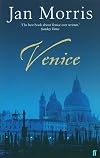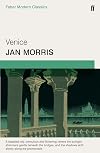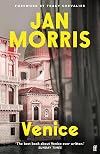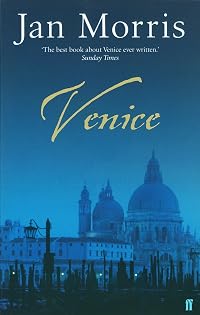
Venice
by James Morris
On This Page
Description
In 2010, the 50th anniversary of the first publication of Venice is celebrated one of the finest travel books on the world's most famous tourist destination! Written as James Morris, this book has been slightly updated without disturbing its period flavour, and is being celebrated by Faber, the book publisher.Tags
Recommendations




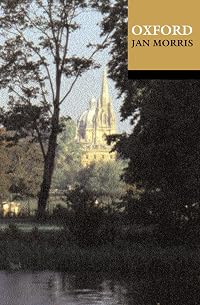



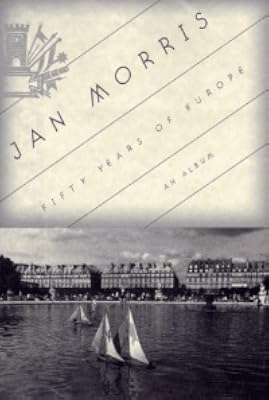

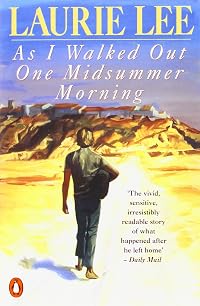

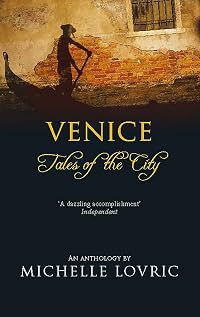
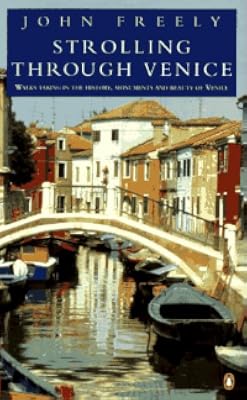
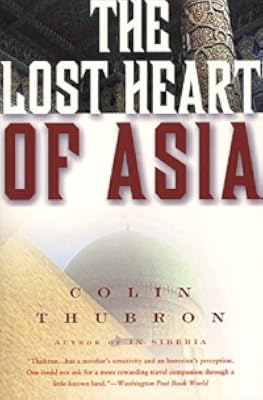









Member Recommendations

bluepiano Discursive, thoughtul observations on the unnoticed from a distinctly personal perspective rather than like Morris's from a journalistic one. Quite evocative.
Member Reviews
This is a richly written book by a British journalist who lived in Venice for many years, a mixture of a history, a tourist guide and real life journalistic observations. This melange did not quite work for me, partly because the book was written in 1960, and re-edited in the 70s, 80s and early 90s, and it often wasn't clear in which decade the real life observations were made, and just when a recently observed event or curiosity had actually taken place. This said, I still enjoyed it, as Venice is such a fascinating place, a republic for over 1,000 years with the trappings and excesses of a monarchy or empire, with a stark juxtaposition of beauty and grotesque horror; the contrast between its vulnerability to its local environment, and show more the fact that this isolation was also its strength for so long and prevented it being successfully conquered until Napoleon breezed in in 1797 and ended over 1,000 years of independent existence. Yet it cannot be said that the Venetians resisted this takeover; the Republic had been declining for the last two centuries or more and the Grand Council prosaically voted for the dissolution of the state by 512 votes to 30, with 5 abstentions. The author also covers the other islands in the lagoon and the coastal area, shedding light on some little known places and isolated communities, distinct from the city itself. She clearly loves Venice, but also recognises the contradictions and appreciates why others have taken an instinctive dislike to it. Perhaps unselfconsciously, she writes "More slush has been written about Venice than anywhere else on earth, more acres of ecstatic maiden prose. Venice is paved with purple passages" - parts of this book are also like this, and perhaps this encapsulates the extremes of emotions that this most contradictory of cities can evoke. show less
I wanted to say I have finally just about finished reading Jan Morris' Venice and the one thing that struck me more strongly about it than any other impression, was how much it reminded me of Hemingway's Death in the Afternoon. Of course, Morris is frequently in the business of evocative, poetic prose, something Hemingway would never allow himself, but the everyday prose style is very similar. Also the way in which the subject is examined from a number of different points of view, not necessarily making a single complete story or narrative of it, but genuinely adding texture and layer of detail until the whole becomes a sort of onion, skin over skin over skin. Finally, both have the feeling of someone who has not entirely been drawn in, show more not lost her or his identity to the subject, but has definitely looked deeply into it and loves it dearly.
Tourists set great store by "authentic" experiences but the previous generation's were always more authentic. Jan Morris makes it clear that even sixties Venice was subject to crap that 19th century tourists wouldn't have had to put up with. Yet the city still exercises a powerful attraction for many. I don't think the charm of twisty, cobbled streets is simply to do with their appearance or their age; I think we bring additional cultural meaning and expectations with us when visiting such places, and when thinking about them. Particularly, I think places like Venice create a self-reflective frisson for us- I am here. It isn't, I don't think, purely an aesthetic experience- part of us is bound up personally in how we experience places like this. They seduce us with the weight of history, with their complexity, their own self-containedness. We thrill at becoming a small part of them, for a little while.
And then we go and get a coffee at Starbucks to recover.
Yes, the weight of time and history, and our being a small part of them, work on us, as much as the aesthetic. If I ever make it back to Venice (I went there last year on a cruise) it will almost certainly be as a dreaded tourist which is mostly about how much time you dispose of. Some places, like Venice, Machu Picchu, or the Great Wall were part of my imagination long before I ever got there in their own shadowy way.
For what it's worth I think Venice is closer to "Invisible Cities" or Borges than it is to a "Lonely Planet Guide." show less
Tourists set great store by "authentic" experiences but the previous generation's were always more authentic. Jan Morris makes it clear that even sixties Venice was subject to crap that 19th century tourists wouldn't have had to put up with. Yet the city still exercises a powerful attraction for many. I don't think the charm of twisty, cobbled streets is simply to do with their appearance or their age; I think we bring additional cultural meaning and expectations with us when visiting such places, and when thinking about them. Particularly, I think places like Venice create a self-reflective frisson for us- I am here. It isn't, I don't think, purely an aesthetic experience- part of us is bound up personally in how we experience places like this. They seduce us with the weight of history, with their complexity, their own self-containedness. We thrill at becoming a small part of them, for a little while.
And then we go and get a coffee at Starbucks to recover.
Yes, the weight of time and history, and our being a small part of them, work on us, as much as the aesthetic. If I ever make it back to Venice (I went there last year on a cruise) it will almost certainly be as a dreaded tourist which is mostly about how much time you dispose of. Some places, like Venice, Machu Picchu, or the Great Wall were part of my imagination long before I ever got there in their own shadowy way.
For what it's worth I think Venice is closer to "Invisible Cities" or Borges than it is to a "Lonely Planet Guide." show less
This is a colourful, detail laden, paean of prose to the city of Venice - it may indeed be "the best book about Venice ever written" , I don't have the depth of knowledge to judge that, but I thoroughly enjoyed and was enormously entertained by Jan Morris's account.. It is by turns erudite, amusing, provocative and thought provoking - it certainly added to my education and leaves a lasting impression.
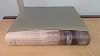
Inexplicably (perhaps), this book was a big disappointment to me. Years ago, I added it to a TBR list that I still maintain, after seeing it recommended as one of The Guardian's top 100 NF books. The endorsement read: "An eccentric but learned guide to the great city's art, history, culture and people." When I had the chance recently to get a copy of The Folio Society's edition I jumped. It's a lovely book.
But it was laborious to read.
Not a narrative, the book doesn't present a coherent, cohesive view of this altogether unique community. I do not feel like I got from the book anecdotes or nuggets of history that I can share, say in a conversation. It didn't imbue me with enthusiasm for Venice. That surprises me, but having read it, I show more can't view it as anything but a disjointed compendium of disconnected factoids. I didn't find a unifying thread; it's just a heap.
Moreover, there's no index, so you can't look up place names or artwork, individuals or definitions.
Last year, I read John Berendt's [City of Falling Angels], which I liked very much (and to be fair, I point out that a number of my LT acquaintances hold a view of it opposite to mine). Yes, it compiled a scattering of topics and people, but it had a narrative drive to it. I enjoyed reading it. I could--and did--talk about it. My report on it is here: https://www.librarything.com/topic/189318#5153692
I want to grouse about the book's visuals. The Folio edition has dandy color photos scattered throughout, but none have captions or IDs, right there on the page. Here and there, I surmised a connection between a photo and the adjacent text. But why not make the connection unequivocal? Folio charged a lot for the book. Yes, I discovered a list of the photos with cryptic identifications, but it's in the front, following the Table of Contents. Not satisfactory to me.
If you do tackle Jan Morris' [Venice], keep access to Google Maps handy. The Folio edition has a map of the island city, but it was of spotty use; I often could not find what I was looking for. Google Maps showed me the entire realm known as Venice. When Morris wrote about Murano, Mestre, Choggio, or the barrier islands of the Lido that protect the Venetian lagoon from the sea, I could see where they were, and grasp the immense size of Venice. And you can google specific landmarks and have them pointed out for you. show less
But it was laborious to read.
Not a narrative, the book doesn't present a coherent, cohesive view of this altogether unique community. I do not feel like I got from the book anecdotes or nuggets of history that I can share, say in a conversation. It didn't imbue me with enthusiasm for Venice. That surprises me, but having read it, I show more can't view it as anything but a disjointed compendium of disconnected factoids. I didn't find a unifying thread; it's just a heap.
Moreover, there's no index, so you can't look up place names or artwork, individuals or definitions.
Last year, I read John Berendt's [City of Falling Angels], which I liked very much (and to be fair, I point out that a number of my LT acquaintances hold a view of it opposite to mine). Yes, it compiled a scattering of topics and people, but it had a narrative drive to it. I enjoyed reading it. I could--and did--talk about it. My report on it is here: https://www.librarything.com/topic/189318#5153692
I want to grouse about the book's visuals. The Folio edition has dandy color photos scattered throughout, but none have captions or IDs, right there on the page. Here and there, I surmised a connection between a photo and the adjacent text. But why not make the connection unequivocal? Folio charged a lot for the book. Yes, I discovered a list of the photos with cryptic identifications, but it's in the front, following the Table of Contents. Not satisfactory to me.
If you do tackle Jan Morris' [Venice], keep access to Google Maps handy. The Folio edition has a map of the island city, but it was of spotty use; I often could not find what I was looking for. Google Maps showed me the entire realm known as Venice. When Morris wrote about Murano, Mestre, Choggio, or the barrier islands of the Lido that protect the Venetian lagoon from the sea, I could see where they were, and grasp the immense size of Venice. And you can google specific landmarks and have them pointed out for you. show less
There are a few flashes of brilliant prose, and more than a few details about Venice that were new to me. But more of it is clumsily overwritten, Morris's desire for comprehensive coverage makes it a bit of a slog (and she still misses some of my favorite parts!), and, unfortunately, fair portions are very dated for modern Venice.
> In the first years of this century E. V. Lucas spent a month eating in every Venetian restaurant in turn, and decided that there was only one he wanted to visit a second time. I have tried about thirty, and shall not feel intolerably misused if denied re-entry to any of them.
> In the first years of this century E. V. Lucas spent a month eating in every Venetian restaurant in turn, and decided that there was only one he wanted to visit a second time. I have tried about thirty, and shall not feel intolerably misused if denied re-entry to any of them.
This book grew on me I have to admit. The enthusiasm was recognisable but the place - not always.
Members
- Recently Added By
Lists

Folio Society
831 works; 53 members

BBC Radio 4 Bookclub
341 works; 13 members

Club Read's Recommended Nonfiction Written by Women
618 works; 30 members
Author Information

12+ Works 2,306 Members
Awards and Honors
Notable Lists
Series
Belongs to Publisher Series
Common Knowledge
- Canonical title
- Venice
- Original title
- Venice
- Alternate titles*
- Venedig
- Original publication date
- 1960
- Important places
- Venice, Veneto, Italy
- Blurbers
- Nicolson, Harold
*Some information comes from Common Knowledge in other languages. Click "Edit" for more information.
Classifications
- Genres
- Travel, Nonfiction, General Nonfiction
- DDC/MDS
- 914.53104929 — History & geography Geography & travel Geography of and travel in Europe Italy, San Marino, Vatican City, Malta Northeastern Italy Venice metropolitan city
- LCC
- DG674.2 — History of Europe, Asia, Africa and Oceania City History of Italy Northern Italy Venice
- BISAC
Statistics
- Members
- 588
- Popularity
- 50,150
- Reviews
- 8
- Rating
- (4.12)
- Languages
- 7 — English, French, German, Greek, Portuguese, Spanish, Swedish
- Media
- Paper, Audiobook, Ebook
- ISBNs
- 29
- ASINs
- 9