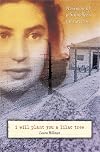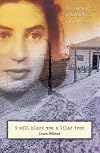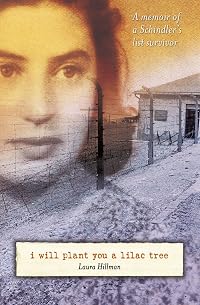
I Will Plant You a Lilac Tree: A Memoir of a Schindler's List Survivor
by Laura Hillman
On This Page
Description
In 1942 Hannelore Wolff made a difficult decision, one that changed her life forever. She left the comfort and safety of her boarding school in Berlin, Germany, and volunteered to be sent to a Polish ghetto. The Gestapo had already killed her father and were deporting her mother and brothers. Hannelore could not bear to be separated from what was left of her family so she chose to go with them. It was the beginning of her long journey through what turned out to be eight concentration camps, show more including Auschwitz. In one of the camps, Hannelore fell in love with a young man named Dick Hillman. After a few months they were separated, but Dick told Hannelore, "I will find you, wherever you are." He kept his promise. They were both put on Oskar Schindler's famous list and married when they were reunited. I Will Plant You a Lilac Tree is one woman's incredible story of finding courage, strength, and love during one of the most horrific times of the modern era. show lessTags
Recommendations




Member Reviews
For someone like me who doesn't relaly believe in family unity and ultimate sacrifices, the choices that Hannah Wolffe made to follow her family in deportation are completely alien, but without this choice her time in the Nazi concentration camps may have been very different. It make seem like an insane choice (with horrible consequences and experiences), but the outcome was her survival and the meeting of her future husband. We will never know if she would have been spared deportation as an attendee of an all girls school in Berlin (though it was strictly for Jews), but I agree that her assumption that it would have happenned eventually is most likely correct considering the Nazi's legislative restrictions of the Jewish population of show more Germany and the deportation trends that were already occuring. Irregardless, her narrative is one that should be read as it provides another perspective of the Jewish experience of the concentration camps and the miracle of being on Schindler's List. show less
"We'll use last names only, saying, 'Reunion for Gruenstein, Wolff, and Helfen taking place at Wangenheimstrasse 36. Berlin, Grunewald. Bring amusing stories."
This book is an easily accessible view into the life of a Holocaust survivor. The book is fast-paced with lots of action. The young author's memoir begins as the Second World War has already started and she is a student at a school for young Jewish girls in Berlin. Her story takes us through her flight from Berlin to meet what's left of her family, to the heights of the Holocaust. She escapes death routinely, and very rarely through any kind of theatrics. The randomness of death that surrounds her is evident and I think the only way the reader can endure with the author is because show more the author herself is so steadfast in her desire to survive.
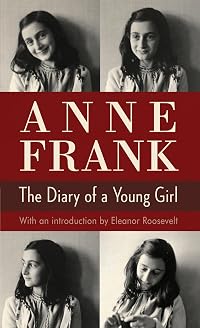
This book is a much more detailed introduction to the depths of depravity and pure villainy that the Nazis were responsible for than the equally important "Diary of Anne Frank". Every thing from bullying, racism, theft, beatings, homicide, infanticide, rape, slavery, torture, corpse-defilement, and mass-murder are listed matter-of-factly in this book. In this respect, I feel this book does a great service to the young reader by giving them a much more thorough expose' on the Nazis than many other sources. Books on the war-effort tend to involve individual heroism and tactics against the Third Reich, but this book reminds me very much of "A Day in the Life of Ivan Denisovich" for the depths that humanity can sink and the heights that humanity can rise.
Hannelore, the young author, is probably the best kind of writer for the level of horror displayed in the concentration camps, giving the reader glimpses of suffering, without (amazingly) dwelling on any particular aspect of her, or anyone else's, suffering. She loses almost every single person close to her through this book, and still carries on. So as much as I dislike the lack of intense detail in this book, its probably the only thing that makes it bearable for the author and reader alike.
This book is a treasure, if for anything, demonstrating that the humanity in good people can survive in the face of the most unimaginable horrors possible. Kindness surrounds Hannelore and she sees it as visibly as she see's man's inhumanity to man. She risks her life for people she barely knows and she is consistently treated to the same selflessness from strangers.
I recommend this book for anyone between the ages of 11 and 18. show less
This book is an easily accessible view into the life of a Holocaust survivor. The book is fast-paced with lots of action. The young author's memoir begins as the Second World War has already started and she is a student at a school for young Jewish girls in Berlin. Her story takes us through her flight from Berlin to meet what's left of her family, to the heights of the Holocaust. She escapes death routinely, and very rarely through any kind of theatrics. The randomness of death that surrounds her is evident and I think the only way the reader can endure with the author is because show more the author herself is so steadfast in her desire to survive.
This book is a much more detailed introduction to the depths of depravity and pure villainy that the Nazis were responsible for than the equally important "Diary of Anne Frank". Every thing from bullying, racism, theft, beatings, homicide, infanticide, rape, slavery, torture, corpse-defilement, and mass-murder are listed matter-of-factly in this book. In this respect, I feel this book does a great service to the young reader by giving them a much more thorough expose' on the Nazis than many other sources. Books on the war-effort tend to involve individual heroism and tactics against the Third Reich, but this book reminds me very much of "A Day in the Life of Ivan Denisovich" for the depths that humanity can sink and the heights that humanity can rise.
Hannelore, the young author, is probably the best kind of writer for the level of horror displayed in the concentration camps, giving the reader glimpses of suffering, without (amazingly) dwelling on any particular aspect of her, or anyone else's, suffering. She loses almost every single person close to her through this book, and still carries on. So as much as I dislike the lack of intense detail in this book, its probably the only thing that makes it bearable for the author and reader alike.
This book is a treasure, if for anything, demonstrating that the humanity in good people can survive in the face of the most unimaginable horrors possible. Kindness surrounds Hannelore and she sees it as visibly as she see's man's inhumanity to man. She risks her life for people she barely knows and she is consistently treated to the same selflessness from strangers.
I recommend this book for anyone between the ages of 11 and 18. show less
Laura Hillman is Hannelore Wolff, a student in a private school in Berlin who decides to go home and be deported with her recently -widowed mother and brothers. At the arrival of the concentration camp, Hannelore is separated from her mother and brothers, and in a 3-year period, she endures 8 concentration camps and hardships. From her own rape to the execution of a friend who got involved with a German soldier, Hillman recalls her experiences in straightforward, direct language, mirroring perhaps her resignation to simply endure. She and her love, Pole Dick Hillman, end up on Schindler's list (we are never told how), which is how they ultimately survive the Holocaust. They are the only surviving members of their family, and after they show more are reunited, they marry. Hillman's recollection is a challenging, yet honest, depiction of human cruelty but also of hope and love.
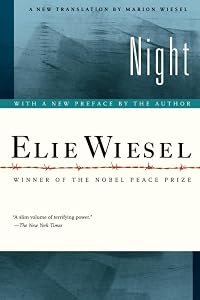
I teach Night in English II, and next year, in addition to the Wiesel text, students will have to read one other Holocaust experiences. I plan to recommend Hillman's novel. While Wiesel provides the voice of the adolescent male, Hillman provides the experience of the adolescent female during the Holocaust. show less
I teach Night in English II, and next year, in addition to the Wiesel text, students will have to read one other Holocaust experiences. I plan to recommend Hillman's novel. While Wiesel provides the voice of the adolescent male, Hillman provides the experience of the adolescent female during the Holocaust. show less
The book starts out with Hannelore Wolff (Laura Hillman) in a school, receiving a letter that her father,Martin Wolff, was dead and her mother and brothers were being deported from Weimar. she sends a letter that will allow her to travel to Weimar. Throughout the book, she goes to many different camps which is said on the map before the book. Her first job was as a Nursemaid taking care of two SS family children. her second job, which she got when she moved to the next camp, was a nurse working in the infirmary. Her previous camp was liquidated, where she was separated from her mother and brothers, Karoline Wolff, Wolfgang, and Selly Wolff. Later she sees Selly again in the infirmary, of which he dies at fifteen. In the next chapters, show more Hannelore meets a POW named Bernard Hillman, also known as Dick. she falls in love with him, and they get separated and found each other in another camp. soon reveals that they were both put on Schindler's list. along with others, she is actually put on a train that brought her to Auschwitz Birkenau. The book ends with the corrections being made and her ending up in Schindler's, where she is with Dick again. the war ends and a Russian man (doesn't mention his name) tells all the people that they are free.
IN my opinion, this book really does deserve five stars. not only did it describe the setting correctly, but it gave a unique perspective on what it was like to be a jew during WW2. This is a first witness account book, and the fact that this book was published decades after the war ended, it is told in great descriptions of the real people. To tell how even in some of the darkest times, they could still seem to smile. Truly I can't say this book was bad, I don't have any complaints (If I did I would put them up with history more than I'd put them with this author!) The book was great, it had a happy ending. show less
IN my opinion, this book really does deserve five stars. not only did it describe the setting correctly, but it gave a unique perspective on what it was like to be a jew during WW2. This is a first witness account book, and the fact that this book was published decades after the war ended, it is told in great descriptions of the real people. To tell how even in some of the darkest times, they could still seem to smile. Truly I can't say this book was bad, I don't have any complaints (If I did I would put them up with history more than I'd put them with this author!) The book was great, it had a happy ending. show less
This was a very engrossing first person account of the author's experiences during the Holocaust. The hardship and abuse that Hannelore was subjected to in the concentration and labor camps is in stark contrast to her life before the Nazi Party rose to power. A particular strength of the book is its readability despite the subject matter being frequently horrifying. Ms Hillman weaves a narrative that is both engaging and illuminating. It is one thing to read a history text about the Holocaust and find it powerful and moving. Reading a first person account has the ability to scratch the reader raw. This is definitely a book I would consider using in a classroom setting,
Hannelore is shuffled from camp to camp in an agonizing horror show. As shocking as the Nazi atrocities is the sense you get that there is absolutely no meaning to life, that survival is dependent on the arbitrary moods of your captors, a matter of stepping into a different line of people or speaking with the right accent. Hannelore's is an important voice to add to those who have recorded their experiences during this time.
For anyone who bothers to consider it, I think we all wonder how the world turned so on edge that a group like the Nazis could be seen as a good choice to rule a country. Even more so, I wonder how anyone who they didn't like managed to survive their evil rule to see it ended before they were ended themselves. This book tells just that story from the perspective of one of the least empowered people of the time, a young girl of Jewess decent in Germany. Unlike Anne Frank, Hannelore Wolff took the bold step to leave school and join her mother and brothers in deportation to camps in the east rather than attempt to hide from the SS, even after her father had been killed for the simple act of being a Jew and riding a bike without a license. show more It is a gripping tale that will give you a glimpse into what it was like to be viewed as subhuman by a "master race" and what it takes to survive in a world turned upside down. show less
Members
- Recently Added By
Author Information

2 Works 455 Members
Awards and Honors
Common Knowledge
- People/Characters
- Hannelore Hillman; Oskar Schindler
- Important events
- Holocaust; Shoah
Classifications
Statistics
- Members
- 455
- Popularity
- 67,084
- Reviews
- 26
- Rating
- (4.10)
- Languages
- Chinese, English
- Media
- Paper, Ebook
- ISBNs
- 9
- ASINs
- 3