On This Page
Description
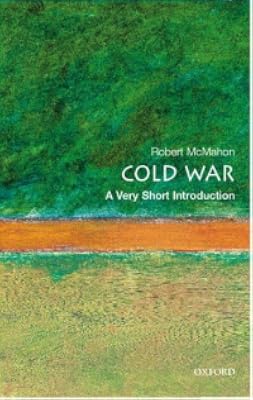
This title provides a clear interpretive overview of the Cold War, one that should both invite debate and encourage deeper investigation.Tags
Recommendations







Member Reviews
Largely fine, this quick survey falls down in two critical ways. First, there's a persistent bias in focus and attribution, no doubt partially about the state of the sources, but still marked. The author seems to prefer different vocabularies and sentence structures to describe the US and the Soviet Union. The US tends to do things--often for the wrong reasons or bad motives--while such things merely take place, happen or occur with or around the Soviet Union. The US acts, but the Soviet Union more commonly reacts, responds or defends. The US acquires its various satellites intentionally, and mucks around with them unfairly; the Soviet Union just seems to have them, and is never seen to do much beyond "supporting" them. As Britain was show more once said to have done, the Soviet Union seems to "conquer half the world in a fit of absence of mind." Second, while the internal politics and motivations of the US and Soviet Union are dealt with in depth—anyway, depth appropriate to a short survey—China is treated as a mysterious, "inscrutable" power. show less
Not sure it qualifies as *very* short, at almost 170 pages, but it is a very nicely written summary of the geopolitical aspects of the cold war. As McMahon himself admits, the domestic repercussions of cold war foreign policies are less well known, and I found the chapter on these much more interesting than the other stuff; I just wish someone had done a bit more research on them. The cold war itself is more or less history in the sense of 'done with;' the horrific results of cold war thinking persist in any number of ways, and we won't understand them by endlessly debating whether Gorbachev or Reagan or John Paul II was the Great Man who ended the Evil Empire. McMahon inclines to the 'Gorbachev did it unwittingly' school of thought, show more which seems reasonable, and he doesn't talk about it much, for which we can be thankful. show less
This book is lean but packs quite a punch! Unbiased portrayal of the scenarios that led to cold war. Insecurity and some poor diplomacy lay at the heart of the cold war. Haven't read a simpler book than this about cold war. Kudos!
Concise and helpful
Ratings
Members
- Recently Added By
Lists

Author Information
7 Works 604 Members
Series

Common Knowledge
- Canonical title
- The Cold War: A Very Short Introduction
- Important events
- Cold War
- First words
- Explanations for the onset of the Cold War must begin with World War II.
- Last words
- (Click to show. Warning: May contain spoilers.)By the time the Soviet Union disappeared, the Cold War itself was already history.
Classifications
Statistics
- Members
- 406
- Popularity
- 76,452
- Reviews
- 4
- Rating
- (3.53)
- Languages
- English, Spanish
- Media
- Paper, Audiobook, Ebook
- ISBNs
- 12
- ASINs
- 5