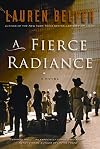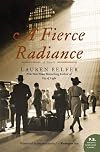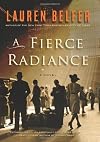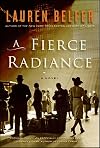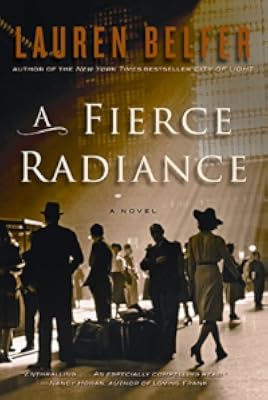
A Fierce Radiance
by Lauren Belfer
On This Page
Description
"An engrossing and ambitious novel that vividly portrays a critical time in American history." — Booklist (starred review)"Enthralling. A Fierce Radiance shines with fascinating detail.... Belfer's powerful portrayal of how people are changed in pursuit of a miracle makes this book an especially compelling read." — Nancy Horan, author of Loving Frank
Set during the uncertain early days of World War II, this suspenseful story from the New York Times bestselling author of City of Light show more follows the work of photojournalist Claire Shipley as she captures America's race to develop life-saving antibiotics—an assignment that will involve blackmail, espionage, and murder.
. show less
Tags
Recommendations















Member Reviews
For anyone born after 1945, can you imagine a life where getting the smallest cut could mean a life-or-death struggle? Where one lived in simple fear of the common cold because it may turn into something more insidious? Of every change that has occurred during the twentieth century, the mass production of penicillin tops the list among technology that has the greatest impact on human life. Lauren Belfer's A Fierce Radiance explores the pre-penicillin world, giving insight into what life was like before and during the search for the technology that would allow penicillin to become available to the masses rather than an experimental drug given only to the military.
A Fierce Radiance has the feel of an old-fashioned thriller. Ms. Belfer show more takes her time establishing the characters and the plot, allowing the reader to thoroughly immerse him/herself into the story and the time period. The action builds slowly but never drags, making each page a treasure as the reader explores life in the U.S. after Pearl Harbor. The threat of war coming to the U.S. mainland, combined with the shady needs of the government, and the nefarious plans of the pharmaceutical companies enhances the tension to this taut thriller.
Speaking of the pharmaceutical companies, even though this is a murder mystery, the true bad guys are those who hope to/did make a fortune on the new types of antibiotics that were created as a result of the search for the next big weapon against infection and diseases. The eagerness with which they are described as willing to charge $200 per shot for something that cost them $0.02 to product is appalling, let alone the lengths they were willing to go to protect their research. The reader is left to extrapolate that very little has changed in the pharmaceutical industry. It is a telling picture of an industry that remains controversial today.
A Fierce Radiance is a picturesque novel that hearkens back to a time when people appreciated a well-plotted, well-written drama. The factual portions of the novel are well-researched and intricately intertwined with the fiction, blurring the line between fact and fiction in the most realistic manner. Claire's struggle as a working single mother will resonate well with modern readers, as will her fractured relationship with her ex-husband and her attempt to balance her work with her family. Claire is immensely likable, as a woman who is fragile from her past and current relationships but has a steel backbone when it comes to protecting her own. She proves that a woman does not need a man to protect her or to fulfill her life's purpose, and as much as most readers enjoy a "happily ever after" ending, Claire is forceful enough to thrive without her fairy tale ending. Even with the differences in culture from the U.S. in the 1940s to today, Claire is a strong heroine.
A Fierce Radiance is one of those novels I enjoyed from beginning to end. It felt like I was dropped into life after Pearl Harbor and am now able to better appreciate the sacrifices, the fear and anxiety, and the sorrow that filled that time period. Life before antibiotics is virtually unrecognizable, but as Ms. Belfer points out in her afterword, with bacteria becoming more and more resistant to current medications, we very well could one day reach a point where a simple paper cut could mean a life-or-death struggle again. It is a scary notion, and one I can better appreciate after reading this excellent novel. Claire's story fits well with the time period, not romanticizing the war effort or creating happiness during a time period in which very little happiness was occurring. Historical fiction fans, as well as fans of mysteries and thrillers, will definitely enjoy A Fierce Radiance. show less
A Fierce Radiance has the feel of an old-fashioned thriller. Ms. Belfer show more takes her time establishing the characters and the plot, allowing the reader to thoroughly immerse him/herself into the story and the time period. The action builds slowly but never drags, making each page a treasure as the reader explores life in the U.S. after Pearl Harbor. The threat of war coming to the U.S. mainland, combined with the shady needs of the government, and the nefarious plans of the pharmaceutical companies enhances the tension to this taut thriller.
Speaking of the pharmaceutical companies, even though this is a murder mystery, the true bad guys are those who hope to/did make a fortune on the new types of antibiotics that were created as a result of the search for the next big weapon against infection and diseases. The eagerness with which they are described as willing to charge $200 per shot for something that cost them $0.02 to product is appalling, let alone the lengths they were willing to go to protect their research. The reader is left to extrapolate that very little has changed in the pharmaceutical industry. It is a telling picture of an industry that remains controversial today.
A Fierce Radiance is a picturesque novel that hearkens back to a time when people appreciated a well-plotted, well-written drama. The factual portions of the novel are well-researched and intricately intertwined with the fiction, blurring the line between fact and fiction in the most realistic manner. Claire's struggle as a working single mother will resonate well with modern readers, as will her fractured relationship with her ex-husband and her attempt to balance her work with her family. Claire is immensely likable, as a woman who is fragile from her past and current relationships but has a steel backbone when it comes to protecting her own. She proves that a woman does not need a man to protect her or to fulfill her life's purpose, and as much as most readers enjoy a "happily ever after" ending, Claire is forceful enough to thrive without her fairy tale ending. Even with the differences in culture from the U.S. in the 1940s to today, Claire is a strong heroine.
A Fierce Radiance is one of those novels I enjoyed from beginning to end. It felt like I was dropped into life after Pearl Harbor and am now able to better appreciate the sacrifices, the fear and anxiety, and the sorrow that filled that time period. Life before antibiotics is virtually unrecognizable, but as Ms. Belfer points out in her afterword, with bacteria becoming more and more resistant to current medications, we very well could one day reach a point where a simple paper cut could mean a life-or-death struggle again. It is a scary notion, and one I can better appreciate after reading this excellent novel. Claire's story fits well with the time period, not romanticizing the war effort or creating happiness during a time period in which very little happiness was occurring. Historical fiction fans, as well as fans of mysteries and thrillers, will definitely enjoy A Fierce Radiance. show less
I really thought I would like this book better. It seemed like it would hit all the high points that I enjoy in literature--historical fiction, scientific research, unsolved murder, a love story. And yet, as I read it I kept flipping to the back to see how much further I had to read until the end. I think the problem comes down to the story being too melodramatic to be believable.
Claire Shipley is a divorced woman who works as a photographer for Life magazine. When she is sent to the Rockefeller Institute to take photos of a man being treated for a bacterial infection with the very new penicillin being produced there the story hits home for her. Her daughter, Emily, died of just such a bacterial infection when she was just 3 years old show more and the available antibiotics (sulfa drugs) couldn't do anything to stop the infection. Claire meets the scientist in charge of the experiment, Dr. James Stanton, and his sister, mycologist Tia Stanton. The patient responds well to the penicillin with his fever dropping and his wound improving. His wife and children come to see him and Claire gets pictures of the kids being shown the lab where Tia Stanton visits. Unfortunately, the supply of penicillin is limited and when it is used up the infection comes raging back. The patient dies very shortly after. This experiment does show that penicillin could cure bacterial infections if enough of it could be made. This is of great interest to the US government because they have just entered WWII and they know that many more soldiers die of infections than from enemy fire. Soon Dr. Stanton and his colleague Dr. Nick Colapinto are tapped to head up a project to get pharmaceutical companies to solve the problem of producing sufficient quantities of penicillin for the needs of the troops. Tia Stanton starts looking into finding a penicillin cousin from the hundreds of soil samples she has obtained from around the country and even across the world. Meanwhile, Claire and Jamies (!!!) are embarking on a romance. Claire has also commenced a relationship with her estranged father, the multi-millionaire Edward Rutherford. Just as Tia finds some success in her search she mysteriously dies. Was she despondent and committed suicide by jumping off the cliff surrounding the Institute? Seems unlikely. Did she go for a walk and accidentally fall off the cliff, as the enquiry into her death decides? Or was she pushed by someone hoping to obtain the sample she has been working on? Jamie really doesn't have time to grieve for his sister let alone question the official enquiry finding but something doesn't seem right. His love for Claire and hers for him does seem right but they are unable to spend much time together due to their work schedules. Meanwhile the war rages on and the government is determined nothing shall interfere with their quest for success. If that means a few lies get told and a few people are hushed up so be it.
I think I would have appreciated this story more if the author didn't work so hard to make us believe that death from infection was just around the corner for everyone. I don't mean to downplay the importance of the development of penicillin but it seems like every person in the story had a friend or family member who died of infection. If that truly was the case then we would see more cases of people having to be treated for antibiotics for simple scrapes and wounds. And to name her two main characters Claire and Jamie (as in the Diana Gabaldon Outlander series) just grates on me. show less
Claire Shipley is a divorced woman who works as a photographer for Life magazine. When she is sent to the Rockefeller Institute to take photos of a man being treated for a bacterial infection with the very new penicillin being produced there the story hits home for her. Her daughter, Emily, died of just such a bacterial infection when she was just 3 years old show more and the available antibiotics (sulfa drugs) couldn't do anything to stop the infection. Claire meets the scientist in charge of the experiment, Dr. James Stanton, and his sister, mycologist Tia Stanton. The patient responds well to the penicillin with his fever dropping and his wound improving. His wife and children come to see him and Claire gets pictures of the kids being shown the lab where Tia Stanton visits. Unfortunately, the supply of penicillin is limited and when it is used up the infection comes raging back. The patient dies very shortly after. This experiment does show that penicillin could cure bacterial infections if enough of it could be made. This is of great interest to the US government because they have just entered WWII and they know that many more soldiers die of infections than from enemy fire. Soon Dr. Stanton and his colleague Dr. Nick Colapinto are tapped to head up a project to get pharmaceutical companies to solve the problem of producing sufficient quantities of penicillin for the needs of the troops. Tia Stanton starts looking into finding a penicillin cousin from the hundreds of soil samples she has obtained from around the country and even across the world. Meanwhile, Claire and Jamies (!!!) are embarking on a romance. Claire has also commenced a relationship with her estranged father, the multi-millionaire Edward Rutherford. Just as Tia finds some success in her search she mysteriously dies. Was she despondent and committed suicide by jumping off the cliff surrounding the Institute? Seems unlikely. Did she go for a walk and accidentally fall off the cliff, as the enquiry into her death decides? Or was she pushed by someone hoping to obtain the sample she has been working on? Jamie really doesn't have time to grieve for his sister let alone question the official enquiry finding but something doesn't seem right. His love for Claire and hers for him does seem right but they are unable to spend much time together due to their work schedules. Meanwhile the war rages on and the government is determined nothing shall interfere with their quest for success. If that means a few lies get told and a few people are hushed up so be it.
I think I would have appreciated this story more if the author didn't work so hard to make us believe that death from infection was just around the corner for everyone. I don't mean to downplay the importance of the development of penicillin but it seems like every person in the story had a friend or family member who died of infection. If that truly was the case then we would see more cases of people having to be treated for antibiotics for simple scrapes and wounds. And to name her two main characters Claire and Jamie (as in the Diana Gabaldon Outlander series) just grates on me. show less
In her life after Pearl Harbor, Claire Shipley, a single, divorced mother and successful photojournalist for Life, follows the development of the new "miracle drug" penicillin. As her personal life becomes entwined with her professional life in a potential new romantic venture with one of the doctors working on the top secret military project, her long estranged father also winds his way back into her life as a much darker presence than her shining doctor. The dangers of financial gain become apparent after a murder is committed in an attempt to gain the new drug. Claire thrusts herself into the center of the danger in hopes of finding the killer at any cost.
A FIERCE RADIANCE
by Lauren Belfer
Harper/Harper Collins Publishers
$25.99/$33.99 Can; 544 pages
ISBN 13 : 9780061252518
On Sale: 6/15/2010
Taken for granted now, it is hard to fathom that prior to WWII a person could die from a minor scratch just as easily as pneumonia and other staphylococcal bacterium. During the war, soldiers were seriously wounded in mass numbers often recovering from wounds yet later died from infection. The government saw penicillin as a critical weapon of war. By saving lives lost from infection, troops could be returned to the war to fight again.
The government recruited pharmaceutical companies like Merck and Pfizer among others to focus all research on the development, production, clinical trials and ultimately the show more administration of penicillin. To stem competition the government disallowed a patent on penicillin. However, these same companies worked furiously to develop alternate patentable antibiotics that would prove more lucrative.
A Fierce Radiance is an absorbing fictional account of this momentous, life changing scientific discovery that became the medical breakthrough of the decade. The story takes place just after Pearl Harbor in New York City, 1941. Claire Shipley is a famous photojournalist who works for Life magazine. Her assignment is to cover the story of the miracle drug penicillin as it is administered and tested on a dying patient at the Rockefeller Institute. Claire is a witness to the patient’s recovery. The drug works! Unfortunately, without sufficient supply on hand, the patient relapses and dies. Deemed by her boss, Henry Luce, magazine mogul and husband of Clare Booth Luce as too depressing, too controversial her story never will not run.
What follows is the sudden violent death of the beautiful young assiduous mycologist, Tia Stanton, sister of Claire’s new boyfriend Jamie. Tia’s impressive research was startling one formula showed positive results with hopeful promise.
Claire’s life becomes the lens and conduit for Belfer’s compelling story.
Her daughter Emily died very young, a victim of illness that had penicillin been around would have saved her. Divorced, she now lives with her son Charlie. Her father, Edward Rutherford, is a lonely millionaire, estranged for years and absent from her childhood. Recently he has pursued a father-daughter relationship they never had.
Rutherford learns about the new miracle drug and its healing possibilities. He invests his money in a new pharmaceutical company and joins the penicillin race. When Jamie Stanton accuses Rutherford of killing his sister Tia, Claire’s world appears to collapse.
A Fierce Brilliance takes you back to the exciting age of discovery and the highly charged days during World War II when the race to win the war was in everyone’s hearts. Belfer succeeds in recreating the fury of this historical period with astute memoir like details. Claire stands out as a resilient character who will be remembered for her strength, faith and ability to forgive. A memorable impressively written story with timely relevance.
Disclosure: Arc was sent by publisher.
show less
by Lauren Belfer
Harper/Harper Collins Publishers
$25.99/$33.99 Can; 544 pages
ISBN 13 : 9780061252518
On Sale: 6/15/2010
Taken for granted now, it is hard to fathom that prior to WWII a person could die from a minor scratch just as easily as pneumonia and other staphylococcal bacterium. During the war, soldiers were seriously wounded in mass numbers often recovering from wounds yet later died from infection. The government saw penicillin as a critical weapon of war. By saving lives lost from infection, troops could be returned to the war to fight again.
The government recruited pharmaceutical companies like Merck and Pfizer among others to focus all research on the development, production, clinical trials and ultimately the show more administration of penicillin. To stem competition the government disallowed a patent on penicillin. However, these same companies worked furiously to develop alternate patentable antibiotics that would prove more lucrative.
A Fierce Radiance is an absorbing fictional account of this momentous, life changing scientific discovery that became the medical breakthrough of the decade. The story takes place just after Pearl Harbor in New York City, 1941. Claire Shipley is a famous photojournalist who works for Life magazine. Her assignment is to cover the story of the miracle drug penicillin as it is administered and tested on a dying patient at the Rockefeller Institute. Claire is a witness to the patient’s recovery. The drug works! Unfortunately, without sufficient supply on hand, the patient relapses and dies. Deemed by her boss, Henry Luce, magazine mogul and husband of Clare Booth Luce as too depressing, too controversial her story never will not run.
What follows is the sudden violent death of the beautiful young assiduous mycologist, Tia Stanton, sister of Claire’s new boyfriend Jamie. Tia’s impressive research was startling one formula showed positive results with hopeful promise.
Claire’s life becomes the lens and conduit for Belfer’s compelling story.
Her daughter Emily died very young, a victim of illness that had penicillin been around would have saved her. Divorced, she now lives with her son Charlie. Her father, Edward Rutherford, is a lonely millionaire, estranged for years and absent from her childhood. Recently he has pursued a father-daughter relationship they never had.
Rutherford learns about the new miracle drug and its healing possibilities. He invests his money in a new pharmaceutical company and joins the penicillin race. When Jamie Stanton accuses Rutherford of killing his sister Tia, Claire’s world appears to collapse.
A Fierce Brilliance takes you back to the exciting age of discovery and the highly charged days during World War II when the race to win the war was in everyone’s hearts. Belfer succeeds in recreating the fury of this historical period with astute memoir like details. Claire stands out as a resilient character who will be remembered for her strength, faith and ability to forgive. A memorable impressively written story with timely relevance.
Disclosure: Arc was sent by publisher.
show less
A Fierce Radiance crosses genres as a historical novel, a love story, a crime thriller, and a murder mystery. It captured my attention from the very beginning and held it throughout. Claire Shipley is a fascinating character as a photo journalist dealing with situations in her job, her family, and her relationships. Claire is assigned to a local hospital to report on a still experimental drug, penicillin, but her interest was more than professional. Penicillin could have saved the life of the daughter she lost to an infection. Through her work she also meets her love interest, Dr. James Stanton.
The author brings to life the promise and heartache of experimental drugs. Problems arise when they cannot create the drugs quickly enough to show more give the patient a complete series, and some of the drugs have unexpected side effects. Competition among drug companies, the Federal Government, and greedy business men round out this superb crime drama.
I am very impressed with the author’s depiction of a mother living with the grief of losing a child. In A Fierce Radiance, Lauren Belfer captured this aspect of Claire’s life perfectly. I’ve read other books that do not come close to portraying this appropriately. All of the characters and their roles are clearly defined and developed. Claire is not always likeable, but she is always interesting. show less
The author brings to life the promise and heartache of experimental drugs. Problems arise when they cannot create the drugs quickly enough to show more give the patient a complete series, and some of the drugs have unexpected side effects. Competition among drug companies, the Federal Government, and greedy business men round out this superb crime drama.
I am very impressed with the author’s depiction of a mother living with the grief of losing a child. In A Fierce Radiance, Lauren Belfer captured this aspect of Claire’s life perfectly. I’ve read other books that do not come close to portraying this appropriately. All of the characters and their roles are clearly defined and developed. Claire is not always likeable, but she is always interesting. show less
Claire Shipley is a single mother haunted by the death of her young daughter due to infection from a scratch. She is also an ambitious photojournalist, and in the anxious days after Pearl Harbor, the talented Life magazine reporter finds herself on top of one of the nation's most important stories. In the bustling labs of New York City's renowned Rockefeller Institute, some of the country's brightest doctors and researchers are racing to find a cure that will save the lives of thousands of wounded American soldiers and countless others—a miraculous new drug they call penicillin. Little does Claire suspect how much the story will change her own life.
This was an intriguing story of how penicillin was developed in the early 1940s, the show more difficulties in producing it, and the trials performed on sick people and later on sick and wounded soldiers. Amid this was an evolving romance between Claire, working at Life magazine, and Dr. Jamie Stanton, overseeing penicillin trials. WWII was a constant throughout whether Claire was worried about New York City being bombed or Jamie was assigned to work overseas on penicillin trials on soldiers. The big business of pharmaceutical companies getting involved in penicillin and similar drugs was also an important part of the story, along with the US government’s involvement. Throw in a murder or two and a few spys and there was never a dull moment. There was a lot going on in this story but it was easy to follow and kept me turning pages to the end. show less
This was an intriguing story of how penicillin was developed in the early 1940s, the show more difficulties in producing it, and the trials performed on sick people and later on sick and wounded soldiers. Amid this was an evolving romance between Claire, working at Life magazine, and Dr. Jamie Stanton, overseeing penicillin trials. WWII was a constant throughout whether Claire was worried about New York City being bombed or Jamie was assigned to work overseas on penicillin trials on soldiers. The big business of pharmaceutical companies getting involved in penicillin and similar drugs was also an important part of the story, along with the US government’s involvement. Throw in a murder or two and a few spys and there was never a dull moment. There was a lot going on in this story but it was easy to follow and kept me turning pages to the end. show less
Claire Shipley is a photojournalist working for Life magazine in the early years of World War II. She’s assigned to document the medical trials of a new wonder drug – penicillin. While her story never sees print, she becomes involved in the intrigue surrounding the efforts by various big pharmaceutical companies to develop and produce penicillin in large quantities, as needed to fight battle infections during the war.
Well this sounded much more interesting than it wound up being.
I definitely enjoyed some aspects of the novel. I like reading medical histories, and the race to develop a procedure to mass produce penicillin was an important effort in World War II. Like many of the characters in the book, my family suffered the death show more of a loved one due to infection; my grandfather died of peritonitis resulting from a burst appendix. Penicillin and antibiotics that were developed later spared many such deaths. If Belfer had stayed focused on that exciting story I think I would have greatly enjoyed the book.
But, Belfer included a romantic subplot between Claire and a lead scientist, Dr James Stanton (aka Jamie), as well as broken family ties, a murder, corporate espionage, Russian spies and unethical treatment of the Japanese families interred at various camps. There is just too much going on between the covers of this book for Belfer to give us a cohesive story, and I never got caught up in the novel. show less
Well this sounded much more interesting than it wound up being.
I definitely enjoyed some aspects of the novel. I like reading medical histories, and the race to develop a procedure to mass produce penicillin was an important effort in World War II. Like many of the characters in the book, my family suffered the death show more of a loved one due to infection; my grandfather died of peritonitis resulting from a burst appendix. Penicillin and antibiotics that were developed later spared many such deaths. If Belfer had stayed focused on that exciting story I think I would have greatly enjoyed the book.
But, Belfer included a romantic subplot between Claire and a lead scientist, Dr James Stanton (aka Jamie), as well as broken family ties, a murder, corporate espionage, Russian spies and unethical treatment of the Japanese families interred at various camps. There is just too much going on between the covers of this book for Belfer to give us a cohesive story, and I never got caught up in the novel. show less
Members
- Recently Added By
Published Reviews
ThingScore 50
Like the doctors, scientists, detectives, soldiers, captains of industry, glamorous photographers and hot-blooded lovers who swirl through Lauren Belfer's World War II novel, 'A Fierce Radiance,' book critics have their own system of early warning signs. In deciding whether a book is worth their while, let alone their readers', many have been known to practice the first-sentence test--the more show more charitable among them, the first-page, the first-chapter, or the pick-a-page-at-random test. That is: if such samples from a new book under review don't past muster, it's fair to say that the work as a whole deserves only a passing grade, or worse.
'With A Fierce Radiance,' which follows her best-selling debut novel 'City of Light,' Belfer poses an exasperating challenge for such checks. The first sentence--"Claire Shipley was no doctor, but even she could see the man on the stretcher was dying"--is pretty grabby. Further down the page, you get Claire, a photographer for Life magazine, noticing, "His eyes were open but unfocused, like the glass eyes in a box at a doll factory she'd once photographed." A tad stiff, that one, but evocative. Turn the page, though, and there's stuff like "Her thick hair fell in waves to her shoulders," or Claire experiencing "a piercing ache." Soon enough, "Bravado was a trait Claire put on each morning with her silk blouse and tailored trousers." These promptly go easy on the eyes of a handsome doctor, James Stanton, who is "about six feet tall, lean, with brown hair brushed back," and before you can say True Romance, "His close physical presence stirred her." The full experience of the novel is a kind of whiplash--historical nuggets mixed with cliches, portraits of such real people as Henry Luce handicapped by icky dialogue, tense passions encountering predictable plot twists, and the incessant use of words like "upon" rearing its cumbersomeness when a simple "on" would do (sex scenes included). Belfer has profuse research on her side, and against her the tincture of 1940s popular fiction.
Still, who can't be grateful for a long, interesting, if over-full, historical novel that isn't about vampires? . . . show less
'With A Fierce Radiance,' which follows her best-selling debut novel 'City of Light,' Belfer poses an exasperating challenge for such checks. The first sentence--"Claire Shipley was no doctor, but even she could see the man on the stretcher was dying"--is pretty grabby. Further down the page, you get Claire, a photographer for Life magazine, noticing, "His eyes were open but unfocused, like the glass eyes in a box at a doll factory she'd once photographed." A tad stiff, that one, but evocative. Turn the page, though, and there's stuff like "Her thick hair fell in waves to her shoulders," or Claire experiencing "a piercing ache." Soon enough, "Bravado was a trait Claire put on each morning with her silk blouse and tailored trousers." These promptly go easy on the eyes of a handsome doctor, James Stanton, who is "about six feet tall, lean, with brown hair brushed back," and before you can say True Romance, "His close physical presence stirred her." The full experience of the novel is a kind of whiplash--historical nuggets mixed with cliches, portraits of such real people as Henry Luce handicapped by icky dialogue, tense passions encountering predictable plot twists, and the incessant use of words like "upon" rearing its cumbersomeness when a simple "on" would do (sex scenes included). Belfer has profuse research on her side, and against her the tincture of 1940s popular fiction.
Still, who can't be grateful for a long, interesting, if over-full, historical novel that isn't about vampires? . . . show less
added by PLReader
Lists

ALA The Reading List
490 works; 28 members

Books about World War II
241 works; 22 members

BingoDOG - Scientists in Fiction
111 works; 17 members
Author Information

4 Works 2,049 Members
Awards and Honors
Awards
Distinctions
Common Knowledge
- Canonical title
- A Fierce Radiance
- Original publication date
- 2010-06-15
- People/Characters
- Claire Shipley; Dr. James Stanton
- Important places
- New York, New York, USA
- Important events
- World War II; Cocoanut Grove Night Club fire
- Epigraph
- The Lord hath created medicines out of the earth; and he that is wise will not abhor them.
--Sirach (Ecclesiasticus) 38:4
When thou dost ask me blessing, I'll kneel down,
And ask of thee forgiveness.
--King Lear, V, III, 10-11 - Dedication
- For Tristan,
and for Michael - First words
- Claire Shipley was no doctor, but even she could see that the man on the stretcher was dying.
Classifications
- Genres
- Fiction and Literature, General Fiction, Historical Fiction, Mystery
- DDC/MDS
- 813.54 — Literature & rhetoric American literature in English American fiction in English 1900-1999 1945-1999
- LCC
- PS3552 .E467 .F54 — Language and Literature American literature American literature Individual authors 1961-
- BISAC
Statistics
- Members
- 503
- Popularity
- 59,902
- Reviews
- 27
- Rating
- (3.63)
- Languages
- English
- Media
- Paper, Audiobook, Ebook
- ISBNs
- 5
- ASINs
- 8