On This Page
Description
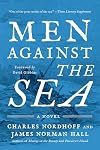
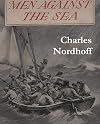
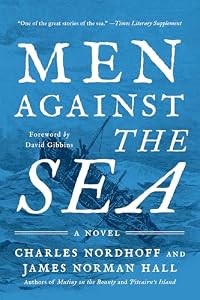
"Unsurpassed as a gripping tale of historical adventure, 'Men Against the Sea' is the epic account of the eighteen loyal men who, in the aftermath of the mutiny on the 'Bounty, ' are set adrift on the high seas in a 23-foot open launch, with Captain William Bligh at the helm. Alone on uncharted waters, the men struggle to survive on scant rations, taking pains to avoid war canoes and inhabited islands under cover of night. Their 3,600-mile voyage from the island of Tofoa in the Friendly show more Archipelago to the Dutch East Indies remains to this day one of the greatest feats of courage and endurance in maritime history." *** "The second in a three-volume narrative of the voyage of the H.M.S. Bounty, telling what happened to the crew, captain, and mutineers after the famous mutiny." *** "In the sequel to 'Mutiny on the Bounty, ' Captain Bligh and 18 men sail from the Friendly Islands of the South Pacific to Timor in the East Indies." show lessTags
Recommendations


























Member Recommendations

Member Reviews
https://nwhyte.livejournal.com/2927397.html
I read Men Against the Sea during a particularly insomniac night; it's the shortest of the three books, told in the voice of the (historical) surgeon's mate of the Bounty, Thomas Ledward, explaining the epic 41-day, 6,500 km journey taken by Bligh and 18 others in an 7-metre long open boat from the site of the mutiny (near Tofua, one of the Tonga islands) to Kupang at the western end of Timor, avoiding the potentially hostile shores of Australia and other islands - one man was killed at the very beginning, on Tofua. It is an extraordinary feat of navigation, and Nordhoff and Hall succeed in spinning it out; the internal tensions among the 18 survivors are easy to imagine and well portrayed. The show more impact of their ordeal on the men's digestive systems also is a disturbing but reasonable detail. Interestingly, Samuel is portrayed here as just another crew member; the previous book's anti-Semitism has disappeared. The book ends with Ledward taking his leave of Bligh, who is on his way back to London. In real life, Ledward was one of the five crewmen who died very soon after they reached Batavia (where they all went shortly after arriving in Timor). show less
I read Men Against the Sea during a particularly insomniac night; it's the shortest of the three books, told in the voice of the (historical) surgeon's mate of the Bounty, Thomas Ledward, explaining the epic 41-day, 6,500 km journey taken by Bligh and 18 others in an 7-metre long open boat from the site of the mutiny (near Tofua, one of the Tonga islands) to Kupang at the western end of Timor, avoiding the potentially hostile shores of Australia and other islands - one man was killed at the very beginning, on Tofua. It is an extraordinary feat of navigation, and Nordhoff and Hall succeed in spinning it out; the internal tensions among the 18 survivors are easy to imagine and well portrayed. The show more impact of their ordeal on the men's digestive systems also is a disturbing but reasonable detail. Interestingly, Samuel is portrayed here as just another crew member; the previous book's anti-Semitism has disappeared. The book ends with Ledward taking his leave of Bligh, who is on his way back to London. In real life, Ledward was one of the five crewmen who died very soon after they reached Batavia (where they all went shortly after arriving in Timor). show less
This book continues the story of mutiny aboard the British armed vessel, the Bounty. It picks up the story of its captain, William Bligh, following the mutiny and details the 3600 mile voyage across open seas he took with 17 other members of the crew.
Nordhoff and Hall turned this adventure story into something more than mere action; it provided an alternative psychological insight into Bligh from the one detailed in the first book of the trilogy. It is extraordinary how Bligh transforms from a psychotic martinet into a bonafide hero in Men Against the Sea. From being a character of disgust, Bligh becomes a man uniquely suited to the task he faces of saving himself and his 17 member loyal crew.
Another turn in this volume from the first show more book Mutiny on the Bounty, is the change in narrator. Mutiny has as its narrator the young midshipman, Roger Byam. In Men Against the Sea, the narrator is the older, wiser, and more knowledgeable ship's surgeon, Thomas Ledward. Accordingly, the narration shifts from the perspective a young man eager for action and adventure--while being more than a bit naive--to an older man more nuanced with life and its disappointments and harsh demands. Ledward's narration and dialogue, therefore, is a bit more complex and expert than Byam's. This is a subtle shift that Nordhoff and Hall managed to pull off in a manner so to shift the reader's entire point of view from that of the first book.
Finally, there is the description of the sea. Men Against the Sea yields an image of the ocean that is constantly changing. From storms and purple clouds to sunlit days of blinding clarity, the passage of the men through the waters is as varied as any trek along the land. Blue waters, clear waters, foul waters, all turned glassy calm or foamy and violent, the sea is ever changing. By novel's end, the reader is just as eager to follow the fate of the Bounty's loyal seamen as he or she was to see out the eventual fate of the mutineers in the first volume. show less
Nordhoff and Hall turned this adventure story into something more than mere action; it provided an alternative psychological insight into Bligh from the one detailed in the first book of the trilogy. It is extraordinary how Bligh transforms from a psychotic martinet into a bonafide hero in Men Against the Sea. From being a character of disgust, Bligh becomes a man uniquely suited to the task he faces of saving himself and his 17 member loyal crew.
Another turn in this volume from the first show more book Mutiny on the Bounty, is the change in narrator. Mutiny has as its narrator the young midshipman, Roger Byam. In Men Against the Sea, the narrator is the older, wiser, and more knowledgeable ship's surgeon, Thomas Ledward. Accordingly, the narration shifts from the perspective a young man eager for action and adventure--while being more than a bit naive--to an older man more nuanced with life and its disappointments and harsh demands. Ledward's narration and dialogue, therefore, is a bit more complex and expert than Byam's. This is a subtle shift that Nordhoff and Hall managed to pull off in a manner so to shift the reader's entire point of view from that of the first book.
Finally, there is the description of the sea. Men Against the Sea yields an image of the ocean that is constantly changing. From storms and purple clouds to sunlit days of blinding clarity, the passage of the men through the waters is as varied as any trek along the land. Blue waters, clear waters, foul waters, all turned glassy calm or foamy and violent, the sea is ever changing. By novel's end, the reader is just as eager to follow the fate of the Bounty's loyal seamen as he or she was to see out the eventual fate of the mutineers in the first volume. show less
I didn't enjoy this as much as the first book, perhaps because I already knew how it would end, and indeed, already knew which characters would die. That being said, it is an interesting look at Captain Bligh, so much a villain in the first book, yet clearly the hero in this one.
Some 222 years ago one of the greatest feats of seamanship (and leadership) took place. This painstakingly researched historical novel retells the story of how one man kept 18 men (generally) alive on a harrowing 3600 mile passage in a 23 foot open boat for 41 days. Rations were beyond skimpy. Seas were horribly rough. The “natives” were beyond restless and wanted to eat them.
To navigate these waters from Tahiti to Timor (think Indonesia) via the Great Barrier Reef and through the treacherous Torres Strait is difficult enough today (I know because I have done so). To do so without charts and only a chance short conversion with the only other (European) man who had sailed these waters is nothing sort of incredible.
Writing is a little show more dull towards the middle (23 days in an open boat, without making land, bailing for their lives does not lend itself to variety) but it is worth slogging through to the scene of landfall in Coupang, Timor.
This is the second of the three part Mutiny on the Bounty trilogy. History and Hollywood may not have been kind to Captain Bligh, but we have to pay respect to his seamanship. Recommended for lovers of classic epic survival tales, and blue water sailors, everyone else can pass. show less
To navigate these waters from Tahiti to Timor (think Indonesia) via the Great Barrier Reef and through the treacherous Torres Strait is difficult enough today (I know because I have done so). To do so without charts and only a chance short conversion with the only other (European) man who had sailed these waters is nothing sort of incredible.
Writing is a little show more dull towards the middle (23 days in an open boat, without making land, bailing for their lives does not lend itself to variety) but it is worth slogging through to the scene of landfall in Coupang, Timor.
This is the second of the three part Mutiny on the Bounty trilogy. History and Hollywood may not have been kind to Captain Bligh, but we have to pay respect to his seamanship. Recommended for lovers of classic epic survival tales, and blue water sailors, everyone else can pass. show less
Twenty one men were placed in the Bounty's launch following the celebrated mutiny. Lt. Bligh brought all but one of them to Timor island, the closest European colony. This is a novel necessarily kinder to Bligh than the two Hollywood films made in 1935, and 1965. In the opinion of Bligh's biographers, Bligh was a magnificent bad weather sailor, and a very good Navigator, but a very difficult human being to live with. In a rowboat with only seven inches (17.7 cm) of freeboard, it must have been a very difficult 2500 miles. Try "The Bounty" a British/Australian co-production for a better view of Bligh.
360. Men Against the Sea, by Charles Nordhoff and James Norman Hall (read 19 Jun 1949) I was mightily impressed by the feat that this book tells of, that Captain Bligh could bring all the men in the boat to safety. The book lives in my memory still,, after 63 years!
This is the story of what happened to Captain Bligh & the men with him that were cast off from the Bounty! Captain Bligh seems like a different person! Since this is based on the true story, it's quite amazing!
Members
- Recently Added By
Lists

Best Books of 1926-1935
403 works; 10 members
Author Information

19+ Works 3,883 Members

47+ Works 4,291 Members
James Norman Hall, 1887 - 1951 James Norman Hall was born at Colfax, Iowa. He attended public schools in Colfax, and entered Grinnell College, Iowa, graduating in 1910. From 1910 to 1914 he was a social worker in Boston, working for Society for the Prevention of Cruelty to Children. At the outbreak of World War I, Hall joined the British Army. He show more served in the 9th Battalion Royal Fusiliers, taking part in the Battle of Loos. His war memoirs were published in 1916 under the title Kitcher's Mob and High Adventure. Hall re-enlisted in 1916 as a member of the Lafayette Flying Corps. During those years, he met Charles Nordhoff, a pilot serving in the same corps. When Hall and Nordhoff received an advance from Harper's to write travel articles, they moved to Tahiti. In 1921 their travel book Faery Lands of the South Seas was published. Eventually they parted ways, with Hall continuing with travel books and Nordhoff publishing novels. In 1929 Nordhoff's and Hall's jointly written book about flying, Falcons of France was published. Hall suggested the team start to write Mutiny on the Bounty in 1932, and ended up a trilogy that included Men against the Sea in 1933 and Pitcairn's Island in 1934. Nordhoff and Hall published six more coauthored novels, although the last three were largely composed by Hall. Several of these books were filmed. In his later years, Hall wrote children stories about Dr. Dogbody, a peg-legged old sailor, travel essays, narrative poems, and an collection of short stories. In 1950, Hall returned to the United States to accept an honorary doctorate from Grinnell University. He died the next year in Tahiti in 1951. His posthumously published memoirs, My Island Home, appeared in 1952. (Bowker Author Biography) show less
Series

Belongs to Publisher Series
Work Relationships
Common Knowledge
- People/Characters
- William Bligh
Classifications
- Genres
- Fiction and Literature, General Fiction, Historical Fiction
- DDC/MDS
- 813.54 — Literature & rhetoric American literature in English American fiction in English 1900-1999 1945-1999
- LCC
- PS3527 .O437 .M46 — Language and Literature American literature American literature Individual authors 1900-1960
- BISAC
Statistics
- Members
- 323
- Popularity
- 98,028
- Reviews
- 7
- Rating
- (3.99)
- Languages
- 8 — Danish, English, Finnish, French, German, Norwegian (Bokmål), Spanish, Swedish
- Media
- Paper, Ebook
- ISBNs
- 23
- ASINs
- 25