On This Page
Description
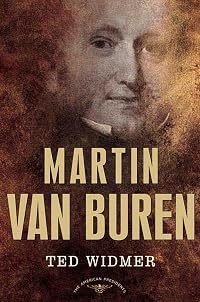
The first president born after America's independence ushers in a new era of no-holds-barred democracy The first "professional politician" to become president, the slick and dandyish Martin Van Buren was to all appearances the opposite of his predecessor, the rugged general and Democratic champion Andrew Jackson. Van Buren, a native Dutch speaker, was America's first ethnic president as well as the first New Yorker to hold the office, at a time when Manhattan was bursting with new arrivals. show more A sharp and adroit political operator, he established himself as a powerhouse in New York, becoming a U.S. senator, secretary of state, and vice president under Jackson, whose election he managed. His ascendancy to the Oval Office was virtually a foregone conclusion. Once he had the reins of power, however, Van Buren found the road quite a bit rougher. His attempts to find a middle ground on the most pressing issues of his day-such as the growing regional conflict over slavery-eroded his effectiveness. But it was his inability to prevent the great banking panic of 1837, and the ensuing depression, that all but ensured his fall from grace and made him the third president to be denied a second term. His many years of outfoxing his opponents finally caught up with him. Ted Widmer, a veteran of the Clinton White House, vividly brings to life the chaos and contention that plagued Van Buren's presidency-and ultimately offered an early lesson in the power of democracy. A portrait of the mid-nineteenth-century president considers his roles as the first president born after American independence, the first ethnic president, and the first New Yorker to hold the office, describing his failed efforts to control such issues as slavery and the great banking panic of 1837. show lessTags
Recommendations






Member Reviews
Short and ever so much more readable than the John Niven bio of Van Buren I tried and failed to finish reading. Van B was an interesting man who was the first "born in America" president. He was a professional politician with a law background. He founded the Democratic Party and had a huge influence on partisan politics in this country. He indirectly founded the Republican Party when he tried again for the presidency as a third party candidate representing the Free Soilers, which eventually became the Republican Party.
This is not a very long biography, but I have to say, its brevity is a feature, not a bug. Its very detailed and the author writes in a very compelling style and I feel like you get a very complete picture of Martin Van Buren, despite it not being an 800 page tome detailing every single aspect of Van Buren's life.
This biography of Martin Van Buren, our 8th President, reminded me of Tom Stoppard's play Rosencrantz & Guildenstern Are Dead, in which Shakespeare's Hamlet is seen through the eyes of two minor characters. In Stoppard's case, the result is very funny, although it helps to know the main story to start with. Here, Van Buren's story, which would seem to be the main topic, is seen only in glimpses sprinkled through a history of the times. For a President so little known to modern readers, the result is frustration.
I'm not sure this is the author's fault, given his subject. Most of Van Buren's career was dedicated to forging a new political party, accomplished by years of backroom (and therefore hidden, even to historians) political show more maneuvering, which often found him promoting a middle ground between opponents he was trying to woo. In many instances he was thought to have no strong views himself, and, unlike his predecessors, he left no reams of correspondence or voluminous diaries to give us a peak at his inner turmoil. (He did leave an autobiography written only late in life.)
Van Buren was the first of a lesser-known group to hold the Presidency between Jackson and Lincoln. It was a difficult time for the nation, as the addition of territory brought to a head the oft-sidetracked issue of slavery. Sectional divisions strengthened, and, like others, Van Buren foresaw the Civil War, but it was only in the late 1840s that he could bring himself to publicly criticize slavery and call for its end, after many years of letting the issue slide as he courted Southerners. Although his presidency was expected to be at least somewhat successful, the economic policies of previous years came to a head within weeks of his inauguration, and the Panic of 1837 was only the beginning of the downswing which led to Van Buren's defeat in 1840. Born near the end of the Revolution, he lived to see the beginning of the Civil War, having survived most of his political contemporaries.
Two quotes of note:
p. 69. To this day we still do not know how close young Andrew Jackson came to throwing his lot in with Burr's efforts to create an American empire outside the jurisdiction of the United States. (OK, that's not a thread I recall from the bio of Jackson I just read.)
p. 16. His failures showed how difficult it was to assemble a democratic coalition in the face of withering pressure from economic chaos, regional discord, and the conservative enemies who never gave him a moment's peace. (Doesn't that sound familiar?)
And I was surprised to read that Davy Crockett wrote a (very negative) biography of him leading up to the election of 1836. (RIP Fess Parker, who died this week.)
For all its brevity and lack of detail on a personal level, this entry in Arthur M. Schlesinger Jr.'s The American Presidents Series is a very readable introduction. I would have liked more information on Van Buren's home life and children, and sometimes the author's style is off-putting, as when he refers to Van Buren by all the cute/sarcastic/nasty nicknames employed by his adversaries. But I found myself drawn in and interested till the end. show less
I'm not sure this is the author's fault, given his subject. Most of Van Buren's career was dedicated to forging a new political party, accomplished by years of backroom (and therefore hidden, even to historians) political show more maneuvering, which often found him promoting a middle ground between opponents he was trying to woo. In many instances he was thought to have no strong views himself, and, unlike his predecessors, he left no reams of correspondence or voluminous diaries to give us a peak at his inner turmoil. (He did leave an autobiography written only late in life.)
Van Buren was the first of a lesser-known group to hold the Presidency between Jackson and Lincoln. It was a difficult time for the nation, as the addition of territory brought to a head the oft-sidetracked issue of slavery. Sectional divisions strengthened, and, like others, Van Buren foresaw the Civil War, but it was only in the late 1840s that he could bring himself to publicly criticize slavery and call for its end, after many years of letting the issue slide as he courted Southerners. Although his presidency was expected to be at least somewhat successful, the economic policies of previous years came to a head within weeks of his inauguration, and the Panic of 1837 was only the beginning of the downswing which led to Van Buren's defeat in 1840. Born near the end of the Revolution, he lived to see the beginning of the Civil War, having survived most of his political contemporaries.
Two quotes of note:
p. 69. To this day we still do not know how close young Andrew Jackson came to throwing his lot in with Burr's efforts to create an American empire outside the jurisdiction of the United States. (OK, that's not a thread I recall from the bio of Jackson I just read.)
p. 16. His failures showed how difficult it was to assemble a democratic coalition in the face of withering pressure from economic chaos, regional discord, and the conservative enemies who never gave him a moment's peace. (Doesn't that sound familiar?)
And I was surprised to read that Davy Crockett wrote a (very negative) biography of him leading up to the election of 1836. (RIP Fess Parker, who died this week.)
For all its brevity and lack of detail on a personal level, this entry in Arthur M. Schlesinger Jr.'s The American Presidents Series is a very readable introduction. I would have liked more information on Van Buren's home life and children, and sometimes the author's style is off-putting, as when he refers to Van Buren by all the cute/sarcastic/nasty nicknames employed by his adversaries. But I found myself drawn in and interested till the end. show less
Well written and gives a good overview of a president who is only slightly known. While it was short on specific details and does not give a detailed daily step by step, but rather concentrates on the larger spread of his centrist positions. It gave me enough of a feel to continue on my quest to read a bio of each president in order. I can see how he fits in the line, and can now go on to read the next.
This book is regarded by many libraries as YA. It is rather erudite in its vocabulary, and presumes the reader has a better than average grasp of history and politics. I found it a pleasant addition to my rather thin knowledge of that era.
This book is regarded by many libraries as YA. It is rather erudite in its vocabulary, and presumes the reader has a better than average grasp of history and politics. I found it a pleasant addition to my rather thin knowledge of that era.
This short biography was well-written and told me a lot about Martin Van Buren's political career. I would've liked to learn more about his personal life and also how he managed to create the modern political party as we know it - unfortunately he got rid of his personal letters and did not write down the specifics on how he actually created the political machine that is his legacy. He did write an autobiography, but as was noted in the biography, it was short on these details as well.
The author tried to give an objective narrative of Van Buren's political career - and he largely succeeds. However, the book contains all kinds of references - sometimes totally not related to the subject - that shows authors biases. The book is short but would be much better without author going on the tangent.
Short and easy to read, if a little dull, biography of our little-known 8th president. This was the man credited with the formation of a national Democratic party at a time when regional parties were more common. He was also the first sitting president to actively seek re-election. Previously, it was considered unseemly to engage in campaigning. Van Buren was the youngest man elected to the office of president to date, after being active in state and local politics in his native New York - the first New Yorker to become president, and distant cousin to fellow NY presidents Franklin and Theodore Roosevelt. Van Buren's term in office saw the economic panic of 1837 and the continuation of disagreements over slavery which eventually led to show more the civil war.
The book is part of the American Presidents series of books - short and generally well-written biographies of most of our former leaders. This volume was written by Bill Clinton's head speech writer and contained several uncalled-for jabs at Reagan and both Bushes, as well as unnecessary adulations of Clinton, Kennedy and LBJ. I couldn't understand why any of these men are relevent to a biography of Van Buren, and the blatant partisianship caused me to have serious doubts about the author's dependability. There are relatively few biographies of Van Buren available and this one is easily obtainable which makes it a good choice for the person with only a casual interest in learing about Martin Van Buren. show less
The book is part of the American Presidents series of books - short and generally well-written biographies of most of our former leaders. This volume was written by Bill Clinton's head speech writer and contained several uncalled-for jabs at Reagan and both Bushes, as well as unnecessary adulations of Clinton, Kennedy and LBJ. I couldn't understand why any of these men are relevent to a biography of Van Buren, and the blatant partisianship caused me to have serious doubts about the author's dependability. There are relatively few biographies of Van Buren available and this one is easily obtainable which makes it a good choice for the person with only a casual interest in learing about Martin Van Buren. show less
Members
- Recently Added By
Lists

The Presidents
42 works; 2 members

Best Biographies of U.S. Presidents
61 works; 6 members
Author Information

16 Works 1,471 Members
Ted Widmer is a Distinguished Lecturer at Macaulay Honors College of the City University of New York. He writes actively about American history in The Washington Post, The New Yorker, and The New York Times, where he helped create the Disunion feature about the Civil War.
Series

Common Knowledge
- Canonical title
- Martin Van Buren
- Original title
- 2005
- Original publication date
- 2005-01-05
- People/Characters
- Martin van Buren; John Quincy Adams; Aaron Burr; John C. Calboun; DeWitt Clinton; Andrew Jackson
- Important places
- Kinderhook, New York, USA; New York, USA
- Important events
- Second Bank of the United States; Panic of 1837
- Dedication
- For Two Grandfathers Who Loved History:
EDWARD MASON REED III
ROBERT JEAN RENE WIDMER
and for
FREDDY - First words
- The president is the central player in the American political order. (Editor's Note)
In June 1854, a small, elderly man rented rooms overlooking the central plaza of Sorrento, the ancient city jutting into the Mediterranean from a peninsula south of Naples. (Prologue)
Legend has it that Martin van Buren was once received at a royal reception by Queen Adelaide of the Netherlands. - Last words
- (Click to show. Warning: May contain spoilers.)It is in the voting booth, not on the presidential desk, that the buck finally stops. (Editor's Note)
(Click to show. Warning: May contain spoilers.)Perhaps this profile will begin the process of explaining him more fully, expanding upon the effort he began alongside the Mediterranean, with the Sirens singing their entreaties and Clio whispering in his ear. (Prologue)
(Click to show. Warning: May contain spoilers.)It's a hell of a place.
Classifications
- Genres
- History, Nonfiction, Biography & Memoir, General Nonfiction
- DDC/MDS
- 973.5 — History & geography History of North America United States Jacksonian Era (1809-1837)
- LCC
- E387 .W535 — History of the United States United States Revolution to the Civil War, 1775/1783-1861 By period Early nineteenth century, 1801/1809-1845 Van Buren's administration, 1837-1841
- BISAC
Statistics
- Members
- 282
- Popularity
- 114,577
- Reviews
- 7
- Rating
- (3.39)
- Languages
- English
- Media
- Paper, Ebook
- ISBNs
- 3
- ASINs
- 2