On This Page
Description
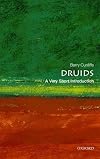
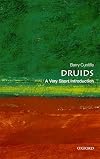
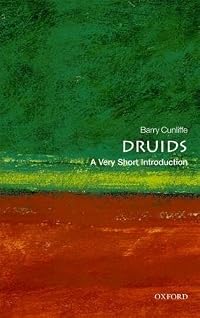
The Druids have been known and discussed for over 2,000 years few figures flit so elusively through history. Enigmatic and puzzling, the lack of knowledge about them as resulted in a wide spectrum of interpretations. Barry Cunliffe examines their origins, the evidence for their beliefs and practices, and how we interpret them today.Tags
Recommendations












Member Reviews
Another nice very short introduction to European prehistory. I appreciate the scholarly objective approach to this subject that is often romanticized. The idea of druids has often fascinated me but I always knew that my dungeons and dragons version was way off base. Not that this little volume clears up everything necessarily, but it certainly shows that we do not know much about what it really meant to be a druid in the 1st millennium BC. The archealogical evidence is sparse and the literary evidence is mostly propaganda.There is a lot to be said about mystery though. Yet, I agree with Mr. Cunliffe's conclusions wholeheartedly. What is almost more interesting is his chapter on how romantic era Brits were so eager to create a fake show more druidic history so that the longing for some historical identity could be satisfied. This is very similar to Mr. Cunliffe's work on Celtic history. What we call LARPing and SCA in the US can easily be transposed over 18th and 19th century philanthropic organizations where proper businessmen dressed up like wizards on the weekend and chanted nonsense at each other in order to feel connected to something. show less
61. Druids : A Very Short Introduction by Barry Cunliffe (2010, 240 pages, read Nov 7-11)
I really like the idea of the "Very Short Introduction" series. Cunliffe has written summaries on the archeology of Celts and on of Europe through AD 1000. He presents some great and complex ideas in his books (whether the ideas are his, or common among many, I can't say). He keeps this one simple, making a point of separating modern Druids from the ancients (any connection is purely one of wishful thinking), and of separating the archeology and ancient written record on the Druids. It's a good summary. He notes that the Celts had a three cultural leaders of sorts - seers who probably filled something like a shaman's or fortune tellers roll, bards show more who preserved the stories, and the druids who preserved the knowledge. In this logic he connects the Druids with the much more ancient megalithic structures in Europe. In his words, "There can be little doubt that the belief systems evident in the last four centuries or so of the 1st millenium BC—the time of the historical Druids—were the result of a longue duree of development and refinement spanning several millennia. The druidic class, then, were the inheritors of ancient wisdom."
In Ireland, where the Druidic Celts were never conquered, it was Christianity that did the Druids in. In the cultural trivectum, the roll of the Druids was replaced by the clergy. I don't recall what happened to the seers. The bards continued on for some time into the Christianized culture.
(You can find this review on my LT thread here: http://www.librarything.com/topic/138560#3772057 ) show less
I really like the idea of the "Very Short Introduction" series. Cunliffe has written summaries on the archeology of Celts and on of Europe through AD 1000. He presents some great and complex ideas in his books (whether the ideas are his, or common among many, I can't say). He keeps this one simple, making a point of separating modern Druids from the ancients (any connection is purely one of wishful thinking), and of separating the archeology and ancient written record on the Druids. It's a good summary. He notes that the Celts had a three cultural leaders of sorts - seers who probably filled something like a shaman's or fortune tellers roll, bards show more who preserved the stories, and the druids who preserved the knowledge. In this logic he connects the Druids with the much more ancient megalithic structures in Europe. In his words, "There can be little doubt that the belief systems evident in the last four centuries or so of the 1st millenium BC—the time of the historical Druids—were the result of a longue duree of development and refinement spanning several millennia. The druidic class, then, were the inheritors of ancient wisdom."
In Ireland, where the Druidic Celts were never conquered, it was Christianity that did the Druids in. In the cultural trivectum, the roll of the Druids was replaced by the clergy. I don't recall what happened to the seers. The bards continued on for some time into the Christianized culture.
(You can find this review on my LT thread here: http://www.librarything.com/topic/138560#3772057 ) show less
Packs a lot in a small package - a good overview of the subject for those new to the subject and for some of those not so new. A nice blend of history and archaeology which makes it clear how little we actually know about the early druids.
Very thorough. A bit too much. A little repetitious.
Ratings
Members
- Recently Added By
Author Information

112+ Works 5,263 Members
Barry Cunliffe, a professor of European archaeology at the University of Oxford, is the author of several books on the Romans and on Celtic and Iron Age Europe. He lives in Oxford, England. (Publisher Fact Sheets) Sir Barrington Windsor "Barry" Cunliffe is a British archaeologist and academic. He was Professor of European Archaeology at the show more University of Oxford. Cunliffe was born on December 10, 1939. He became a professor at an early age and became involved in the excavation of the Fishbourne Roman Palace in Sussex. Cunliffe was knighted on June 17, 2006. Some of his publications include: Fishbourne: A Roman Palace and Its Garden; The Celtic World; Facing the Ocean: The Atlantic and Its Peoples, 8000 BC to AD 1500; The Extraordinary Voyage of Pytheas the Greek: The Man Who Discovered Britain; and Britain Begins. (Bowker Author Biography) show less
Series

Common Knowledge
- Canonical title
- Druids: A Very Short Introduction
- Original title
- Druids: A Very Short Introduction
- Original publication date
- 2010
- People/Characters
- druids
- Important places
- Stonehenge
- First words
- Every midsummer solstice hundreds of 'Druids' flock to Stonehenge in the middle of Salisbury Plain to celebrate the midsummer sunrise.
- Last words
- (Click to show. Warning: May contain spoilers.)By the 17th century — the Druids long gone — the last remnants of the ancient tradition of an intellectual elite had faded into the landscape.
- Original language
- English
Classifications
- Genres
- Nonfiction, Religion & Spirituality, History, General Nonfiction
- DDC/MDS
- 299.16 — Religion Other religions Shintoism/Taoism/Other Mythologies Indo-European Celtic, Druid
- LCC
- BL910 .C86 — Philosophy, Psychology and Religion Religions. Mythology. Rationalism Religions. Mythology. Rationalism History and principles of religions European. Occidental Other European
- BISAC
Statistics
- Members
- 178
- Popularity
- 180,284
- Reviews
- 4
- Rating
- (3.77)
- Languages
- Dutch, English
- Media
- Paper, Audiobook, Ebook
- ISBNs
- 6
- ASINs
- 5