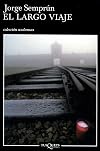
The Long Voyage
by Jorge Semprún
On This Page
Description
Gasping for breath in a cattle truck occupied by 119 other men, a young Spaniard captured fighting with the French Resistance counts off the days and nights as the train rolls slowly but inexorably toward Buchenwald. On the five seemingly endless days of the journey, he has conversations that send him into daydreams about his childhood or set him fighting Resistance battles over again. He describes the temporary holding prison where the names of distant concentration camps are spoken of in show more whispers - their individual horrors discussed, rated, contemplated. In chilling detail, the trip with those 119 men - some fearful, some defiant - is evoked, along with his own confusion, anger, and bitter resignation. When at last the fantastic, Wagnerian gates to Buchenwald come into sight, the young Spaniard is left alone to face the camp. show lessTags
Recommendations



































Member Reviews
Jorge Semprun has lived the novel he writes. He was in the French Resistance, captured, and deported to Buchenwald, where he spent two years. He was 21 years old when he was liberated. Yet, Semprun choses to write this, his first novel, as fiction. He uses as the structure of the book, his five-day train ride to the concentration camp in the winter of 1943. Within this basic frame, Semprun reflects on the decisions that led him to being in that cattle car with 99 other men, the nature of freedom and captivity, and his life back on the outside post-liberation. The unique method of organization, with flashbacks and forwards, provides depth to the story and mimics the way our minds travel, when our bodies can not.
Semprun is the best French novelist of the second half of the 20th century (it has been a terrible time for French literature, no surprise that the light came from Spain). The book is about the travel in train of war prisoners from France to the concentration camp of Buchenwald. If members of your family have seen terrible things during any war, Vietnam or Iraq, you know that they do not talk about it. Not for ten or twenty years. It happened to Semprun after WWII: he did not talk about the camps until 1963, and even then, in this beautiful novel full or restraint, he does not talk about Buchenwald: he just describes the long voyage to the camp. It is horrible enough. Semprun is above all a great writer, with style, strong images and a show more good sense of composition. This book is about learning "to stay inside yourself",as he says, true to yourself. Semprun is not translated enough. He had an interesting career, as a young communist aristocrat (when he was 16), a resistant, years of intellectual misery when he discovered what communism really was, then as a Minister of Culture in the Spanish government. What is left for us is an incomparable writer. I tagged this a "life changing book" because at the end of the book, coming out of the camp, Semprun decides not to be a "veteran" but to fight again. show less
We were not there. One has to bypass Adorno. Acknowledging that, a sensual inventory of the Shoah becomes an imperative. Fatelessness is an example of such, as is this. It is a challenge. Semprun achieves the act, the consummation. Suggestions wilt, cower and abandon. He perseveres.
We do not know. Semprun relates, he apprehends, he fashions the verse from ash and yields a chuckle as gratuity.
We do not know. Semprun relates, he apprehends, he fashions the verse from ash and yields a chuckle as gratuity.
One of the most powerful accounts of the Holocaust I know of. Intense, unrelenting...almost unendurably sad.
Seize ans après avoir survécu à l'enfer concentrationnaire nazi, Jorge Semprun se remémore chaque minute de son voyage vers les camps. C'est un incessant aller-retour dans sa mémoire entre les évènements d'avant, d'après et de pendant... chaque minutes qui reviennent à sa mémoire le renvoie vers d'autre souvenirs, un paysage, une personne, une situation, une sensation qui eux-mêmes lui font se rémémorer d'autres paysages, d'autres personnes, pour revenir inlassablement à ce long voyage de quatre jours et cinq nuits, enfermé dans un wagon bestiaux avec 119 autres déportés. Voyage angoissant, douloureux où le tragique côtoie parfois le comique absurde.
Tout au long de ce récit, ce flot de souvenir, Jorge Semprun, avec show more beaucoup d'honnêteté, montre de manière magistrale comment ses réflexions, ses questionnements ont pu évoluer, se modifier, enrichis par ces seize années d'attente avant d'écrire. Ses souvenirs reviennent à sa mémoire au travers d'un filtre qui modifie considérablement la perception des choses, sur la mort, l'homme : c'est un survivant. Alors comme pour de nombreux déportés revenus se pose la question : comment en parler ? comment décrire l'innommable ? comment rendre perceptible l'enfer ? Mais surtout comment faire pour que la réalité indescriptible reste dans la mémoire de l'humanité même lorsque tous les acteurs de cette tragédie auront disparu.
Le grand voyage est le premier livre de Jorge Semprun. Lorsque l'on referme le roman, on comprend que l'auteur n'était pas encore prêt à parler des camps... il parle, décrit l'avant et l'après, le grand voyage et les premiers jours de la libération. Entre il y a un grand trou noir, un ailleurs.
Voici les derniers mots de ce formidable roman, lorsque l'auteur atteint les portes du camp :
"Gérard essaye de conserver la mémoire de tout ceci, tout en pensant d'une manière vague qu'il est dans le domaine des choses possibles que la mort prochaine de tous les spectateurs vienne effacer à tout jamais la mémoire de ce spectacle, ce qui serait dommage, il ne sait pas pourquoi, il faut remuer des tonnes de coton neigeux dans son cerveau, mais ce serait dommage, la certitude confuse de cette idée l'habite, et il lui semble bien, tout à coup, que cette musique noble et grave prend son envol, ample, serein, dans la nuit de janvier, il lui semble bien qu'ils en arrivent par là au bout du voyage, que c'est ainsi, en effet, parmi les vagues sonores de cette noble musique, sous la lumière glacée éclatant en gerbes mouvantes, qu'il faut quitter le monde des vivants, cette phrase toute faite tournoie vertigineusement dans les replis de son cerveau embué comme une vitre par les rafales d'une pluie rageuse, quitter le monde des vivants, quitter le monde des vivants."
Le livre est construit en deux parties. La première partie, la plus importante c'est l'auteur qui parle, qui se souvient, raconte ce grand voyage, la résistance, la libération des camps, la mort, la terreur, la torture, les SS, la fraternité entre déportés, entre résistants. Semprun nous délivre des passages d'une puissance incroyable notamment sur sa vision des allemands, le soldat allemand pendant sa détention à Auxerre, l'enfant qui les insulte lors d'une halte dans une gare où les habitants du village aux abords du camp, où il ne les condamne pas, ne les juge pas et analyse avec les seize années de recul. Puis la seconde partie, bascule dans le roman, c'est Gérard, nom d'emprun de l'auteur, que l'on suit à l'entrée du camp. Très courte seconde partie mais très intense.
Un style très particulier, difficile dans les premières pages, puis la poésie fait son effet et on se laisse embarquer dans les méandres des souvenirs et les réflexions de Jorge Semprun. Un texte magnifique, terrifiant. show less
Tout au long de ce récit, ce flot de souvenir, Jorge Semprun, avec show more beaucoup d'honnêteté, montre de manière magistrale comment ses réflexions, ses questionnements ont pu évoluer, se modifier, enrichis par ces seize années d'attente avant d'écrire. Ses souvenirs reviennent à sa mémoire au travers d'un filtre qui modifie considérablement la perception des choses, sur la mort, l'homme : c'est un survivant. Alors comme pour de nombreux déportés revenus se pose la question : comment en parler ? comment décrire l'innommable ? comment rendre perceptible l'enfer ? Mais surtout comment faire pour que la réalité indescriptible reste dans la mémoire de l'humanité même lorsque tous les acteurs de cette tragédie auront disparu.
Le grand voyage est le premier livre de Jorge Semprun. Lorsque l'on referme le roman, on comprend que l'auteur n'était pas encore prêt à parler des camps... il parle, décrit l'avant et l'après, le grand voyage et les premiers jours de la libération. Entre il y a un grand trou noir, un ailleurs.
Voici les derniers mots de ce formidable roman, lorsque l'auteur atteint les portes du camp :
"Gérard essaye de conserver la mémoire de tout ceci, tout en pensant d'une manière vague qu'il est dans le domaine des choses possibles que la mort prochaine de tous les spectateurs vienne effacer à tout jamais la mémoire de ce spectacle, ce qui serait dommage, il ne sait pas pourquoi, il faut remuer des tonnes de coton neigeux dans son cerveau, mais ce serait dommage, la certitude confuse de cette idée l'habite, et il lui semble bien, tout à coup, que cette musique noble et grave prend son envol, ample, serein, dans la nuit de janvier, il lui semble bien qu'ils en arrivent par là au bout du voyage, que c'est ainsi, en effet, parmi les vagues sonores de cette noble musique, sous la lumière glacée éclatant en gerbes mouvantes, qu'il faut quitter le monde des vivants, cette phrase toute faite tournoie vertigineusement dans les replis de son cerveau embué comme une vitre par les rafales d'une pluie rageuse, quitter le monde des vivants, quitter le monde des vivants."
Le livre est construit en deux parties. La première partie, la plus importante c'est l'auteur qui parle, qui se souvient, raconte ce grand voyage, la résistance, la libération des camps, la mort, la terreur, la torture, les SS, la fraternité entre déportés, entre résistants. Semprun nous délivre des passages d'une puissance incroyable notamment sur sa vision des allemands, le soldat allemand pendant sa détention à Auxerre, l'enfant qui les insulte lors d'une halte dans une gare où les habitants du village aux abords du camp, où il ne les condamne pas, ne les juge pas et analyse avec les seize années de recul. Puis la seconde partie, bascule dans le roman, c'est Gérard, nom d'emprun de l'auteur, que l'on suit à l'entrée du camp. Très courte seconde partie mais très intense.
Un style très particulier, difficile dans les premières pages, puis la poésie fait son effet et on se laisse embarquer dans les méandres des souvenirs et les réflexions de Jorge Semprun. Un texte magnifique, terrifiant. show less
Dec 6, 2012French
« Il y a cet entassement des corps dans le wagon, cette lancinante douleur dans le genou droit. Les jours, les nuits. Je fais un effort et j'essaye de compter les jours, de compter les nuits. Ça m'aidera peut-être à y voir clair. Quatre jours, cinq nuits. Mais j'ai du mal à compter ou alors il y a des jours qui se sont changés en nuits. J'ai des nuits en trop ; des nuits à revendre. Un matin, c'est sûr, c'est un matin que ce voyage a commencé... »
Jun 7, 2011French
Jorge Sempruns große Reise dauert vier Tage und fünf Nächte. Es handelt sich dabei um die Deportation von 119 Gefangenen aus dem französischen Internierungslager Compiègne ins KZ Buchenwald in einem Gütterwagon.
Jahre später erinnert sich der Ich-Erzähler, ein ursprünglich nach Frankreich geflohener Rotspanier, an diesen Transport. Ohne chronologischem Erzählstrang und voller Rückblenden, Reflexionen und Ausblicken berichtet Semprun von diesem traumatischen Erlebnis, aber auch vom Widerstandskampf im Maquis, dem Leben in Gefangenschaft, der Selbstbefreiung und dem schwierigen Sich-Zurechtfinden im Nachkriegseuropa.
Trotz des sprunghaften Erzählstils und den oftmals vage bleibenden Reminiszenzen ist Sempruns autobiographischer show more Roman flüssig zu lesen. Semprun literarischer Versuch der eigenen Vergangenheitsbewältigung bietet einen Blick auf die NS-Vernichtungsmaschinerie aus einem ungewöhnlichen Blickwinkel und ist gerade deshalb wertvoll und lesenswert. show less
Jahre später erinnert sich der Ich-Erzähler, ein ursprünglich nach Frankreich geflohener Rotspanier, an diesen Transport. Ohne chronologischem Erzählstrang und voller Rückblenden, Reflexionen und Ausblicken berichtet Semprun von diesem traumatischen Erlebnis, aber auch vom Widerstandskampf im Maquis, dem Leben in Gefangenschaft, der Selbstbefreiung und dem schwierigen Sich-Zurechtfinden im Nachkriegseuropa.
Trotz des sprunghaften Erzählstils und den oftmals vage bleibenden Reminiszenzen ist Sempruns autobiographischer show more Roman flüssig zu lesen. Semprun literarischer Versuch der eigenen Vergangenheitsbewältigung bietet einen Blick auf die NS-Vernichtungsmaschinerie aus einem ungewöhnlichen Blickwinkel und ist gerade deshalb wertvoll und lesenswert. show less
Dec 28, 2020German
Members
- Recently Added By
Lists

Favourite Books
1,820 works; 316 members
Author Information

70+ Works 2,384 Members
Some Editions
Awards and Honors
Awards
Notable Lists
Series
Belongs to Publisher Series
Work Relationships
Is contained in
Common Knowledge
- Canonical title
- The Long Voyage
- Original title
- Le grand voyage
- Alternate titles*
- De grote reis : roman
- Original publication date
- 1963
- People/Characters
- Jorge Semprun
- Important places
- Buchenwald concentration camp, Weimar, Thuringia, Germany; Spain; France
- Important events
- World War II; Holocaust; French Resistance
- First words*
- Er is die opeenhoping van lichamen in de wagen, die stekende pijn in de rechterknie.
- Original language*
- Frans
*Some information comes from Common Knowledge in other languages. Click "Edit" for more information.
Classifications
Statistics
- Members
- 432
- Popularity
- 71,632
- Reviews
- 14
- Rating
- (3.99)
- Languages
- 12 — Catalan, Dutch, English, Estonian, Finnish, French, German, Hungarian, Italian, Portuguese, Spanish, Turkish
- Media
- Paper
- ISBNs
- 32
- ASINs
- 9