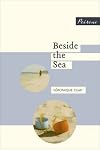
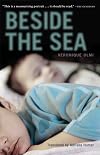
Beside the Sea
by Veronique Olmi
On This Page
Description
Fiction. Literature. HTML:A single mother takes her two sons on a trip to the seaside. They stay in a hotel, drink hot chocolate, and go to the funfair. She wants to protect them from an uncaring and uncomprehending world. She knows that it will be the last trip for her boys.Beside the Sea is a haunting and thought-provoking story about how a mother's love for her children can be more dangerous than the dark world she is seeking to keep at bay. It's a hypnotizing look at an unhinged mind show more and the cold society that produced it. With language as captivating as the story that unfolds, Véronique Olmi creates an intimate portrait of madness and despair that won't soon be forgotten. show less
Tags
Recommendations















































Member Recommendations


Member Reviews
With the first line I was sucked in to her mind:
"We took the bus, the last bus of the evening, so no one would see us."
A mom and her two young boys. A spontaneous trip to the seaside. Disquiet. A bit ominous. What’s going on, mom? Mom is fraying, and has been for a while. There are only opaque hints of the backstory, of the life before this mini-holiday. It feels claustrophobic being here in her mind, there are two of us in here but it seems only one of us can see clearly. It’s clear this mom loves her boys above all else, and also painfully and poignantly clear that she can not cope with even a stripped down reality.
Intense empathy. That is what this story evokes. So powerful.
I'm loving these books from Peirene Press, "...first show more class European literature in high quality translation." This novella was a bestseller in France, "Bord de Mer", and was staged in London a couple of years ago.
They are slim novels / novellas, promoted as books to read in less than 2 hours. But the ones I've read have packed in a lot more than a mere two hours worth of story. show less
"We took the bus, the last bus of the evening, so no one would see us."
A mom and her two young boys. A spontaneous trip to the seaside. Disquiet. A bit ominous. What’s going on, mom? Mom is fraying, and has been for a while. There are only opaque hints of the backstory, of the life before this mini-holiday. It feels claustrophobic being here in her mind, there are two of us in here but it seems only one of us can see clearly. It’s clear this mom loves her boys above all else, and also painfully and poignantly clear that she can not cope with even a stripped down reality.
Intense empathy. That is what this story evokes. So powerful.
I'm loving these books from Peirene Press, "...first show more class European literature in high quality translation." This novella was a bestseller in France, "Bord de Mer", and was staged in London a couple of years ago.
They are slim novels / novellas, promoted as books to read in less than 2 hours. But the ones I've read have packed in a lot more than a mere two hours worth of story. show less
This is a rare treasure of a book.
Written in the first person, it tells of a single Mother's journey to the seaside with her 2 young sons. However, this is no holiday treat and it is clear from the beginning that there will be a devastating end to the story.
The writing is first class and no detail is spared and yet we are left not knowing how and why some things have happened to this young Mother. Veronique Olmi's understanding of children and how they think is wonderful and you feel every tear the youngest child sheds and the "little man" bravery of the nine year old. It leaves you wondering how things could get this far. Did no one "care" enough. The family is obviously under the care of social services,doctors, health visitors and a show more teacher who senses all is not well. These people are not the only ones to blame...ordinary citizens let them down in the short time we are with them and it makes you ashamed to be part of the human race.
A must read form a very talented and insightful author. show less
Written in the first person, it tells of a single Mother's journey to the seaside with her 2 young sons. However, this is no holiday treat and it is clear from the beginning that there will be a devastating end to the story.
The writing is first class and no detail is spared and yet we are left not knowing how and why some things have happened to this young Mother. Veronique Olmi's understanding of children and how they think is wonderful and you feel every tear the youngest child sheds and the "little man" bravery of the nine year old. It leaves you wondering how things could get this far. Did no one "care" enough. The family is obviously under the care of social services,doctors, health visitors and a show more teacher who senses all is not well. These people are not the only ones to blame...ordinary citizens let them down in the short time we are with them and it makes you ashamed to be part of the human race.
A must read form a very talented and insightful author. show less
 This review was written for LibraryThing Early Reviewers.
Beside the Sea is a translation of a French book Bord de Mer, the first novel from acclaimed dramatist Véronque Olmi. First published in 2001, this novel has been translated into all major European languages. On the surface, this seems to be a sweet story about a mother taking her children on a trip to the seaside. However, digging a little deeper reveals a darker undercurrent. This is no joyful jaunt to sun, surf and sand. Instead, we discover a deeply disturbed mother, already on the edge, afraid for the life of poverty and exclusion that she fears her boys are destined to lead. Determined to give them at least one happy memory, she takes them on a holiday that she cannot afford and has not properly planned.
We are introduced to the show more two little boys, Stan and Kevin, through the eyes of their mother allowing us to develop a proxy parental concern for them. The story is told from within their mother’s mind but she remains nameless, allowing us to feel empathy for her while still keeping her at arms distance.
Seeing the experiences of this family through the eyes of the boys gives a sense of wonder and delight, but the covering veil of the mother’s thoughts and emotions and the constant presence of rain gives the story a continual sense of darkness that leads to a disharmony – a sense that something is not quite right.
As a mother who has experienced the depths of depression, I can totally relate to this mother’s concerns and despair when she considers sending her boys out into this dark and dreary world. But the very fact that I am lucky enough to be on the road to recovery makes the climax of this book all the more tragic. There, but for the grace of the Gods go I.
At only 111 pages, Beside the Sea is quite short, but don’t let that fool you into believing that it is a light read. It is not. This story will have you delving into the deepest, darkest parts of your soul and some may not like what they find.
Overall, this is a superbly written book with a small but well-developed cast. The author’s theatrical influence can definitely be felt in the vividly described scenery and clear transition between scenes.
Despite the quality of the writing, Beside the Sea is not for everyone. Delving into the dark side of motherhood, coupled with a deeply disturbing climax, could be upsetting to many readers, particularly parents. For those brave enough to read this book, I highly recommend picking up a copy. It is very much worth it. show less
We are introduced to the show more two little boys, Stan and Kevin, through the eyes of their mother allowing us to develop a proxy parental concern for them. The story is told from within their mother’s mind but she remains nameless, allowing us to feel empathy for her while still keeping her at arms distance.
Seeing the experiences of this family through the eyes of the boys gives a sense of wonder and delight, but the covering veil of the mother’s thoughts and emotions and the constant presence of rain gives the story a continual sense of darkness that leads to a disharmony – a sense that something is not quite right.
As a mother who has experienced the depths of depression, I can totally relate to this mother’s concerns and despair when she considers sending her boys out into this dark and dreary world. But the very fact that I am lucky enough to be on the road to recovery makes the climax of this book all the more tragic. There, but for the grace of the Gods go I.
At only 111 pages, Beside the Sea is quite short, but don’t let that fool you into believing that it is a light read. It is not. This story will have you delving into the deepest, darkest parts of your soul and some may not like what they find.
Overall, this is a superbly written book with a small but well-developed cast. The author’s theatrical influence can definitely be felt in the vividly described scenery and clear transition between scenes.
Despite the quality of the writing, Beside the Sea is not for everyone. Delving into the dark side of motherhood, coupled with a deeply disturbing climax, could be upsetting to many readers, particularly parents. For those brave enough to read this book, I highly recommend picking up a copy. It is very much worth it. show less
This review was written for LibraryThing Early Reviewers."When it came to an end that was where we belonged. We knew that"
By sally tarbox on 8 March 2018
Format: Kindle Edition
Read in one sitting: a woman takes her two sons - nine and five - on a trip to see the sea. But this is no jolly holiday memoir: the mother (narrator) is very obviously massively mentally ill. Her eldest son is very aware:
"Stan kept giving me suspicious looks like when I just sit in the kitchen and he watches me, thinking I don't know he's there, barefoot in his pyjamas, I don't even have the strength to say Don't stay there with nothing on your feet, Stan. Yep, sometimes I sit in the kitchen for hours and I couldn't give a stuff about anything."
She's planned this treat, saved up bags of change. But the whole thing is show more ill-thought ot, it's cold, wet,they can't afford to feed themselves, the hotel's awful. As the pressures build up, she resorts to sleep... But we have hints throughout that bode ill. Builds to a horrifying climax.
Amazing writing - one you'll never forget. show less
By sally tarbox on 8 March 2018
Format: Kindle Edition
Read in one sitting: a woman takes her two sons - nine and five - on a trip to see the sea. But this is no jolly holiday memoir: the mother (narrator) is very obviously massively mentally ill. Her eldest son is very aware:
"Stan kept giving me suspicious looks like when I just sit in the kitchen and he watches me, thinking I don't know he's there, barefoot in his pyjamas, I don't even have the strength to say Don't stay there with nothing on your feet, Stan. Yep, sometimes I sit in the kitchen for hours and I couldn't give a stuff about anything."
She's planned this treat, saved up bags of change. But the whole thing is show more ill-thought ot, it's cold, wet,they can't afford to feed themselves, the hotel's awful. As the pressures build up, she resorts to sleep... But we have hints throughout that bode ill. Builds to a horrifying climax.
Amazing writing - one you'll never forget. show less
From the opening sentence, I knew there was something different about this book: We took the bus, the last bus of the evening, so no one would see us. I was instantly intrigued and wary. Why would a mother and her two young sons want to leave home unnoticed? The bus takes them to a seaside town, to fulfill the mother's wish that her boys see the ocean. The nameless mother provides the narrative, and the more I lived inside her head, the greater my fear and trepidation. It's clear she loves her sons, and wants to preserve their childhood as long as possible:
he jumps onto my bed and asks me to give him a farty kiss, that's a big kiss on his tummy which makes a lot of noise and it makes him laugh so much you wouldn't believe it, it's like show more he's laughing to hear himself laugh, that he's making the most of that laughter, having fun with it, and I know that a laugh like that runs away the minute you grow up. (p. 32)
But little by little, the story reveals a troubled soul. The holiday is stressful in the way holidays with young children can be. The weather is horrible, and she must deal with two little boys, cooped up in a sixth-floor hotel room accessible only by stairs. But she is also overcome by anxiety and paranoia. Having scraped together all the spare change in the house to spend on treats, she is convinced local merchants are looking down on her for paying with coins instead of notes. Eventually her anxiety gets the better of her, and she escapes into sleep, leaving the boys to fend for themselves in the hotel room:
I left everything, left that town and myself along with it: my body was weightless, painless, I sank into something soft and I shed my fear and anger, and my shame too. I went to a world where there's a place kept for me. Not asleep and not awake, I'm a feather. Not asleep and not awake, but I come undone, I sprawl out look a cotton reel unwinding. Why did I topple over the edge then? Why did I start to dream? (p. 59)
The young family's loneliness and desperation was so sad, and I was completely immersed in the mother's unraveling. But I still gasped out loud when the novella reached its inevitable climax. This is a beautifully written story, but one that will haunt me for quite some time. show less
he jumps onto my bed and asks me to give him a farty kiss, that's a big kiss on his tummy which makes a lot of noise and it makes him laugh so much you wouldn't believe it, it's like show more he's laughing to hear himself laugh, that he's making the most of that laughter, having fun with it, and I know that a laugh like that runs away the minute you grow up. (p. 32)
But little by little, the story reveals a troubled soul. The holiday is stressful in the way holidays with young children can be. The weather is horrible, and she must deal with two little boys, cooped up in a sixth-floor hotel room accessible only by stairs. But she is also overcome by anxiety and paranoia. Having scraped together all the spare change in the house to spend on treats, she is convinced local merchants are looking down on her for paying with coins instead of notes. Eventually her anxiety gets the better of her, and she escapes into sleep, leaving the boys to fend for themselves in the hotel room:
I left everything, left that town and myself along with it: my body was weightless, painless, I sank into something soft and I shed my fear and anger, and my shame too. I went to a world where there's a place kept for me. Not asleep and not awake, I'm a feather. Not asleep and not awake, but I come undone, I sprawl out look a cotton reel unwinding. Why did I topple over the edge then? Why did I start to dream? (p. 59)
The young family's loneliness and desperation was so sad, and I was completely immersed in the mother's unraveling. But I still gasped out loud when the novella reached its inevitable climax. This is a beautifully written story, but one that will haunt me for quite some time. show less
Just a novella, only 111 pages long, but Beside the Sea took an eternity to read because by page 15 I knew what was going to happen, and I didn’t want it to.
An un-named narrator speaks in an incoherent babble, prattling on about irrelevant things as the desperate do when they don’t want others to know what’s really on their minds. Her anxiety is palpable. She’s set out on a journey to the seaside with her two children, but it’s not a pleasure trip. Her older son is suspicious, as well he might be, because she can’t help but alert the reader to her intentions. She’s using up the last of her pitiful store of money, because nothing matters any more.
We can tell that she’s been letting the kids down. She’s not much good at show more carrying things since she broke her collar bone, she’s not been there when they get up in the morning to go to school and she’s been getting day and night confused.. Now she’s forgotten the little one’s ‘noonoo’ (some kind of comforter), she’s disorientated and she’s not confident about finding her way. The trip’s a big disappointment too: the weather’s miserable, everything is dark, the hotel is cramped and dingy.
And she hasn’t taken her medicine.
***
The book is beautifully presented with a smart cover but the pages fell apart as I read it. As a librarian, I find this really annoying because we all have better things to do than mend books after just one reading.
For links to other reviews visit
see http://anzlitlovers.wordpress.com/2010/04/01/beside-the-sea-by-veronique-olmi/ - but be careful - some of them have major spoilers. show less
An un-named narrator speaks in an incoherent babble, prattling on about irrelevant things as the desperate do when they don’t want others to know what’s really on their minds. Her anxiety is palpable. She’s set out on a journey to the seaside with her two children, but it’s not a pleasure trip. Her older son is suspicious, as well he might be, because she can’t help but alert the reader to her intentions. She’s using up the last of her pitiful store of money, because nothing matters any more.
We can tell that she’s been letting the kids down. She’s not much good at show more carrying things since she broke her collar bone, she’s not been there when they get up in the morning to go to school and she’s been getting day and night confused.. Now she’s forgotten the little one’s ‘noonoo’ (some kind of comforter), she’s disorientated and she’s not confident about finding her way. The trip’s a big disappointment too: the weather’s miserable, everything is dark, the hotel is cramped and dingy.
And she hasn’t taken her medicine.
***
The book is beautifully presented with a smart cover but the pages fell apart as I read it. As a librarian, I find this really annoying because we all have better things to do than mend books after just one reading.
For links to other reviews visit
see http://anzlitlovers.wordpress.com/2010/04/01/beside-the-sea-by-veronique-olmi/ - but be careful - some of them have major spoilers. show less
This review was written for LibraryThing Early Reviewers.This dark short novella translated from French by Pereine Press centres around a mother taking a trip with her two small boys to stay in a wet and dreary sea side town. It's a profoundly sad tale of a woman who is struggling with mental illness, motherhood and social poverty.
The holiday has been planned in the wrong season with expectations of enjoyment for the children that will never be realised. We experience through her first person narrative the never-ending rain, their financial hardship and the mother's severely distorted thought process of what other people think of her.
It's a superbly written but deeply sad account of serious mental illness and tragedy.
4 stars for the fantastic writing, but the terribly sad tale makes for an show more appreciative read rather than necessarily an enjoyable one. show less
The holiday has been planned in the wrong season with expectations of enjoyment for the children that will never be realised. We experience through her first person narrative the never-ending rain, their financial hardship and the mother's severely distorted thought process of what other people think of her.
It's a superbly written but deeply sad account of serious mental illness and tragedy.
4 stars for the fantastic writing, but the terribly sad tale makes for an show more appreciative read rather than necessarily an enjoyable one. show less
Members
- Recently Added By
Published Reviews
ThingScore 100
This is a mesmerising portrait of a frayed and twisted mind...When you think of the rather more unadventurous stuff that does well over here and compare it with Beside the Sea, you despair.
added by wandering_star
Lists

Boarding House and Hotel Fiction
73 works; 25 members

A Novel Cure
742 works; 23 members
Author Information

27 Works 709 Members
Some Editions
Awards and Honors
Series
Belongs to Publisher Series
Work Relationships
Is contained in
Common Knowledge
- Canonical title
- Beside the Sea
- Original title
- Bord de mer
- Original publication date
- 2001
- People/Characters
- narrator; Kevin; Stan
- Important places
- France
- Dedication
- For Douchka
- First words
- We took the bus, the last bus of the evening, so no one would see us.
- Quotations
- It's lost. Fallen into a hole. You struggle to live as best you can but soon the whole lot disappears. We get up in the morning, but that morning doesn't actually exist any more than the night before which everyone's already ... (show all)forgotten. We're all walking on the edge of a precipice, I've known that for a long time. One step forward, one step in the void. Over and over again. Going where? No one knows. No one gives a stuff.
- Last words
- (Click to show. Warning: May contain spoilers.)And I screamed.
- Original language
- French
Classifications
Statistics
- Members
- 227
- Popularity
- 143,845
- Reviews
- 28
- Rating
- (3.87)
- Languages
- 7 — Dutch, English, French, German, Hungarian, Italian, Spanish
- Media
- Paper, Ebook
- ISBNs
- 15
- ASINs
- 2