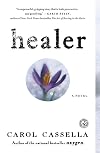
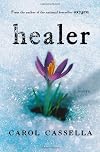
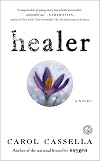
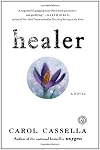
Healer
by Carol Cassella
On This Page
Description
Claire Boehning must dust off her long-unused medical expertise and make a living for her family in rural Washington when her husband's biotech venture crashes--taking everything they owned with it.Tags
Recommendations










Member Reviews
Bodies are not the only things that sometimes require healing. Sometimes that's true of marriages, relationships of all kinds, our grief, even our own attitudes about our place in the world. That, in brief, is the gist of Carol Cassella's compelling 2010 novel “Healer.”
Two factors caused Claire Boehning to abandon her medical profession just short of certification 14 years earlier. First came the birth of her premature daughter, Jory, and the need to give her her full-time attention. Then there was the stunning success of Addison, her husband, a medical researcher who struck it rich with the development of a cancer drug. Money poured in. They built a spacious home in Seattle, became accustomed to a luxurious lifestyle and even show more bought a vacation home in a rural area in the Pacific Northwest.
Now, without first talking it over with Claire, Addison has lost everything but that vacation home trying to finance development of another drug after tests go awry. So while Addison struggles to find financial backers to resurrect his research, Claire and Jory are stuck in their small house in Hallum, Wash. Jory misses her friends and her former lifestyle, and somehow resents her mother more than her father for their present isolation. Claire, meanwhile, wonders if her marriage can be saved and, more immediately, if she can make a living practicing medicine in Hallum.
Despite her lack of certification, she is finally hired by a clinic that mostly treats migrant workers. Her pay is minimal and she speaks little Spanish, yet she soon enough becomes indispensable, especially when Dan, the aging doctor who hires her, develops serious medical problems of his own.
In an important subplot, both Claire and Jory develop a close relationship with Miguela, a Nicaraguan refuge who keeps hanging around the clinic even though she does not appear to have any medical condition. It turns out she is trying to learn why her daughter got sick and died after coming to Hallum to work.
A medical school graduate with another degree in English literature, Cassella has written a brief series of novels with medical backdrops. “Oxygen” was terrific, and the same can be said for “Healer.” show less
Two factors caused Claire Boehning to abandon her medical profession just short of certification 14 years earlier. First came the birth of her premature daughter, Jory, and the need to give her her full-time attention. Then there was the stunning success of Addison, her husband, a medical researcher who struck it rich with the development of a cancer drug. Money poured in. They built a spacious home in Seattle, became accustomed to a luxurious lifestyle and even show more bought a vacation home in a rural area in the Pacific Northwest.
Now, without first talking it over with Claire, Addison has lost everything but that vacation home trying to finance development of another drug after tests go awry. So while Addison struggles to find financial backers to resurrect his research, Claire and Jory are stuck in their small house in Hallum, Wash. Jory misses her friends and her former lifestyle, and somehow resents her mother more than her father for their present isolation. Claire, meanwhile, wonders if her marriage can be saved and, more immediately, if she can make a living practicing medicine in Hallum.
Despite her lack of certification, she is finally hired by a clinic that mostly treats migrant workers. Her pay is minimal and she speaks little Spanish, yet she soon enough becomes indispensable, especially when Dan, the aging doctor who hires her, develops serious medical problems of his own.
In an important subplot, both Claire and Jory develop a close relationship with Miguela, a Nicaraguan refuge who keeps hanging around the clinic even though she does not appear to have any medical condition. It turns out she is trying to learn why her daughter got sick and died after coming to Hallum to work.
A medical school graduate with another degree in English literature, Cassella has written a brief series of novels with medical backdrops. “Oxygen” was terrific, and the same can be said for “Healer.” show less
Claire Boehning is dealing with a lot these days. After a disastrous complication with her husband Addison's new drug research, Claire and her small family are left financially destitute. This is a severe change, as in the days leading up to the disaster, Claire, Addison and their teenage daughter Jory lived a very expensive lifestyle. Now the family has sold their beautiful and spacious home in Seattle and moved to a small farmhouse in rural Washington. Addison is not deterred by these complications and continues to seek funding for his new drug, flying to cities all over the country to meet with entrepreneurs who might be interested in backing him. This leaves Claire to struggle alone at the farmhouse with Jory during a blisteringly show more cold winter, a winter in which she cannot afford to purchase propane to heat the house. As Claire struggles to make ends meet, she hatches a plan to seek employment as a doctor in the nearby small town. But having given up her schooling after Jory's birth, Claire has not actually been certified as a doctor, and as such can only find work caring for the sick in an underfunded clinic that mainly treats migrant farm workers. Meanwhile, the relationship between Claire and Addison is deteriorating rapidly due to the anger and resentment Claire feels about Addison's financial mismanagement. In addition, issues begin to crop up with Jory, who is not only lonely in her new surroundings, but acting out as she sees her parents' marriage crumbling. In this timely and realistic tale, Cassella shows us the life of one family struggling under the financial burdens that so many today are facing.
Lately I've been avoiding the news and similar outlets where the financial crisis plays itself out day after day for public consumption. It's a hard time for everyone and I don't think I know one person who hasn't felt the crunch in one way or the other. I certainly know that our family has taken some major hits in the last two years, and like many, we haven't fully recovered. You would think that having this mindset, I wouldn't enjoy reading a story about a couple who has to watch it all slip away. In fact, I think Cassella does some very interesting things with this story that keep it not only right on target, but make it very easy to relate to, and sometimes just slides shyly away from making this story too uncomfortable for her readers.
First off, I think that there was something about Claire that made her very easy to understand emotionally for me. Though she wants to be kind and supportive of her husband and daughter, she's burning the candle at both ends and finds herself emotionally raw and frustrated much of the time. I could really relate to that, and though it's sad to say that money can cause this kind of devastation in a marriage, it is ultimately believable, especially the way Cassella portrays it. Part of the problem is that Addison hasn't been transparent when it comes to what has happened to his family's money. He's used their nest egg to bail out his fledgling company and didn't tell Claire what he was doing. This understandably upsets and frightens Claire, and although she loves her husband, there's a deep wound between them that continues to fester throughout the story. I can completely understand where she's coming from. To be blindsided and lose everything without a clue must have been maddening for her, and just what is she supposed to do about her teenage daughter? I felt a lot of anger toward Addison in this story. Although he's a likable enough fellow, I felt he betrayed his family to a startling degree, and couldn't imagine having to be in Claire's position. To forgive him would have been murderously hard for me.
Another main aspect of this story has to do with Claire's work at the clinic. Though she is qualified for the work, it's been many years since she's seen a patient and the language barrier is not the only problem she has when treating them. Many of them are almost destitute and live seasonally at farms across America, harvesting the fruits and vegetables that we see in the grocery store everyday. They're not only underprivileged but have to constantly worry about the border patrol that comes hunting for them. There's no safe place for them and they often go a startlingly long time without medical care. Claire's clinic is always overpopulated and understaffed, and finding a way to treat these people who seem to have no home base or ties to the community is almost impossible. Cassella does a great job of highlighting the problems that immigrants face in America today. It's not a black and white issue, but one with a lot of gradations and hues, and it's an issue that seems to be on the minds of many Americans right now. Cassella is sensitive to the immigrant population as a whole and paints a picture that most people don't think about when they seek to speak on immigration.
I think the part of the book that resonated most deeply with me was the financial struggle Claire and her family was going through, and what it ultimately did to the family relationships. Where Claire was almost irate and scared for the future, plowing ahead determinedly, Addison had his head buried in the sand and refused to see the consequences of his actions. Jory, on the other hand, begins to steal and lie to her parents. These are all very different reactions to the same stimuli but all very believable coping mechanisms. Each is trying to get by in a world that's been changed under them and each can't understand the reaction of the others. This creates confusion among them and the lack of communication between them only heightens this effect. Though I wanted to castigate some of them for the things they were doing, I ultimately realized that they were coping with a trauma, and like a trauma victim, there was no prescribed set of actions and reactions that I could pin them down to. Yes, there was passive-aggressiveness, there was open hostility, and there was secretiveness, but there was also a lot of compassion and understanding when things began to boil down to their basic elements. It was amazing to see the heartache and reconciliation between these three, but for me, the most startling thing to realize was that these people could be any of us. They didn't seem like creations to me but rather like fictional versions of people I might know.
I loved this book for its stark honesty with character creation and for the fact that it highlighted so beautifully one facet of today's economic disaster. In its quest to be relevant, it was also touching and believable in a way that not many other books on this subject have been to me. The book has a lot to say about many different issues and utilizes a great plausibility of character and situation in which to frame this often-told and familiar story. I think this book would appeal to many for various reasons and have to say I'm glad I got to spend the time with these very human characters. Recommended. show less
Lately I've been avoiding the news and similar outlets where the financial crisis plays itself out day after day for public consumption. It's a hard time for everyone and I don't think I know one person who hasn't felt the crunch in one way or the other. I certainly know that our family has taken some major hits in the last two years, and like many, we haven't fully recovered. You would think that having this mindset, I wouldn't enjoy reading a story about a couple who has to watch it all slip away. In fact, I think Cassella does some very interesting things with this story that keep it not only right on target, but make it very easy to relate to, and sometimes just slides shyly away from making this story too uncomfortable for her readers.
First off, I think that there was something about Claire that made her very easy to understand emotionally for me. Though she wants to be kind and supportive of her husband and daughter, she's burning the candle at both ends and finds herself emotionally raw and frustrated much of the time. I could really relate to that, and though it's sad to say that money can cause this kind of devastation in a marriage, it is ultimately believable, especially the way Cassella portrays it. Part of the problem is that Addison hasn't been transparent when it comes to what has happened to his family's money. He's used their nest egg to bail out his fledgling company and didn't tell Claire what he was doing. This understandably upsets and frightens Claire, and although she loves her husband, there's a deep wound between them that continues to fester throughout the story. I can completely understand where she's coming from. To be blindsided and lose everything without a clue must have been maddening for her, and just what is she supposed to do about her teenage daughter? I felt a lot of anger toward Addison in this story. Although he's a likable enough fellow, I felt he betrayed his family to a startling degree, and couldn't imagine having to be in Claire's position. To forgive him would have been murderously hard for me.
Another main aspect of this story has to do with Claire's work at the clinic. Though she is qualified for the work, it's been many years since she's seen a patient and the language barrier is not the only problem she has when treating them. Many of them are almost destitute and live seasonally at farms across America, harvesting the fruits and vegetables that we see in the grocery store everyday. They're not only underprivileged but have to constantly worry about the border patrol that comes hunting for them. There's no safe place for them and they often go a startlingly long time without medical care. Claire's clinic is always overpopulated and understaffed, and finding a way to treat these people who seem to have no home base or ties to the community is almost impossible. Cassella does a great job of highlighting the problems that immigrants face in America today. It's not a black and white issue, but one with a lot of gradations and hues, and it's an issue that seems to be on the minds of many Americans right now. Cassella is sensitive to the immigrant population as a whole and paints a picture that most people don't think about when they seek to speak on immigration.
I think the part of the book that resonated most deeply with me was the financial struggle Claire and her family was going through, and what it ultimately did to the family relationships. Where Claire was almost irate and scared for the future, plowing ahead determinedly, Addison had his head buried in the sand and refused to see the consequences of his actions. Jory, on the other hand, begins to steal and lie to her parents. These are all very different reactions to the same stimuli but all very believable coping mechanisms. Each is trying to get by in a world that's been changed under them and each can't understand the reaction of the others. This creates confusion among them and the lack of communication between them only heightens this effect. Though I wanted to castigate some of them for the things they were doing, I ultimately realized that they were coping with a trauma, and like a trauma victim, there was no prescribed set of actions and reactions that I could pin them down to. Yes, there was passive-aggressiveness, there was open hostility, and there was secretiveness, but there was also a lot of compassion and understanding when things began to boil down to their basic elements. It was amazing to see the heartache and reconciliation between these three, but for me, the most startling thing to realize was that these people could be any of us. They didn't seem like creations to me but rather like fictional versions of people I might know.
I loved this book for its stark honesty with character creation and for the fact that it highlighted so beautifully one facet of today's economic disaster. In its quest to be relevant, it was also touching and believable in a way that not many other books on this subject have been to me. The book has a lot to say about many different issues and utilizes a great plausibility of character and situation in which to frame this often-told and familiar story. I think this book would appeal to many for various reasons and have to say I'm glad I got to spend the time with these very human characters. Recommended. show less
The storytelling in this novel is filled with an underlying tension that grabs the reader and doesn’t let go until the last page. I didn’t expect that from a novel about a doctor who is forced to return to work after her husband loses a fortune on a failed cancer drug. Because she never completed her residency, the only work Claire can get is at a struggling health care clinic that primarily treats migrant workers. I was expecting a good story, but I was surprised at how gripping it was. The author creates a subtle but undeniable drama around the marriage, parenthood, health care, and friendships that make up the story. It kept me on edge with anticipation. I also became emotionally involved with the characters and felt very much show more entrenched in their lives. Healer is a story about marriage and friendship, but it is also a book that shines a spotlight on the plight of illegal immigrants and the ethics of medicine. I appreciated that the author was able to tell such a compelling story while allowing the reader to draw his/her own conclusions about difficult subjects. I recommend this satisfying and engrossing read to anyone who enjoys stories of courage and hope in the midst of adversity.
In compliance with FTC guidelines, please note that I received this book for free through Goodreads First Reads. show less
In compliance with FTC guidelines, please note that I received this book for free through Goodreads First Reads. show less
I picked this book up because I had read Cassella's debut novel, [b:Oxygen|2916001|Oxygen|Carol Cassella|https://images.gr-assets.com/books/1348459261s/2916001.jpg|2943218], several years ago and loved it. Healer, unfortunately, wasn't nearly as interesting. Our protagonist, Claire, has moved to a small mountain town in Washington state with her daughter after her husband has lost everything. They are deeply in debt and Claire must find work, even though she hasn't practiced medicine in fourteen years and never even finished her residency. The only place that will hire Claire is a clinic serving the lower classes of the area, mostly migrant workers. It doesn't take much imagination to know how this one turns out: Claire learns several show more lessons about humanity, compassion, family, and what it means to be a "healer." There was a bit of drama towards the end, but it isn't worth slowing through this boring read. show less
This book is definitely more of a 3.5 for me but there was something missing throughout that I just cannot put my finger on. I like the flow of the story. The author easily transitioned from past to present without it being jarring. Her descriptions of the settings and character development were elegantly written. Yet, there was something missing in the plot. When I finished the book, I literally said, "Huh?" because it seemed too abrupt. The author attempted to give the book a beautiful ending but it felt like a big question mark. I wanted more which is not necessarily a bad thing.
I won this book from a Goodreads giveaway.
I won this book from a Goodreads giveaway.
What's left when you've lost it all?
This second novel by medical doctor Carol Cassella explores the answer to the question -- what is left when you've lost all your material possessions, your home, your reputation, and your previous world of friends and social interaction? The answer lies, for these characters, in the rustic, rural former vacation home they never renovated, in a small town in Hallum, Washington. What remains is simple: hard work and love.
Claire is a stay-at-home mom to teen-aged Jory (the only child she can have, born prematurely) when her husband Addison, a wildly successful biochemist who had made them rich by discovering a test to diagnose ovarian cancer early, gambles their entire financial portfolio on a new show more anti-cancer drug he's trying to bring to market. Almost ready for FDA approval, lab data from clinical trials is suspicious, and the fledgling research venture folds along with Addison's integrity. Gone is all the money they had received from Addison's former triumph, and they have to sell their house and possessions and relocate to Hallum while Addison goes begging at medical conventions for investors in the project he can't give up.
Meanwhile, Claire -- who was almost done with residency when Jory arrived early -- needs a job to feed herself and her daughter. Because she's not board certified, she takes the only job she's offered -- in a free clinic for migrant workers run by an aging physician, Dr. Dan Zalaya. The position pays little, and Claire is nervous and anxious about actually working as a doctor again and has also a little difficulty with translating the patients' complaints from Spanish since she doesn't speak the language. She is forced to be a single parent to Jory and works long hours in the barely funded clinic. This was the best part of the novel for me, watching Claire develop her confidence in the art of practicing medicine, being the "healer" as doctora to these migrant workers. I loved the interactions between her and the patients, and between her and the staff at the clinic. It painted a bleak picture of the life of the illegal immigrants and it felt to me that Claire was getting back some of her self esteem.
A constant irritant in the book was the teenage daughter Jory, whom I could not stand. I realize that many teenagers are self absorbed and narcissistic, but the amount of patience that Claire had to use to deal with her defied my tolerance level. I just couldn't stand Jory's character and in my view she never redeemed herself or grew up any in the book. Addison was shallow and also selfish -- forging ahead with his dream when he should have taken a bench lab job to provide for his family. I saw him, who had basically stolen away the family fortune without ever discussing it with his wife, as a complete failure as husband and father. I also couldn't understand where the money to buy the food and pay the other bills was coming from as they were buying jewelry and food and paying utilities on only Claire's meager salary. Despite these discordant notes, the narrative moved along hopefully as the family tiptoes around each other trying to work their way back to being a unit and the loving trio they once had been.
Then, for some reason, the last part of the book attempts to set up a mystery using a Nicaraguan refugee with a lost daughter. This part of the novel fell flat and seemed tacked on, but other than that - the story moves to a conclusion that is somewhat satisfying. There is redemption of a sort, and the restoration of trust -- though hard won -- and above all, there is love. show less
This second novel by medical doctor Carol Cassella explores the answer to the question -- what is left when you've lost all your material possessions, your home, your reputation, and your previous world of friends and social interaction? The answer lies, for these characters, in the rustic, rural former vacation home they never renovated, in a small town in Hallum, Washington. What remains is simple: hard work and love.
Claire is a stay-at-home mom to teen-aged Jory (the only child she can have, born prematurely) when her husband Addison, a wildly successful biochemist who had made them rich by discovering a test to diagnose ovarian cancer early, gambles their entire financial portfolio on a new show more anti-cancer drug he's trying to bring to market. Almost ready for FDA approval, lab data from clinical trials is suspicious, and the fledgling research venture folds along with Addison's integrity. Gone is all the money they had received from Addison's former triumph, and they have to sell their house and possessions and relocate to Hallum while Addison goes begging at medical conventions for investors in the project he can't give up.
Meanwhile, Claire -- who was almost done with residency when Jory arrived early -- needs a job to feed herself and her daughter. Because she's not board certified, she takes the only job she's offered -- in a free clinic for migrant workers run by an aging physician, Dr. Dan Zalaya. The position pays little, and Claire is nervous and anxious about actually working as a doctor again and has also a little difficulty with translating the patients' complaints from Spanish since she doesn't speak the language. She is forced to be a single parent to Jory and works long hours in the barely funded clinic. This was the best part of the novel for me, watching Claire develop her confidence in the art of practicing medicine, being the "healer" as doctora to these migrant workers. I loved the interactions between her and the patients, and between her and the staff at the clinic. It painted a bleak picture of the life of the illegal immigrants and it felt to me that Claire was getting back some of her self esteem.
A constant irritant in the book was the teenage daughter Jory, whom I could not stand. I realize that many teenagers are self absorbed and narcissistic, but the amount of patience that Claire had to use to deal with her defied my tolerance level. I just couldn't stand Jory's character and in my view she never redeemed herself or grew up any in the book. Addison was shallow and also selfish -- forging ahead with his dream when he should have taken a bench lab job to provide for his family. I saw him, who had basically stolen away the family fortune without ever discussing it with his wife, as a complete failure as husband and father. I also couldn't understand where the money to buy the food and pay the other bills was coming from as they were buying jewelry and food and paying utilities on only Claire's meager salary. Despite these discordant notes, the narrative moved along hopefully as the family tiptoes around each other trying to work their way back to being a unit and the loving trio they once had been.
Then, for some reason, the last part of the book attempts to set up a mystery using a Nicaraguan refugee with a lost daughter. This part of the novel fell flat and seemed tacked on, but other than that - the story moves to a conclusion that is somewhat satisfying. There is redemption of a sort, and the restoration of trust -- though hard won -- and above all, there is love. show less
I really liked a lot of her other books, but I couldn't get all the way to the end of this one. She's a great writer, but the daughter in this book was such an over-the-top brat and the mother such a pushover that I couldn't get past it to enjoy the other characters or the plot. I understand the difficulty of moving and changing schools for a child/teen, as I went through it myself, but the daughter's reaction and behavior in he midst of what is obviously a challenging time for her parents seemed disproportionate to the circumstances she faced, and her reaction to every minor aspect of the move seemed overemphasized, unbalancing the plot.
Members
- Recently Added By
Author Information

5 Works 1,272 Members
Awards and Honors
Awards
Common Knowledge
- Canonical title
- Healer
Classifications
Statistics
- Members
- 185
- Popularity
- 177,055
- Reviews
- 16
- Rating
- (3.45)
- Languages
- English
- Media
- Paper, Audiobook, Ebook
- ISBNs
- 10
- ASINs
- 3