On This Page
Description
In 1900 B.C., what modern Indians mistakenly call the Indus Valley Civilisation; the inhabitants of that period called it the land of Meluha a near perfect empire created many centuries earlier by Lord Ram, one of the greatest monarchs that ever lived; this once proud empire and its Suryavanshi rulers face severe perils as its primary river, the revered Saraswati, is slowly drying to extinction; they also face devastating terrorist attacks from the east, the land of the Chandravanshis; too show more make matters worse, the Chandravanshis appear to have allied with the Nagas, an ostracised and sinister race of deformed humans with astonishing martial skills; the only hope for the Suryavanshis is an ancient legend: when evil reaches epic proportions, when all seems lost, when it appears that your enemies have triumphed, a hero will emerge. Is the rough-hewn Tibetan immigrant Shiva, really that hero? And does he want to be that hero at all? Drawn suddenly to his destiny, by duty as well as by love, will Shiva lead the Suryavanshi vengeance and destroy evil? show lessTags
Recommendations














Member Reviews
Faith has always been a best seller. And when faith fuses with fiction to bring to life Gods which are revered by millions, fireworks are no surprise. It happened with the “Jesus was a man, a husband, a father” Da Vinci Code. And now the same is happening with The Immortals of Meluha that tells the story of Shiva the man, who legend made into a God. For some, it is just the freshness of the plot (or relative freshness as critics cite the Da Vinci code “inspiration”) that blends elements of history and mythology with action, adventure and religion. For others it is a desire to relook at some mythological and religious sayings. Agnostics are drawn to it by hope; believers pick it up so that they can dismiss its blasphemous show more contentions. A few housewives confessed that they just wanted to see what the “human avtaar” of their Gods would be like . An elderly reader explained that a plot set in the context of his beliefs and religion was more appealing – “I can relate to it, understand it.” And a college student at the billing counter offered, ” I just want to see what the hooplah is all about!” Varied reasons, and yet they meshed together to make the 35 year old MBA from IIM Kolkata an instant celebrity.
The charm of The Da Vinci Code was in the seamless fusion of “believed” fact and fiction. Where did reality end and story begin, where did legend end and creativity begin – it was impossible to tell. The book did carry some important messages – respect for the feminine and the need for faith (or as some would say the power of faith), but these were lost in the intricacy of the plot and in its intrigue.
This however, is not the case with The Immortals of Meluha. Not surprisingly, while the plot and premise of the book have been much talked about, little has been said about it’s literary merit, about it’s consciously “modern” writing style that is completely at odds with the age and era it seeks to create for the reader. Many a times, it seems as if the author has juxtaposed modern day concepts on an ancient society. Disconcerting yes, but forgivable because once you rid yourself of your expectations from the plot, you discover nuances that hold great import for today’s world. For instance, after leading the “good” Suryavnshis to victory against the “evil” Chandravanshis, Shiva discovers his error. The Chandravanshis were not evil, not “terrorists” as the Suryavanshis and he himself had believed; only different. Just like the Asuras who were cast as “evil” by the Devas in their own texts (a reference to the bias of history – it always reflects the beliefs of those who pen it) . The “war against evil”, the Dharmayudh in which millions were killed were thus never battles of the righteous. They were battles between two different belief systems, two lifestyles, both of which were essential to maintain the balance in this world, to complete the world. The warriors and civilians who lost their lives were not martyrs who gave up their life for the “greater good” but unfortunate victims of the lack of understanding between two cultures that refused to engage with, and hence to understand each other.
Read complete review @ http://blogs.indiareads.com/views-and-reviews/the-political-message-from-meluha/ show less
The charm of The Da Vinci Code was in the seamless fusion of “believed” fact and fiction. Where did reality end and story begin, where did legend end and creativity begin – it was impossible to tell. The book did carry some important messages – respect for the feminine and the need for faith (or as some would say the power of faith), but these were lost in the intricacy of the plot and in its intrigue.
This however, is not the case with The Immortals of Meluha. Not surprisingly, while the plot and premise of the book have been much talked about, little has been said about it’s literary merit, about it’s consciously “modern” writing style that is completely at odds with the age and era it seeks to create for the reader. Many a times, it seems as if the author has juxtaposed modern day concepts on an ancient society. Disconcerting yes, but forgivable because once you rid yourself of your expectations from the plot, you discover nuances that hold great import for today’s world. For instance, after leading the “good” Suryavnshis to victory against the “evil” Chandravanshis, Shiva discovers his error. The Chandravanshis were not evil, not “terrorists” as the Suryavanshis and he himself had believed; only different. Just like the Asuras who were cast as “evil” by the Devas in their own texts (a reference to the bias of history – it always reflects the beliefs of those who pen it) . The “war against evil”, the Dharmayudh in which millions were killed were thus never battles of the righteous. They were battles between two different belief systems, two lifestyles, both of which were essential to maintain the balance in this world, to complete the world. The warriors and civilians who lost their lives were not martyrs who gave up their life for the “greater good” but unfortunate victims of the lack of understanding between two cultures that refused to engage with, and hence to understand each other.
Read complete review @ http://blogs.indiareads.com/views-and-reviews/the-political-message-from-meluha/ show less
A man who becomes a God. This mythological novel traces the journey of one man, Shiva, Chief of the Gunas tribe, who, tired of constant battles with neighboring tribes, is persuaded by a Meluhan, to bring his whole tribe across the mountain to Meluha, promising a land of peace, beauty and organization.
Upon arrival in Meluha, Shiva's tribe are all made to drink the somras and in doing so, Shiva's destiny emerges in the form of a cold blue light in his throat. He is the awaited Neelkanth, one that will rid the world of evil, if the legend is to be believed. But the challenge for the Emperor of Meluha is to get Shiva to accept that he is the Neelkanth and to accept his fate to save them from evil and then to accept that he is the Mahadev, show more the God of Gods.
Mixing science with superstition, this novel highlights the depth of the Indian culture in 1900 BC and the development of the caste system.
I think the author may have deliberately kept the dialogue light, especially that of Shiva, who sometimes comes across as a happy-go-lucky adolescent, to balance the often weighty philosophies delivered by the pandits or priests. show less
Upon arrival in Meluha, Shiva's tribe are all made to drink the somras and in doing so, Shiva's destiny emerges in the form of a cold blue light in his throat. He is the awaited Neelkanth, one that will rid the world of evil, if the legend is to be believed. But the challenge for the Emperor of Meluha is to get Shiva to accept that he is the Neelkanth and to accept his fate to save them from evil and then to accept that he is the Mahadev, show more the God of Gods.
Mixing science with superstition, this novel highlights the depth of the Indian culture in 1900 BC and the development of the caste system.
I think the author may have deliberately kept the dialogue light, especially that of Shiva, who sometimes comes across as a happy-go-lucky adolescent, to balance the often weighty philosophies delivered by the pandits or priests. show less
I picked up the Immortals of Meluha at Delhi airport last year. I think it cost just shy of 3€. At the time, this was a huge bestseller in India, with the third volume being at the top of the bestseller list and the two earlier ones still in top ten.
The blurbs on the cover compare the author, Amish Tripathi, to everyone from Tolkien to Paulo Coehlo and even promise that it "uncovers the deepest recesses of the soul", a pompous and hollow statement made naturally by none other than that peddler of anything "spiritual", quasi-scientific and Indian, Deepak Chopra.
In reality, Immortals of Meluha is a sub-par fantasy novel by a banker turned novelist (which shows). It suffers from several specific problems, but even on overall is just show more plain too dull.
The story is a mythological and fictional account of how Shiva, one of the most important Hindu deities, walked the path from a mortal to a god. The setting is the so called (although apparently incorrectly) Indus Valley Civilization in Northern India, around 1900 BC. This has all the potential of being a interesting mix of history, mythology and religion. Unfortunately, Amish botches it up.
Shiva, a mere mortal for now, is apparently the most badass person ever imagined. He is the best at everything. The best fighter, the smartest person in the history of the world, the best military strategist and even the best dancer. Annoying in its own, but even more annoying is that every other character in the book loudly proclaims this at every chance they get, over and over and over again. Everyone is completely and utterly in love with Shiva, if not immediately upon meeting him, then five minutes later. Subtlety - not one of Amish's strengths.
A similar problem exists with the Meluhan civilization. In order for the author to establish how great that civilization is (and therefore possibly justify the rather fascist trumping of the neighboring civilization), everybody constantly proclaims the civilization's achievements to anyone who would listen. It gets even more ridiculous here, as the Suryavanshis apparently already have extensive knowledge of electromagnetic radiation, oxygen and free radicals. In 1900 BC, literally thousands of years before they had actually been discovered. Despite this incredible technological advancement, they still believe in a blue-throated Messiah that will deliver them from all their worldly problems, in the form of Shiva, a Tibetan tribal chief.
Comparable mental gymnastics are also in place when justification for Meluhan social systems is needed, such as the rigid caste system and the shunning of injured and afflicted people, although, to author's credit, Shiva is conflicted about this.
The writing style is also pretty awkward, with weird jokes that seem out of context for that time and place and incredibly corny moments, such as deathbed I wuv you proclamations better suited to a Mexican telenovella. In fact, I don't think Amish captured the spirit of time and place at all, since people talk and act like they would nowadays.
To top it all, the book ends on a complete cliff-hanger. I'm not talking about the main plots not being resolved, it literally ends in the middle of an action scene. The dude's got balls, is all I have to say.
A few brighter moments include Shiva's internal agonizing over his own merit to take on the role of the Messiah, and the injustices of Meluhan societal structure, and his eventual realization that the other civilization is not evil, but perhaps just different. In the end, though, this is not worth it at all, there's loads of better fantasy and historical fiction around. show less
The blurbs on the cover compare the author, Amish Tripathi, to everyone from Tolkien to Paulo Coehlo and even promise that it "uncovers the deepest recesses of the soul", a pompous and hollow statement made naturally by none other than that peddler of anything "spiritual", quasi-scientific and Indian, Deepak Chopra.
In reality, Immortals of Meluha is a sub-par fantasy novel by a banker turned novelist (which shows). It suffers from several specific problems, but even on overall is just show more plain too dull.
The story is a mythological and fictional account of how Shiva, one of the most important Hindu deities, walked the path from a mortal to a god. The setting is the so called (although apparently incorrectly) Indus Valley Civilization in Northern India, around 1900 BC. This has all the potential of being a interesting mix of history, mythology and religion. Unfortunately, Amish botches it up.
Shiva, a mere mortal for now, is apparently the most badass person ever imagined. He is the best at everything. The best fighter, the smartest person in the history of the world, the best military strategist and even the best dancer. Annoying in its own, but even more annoying is that every other character in the book loudly proclaims this at every chance they get, over and over and over again. Everyone is completely and utterly in love with Shiva, if not immediately upon meeting him, then five minutes later. Subtlety - not one of Amish's strengths.
A similar problem exists with the Meluhan civilization. In order for the author to establish how great that civilization is (and therefore possibly justify the rather fascist trumping of the neighboring civilization), everybody constantly proclaims the civilization's achievements to anyone who would listen. It gets even more ridiculous here, as the Suryavanshis apparently already have extensive knowledge of electromagnetic radiation, oxygen and free radicals. In 1900 BC, literally thousands of years before they had actually been discovered. Despite this incredible technological advancement, they still believe in a blue-throated Messiah that will deliver them from all their worldly problems, in the form of Shiva, a Tibetan tribal chief.
Comparable mental gymnastics are also in place when justification for Meluhan social systems is needed, such as the rigid caste system and the shunning of injured and afflicted people, although, to author's credit, Shiva is conflicted about this.
The writing style is also pretty awkward, with weird jokes that seem out of context for that time and place and incredibly corny moments, such as deathbed I wuv you proclamations better suited to a Mexican telenovella. In fact, I don't think Amish captured the spirit of time and place at all, since people talk and act like they would nowadays.
To top it all, the book ends on a complete cliff-hanger. I'm not talking about the main plots not being resolved, it literally ends in the middle of an action scene. The dude's got balls, is all I have to say.
A few brighter moments include Shiva's internal agonizing over his own merit to take on the role of the Messiah, and the injustices of Meluhan societal structure, and his eventual realization that the other civilization is not evil, but perhaps just different. In the end, though, this is not worth it at all, there's loads of better fantasy and historical fiction around. show less
By writing this book Amish unlocked an entirely different genre in the Indian Fiction writing scene. Strong narrative, vivid imagination and good story-pace keep you engaged with the book. The way he weaves Shiva as a human character with an ethereal out-worldly aura is remarkable. Top that off with picturesque descriptions of tools, weapons, battles, strategies, and way kingdoms and ancient commerce behaved, keeps you wanting for more. The book was a good story in itself, but at the root of it though I did not find the story engaging and suspenseful enough to read the next two books.
Positives -
1. Racy plot - retains interest big time
2. Amalgamation of mythological components into a modern day story.
3. Depiction of Shiva as a ordinary man who attains wisdom and ability to hold the designation of Mahadev on the way. Shiva makes mistakes too.
4. New (read old) city description and new systems.
Negatives -
1. Language - it's way too casual. Some dialogs doesn't seem to be befitting of a wise man like Shiva. Sometimes it's off-putting. I have some examples that I jotted somewhere - remind me to add here.
2. Writing style is quite superficial - it lacks detailed, visual qualities.
So overall interesting story but badly written.
1. Racy plot - retains interest big time
2. Amalgamation of mythological components into a modern day story.
3. Depiction of Shiva as a ordinary man who attains wisdom and ability to hold the designation of Mahadev on the way. Shiva makes mistakes too.
4. New (read old) city description and new systems.
Negatives -
1. Language - it's way too casual. Some dialogs doesn't seem to be befitting of a wise man like Shiva. Sometimes it's off-putting. I have some examples that I jotted somewhere - remind me to add here.
2. Writing style is quite superficial - it lacks detailed, visual qualities.
So overall interesting story but badly written.
Who is God? It is not often that I ponder over a question like this. It was especially not until I lay my hands on this one-of-its kind book, called The Immortals of Meluha, authored by Amish. A book that borrows heavily from the royal pages of Indian mythology, The Immortals of Meluha weaves together myths and legends and modern sensibilities with remarkable ease.
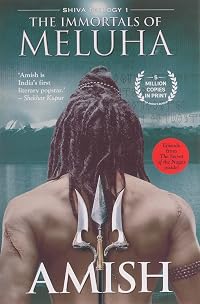
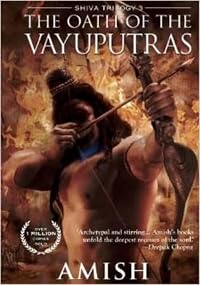
The book cover was immediately intriguing- the back of the mighty Shiva, with deep scars over a shoulder and an arm; long, majestic tresses falling over his back; a trident elegantly positioned at the very centre of his form; and the backdrop comprising of Indus and the magnificent Mountains of the North. This was easily a book I would have wanted to read, and as it did turn show more out, it was a book I simply could not keep down once I started on. The first of a series of three (called the Shiva Trilogy), this book tells the story of Shiva, the Destroyer, a much hailed and praised God from the Hindu Trinity of Brahma-Vishnu-Mahesh. One of the boldest attempts in the Indian fantasy fiction genres, this book lays down the hypothesis that Shiva was never actually a God. More so, he did not even belong to India (the Saptasindhu, as mentioned in the book). Blasphemy you would say, but so long as we consider this book to remain within the realm of fiction, it is actually amazing how the author has carved out a story with Shiva as a War Hero, firmly supported by accurate facts and descriptions, giving strong evidence of the author's deep knowledge and research of the subject.
The book is set in the Indus Valley Civilization, referred in this book as Meluha (It was only later that my History teacher informed me about the Indus Valley Civilization being called as 'Meluha' by the Sumerians and the Mesopotamians). This civilization was one of the finest the world has ever been testimony to, and is often hailed as the birthplace of men of greatness, because the things they did have not been imitated anywhere, anytime in the world. Before beginning the book, the author makes three claims, the fundamental premise on which his book is based-
I believe that the Hindu gods were not mythical beings or a figment of a rich imagination.
I believe that they were creatures of flesh and blood, like you and me.
I believe that they achieved godhood through their karma, their deeds.
The story begins with an elaborate depiction of Shiva, who is not a God, not even an extraordinary human, but the head of a simple tribe of cattle herders, somewhere in the foot of the Himalayas, ridden with fatigue due to incessant struggles for existence being fought with the other tribes. His assistant, comrade and best pal, curiously, is a fellow tribesman called Nandi. Due to the course of events, Shiva and his tribe migrate to Meluha, the land of Suryavanshis, the descendants of the illustrious Lord Rama. The land of the Suryavanshis is plagued with many evils, and is under threat from the opposite race, the Chandravanshis. To add to their already cup-full of woes, the Chandravanshis have employed the despicable, sinister Nagas, an ostracized caste, to spread terror in the land of Meluhans.
It is from these terrors that the Meluhans seek respite. According to the Meluhan legend, it will be 'Neelkanth', the one whose neck will turn blue on drinking their nectar, Somaras, who will be their Savior. Thus is defined the character and course of the protagonist, Shiva, who after drinking the Somaras is hailed by the hapless people as their Lord, the one who will alleviate all evils from their land. What then ensues is the journey of Shiva through the land of Meluhans, during which, he establishes himself as a warrior of unparalleled might and war skills. At most places during the narrative, Shiva is shown to be spellbound by the superior technology and infrastructure possessed by the inhabitants of the magnificent land of Meluha. Also, as an undercurrent, laced into the narrative is the love story of our indomitable hero and the demure, chaste and skilled Parvati, incidentally the daughter of Maharaja Dasya, King of Meluha.
The narrative of the story is contemporary, not in the least archaic, as one would expect the tone of any of our mythological tales to be. This book attempts to clear the mist around the concept of Mahadev we have grown up with. While reading about this book, I came across interesting facts, such as, long back, in the ancient times, there was no concept of India. The only concept then that has left its traces to be felt in the contemporary times is that of the Aryans, the greatest race on the Earth. What is particularly curious about Shiva is that he is the only non-Aryan entity in the Trinity of Hindu Gods. In the book too, he conforms to what have been his features otherwise- easy to please, free of deceit and trickery (Bholenath), unabashed in his display of emotions (anger in particular- Tandav), passionate lover, substance addiction...and the list can go on.
To conclude my assessment of the book, I can say, it was a compelling read. It was not anything like the other tales of our three crore plus Gods and Goddesses I have read or heard about. Very few authors have touched this particular genre with such marvellous ease, making the reader more and more intrigued by the vivid and precise description of the events which form this story. Worthy of not less than four stars on five, it is one of those books which all of us should pick up, especially if we feel detached from our rich mythological heritage, with a promise that if one begins with this book, he would only be lured deeper and deeper into the mystical world of our tales and legends and myths. Highly recommended! show less
The book cover was immediately intriguing- the back of the mighty Shiva, with deep scars over a shoulder and an arm; long, majestic tresses falling over his back; a trident elegantly positioned at the very centre of his form; and the backdrop comprising of Indus and the magnificent Mountains of the North. This was easily a book I would have wanted to read, and as it did turn show more out, it was a book I simply could not keep down once I started on. The first of a series of three (called the Shiva Trilogy), this book tells the story of Shiva, the Destroyer, a much hailed and praised God from the Hindu Trinity of Brahma-Vishnu-Mahesh. One of the boldest attempts in the Indian fantasy fiction genres, this book lays down the hypothesis that Shiva was never actually a God. More so, he did not even belong to India (the Saptasindhu, as mentioned in the book). Blasphemy you would say, but so long as we consider this book to remain within the realm of fiction, it is actually amazing how the author has carved out a story with Shiva as a War Hero, firmly supported by accurate facts and descriptions, giving strong evidence of the author's deep knowledge and research of the subject.
The book is set in the Indus Valley Civilization, referred in this book as Meluha (It was only later that my History teacher informed me about the Indus Valley Civilization being called as 'Meluha' by the Sumerians and the Mesopotamians). This civilization was one of the finest the world has ever been testimony to, and is often hailed as the birthplace of men of greatness, because the things they did have not been imitated anywhere, anytime in the world. Before beginning the book, the author makes three claims, the fundamental premise on which his book is based-
I believe that the Hindu gods were not mythical beings or a figment of a rich imagination.
I believe that they were creatures of flesh and blood, like you and me.
I believe that they achieved godhood through their karma, their deeds.
The story begins with an elaborate depiction of Shiva, who is not a God, not even an extraordinary human, but the head of a simple tribe of cattle herders, somewhere in the foot of the Himalayas, ridden with fatigue due to incessant struggles for existence being fought with the other tribes. His assistant, comrade and best pal, curiously, is a fellow tribesman called Nandi. Due to the course of events, Shiva and his tribe migrate to Meluha, the land of Suryavanshis, the descendants of the illustrious Lord Rama. The land of the Suryavanshis is plagued with many evils, and is under threat from the opposite race, the Chandravanshis. To add to their already cup-full of woes, the Chandravanshis have employed the despicable, sinister Nagas, an ostracized caste, to spread terror in the land of Meluhans.
It is from these terrors that the Meluhans seek respite. According to the Meluhan legend, it will be 'Neelkanth', the one whose neck will turn blue on drinking their nectar, Somaras, who will be their Savior. Thus is defined the character and course of the protagonist, Shiva, who after drinking the Somaras is hailed by the hapless people as their Lord, the one who will alleviate all evils from their land. What then ensues is the journey of Shiva through the land of Meluhans, during which, he establishes himself as a warrior of unparalleled might and war skills. At most places during the narrative, Shiva is shown to be spellbound by the superior technology and infrastructure possessed by the inhabitants of the magnificent land of Meluha. Also, as an undercurrent, laced into the narrative is the love story of our indomitable hero and the demure, chaste and skilled Parvati, incidentally the daughter of Maharaja Dasya, King of Meluha.
The narrative of the story is contemporary, not in the least archaic, as one would expect the tone of any of our mythological tales to be. This book attempts to clear the mist around the concept of Mahadev we have grown up with. While reading about this book, I came across interesting facts, such as, long back, in the ancient times, there was no concept of India. The only concept then that has left its traces to be felt in the contemporary times is that of the Aryans, the greatest race on the Earth. What is particularly curious about Shiva is that he is the only non-Aryan entity in the Trinity of Hindu Gods. In the book too, he conforms to what have been his features otherwise- easy to please, free of deceit and trickery (Bholenath), unabashed in his display of emotions (anger in particular- Tandav), passionate lover, substance addiction...and the list can go on.
To conclude my assessment of the book, I can say, it was a compelling read. It was not anything like the other tales of our three crore plus Gods and Goddesses I have read or heard about. Very few authors have touched this particular genre with such marvellous ease, making the reader more and more intrigued by the vivid and precise description of the events which form this story. Worthy of not less than four stars on five, it is one of those books which all of us should pick up, especially if we feel detached from our rich mythological heritage, with a promise that if one begins with this book, he would only be lured deeper and deeper into the mystical world of our tales and legends and myths. Highly recommended! show less
The story focuses on Shiva, a twenty-one year old warrior who is living with his tribesmen in what is currently Tibet. He comes across a group of Meluhans (Meluha is what is now Western India & Pakistan) who are searching for something or someone. Shiva’s tribe is called the Gunas and another tribe called the Pakratis is hunting them. Shiva detests the needless violence and decides to follow the Meluhan party back to their land. Things seem troublesome in Meluha wherein the Suryavanshi kings (Descendants of the Sun) are the rulers and the people live by Suryavanshi standards. They are facing friction from their eastern neighbors, the land of Swadeep ruled by Chandravanshis (Descendants of the moon) as both sides are clueless in show more regards to the drying up of the Saraswati River and hence blame each other for their differences.
Shiva then meets Sati,the emperor's daughter and falls in love with her..and you can read the rest :P
Loved the book!I loved the plot but I don't know why something was missing.I loved the way he used the names..like Sati,Shiva,Nandi etc.The author is really creative..I just loved the way he talked about Ram and Lord Rudra and he made it easy to digest.Nice climax ,by the way.I loved the way he described the city of Meluha.I didn't like the way they swore..I mean.who said "Damn it!" in 1900 BC?I hated those parts..and during the war it was just boring at times you know..only that part..overall,the book was just beautiful..It reached my expectations!loved it :)It made understanding Hindu mythology easy! you guys should read it..totally! show less
Members
- Recently Added By
Lists

Speculative Fiction from around the World
610 works; 18 members
Author Information

56 Works 3,624 Members
Awards and Honors
Notable Lists
Series

Work Relationships
Common Knowledge
- Original publication date
- 2010
Classifications
Statistics
- Members
- 1,076
- Popularity
- 23,840
- Reviews
- 27
- Rating
- (3.78)
- Languages
- 6 — English, Estonian, Gujarati, Hindi, Marathi, Tamil
- Media
- Paper, Audiobook, Ebook
- ISBNs
- 20
- ASINs
- 13