On This Page
Description
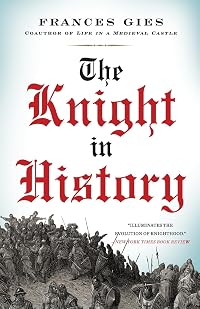
A magisterial history of the origins, reality, and legend of the knightBorn out of the chaos of the early Middle Ages, the armored and highly mobile knight revolutionized warfare and quickly became a mythic figure in history. From the Knights Templars and English knighthood to the crusades and chivalry, The Knight in History, by acclaimed medievalist Frances Gies, bestselling coauthor of Life in a Medieval Castle, paints a remarkable true picture of knighthood--exploring the knight's show more earliest appearance as an agent of lawless violence, his reemergence as a dynamic social entity, his eventual disappearance from the European stage, and his transformation into Western culture's most iconic hero. show lessTags
Recommendations















Member Reviews
Bought this book at Fanfare Books in Stratford, Ontario in September 2022. I found it to be an engaging survey of the development of knights over the centuries. Gies does well in covering both broad themes (e.g. Knights of the First Crusade, The Troubadours) as well as a few chapter length biographies of individual knights (including Bertrand Du Guesclin of France and Sir John Fastolf of England).
The most significant weakness to the book is the publisher's decision to print black and white illustrations. In some cases, these are clear. In many other cases, it is difficult to see the details.
The most significant weakness to the book is the publisher's decision to print black and white illustrations. In some cases, these are clear. In many other cases, it is difficult to see the details.
Another fascinating book by medievalist Frances Gies. Normally, Gies writes with her husband, Joseph, but this book is hers alone. There were times when I found the book a bit slow, but I attribute that to my not being as interested in this topic than in the Gies' books on daily life. However, it's not a long book, and the inclusion of pictures helps break up the monotony of text.
Gies begins the book by telling readers what the medieval knight is and what it is not, consequently both playing into and dismantling modern notions of knighthood. After this, the books is really broken down into a few distinct sections: the Crusades, romantic depiction with troubadours, William Marshal, the Templars. There are more chapters than this, but show more these are the main points. Additionally, Gies spends some time on the logistics of knighthood, how much it cost to maintain the title, the ebb and flow of its population, and who could become a knight. Overall, it's super interesting stuff. I just don't find military history to be the most interesting topic, personally.
Gies indicates she is going to review the different evolutions of knighthood through the lens of various famous knights in history. This is my favorite part of Gies' books because the inclusion of real people helps ground the history for me and contextualize it. However, Gies didn't really do that here. There were three people that really stood out: William Marshal, Robert du Guesclin, and Sir John Fastolf. Unfortunately, they didn't make an appearance until the latter half of the book, and I think this is why I struggled with this book. There are a lot of dates and battles and city names to remember that, eventually, it all gets muddled.
If military history is your thing, then you will love this book. Medievalists will also really enjoy this. I'm still glad I read this, even if it didn't grip me as much as other books by the Gies. show less
Gies begins the book by telling readers what the medieval knight is and what it is not, consequently both playing into and dismantling modern notions of knighthood. After this, the books is really broken down into a few distinct sections: the Crusades, romantic depiction with troubadours, William Marshal, the Templars. There are more chapters than this, but show more these are the main points. Additionally, Gies spends some time on the logistics of knighthood, how much it cost to maintain the title, the ebb and flow of its population, and who could become a knight. Overall, it's super interesting stuff. I just don't find military history to be the most interesting topic, personally.
Gies indicates she is going to review the different evolutions of knighthood through the lens of various famous knights in history. This is my favorite part of Gies' books because the inclusion of real people helps ground the history for me and contextualize it. However, Gies didn't really do that here. There were three people that really stood out: William Marshal, Robert du Guesclin, and Sir John Fastolf. Unfortunately, they didn't make an appearance until the latter half of the book, and I think this is why I struggled with this book. There are a lot of dates and battles and city names to remember that, eventually, it all gets muddled.
If military history is your thing, then you will love this book. Medievalists will also really enjoy this. I'm still glad I read this, even if it didn't grip me as much as other books by the Gies. show less
This is obviously very well researched. And it is equally obvious that Gies knows what he is talking about. The knight is a very broad topic and spans over a long period of time and over many countries and cultures. So the information is pretty dense. Gies looks into the beginnings of knighthood and how the institution changed over time. From how the equipment and how they were funded and paid changed to how their function changed and they turned to poetry and song or how they ended up fighting for the church. It is impossible, of course, to pull the knight out of the history that he took part in and also impossible to go in-depth into all of that history but Gies strikes a pretty good balance. There were times when a lot of names were show more mentioned that didn't get much of an introduction and a history buff would probably have no trouble with that but some of the names ended up meaning nothing to me. But he also takes a close look at a couple of particular knights that gives the reader a better idea of the life of a knight more than an overview could do. It isn't the most readable history book I've ever read but that doesn't mean it wasn't interesting. You just have to have a true, and I would say, slightly more than casual interest to make it worth your time. show less
3.5 stars
Decent history, good overview. Would like to see what the current research looks like (this book originally being published in 1984). Overall a good introduction to the knight.
Decent history, good overview. Would like to see what the current research looks like (this book originally being published in 1984). Overall a good introduction to the knight.
Ratings
Members
- Recently Added By
Published Reviews
Za one kojima vitez ili viteštvo znače više od istorijskog podatka, korisna i zanimljiva biće knjiga američke autorke Fransis Džajs "Vitezovi kroz istoriju".
Čovek na konju, sa štitom, oklopom i kacigom, sa mačem oko pasa i kopljem u ruci pojavio se na istorijskoj sceni u Francuskoj, u 8. veku i tu je ostao, pretrpevši razne promene, sve do pojave vatrenog oružja i nacionalnih show more država. Dakle, čitav srednji vek. Pratio ga je specifičan kodeks ponašanja poznat kao "kavaljerstvo". Prvo ga imenuje latinska reč miles (vojnik), u anglosaksonskoj jezičkoj verziji cniht, srodna reč, knight.
Pošto je uvek jahao konja, u drugim jezicima reč vojnik zamenjena je rečju sa značenjem konjanik: u francuskom to je chevalier, u nemačkom ritter, italijasnkom cavalier, u španskom caballero. I to je bio početak mita koji i dalje traje. show less
Čovek na konju, sa štitom, oklopom i kacigom, sa mačem oko pasa i kopljem u ruci pojavio se na istorijskoj sceni u Francuskoj, u 8. veku i tu je ostao, pretrpevši razne promene, sve do pojave vatrenog oružja i nacionalnih show more država. Dakle, čitav srednji vek. Pratio ga je specifičan kodeks ponašanja poznat kao "kavaljerstvo". Prvo ga imenuje latinska reč miles (vojnik), u anglosaksonskoj jezičkoj verziji cniht, srodna reč, knight.
Pošto je uvek jahao konja, u drugim jezicima reč vojnik zamenjena je rečju sa značenjem konjanik: u francuskom to je chevalier, u nemačkom ritter, italijasnkom cavalier, u španskom caballero. I to je bio početak mita koji i dalje traje. show less
added by Sensei-CRS
Author Information

Some Editions
Series

Common Knowledge
- Canonical title*
- Le chevalier dans l'histoire
- Original title
- The knight in history
- Original publication date
- 1984; 1984 (1e édition originale américaine, Harpercollins) (1e édition originale américaine, Harpercollins); 2021-06-11 (1e édition originale française, Les Belles letttres) (1e édition originale française, Les Belles letttres)
- People/Characters
- William Marshal, 1st Earl of Pembroke
- Epigraph*
- (Chapitre 1 : Qu'est-ce qu'un chevalier ?)
– Vous vous dites chevalier ? Qu’est-ce que cela ?
Wolfram von Eschenbach, Parsifal. - Dedication
- To Paul "a verray, parfit gentil knight"
- First words
- Of all the many types of soldier that have appeared on the military stage in the course of time, from the Greek hoplite, the Roman legionary, and the Ottoman janissary to members of the specialized branches of modern armed fo... (show all)rces, none has had a longer career than the knight of the European Middle Ages, and none has had an equal impact on history, social and cultural as well as political.
- Last words
- (Click to show. Warning: May contain spoilers.)Many medieval knights were Rolands, few were Galahads.
- Original language*
- Anglais (Etats-Unis) (Etats-Unis)
*Some information comes from Common Knowledge in other languages. Click "Edit" for more information.
Classifications
- Genres
- History, Nonfiction, General Nonfiction
- DDC/MDS
- 929.71 — History & geography Biographies, Genealogy, Heraldry Genealogy, Flags, Heraldry, Civil Records Peerage, precedence, titles of honor; Royal houses Orders of Knighthood
- LCC
- CR4509 .G54 — Auxiliary Sciences of History Heraldry Heraldry Chivalry and knighthood (Orders, decorations, etc.)
- BISAC
Statistics
- Members
- 486
- Popularity
- 62,646
- Reviews
- 4
- Rating
- (3.68)
- Languages
- English, French, Polish, Serbian
- Media
- Paper, Ebook
- ISBNs
- 9
- ASINs
- 2