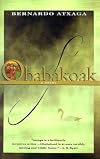
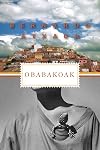
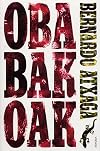
Obabakoak
by Bernardo Atxaga
On This Page
Description
One of only a hundred or so books originally written in the Basque language during the last four centuries, Obabakoak is a shimmering, mercurial novel about life in Obaba, a remote, exotic, Basque village. Obaba is peopled with innocents and intellectuals, shepherds and schoolchildren, whilst everyone from a lovelorn schoolmistress to a cultured but self-hating dwarf wanders across the page. Obabakoak is a dazzling collage of stories, town gossip, diary excerpts and literary theory, all held show more together by Atxaga's distinctive and tenderly ironic voice. show lessTags
Recommendations























Member Recommendations

Member Reviews
With Obabakoak, which has been translated into numerous languages, the Basque language has conquered its place in world literature.
The remote village of Obaba, somewhere in the Basque mountains, follows its own rules. Here, confused hearts, dead letters, and stubborn chickens live. Here, tomato paste piles up in Rosie's corner shop, and rumors about the shepherds' house and lizards creep into unwary ears. Those who aren't careful get lost on the mountain paths or behind the neighbor's door.
Bernardo Atxaga conjures a sensual labyrinth, narrating fantastically real things, searching for the final word and endless stories.
It is a novel of fabulation, in which the fantastic becomes real and the real becomes fantastic, and all the stories show more are essentially about storytelling. The fictional village of Obaba becomes an almost mythical place of universal significance, yet remains a small town lost in the Basque mountains. With a playful perspective that ranges from Germany to Baghdad to the Amazon, from Borges to Calvino to Queneau, Atxaga conjures up a bizarre cosmos, distorting and parodying, delightfully playing with words, sentences, and senses.
I highly recommend this book. show less
The remote village of Obaba, somewhere in the Basque mountains, follows its own rules. Here, confused hearts, dead letters, and stubborn chickens live. Here, tomato paste piles up in Rosie's corner shop, and rumors about the shepherds' house and lizards creep into unwary ears. Those who aren't careful get lost on the mountain paths or behind the neighbor's door.
Bernardo Atxaga conjures a sensual labyrinth, narrating fantastically real things, searching for the final word and endless stories.
It is a novel of fabulation, in which the fantastic becomes real and the real becomes fantastic, and all the stories show more are essentially about storytelling. The fictional village of Obaba becomes an almost mythical place of universal significance, yet remains a small town lost in the Basque mountains. With a playful perspective that ranges from Germany to Baghdad to the Amazon, from Borges to Calvino to Queneau, Atxaga conjures up a bizarre cosmos, distorting and parodying, delightfully playing with words, sentences, and senses.
I highly recommend this book. show less
Where to begin? The most inventive, thought-provoking, clever, and wise books I have read in a very long time. The book (I hesitate to call it a novel) opens with five standalone short stories, each one impressive and several of which share one of the themes tying the volume together: the experience and views of outsiders. Then follows a novella describing the narrator's year-long stay in Villamediana, paying attention to the society and personalities of the village. It feels realistic, possibly even autobiographical, and although enjoyable, I thought it the least satisfying portion of the book. The last half of the book, "In Search of the Last Word," comprises a dozen stories set in a framing narrative. This portion begins with the show more narrator looking at old school photos, one of which prompts a question that launches Atxaga on his quest, a series of partially interconnected stories including literary exchanges between the narrator, his uncle, and a friend who discuss writing and share their own stories (included in the book). Beginning with a retelling of a classic Persian fable about a man fleeing his home to escape Death, Atxaga recounts an Amazonian adventure; a magic liaison and murder; protagonists linked to dead siblings; a medieval vignette; and even a two short advice pieces: "How to write a story in five minutes" and "How to plagiarise," the latter a tour de force. This summary, however, barely scratches the surface of Atxaga’s enterprise, a brilliantly conceived postmodern mosaic that invokes far larger questions, including the question of how to understand and evaluate the history and state of Basque literature. show less
I picked this one up at Erick's place when I staying with him in D.F., and I remember at first loving the whimsical fairy tale quality of the stories in a mythical Basque village. But the promise of a brilliant book did not hold till the end. I can't quite remember now why... but my abiding sense is that the stories became repetitive and were not half as profound as they initially seemed.
The edition I read labels the book as a novel right on the cover below the title. I think I have a pretty open-minded threshold for what constitutes a novel, but in the first half I couldn't see any reason to see the book in that light. Rather, here were a collection of short vignettes grouped into broad categories and of varying degrees of appeal. Ostensibly the unifying element was the titular village of Obaba, but it rarely seemed really important that the setting was this fictitious village--as though the author might just as well have collected together some unrelated stories and added in a reference to the place name "Obaba" after the fact in order to justify the collection. (There was also, inexplicably, one section--about 60 show more pages, almost a fifth of the total book--which was set in a different village called Villamediana). The second half finds a way to interestingly frame its stories and weave them together in an overarching narrative, to bring the past stories back in reference to later ones, but I should say that the stories of the first half weren't BAD for lacking this quality. I only mean to say that the book walks a confusing line by calling itself a novel and yet resembling far more an anthology of short works.
I read this book while also reading Mark Kurlansky's "A Basque History of the World", which served as a very interesting companion. Atxaga's book largely avoids the political issues surrounding his Basque heritage (except toward the very end) and indeed many of his stories have an international quality, some taking place in South America, another in China, others in Germany, but the existence of his book is inherently related to the Basque struggle for self-determination. It was somewhat sad to me to see that what I was reading was a translation from a translation. The book could apparently not be translated directly from Euskera (Basque) to English but from the Spanish translation. Fortunately, it is a translation from the author's own Spanish translation, so we can feel confident that not too much has been lost in fidelity to the original, and as Atxaga himself asserts in his sign-off at the end, the advent of a distinctly Basque literature appears to be waxing rather than sputtering out, with the market for such works expanding. Perhaps as this trends continues there will come to be translators capable of transmitting the works of Basque authors directly to readers from other parts of the world.
The Prologue--a poem in which the author discusses his language--was perhaps my favorite part, in particular where he gives the words for the sun in winter and the sun in spring. show less
I read this book while also reading Mark Kurlansky's "A Basque History of the World", which served as a very interesting companion. Atxaga's book largely avoids the political issues surrounding his Basque heritage (except toward the very end) and indeed many of his stories have an international quality, some taking place in South America, another in China, others in Germany, but the existence of his book is inherently related to the Basque struggle for self-determination. It was somewhat sad to me to see that what I was reading was a translation from a translation. The book could apparently not be translated directly from Euskera (Basque) to English but from the Spanish translation. Fortunately, it is a translation from the author's own Spanish translation, so we can feel confident that not too much has been lost in fidelity to the original, and as Atxaga himself asserts in his sign-off at the end, the advent of a distinctly Basque literature appears to be waxing rather than sputtering out, with the market for such works expanding. Perhaps as this trends continues there will come to be translators capable of transmitting the works of Basque authors directly to readers from other parts of the world.
The Prologue--a poem in which the author discusses his language--was perhaps my favorite part, in particular where he gives the words for the sun in winter and the sun in spring. show less
Excellent storytelling. Something complementary to Calvino (apparent even before the marco polo piece).
This book circumvents serious review by containing its own exegesis, and by existing from such subtle and deft construction that to explain or examine OBABAKOAK is to take something away from future readers. Read this book. Seriously, read this book. I'll write more later.
This is a wonderful book of short stories. Obviously with any book of short stories not everyone can be your favorite but these were all good stories. Some long and some short to make for interesting reading. I'm not familiar with the area that is suppose to be described but I found it interesting.
Members
- Recently Added By
Lists

Best of World Literature
434 works; 51 members

Reading Globally
136 works; 16 members

Books written in uncommon languages
97 works; 8 members

My TBR
371 works; 3 members
Talk Discussions
Past Discussions
Group Read, August 2024: Obabakoak in 1001 Books to read before you die (August 2024)
Author Information

127+ Works 2,342 Members
Some Editions
Awards and Honors
Series
Belongs to Publisher Series
Common Knowledge
- Canonical title
- Obabakoak
- Original title
- Obabakoak; Bi letter jaso nituen oso denbora gutxian; Sugeak txoriari begiratzen dionean; Bi anai
- Original publication date
- 1992 (English Translation) (English Translation); 1989 (Spanish Tranlation) Bernardo Atxaga (Spanish Tranlation); 1988 (Basque) (Basque)
- Important places
- Obaba
- Related movies
- Obaba (2005 | IMDb)
- First words
- Encuadernados la mayoría en piel y severamente dispuestos en las estanterías, los libros de Esteban Werfell lenaban casi por entero las cuatro paredes de la sala;
Recibí dos letters en muy poco tiempo: la primera un viernes y la seugnda cinco días más tarde, un miércoles de mucho sol. - Blurbers
- Byatt, A.S.
- Original language
- Basque
Classifications
- Genres
- General Fiction, Fiction and Literature
- DDC/MDS
- 899.923 — Literature & rhetoric Literatures of other languages Literatures of non-Austronesian languages of Oceania, of Austronesian languages, of miscellaneous languages Literature of Basque, Summerian, Elamite, Etruscan, Caucausian and Artificial languages Basque Basque fiction
- LCC
- PH5339 .A8 .O2313 — Language and Literature Uralic languages. Basque language Uralic. Basque Basque
- BISAC
Statistics
- Members
- 744
- Popularity
- 37,846
- Reviews
- 18
- Rating
- (3.97)
- Languages
- 25 — Arabic, Aragonese Spanish, Basque, Catalan, Danish, Dutch, English, Finnish, French, German, Galician, Greek, Hebrew, Italian, Japanese, Norwegian, Polish, Portuguese, Romanian, Russian, Croatian, Spanish, Swedish, Turkish, Welsh
- Media
- Paper, Audiobook, Ebook
- ISBNs
- 56
- ASINs
- 9