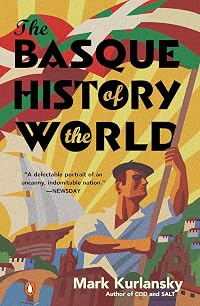
The Basque History of the World: The Story of a Nation
by Mark Kurlansky
On This Page
Description
Award-winning author Mark Kurlansky has drawn enthusiastic praise for his books, which are sharply-focused studies as well as glorious celebrations of their subjects. In The Basque History of the World, he turns his eye toward Europe's oldest surviving culture-a culture as mysterious as it is fascinating. Settled in the western Pyrenees Mountains of France and Spain, the Basque nation is not drawn on maps and the origin of their forbidden language has never been discovered. Yet, Basques show more appear to predate all other cultures in Europe, with many significant global contributions to their credit. Most notably, one of their own took command after Magellan's death and was the first person to circumnavigate the globe. This informative book is full of lively anecdotes that illuminate an otherwise obscure culture. Narrator George Guidall rises to the challenge of the text, which includes many Basque terms, and interprets beautifully. show lessTags
Recommendations








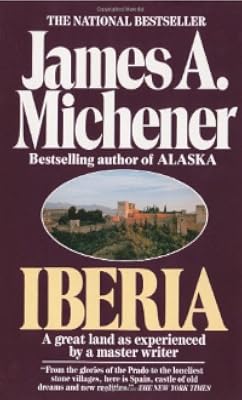

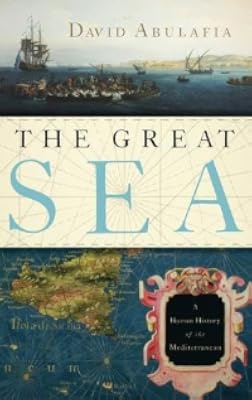
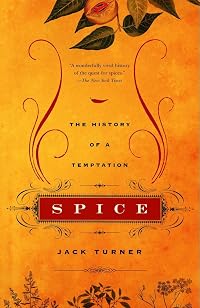
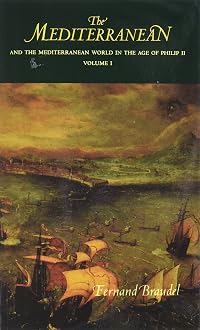








Member Recommendations


Spain by Jan Morris
by John_Vaughan
Member Reviews
This highly enjoyable read sheds light on an ancient culture that was evidently among the greatest nautical explorers. Their genetics, language, and history are fascinating. Devouring the book.
History is the beautiful, brightly lit foam on top of the annihilating tsunami of the unrecorded past. History books are the spectrographic analysis of the light glinting off that foam. Any attempt at making a book more than that is doomed to failure and tedium.
This is not a tedious or failed book. It's just...well...curiously insubstantial. I don't like the focus on the Great and the Good in place of the gestalt of the actions of the Basques. I know, I know, most people can't name their great-grandparents, still less find evidence of their obvious existence, and historians are limited to what documentary evidence exists. But Ignatius Loyola stalled me every time I tried to re-read this book. I hated that jerk when I was confirmed, and show more given the confirmation saint of St. Charles Borromeo, a major Jesuit figure. I am a flawed being, I admit it...I can't abide hagiography, and I fear Kurlansky's absence of harsh, vituperative judgments thundered down upon the founder of the Jesuits sat ill with me.
But the book is, overall, an attempt to do the extremely difficult: Show the unrecorded points of commonality that linked major events in history, ie the involvement of a people generally overlooked. I suspect the Basques like it that way. I don't know what the Basque majority's opinion was of this book, but I suspect it was well and truly mixed. He's drawing attention to us! Yay! Boo! And often from the same person, I'd bet.
Why such a mingy rating as 3.6 stars? Because...well, because it wasn't anywhere near as much fun to read as I expected it to be.
And Loyola, that rotten sleazebag. show less
This is not a tedious or failed book. It's just...well...curiously insubstantial. I don't like the focus on the Great and the Good in place of the gestalt of the actions of the Basques. I know, I know, most people can't name their great-grandparents, still less find evidence of their obvious existence, and historians are limited to what documentary evidence exists. But Ignatius Loyola stalled me every time I tried to re-read this book. I hated that jerk when I was confirmed, and show more given the confirmation saint of St. Charles Borromeo, a major Jesuit figure. I am a flawed being, I admit it...I can't abide hagiography, and I fear Kurlansky's absence of harsh, vituperative judgments thundered down upon the founder of the Jesuits sat ill with me.
But the book is, overall, an attempt to do the extremely difficult: Show the unrecorded points of commonality that linked major events in history, ie the involvement of a people generally overlooked. I suspect the Basques like it that way. I don't know what the Basque majority's opinion was of this book, but I suspect it was well and truly mixed. He's drawing attention to us! Yay! Boo! And often from the same person, I'd bet.
Why such a mingy rating as 3.6 stars? Because...well, because it wasn't anywhere near as much fun to read as I expected it to be.
And Loyola, that rotten sleazebag. show less
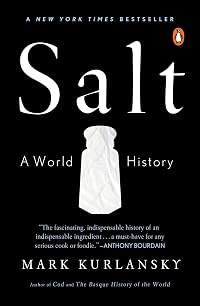
I'm more a fan of natural history than straight up human history, but Kurlansky's Basque history forms a reasonable triptych with his [b:Cod: A Biography of the Fish that Changed the World|64895|Cod A Biography of the Fish that Changed the World|Mark Kurlansky|http://photo.goodreads.com/books/1170625012s/64895.jpg|62987] and [b:Salt: A World History|2715|Salt A World History|Mark Kurlansky|http://photo.goodreads.com/books/1312497764s/2715.jpg|73206]--Cod because of the relationship of the Basque to the cod trade and Salt because of its descriptions of pre-national Europe.
Though some sections dragged a bit (for example, the contemporary political scene, which bogged down in details), this was, overall, an enjoyable and sympathetic show more history, portraying the Basque as more than a furtive people with a terrorist arm who were slaughtered at Guernica. Recipes abound. show less
Though some sections dragged a bit (for example, the contemporary political scene, which bogged down in details), this was, overall, an enjoyable and sympathetic show more history, portraying the Basque as more than a furtive people with a terrorist arm who were slaughtered at Guernica. Recipes abound. show less
This book surprised me in some ways. I was interested in it specifically because my wife and I visited French Basqueland two years back. The book was very well written and very engaging, but I was a bit surprised that it was more or less a straight history of the Basque people from around the Middle Ages to the present. By "straight history" I mean it was mostly a traditional political history, with less cultural information than I was expecting, less about the mythology and social history. Also, much of the book from the post-World War II period onward was a description of the repressive measures of the Franco regime and its predecessors and about the radical and violent ETA nationalist terrorist group. Although all of that is of show more course important and central to the modern Basque story, the book made it seem as if there was little else going on in the Basque areas of Spain and France but that. So I didn't really feel that I got a very good picture of the modern Basque people.
Nevertheless, as I said, I did enjoy the book and feel that I've learned a lot that's interesting about the Basque people, their history and their culture.
It was also interesting to me that the book intersected so strongly with two other books I've read recently, for the section on the middle ages through the Renaissance helped provided some interesting perspective on things I'd recently read about in The Medici. And the detailed chapter on the Spanish Civil War, in which the Basques played an important role, mainly on the Loyalist side, resonated with the novel on the conflict, Another Hill, that I read a month or so. Funny how you can get some interesting congruence that way without even realizing you're doing it. show less
Nevertheless, as I said, I did enjoy the book and feel that I've learned a lot that's interesting about the Basque people, their history and their culture.
It was also interesting to me that the book intersected so strongly with two other books I've read recently, for the section on the middle ages through the Renaissance helped provided some interesting perspective on things I'd recently read about in The Medici. And the detailed chapter on the Spanish Civil War, in which the Basques played an important role, mainly on the Loyalist side, resonated with the novel on the conflict, Another Hill, that I read a month or so. Funny how you can get some interesting congruence that way without even realizing you're doing it. show less
A fabulous book. I came to it knowing the Basques only as a linguistic curiosity and I now know they're one of the coolest peoples on the planet and that they discovered America.
No one's going to make any claims for Kurlansky being a great stylist, but he writes well and orders his material very well. What bumped this book up to a five was that it's the only one I've ever read that had a recipe for cat.
No one's going to make any claims for Kurlansky being a great stylist, but he writes well and orders his material very well. What bumped this book up to a five was that it's the only one I've ever read that had a recipe for cat.
The Basque people are interesting in their desire for nationalism without necessarily the desire for a "country" in the traditional sense of the word. This book is primarily a history of the Basque search for cultural independence. I found it a bit hard to follow as it isn't always chronological -- I sometimes got confused by how different people fit into the story.
I enjoyed far more the descriptions of Basque life -- the cooking, the writing, the development of the language. The comments and views of contemporary Basque citizens put the history into a more interesting perspective.
I enjoyed far more the descriptions of Basque life -- the cooking, the writing, the development of the language. The comments and views of contemporary Basque citizens put the history into a more interesting perspective.
This is a fascinating view of history in Western Europe and the North Atlantic. Particularly interesting is the secret kept of their cod fishing grounds, close enough to North America for them to have "discovered" it
Members
- Recently Added By
Author Information

49+ Works 21,575 Members
Mark Kurlansky is the author of The Basque History of the World, the New York Times bestseller Cod: A Biography of the Fish that Changed the World (among the New York Public Library's Best Books of the Year in 1998), as well as A Chosen Few: The Resurrection of European Jewry; A Continent of Islands: Searching for the Caribbean Destiny, and show more several acclaimed works of short fiction and journalism about the Caribbean. He spent seven years as the Caribbean correspondent for the Chicago Tribune. He lives in New York City. (Bowker Author Biography) show less
Some Editions
Awards and Honors
Distinctions
Common Knowledge
- Original title
- The Basque History of the World: The Story of a Nation
- Original publication date
- 1999
- People/Characters
- Francisco Franco; Roland (The song of Roland); Ignatius of Loyola
- Important places
- France; Spain; Euskadi; Guernica, Basque Country, Spain; Pamplona, Navarre, Spain; Bilbao, Basque Country, Spain
- Important events
- Battle of Ronceveaux Pass; Spanish Civil War (1936-1939)
- Dedication
- To Marian,
who makes life sparkle - First words
- The first time I heard the secret tongue, the ancient and forbidden language of the Basques, was in the Hotel Eskualduna in St.-Jean-de-Luz.
- Last words
- (Click to show. Warning: May contain spoilers.)The sixteenth-century Guipúzcoan Esteban de Garibay, the first scholar of Basque history and the first to attempt to trace the origin of the Basque people and language, told the Castilian crown in the clear simplicity of the ancient language, that which Basques have been saying ever since: "Garean gareana legez," Let us be what we are.
- Blurbers
- Johnson, Charles
- Original language
- English
- Disambiguation notice
- ISBN 0099284138 is for The Basque History of the World: The Story of a Nation by Mark Kurlansky.
Classifications
Statistics
- Members
- 1,502
- Popularity
- 15,506
- Reviews
- 30
- Rating
- (3.78)
- Languages
- 6 — Catalan, Dutch, English, French, German, Spanish
- Media
- Paper, Audiobook, Ebook
- ISBNs
- 26
- ASINs
- 14