
Mark Kurlansky
Author of Salt: A World History
About the Author
Mark Kurlansky is the author of The Basque History of the World, the New York Times bestseller Cod: A Biography of the Fish that Changed the World (among the New York Public Library's Best Books of the Year in 1998), as well as A Chosen Few: The Resurrection of European Jewry; A Continent of show more Islands: Searching for the Caribbean Destiny, and several acclaimed works of short fiction and journalism about the Caribbean. He spent seven years as the Caribbean correspondent for the Chicago Tribune. He lives in New York City. (Bowker Author Biography) show less
Image credit: reading at National Book Festival By Slowking4 - Own work, GFDL 1.2, https://commons.wikimedia.org/w/index.php?curid=62180170
Series
Works by Mark Kurlansky
The Food of a Younger Land: A Portrait of American Food--Before the National Highway System, Before Chain Restaurants, and Before Frozen Food, When the Nation's Food Was Seasonal (2009) 909 copies, 30 reviews
The Last Fish Tale: The Fate of the Atlantic and Survival in Gloucester, America's Oldest Fishing Port and Most Original Town (2008) 371 copies, 5 reviews
Choice Cuts: A Savory Selection of Food Writing from Around the World and Throughout History (2002) 368 copies, 2 reviews
Ready for a Brand New Beat: How "Dancing in the Street" Became the Anthem for a Changing America (2013) 155 copies, 19 reviews
The Core of an Onion: Peeling the Rarest Common Food―Featuring More Than 100 Historical Recipes (2023) 120 copies, 2 reviews
The Eastern Stars: How Baseball Changed the Dominican Town of San Pedro de Macoris (2010) 111 copies, 3 reviews
What?: Are These the 20 Most Important Questions in Human History--Or is This a Game of 20 Questions? (2011) 98 copies, 3 reviews
International Night: A Father and Daughter Cook Their Way Around the World *Including More than 250 Recipes* (2014) 58 copies
The Importance of Not Being Ernest: My Life with the Uninvited Hemingway (A unique Ernest Hemingway biography, Gift for writers) (2022) 31 copies, 1 review
A Moveable Feast 3 copies
The Food of a Younger Land: The Southwest Eats New Mexico, Oklahoma, Texas, Southern California (2009) 3 copies
Associated Works
Gandhi on Non-Violence: A Selection From the Writings of Mahatma Gandi (1965) — Preface, some editions — 373 copies, 2 reviews
Hebbes7: 10 nieuwe smaakmakers voor het najaar — Contributor — 3 copies
Tagged
Common Knowledge
- Canonical name
- Kurlansky, Mark
- Birthdate
- 1948-12-07
- Gender
- male
- Education
- Butler University (BA ∙ 1970)
- Occupations
- journalist
writer-in-residence (Baruch College ∙ Sidney Harman Writer-in-residence ∙ 2007)
chef
pastry maker
non-fiction writer - Organizations
- Chicago Tribune
- Awards and honors
- National Outdoor Book Award (2021)
John Avery Award (2020)
Robert Laxalt Distinguished Writer Award (2012)
Gold Award (2011)
Dayton Literary Peace Prize (2007)
Bon Appétit Food Writer of the Year (2006) (show all 13)
Pluma de Plata Award (2003)
Basque Hall of Fame (2001)
The Glenfiddich Food and Drink Award (1999 | Cod)
James Beard Award for Excellence in Food Writing (1998 | Cod)
New York Public Library Best Books (1997 | Cod)
Earplay Award (1972)
Phi Beta Kappa (1970) - Agent
- Charlotte Sheedy
- Nationality
- USA
- Birthplace
- Hartford, Connecticut, USA
- Places of residence
- Mexico
New York, New York, USA - Associated Place (for map)
- USA
Members
Reviews
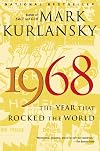
How much we forget. 1968 was a monumental year in many ways. I got married that year. There was a police riot at the Democratic National convention. Two assassinations. Riots in cities. A spirit of rebellion against authority all around the world. The Vietnam War got worse with the Tet Offensive. The president decided not to run for reelection. The capture of the Pueblo by North Korea. Prague Spring followed by the Russian invasion of Czechoslovakia. And the election of Nixon. Many people show more were sure it was the end not just of the United States, but of civilization as well.
Media attention was essential for the non-violent movements to succeed. Something they learned quickly was that in order to get that attention, non-violence had to be met with violence. If the response was equally non-violent, the media would yawn and go elsewhere. Martin Luther King learned this from the police chief of Albany, GA, Laurie Pritchett, who thwarted the "Albany Movement" in 1961-62 by responding to King's demonstration in a completely non-violent manner. It completely undercut the movement there. They were forced to target cities with hot-headed police chiefs and mayors. Video of police beating up peaceful demonstrators was priceless. It's a lesson that police in many communities still have not learned.
1968 was the beginning of a new era in television. Videotape immediacy and satellite transmission meant that the war could now be seen almost live from the battleground. The Tet Offensive, a military defeat for the Viet Cong (they were never to mount a cohesive campaign again) was a media victory for them. Westmoreland's staff had been talking about a light at the end of the tunnel, but the public now realized it was an oncoming train. The police riots at the Democratic Convention in Chicago were broadcast live. That had never happened before. People could see Mayor Daley call Abraham Ribicoff a Jew motherfucker on the convention floor. Those in power didn't like that unedited version of reality. Hubert Humphrey announced that "when" he became president he would have the FCC "look into that." The great liberal as authoritarian. Then again, the violence against the Hippies probably helped Nixon win the election.
Abbie Hoffman understood the power of television. Many people thought he was just a clown, but he understood that clowns attracted attention and that brought TV. TV didn't just report the news any more, it shaped it, and Hoffman, older than most of the other radicals at the time understood its importance.
In the meantime, a perfect metaphor for the bifurcation of society happened in the White House when Lady Bird Johnson invited Eartha Kitt, born in the cotton fields of South Carolina, to a dinner attended mostly by rich white liberal women. Topic of the day was how to address the crime wave (translation: blacks out of control in the cities.) She took it upon herself to suggest that having predominantly black army you sent to fight a war they didn't believe in might be part of the problem. After an uncomfortable silence, Lady Bird graciously suggested she wasn't able to see the world the same way not having had the same experience as Kitt. There it was in a nutshell. *
2020 looks like a walk in the park in comparison.
Slogans are always useful in helping to garner support and defining an issue. The Democrats have failed rather miserably in picking slogans recently, "Defund the Police" being an excellent example. You should not have to explain a slogan. The civil rights movement picked cogent ones. "Freedom Riders" has such an appealing ring to it and needs no explanation. The non-violent movement had the moral high ground and the example of the protester who took his shoes off before leaping on top of a police car to give a speech because he didn't want to scratch the car was emblematic. Running a non-violent movement takes so much more work and planning than just being violent and reacting with rage.
Anyone over fifty will be riveted. Those under should read it to understand why we are where we are today. A must read.
Kitt's comment: "The children of America are not rebelling for no reason. They are not hippies for no reason at all. We don't have what we have on Sunset Blvd. for no reason. They are rebelling against something. There are so many things burning the people of this country, particularly mothers. They feel they are going to raise sons – and I know what it's like, and you have children of your own, Mrs. Johnson – we raise children and send them to war." As a result the CIA put together a phony dossier on Kitt, that was later unearthed by Seymour Hersh in 1975, that branded her as a "sadistic nymphomaniac" and got her blacklisted. (https://www.nytimes.com/1975/01/03/archives/cia-in-68-gave-secret-service-a-report-containing-gossip-about.html) show less
Media attention was essential for the non-violent movements to succeed. Something they learned quickly was that in order to get that attention, non-violence had to be met with violence. If the response was equally non-violent, the media would yawn and go elsewhere. Martin Luther King learned this from the police chief of Albany, GA, Laurie Pritchett, who thwarted the "Albany Movement" in 1961-62 by responding to King's demonstration in a completely non-violent manner. It completely undercut the movement there. They were forced to target cities with hot-headed police chiefs and mayors. Video of police beating up peaceful demonstrators was priceless. It's a lesson that police in many communities still have not learned.
1968 was the beginning of a new era in television. Videotape immediacy and satellite transmission meant that the war could now be seen almost live from the battleground. The Tet Offensive, a military defeat for the Viet Cong (they were never to mount a cohesive campaign again) was a media victory for them. Westmoreland's staff had been talking about a light at the end of the tunnel, but the public now realized it was an oncoming train. The police riots at the Democratic Convention in Chicago were broadcast live. That had never happened before. People could see Mayor Daley call Abraham Ribicoff a Jew motherfucker on the convention floor. Those in power didn't like that unedited version of reality. Hubert Humphrey announced that "when" he became president he would have the FCC "look into that." The great liberal as authoritarian. Then again, the violence against the Hippies probably helped Nixon win the election.
Abbie Hoffman understood the power of television. Many people thought he was just a clown, but he understood that clowns attracted attention and that brought TV. TV didn't just report the news any more, it shaped it, and Hoffman, older than most of the other radicals at the time understood its importance.
In the meantime, a perfect metaphor for the bifurcation of society happened in the White House when Lady Bird Johnson invited Eartha Kitt, born in the cotton fields of South Carolina, to a dinner attended mostly by rich white liberal women. Topic of the day was how to address the crime wave (translation: blacks out of control in the cities.) She took it upon herself to suggest that having predominantly black army you sent to fight a war they didn't believe in might be part of the problem. After an uncomfortable silence, Lady Bird graciously suggested she wasn't able to see the world the same way not having had the same experience as Kitt. There it was in a nutshell. *
2020 looks like a walk in the park in comparison.
Slogans are always useful in helping to garner support and defining an issue. The Democrats have failed rather miserably in picking slogans recently, "Defund the Police" being an excellent example. You should not have to explain a slogan. The civil rights movement picked cogent ones. "Freedom Riders" has such an appealing ring to it and needs no explanation. The non-violent movement had the moral high ground and the example of the protester who took his shoes off before leaping on top of a police car to give a speech because he didn't want to scratch the car was emblematic. Running a non-violent movement takes so much more work and planning than just being violent and reacting with rage.
Anyone over fifty will be riveted. Those under should read it to understand why we are where we are today. A must read.
Kitt's comment: "The children of America are not rebelling for no reason. They are not hippies for no reason at all. We don't have what we have on Sunset Blvd. for no reason. They are rebelling against something. There are so many things burning the people of this country, particularly mothers. They feel they are going to raise sons – and I know what it's like, and you have children of your own, Mrs. Johnson – we raise children and send them to war." As a result the CIA put together a phony dossier on Kitt, that was later unearthed by Seymour Hersh in 1975, that branded her as a "sadistic nymphomaniac" and got her blacklisted. (https://www.nytimes.com/1975/01/03/archives/cia-in-68-gave-secret-service-a-report-containing-gossip-about.html) show less
Ready For a Brand New Beat: How "Dancing in the Street" Became the Anthem for a Changing America by Mark Kurlansky
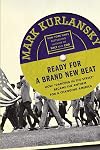
It’s interesting to me that a couple of the last books I’ve reviewed for LibraryThing Early Reviewers have been books on music, of a sort. A couple of months ago, it was DINNER WITH LENNY, the intelligent and compelling interview recorded by Jonathan Cott of the “last long interview” with Leonard Bernstein. This time, it’s READY FOR A BRAND NEW BEAT: How “Dancing in the Street” became the anthem for a changing America, by Mark Kurlansky. In both books, I have been impressed by show more the authors’ vibrant vocabulary of music. Mark Kurlansky gives us not only the history and development of a song, but also the full-bodied examination of one of the most convulsive periods of social and political adjustment known in the United States. Somehow, he is able to do this through smooth and seamless movement between the birth and evolution of “Dancing in the Streets” and that of the Civil Rights Movement.
Having been a young girl through some of the most violent times described in the book and having been deeply attracted to and influenced by the music coming out of that period, including Motown, I was enriched and educated by Kurlansky’s work. In the 1950’s, it was through music that the marginalized African American culture began to call the shots, unseating white culture as the defining one for the country. Just because every effort was made to disguise that fact and prevent it from happening didn’t change reality. Kurlansky gives specific examples of how it all happened.
READY FOR A BRAND NEW BEAT holds many surprises, especially for one so nominally educated in this recent period of our history. As Kurlansky says, history is not how things happened, it’s how they are perceived as having happened. Or something like that; I am not able to quote directly since this is the uncorrected proof of the book. In any case, who knew that the first Freedom Ride wasn’t the one taken by Rosa Parks in 1955, but the one taken by one Bayard Rustin, an African American Quaker, in 1942? According to Kurlansky, Bayard was rejected as a galvanizing emblem for the movement because he was homosexual. One passage I will dare to quote from the book, “In the study of history, beginnings and endings are usually artificial,…” So true.
Stereotypes are unseated throughout. For example, rock and roll “rioting” is clarified beautifully, completely reconfiguring my personal assumptions and miseducation about it. And this isn’t just because I came along at a time when my white culture was defensively struggling to adjust to the monumental changes that were happening. Stereotypes about the rock and roll era continue to abound in our current media. It is a stage of our growth as a nation that deserves to be revisited, as it serves as a reminder of our particular reality in the U.S., and the historical wounds from which we still suffer.
“Dancing in the Streets” was first recorded in Berry Gordy’s little studio on the Eastside in Detroit in July of 1964. That Martha Reeves happened to be hanging around that day and was pulled in from the hallway to sing it is just one of the serendipitous elements that went into the making if “Dancing in the Streets”. She liked doing things right the first time and was a little miffed that a mistake was made, it hadn’t gotten recorded and had to be redone. The slight edge to her second take was vital to the magnetic quality of the recording and certainly had some role to play in the relentless rise to popularity of the song and its remarkable staying power.
Mark Kurlansky follows the song from this humble beginning, through its rise on the charts, its becoming the song that inspired demonstrations from coast to coast, the many covers done of it through the decades and its extraordinary endurance. It wouldn’t surprise me if the book excites a revisit to those decades that revolutionized this country and the Motown originals that carried them. For certain, I am going to dig out all the Motown albums I own, dust them off and play them again. I pity those who don’t have access to those original analog versions. Although I encourage you to get whatever version of “Dancing in the Streets” you can lay your hands on, if it’s digital you’ll literally be missing something. Read this book! show less
Having been a young girl through some of the most violent times described in the book and having been deeply attracted to and influenced by the music coming out of that period, including Motown, I was enriched and educated by Kurlansky’s work. In the 1950’s, it was through music that the marginalized African American culture began to call the shots, unseating white culture as the defining one for the country. Just because every effort was made to disguise that fact and prevent it from happening didn’t change reality. Kurlansky gives specific examples of how it all happened.
READY FOR A BRAND NEW BEAT holds many surprises, especially for one so nominally educated in this recent period of our history. As Kurlansky says, history is not how things happened, it’s how they are perceived as having happened. Or something like that; I am not able to quote directly since this is the uncorrected proof of the book. In any case, who knew that the first Freedom Ride wasn’t the one taken by Rosa Parks in 1955, but the one taken by one Bayard Rustin, an African American Quaker, in 1942? According to Kurlansky, Bayard was rejected as a galvanizing emblem for the movement because he was homosexual. One passage I will dare to quote from the book, “In the study of history, beginnings and endings are usually artificial,…” So true.
Stereotypes are unseated throughout. For example, rock and roll “rioting” is clarified beautifully, completely reconfiguring my personal assumptions and miseducation about it. And this isn’t just because I came along at a time when my white culture was defensively struggling to adjust to the monumental changes that were happening. Stereotypes about the rock and roll era continue to abound in our current media. It is a stage of our growth as a nation that deserves to be revisited, as it serves as a reminder of our particular reality in the U.S., and the historical wounds from which we still suffer.
“Dancing in the Streets” was first recorded in Berry Gordy’s little studio on the Eastside in Detroit in July of 1964. That Martha Reeves happened to be hanging around that day and was pulled in from the hallway to sing it is just one of the serendipitous elements that went into the making if “Dancing in the Streets”. She liked doing things right the first time and was a little miffed that a mistake was made, it hadn’t gotten recorded and had to be redone. The slight edge to her second take was vital to the magnetic quality of the recording and certainly had some role to play in the relentless rise to popularity of the song and its remarkable staying power.
Mark Kurlansky follows the song from this humble beginning, through its rise on the charts, its becoming the song that inspired demonstrations from coast to coast, the many covers done of it through the decades and its extraordinary endurance. It wouldn’t surprise me if the book excites a revisit to those decades that revolutionized this country and the Motown originals that carried them. For certain, I am going to dig out all the Motown albums I own, dust them off and play them again. I pity those who don’t have access to those original analog versions. Although I encourage you to get whatever version of “Dancing in the Streets” you can lay your hands on, if it’s digital you’ll literally be missing something. Read this book! show less
 This review was written for LibraryThing Early Reviewers.
Ready For a Brand New Beat: How "Dancing in the Street" Became the Anthem for a Changing America by Mark Kurlansky
Don't be fooled by the title. This work is much bigger than the humble beginnings and subsequent impact of just one song. Retracing the musical roots of rhythm and blues, jazz, and rock and roll Kurlansky tackles the history of these musical genres (and the musicians who played them) and leaves no stone unturned. The best part of this book was the unveiling of the profound impact technology had on music. As technology continues to change the course of marketing music, buying music, and show more listening to music it is worth remembering that this trend started a long time ago.
There is one prediction I can make about this book. Whether Kurlansky intends for this to happen is another matter, but I bet people will be reaching for their old Chuck Berry and Elvis Presley albums after reading Ready for a Brand New Beat. show less
There is one prediction I can make about this book. Whether Kurlansky intends for this to happen is another matter, but I bet people will be reaching for their old Chuck Berry and Elvis Presley albums after reading Ready for a Brand New Beat. show less
This review was written for LibraryThing Early Reviewers.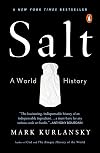
Leave it to Kurlansky to take an ordinary item like salt and make it utterly fascinating. Who knew how much of our world was shaped by the need for salt? Wars were fought over it, and civilizations rose and fell because of it. True to form, Kurlansky's book is accessible, far-reaching, and all but un-put-downable.
Lists
Awards


You May Also Like


Associated Authors
Statistics
- Works
- 48
- Also by
- 9
- Members
- 21,490
- Popularity
- #1,004
- Rating
- 3.8
- Reviews
- 525
- ISBNs
- 376
- Languages
- 18
- Favorited
- 53


