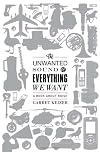
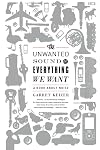
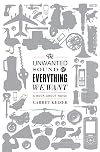
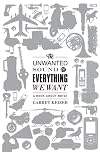
The Unwanted Sound of Everything We Want: A Book About Noise
by Garret Keizer
On This Page
Description
An acclaimed writer investigates the hidden political, social, and environmental costs of that ancient phenomenon we call noiseTags
Recommendations































Member Reviews
I have wondered at times if I am, in fact, more sensitive to noise than the average person. Noise that others seem to be able to shrug off is physically painful to me. The slight variations in the noise the room fan makes in the middle of the night can drive me to distraction. So I was drawn to this book, which is part science and part curmudgeonly meditation on the problem of noise.
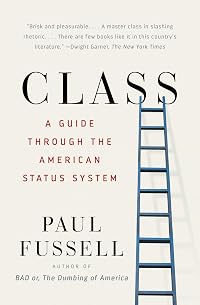
I was impressed with the author's willingness to look at noise as an issue of class. The poor are expected to tolerate what the rich would not, with noise as with so many other quality-of-life issues. And the author is not afraid to look at his own contribution to that issue, asking what is more important: his need for air travel to research a book, or a show more child under the flight path trying to learn to read a book?
I think he missed a few opportunities, but overall, a worthwhile book on a too-seldom heard topic. show less
I was impressed with the author's willingness to look at noise as an issue of class. The poor are expected to tolerate what the rich would not, with noise as with so many other quality-of-life issues. And the author is not afraid to look at his own contribution to that issue, asking what is more important: his need for air travel to research a book, or a show more child under the flight path trying to learn to read a book?
I think he missed a few opportunities, but overall, a worthwhile book on a too-seldom heard topic. show less
 This review was written for LibraryThing Early Reviewers.
Wonderfully written, informative, and insightful. I get funny looks from people when I start waxing about my new interest in the sociopolitics of noise. This is obviously a work of passion by Keizer, who has a knack for spreading a gospel he believes in without being preachy or moralizing. He merely presents the facts and suggests interpretations rather than taking an unfortunate role of oracle. He is consistent in acknowledging his subjectivity and when facts don't fit neatly into black or white. This acknowledgment of gray areas and sometimes being at a loss for solutions demonstrates a profound respect for the reader's intellect and ability to make their own conclusions and decisions. I really liked how Keizer makes the solitary work show more of authorship a collaborative process and incorporates into the book feedback, stories, and comments from readers of a blog he maintains about these issues. This topic could easily be presented in a dry and disengaging manner, but Keizer's wordplay and adroit employment of language are invaluable in guiding readers to considering this important and often ignored topic. show less
This review was written for LibraryThing Early Reviewers.An intriguing book with a timely message.
Keizer uses noise as both metaphor and literal subject to explore American culture, the rise of industrialism, social injustice, environmental degradation, and many other ills of modern society. Tracing the history of noise back to the classical period, he asks what makes noise "noise" and why addressing it is such a low priority in our society, despite its clearly damaging effects.
The problem, he explains, is both that those disproportionately affected by noise lack the power needed to challenge it, and that noise is positively associated with things like freedom, progress, democracy, and so on. He suggests that a quieter mode of living - by which he means not only a way of life with less show more unwanted sound but also one that sits more lightly on the environment and the less-privileged - is not opposed to those things, but a truer, more sustainable expression of them.
In so doing he not only provides an interesting look at noise and what it means, but makes a compelling argument for a world in which the laughter of children, bird song, and a good night's sleep are valued as much as raucous parties, fast cars, and the roar of jet engines. Questioning the priority of noise, he argues, makes it possible to question everything that enables it.
These are questions that need desperately to be asked. Ironically, this quiet, thoughtful book speaks loudly enough to be heard amid the cacophony of voices demanding ever more, while never asking who suffers. Here's hoping that more people will listen. show less
Keizer uses noise as both metaphor and literal subject to explore American culture, the rise of industrialism, social injustice, environmental degradation, and many other ills of modern society. Tracing the history of noise back to the classical period, he asks what makes noise "noise" and why addressing it is such a low priority in our society, despite its clearly damaging effects.
The problem, he explains, is both that those disproportionately affected by noise lack the power needed to challenge it, and that noise is positively associated with things like freedom, progress, democracy, and so on. He suggests that a quieter mode of living - by which he means not only a way of life with less show more unwanted sound but also one that sits more lightly on the environment and the less-privileged - is not opposed to those things, but a truer, more sustainable expression of them.
In so doing he not only provides an interesting look at noise and what it means, but makes a compelling argument for a world in which the laughter of children, bird song, and a good night's sleep are valued as much as raucous parties, fast cars, and the roar of jet engines. Questioning the priority of noise, he argues, makes it possible to question everything that enables it.
These are questions that need desperately to be asked. Ironically, this quiet, thoughtful book speaks loudly enough to be heard amid the cacophony of voices demanding ever more, while never asking who suffers. Here's hoping that more people will listen. show less
This review was written for LibraryThing Early Reviewers.This is an excellent, thoughtful meditation on something virtually everyone can agree upon: painful and intrusive noise sucks. The politically aggressive bullying that typifies noise dominance is finally given a good lashing on these pages; which alone is gratifying enough to recommend the book. Stylistically, Garret Keizer sticks with his forte: the clever milieu of highbrow periodical wit. Perhaps the most resonant quality of the book is its ability to make the reader feel less alone in the world. Most of us tend to stoically (by our own estimation) tolerate a great deal of noise in our daily lives, convinced that the risks of confrontation outweigh the uncertain rewards of complaint. We also recognize, even if only by a tacit sense show more of fair play, that the rights of the noisemaker and the accidental ear overlap in uncomfortable ways. It's a rewarding experience to read through this exhaustive rumination on the subject. Even if it isn't necessarily going to make the world a quieter place, it's a good start.
There are several pages of notes the end of the book, adding substantially to its bulk. An electronic version or the paperback edition would probably be the more economical - and ecologically prudent - choice. show less
There are several pages of notes the end of the book, adding substantially to its bulk. An electronic version or the paperback edition would probably be the more economical - and ecologically prudent - choice. show less
In many ways, the text of this book itself reflects this confusion and conflict, as Keizer weaves a story of history, progress, war, technology, music, poverty, politics, ecology, race, communication, travel and longing all around the central, tenacious topic of noise. A good definition of the word /noise/, Keizer suggests, might be "unwanted or repulsive sound," possibly related to the Latin root that also gives us /nausea/ - noise can provoke distraction, restlessness, annoyance, anger, fear, discomfort, even pain, as well as cause measurable bodily harm. It can be found in both the jamming of jazz musicians and the jamming of enemy radar, the meaningless static between radio stations and the jostling voices on a crowded street, and show more within all the myriad sounds and vibrations that arise, welcomed or resented, intentional or unnoticed, from the way we live our lives. There is a little bit of everything to be found in a book as grand in scope as this one. Keizer's soft-spoken but passionate interest in the "weak" issue of noise and its effects, especially on the weak and disenfranchised in society and in nature, lends an intensity to his writing that quickly engages the reader and becomes a guiding force of its own through the complex and sometimes overwhelming issues that surround battles over the "soundscape" of our lives and our shared world. For most of us, who have rarely given the subject of noise much thought beyond passing annoyance or pleasant indulgence, /The Unwanted Sound of Everything We Want/ is a resounding wake-up call to a deeply complex problem, and a challenge to seek out the gentle mindfulness that can become part of a quieter solution.
To read a more in-depth analysis of this book, as well as reflections on how it can give us insights into violence, peace and pacifism, please check out: http://politics.pagannewswirecollective.com/2010/05/24/peace-quiet-reviewing-a-b... show less
To read a more in-depth analysis of this book, as well as reflections on how it can give us insights into violence, peace and pacifism, please check out: http://politics.pagannewswirecollective.com/2010/05/24/peace-quiet-reviewing-a-b... show less
This review was written for LibraryThing Early Reviewers.Garrett Keizer has tackled the age-old problem of noise pollution, a subject on which there is curiously little non-technical literature. There is much to applaud in Keizer's effort. He seamlessly moves between cultural mores, scientific studies and legal issues. He shifts between journalistic stories of individuals' experiences with noise and broad interpretations of noise in a historical perspective. He openly acknowledges his biases, formed from personal experiences with noisy neighbors, but manages to participate in, rather than intrude upon, the narrative.
The book's opening chapters tackle the difficulties of defining exactly what constitutes "noise" and the legal and political issues that make it tricky to regulate. The next show more section covers noise history--from early humans' survival instincts to the first crusaders against the racket of the industrial age to cell phone etiquette. Contemporary noise issues are well represented with a thoughtful discussion of European noise policy and the noise impacts of airplanes, highways and wind farms. The final section of the book examines potential solutions. Predictably, the author begins this section with a call for more cultural understanding (using American's ever-changing taste in popular music as an example) but then goes on to suggest solutions that recognize increasing population density and diversity, are based on alternative energy, focus on reducing consumption and question all previous assumptions that have brought the world to its current, unsustainable course. In the end, Keizer sums it up quite simply, "We must learn to live more quietly."
I would recommend this book for anyone interested in noise pollution with the caveat that I found it a slow, unengaging read at times. Although the individual topics are knitted together in interesting ways, there is little overall narrative flow and I rarely felt compelled to keep reading once I finished a chapter. Nonetheless, the extensive back matter (timeline of noise history, glossary, list of organizations that deal with noise issues, decibel scale, guidelines for public noise policymaking, and a personal noise code as well as extensive footnotes and bibliographic material) makes this a valuable reference for environmental and community activists. show less
The book's opening chapters tackle the difficulties of defining exactly what constitutes "noise" and the legal and political issues that make it tricky to regulate. The next show more section covers noise history--from early humans' survival instincts to the first crusaders against the racket of the industrial age to cell phone etiquette. Contemporary noise issues are well represented with a thoughtful discussion of European noise policy and the noise impacts of airplanes, highways and wind farms. The final section of the book examines potential solutions. Predictably, the author begins this section with a call for more cultural understanding (using American's ever-changing taste in popular music as an example) but then goes on to suggest solutions that recognize increasing population density and diversity, are based on alternative energy, focus on reducing consumption and question all previous assumptions that have brought the world to its current, unsustainable course. In the end, Keizer sums it up quite simply, "We must learn to live more quietly."
I would recommend this book for anyone interested in noise pollution with the caveat that I found it a slow, unengaging read at times. Although the individual topics are knitted together in interesting ways, there is little overall narrative flow and I rarely felt compelled to keep reading once I finished a chapter. Nonetheless, the extensive back matter (timeline of noise history, glossary, list of organizations that deal with noise issues, decibel scale, guidelines for public noise policymaking, and a personal noise code as well as extensive footnotes and bibliographic material) makes this a valuable reference for environmental and community activists. show less
This review was written for LibraryThing Early Reviewers.This is a very entertaining study, dealing with the unusual subject of noise, and how we perceive it. It is written in a simple language, full of humor, but full of extremely interesting trivia about the origin of noise, the ways it affects the different cultures of the world, the aftermaths of noise in the lives of those of us who live in the big capitals and cities, and the ones who have the fortune to spend their lives away from the urban environment.
Members
- Recently Added By
Author Information
11+ Works 640 Members
Garret Keizer is a frequent contributor to Harper's Magazine. He lives with his family in northeastern Vermont
Common Knowledge
- Original publication date
- 2010-05-04
- Important places
- Sturgis, South Dakota, USA; Springfield, Massachusetts, USA; Mars Hill, Maine, USA; Ludlow, Massachusetts, USA
- Dedication
- For Kathy and Sarah
Classifications
- Genres
- Sociology, Nonfiction, General Nonfiction, Science & Nature, History
- DDC/MDS
- 363.74 — Society, government, & culture Social problems and social services Public Safety - Police, Crime Investigation Environmental Issues - Pollution, Recycling, Global Warming Noise pollution
- LCC
- BF353.5 .N65 .K45 — Philosophy, Psychology and Religion Psychology Psychology Consciousness. Cognition
- BISAC
Statistics
- Members
- 130
- Popularity
- 252,303
- Reviews
- 15
- Rating
- (3.74)
- Languages
- English
- Media
- Paper, Ebook
- ISBNs
- 5
- ASINs
- 1