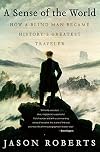
A Sense of the World: How a Blind Man Became History's Greatest Traveler
by Jason Roberts
On This Page
Description
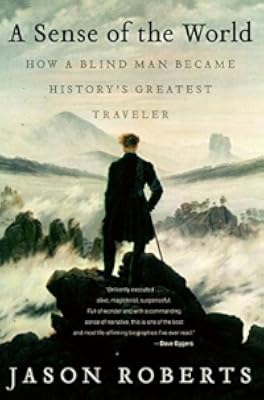
He was known simply as the Blind Traveler--a solitary, sightless adventurer who, astonishingly, fought the slave trade in Africa, survived a frozen captivity in Siberia, hunted rogue elephants in Ceylon, and helped chart the Australian outback. James Holman (1786-1857) became "one of the greatest wonders of the world he so sagaciously explored," triumphing not only over blindness but crippling pain, poverty, and the interference of well-meaning authorities (his greatest feat, a show more circumnavigation of the globe, had to be launched in secret). Once a celebrity, a bestselling author, and an inspiration to Charles Darwin and Sir Richard Francis Burton, the charismatic, witty Holman outlived his fame, dying in an obscurity that has endured--until now. Drawing on meticulous research, Jason Roberts ushers us into the Blind Traveler's uniquely vivid sensory realm, then takes us on a journey rich with suspense, humor, international intrigue, and unforgettable characters. --From publisher description. show lessTags
Recommendations























Member Recommendations
The Invention of Nature: The Adventures of Alexander von Humboldt, the Lost Hero of Science by Andrea Wulf
nessreader Early 19th century field scientists travelling the globe with great courage and endurance. Both superbly written biographies
Member Reviews
I loved this book.
The story of James Holman (1786-1857) who became blind while serving as a lieutenant in the British Navy. Holman had more wanderlust than probably anyone in history, perhaps even more than Ibn Buttata.
In spite of his blindness, maybe even because of it, he was able to travel around the world, through Siberia, through Brazil and through Africa. He helped fight the slave trade in West Africa; he met the czar of Russia; he climbed to the top of Mt. Vesuvius; and visited every country in Europe, on his own, without knowing the local languages before arriving, and with very little money.
He supported himself through a small pension and through writing about his travels. His books were very popular and he was very famous, but show more all of that faded away before the end of his life. He died, almost penniless, in a disreputable part of London, just about forgotten. The autobiography he was working on at the time of his death was never published and is now lost.
A Sense of the World is a fascinating read, perfect for the summer. Roberts focuses on the most interesting aspects of Holman's life and travels. While the book is not comprehensive, it is made more entertaining by this fact. We do not have to wade through the details a more scholarly biography would include just to get to the good stuff. Roberts conveys the personality of Holman, his conviviality, his humor, his positive outlook on life and on his situation, not without pathos, but with a sense of wonder and appreciation for all Holman accomplished.
I am grateful that Mr. Roberts found out about the Blind Traveler and could bring his story to us. I'm giving A Sense of the World five out of five stars. show less
The story of James Holman (1786-1857) who became blind while serving as a lieutenant in the British Navy. Holman had more wanderlust than probably anyone in history, perhaps even more than Ibn Buttata.
In spite of his blindness, maybe even because of it, he was able to travel around the world, through Siberia, through Brazil and through Africa. He helped fight the slave trade in West Africa; he met the czar of Russia; he climbed to the top of Mt. Vesuvius; and visited every country in Europe, on his own, without knowing the local languages before arriving, and with very little money.
He supported himself through a small pension and through writing about his travels. His books were very popular and he was very famous, but show more all of that faded away before the end of his life. He died, almost penniless, in a disreputable part of London, just about forgotten. The autobiography he was working on at the time of his death was never published and is now lost.
A Sense of the World is a fascinating read, perfect for the summer. Roberts focuses on the most interesting aspects of Holman's life and travels. While the book is not comprehensive, it is made more entertaining by this fact. We do not have to wade through the details a more scholarly biography would include just to get to the good stuff. Roberts conveys the personality of Holman, his conviviality, his humor, his positive outlook on life and on his situation, not without pathos, but with a sense of wonder and appreciation for all Holman accomplished.
I am grateful that Mr. Roberts found out about the Blind Traveler and could bring his story to us. I'm giving A Sense of the World five out of five stars. show less
Fourth-born Britain James Holman was destined for the clergy. Instead, he got bit by the travel bug. Like any decent explorer, James Holman bucked authority. After inexplicably going blind at the age of 25 he refused to stand still. When doctors wanted him to languish in the warmer climates of the Mediterranean for his health, Holman instead ignored their advice and set out for France by himself. Naturally Holman didn't stop there. He joined the Navy to continue his travels through far reaching places such as Siberia and Africa.
Despite Holman's remarkable ability to perceive the world as though sighted he was mostly viewed as a novelty and when he passed away his fifteen minutes of fame were quickly up. Roberts decided to resurrect show more Holman's biography because he simply couldn't believe the world had forgotten about this remarkable, yet blind, traveler. He best describes Holman as such, "Alone, sightless, with no prior command of native languages and with only a wisp of fund, he had forged a path equivalent to wandering to the moon" (p 320). Pretty remarkable. show less
Despite Holman's remarkable ability to perceive the world as though sighted he was mostly viewed as a novelty and when he passed away his fifteen minutes of fame were quickly up. Roberts decided to resurrect show more Holman's biography because he simply couldn't believe the world had forgotten about this remarkable, yet blind, traveler. He best describes Holman as such, "Alone, sightless, with no prior command of native languages and with only a wisp of fund, he had forged a path equivalent to wandering to the moon" (p 320). Pretty remarkable. show less
An extraordinary story about a blind man who circumnavigated the globe in the early half of the nineteenth century, this book argues against the notion that blindness is a disability. James Holman, known as the Blind Traveler, traveled alone to Siberia, and then eventually around the world on a series of ships, traversing parts of South America, Australia and Africa on horseback. He made this possible, in large part, by being an affable, outgoing individual of tremendous courage. The author, who used only what he could find in the written record, eschewing any made-up dialogue, has given us a full portrait of the man, his blindness and adaptation to it, and the social history of the period. An utterly involving read and one I highly show more recommend. show less
I loved this book.
The story of James Holman (1786-1857) who became blind while serving as a lieutenant in the British Navy. Holman had more wanderlust than probably anyone in history, perhaps even more than Ibn Buttata.
In spite of his blindness, maybe even because of it, he was able to travel around the world, through Siberia, through Brazil and through Africa. He helped fight the slave trade in West Africa; he met the czar of Russia; he climbed to the top of Mt. Vesuvius; and visited every country in Europe, on his own, without knowing the local languages before arriving, and with very little money.
He supported himself through a small pension and through writing about his travels. His books were very popular and he was very famous, but show more all of that faded away before the end of his life. He died, almost penniless, in a disreputable part of London, just about forgotten. The autobiography he was working on at the time of his death was never published and is now lost.
A Sense of the World is a fascinating read, perfect for the summer. Roberts focuses on the most interesting aspects of Holman's life and travels. While the book is not comprehensive, it is made more entertaining by this fact. We do not have to wade through the details a more scholarly biography would include just to get to the good stuff. Roberts conveys the personality of Holman, his conviviality, his humor, his positive outlook on life and on his situation, not without pathos, but with a sense of wonder and appreciation for all Holman accomplished. show less
The story of James Holman (1786-1857) who became blind while serving as a lieutenant in the British Navy. Holman had more wanderlust than probably anyone in history, perhaps even more than Ibn Buttata.
In spite of his blindness, maybe even because of it, he was able to travel around the world, through Siberia, through Brazil and through Africa. He helped fight the slave trade in West Africa; he met the czar of Russia; he climbed to the top of Mt. Vesuvius; and visited every country in Europe, on his own, without knowing the local languages before arriving, and with very little money.
He supported himself through a small pension and through writing about his travels. His books were very popular and he was very famous, but show more all of that faded away before the end of his life. He died, almost penniless, in a disreputable part of London, just about forgotten. The autobiography he was working on at the time of his death was never published and is now lost.
A Sense of the World is a fascinating read, perfect for the summer. Roberts focuses on the most interesting aspects of Holman's life and travels. While the book is not comprehensive, it is made more entertaining by this fact. We do not have to wade through the details a more scholarly biography would include just to get to the good stuff. Roberts conveys the personality of Holman, his conviviality, his humor, his positive outlook on life and on his situation, not without pathos, but with a sense of wonder and appreciation for all Holman accomplished. show less
An engaging read for me because of my interests in history, travel, other cultures, and a desire to understand something of the experience of being visually blind.
I had never read a description of haptic perception, nor was I familiar with the word.
With sight-centric consciousness "your visual spatial map begins to degrade with your first step, and in the absence of new data soon becomes useless. It appears to be enduring, but is, in fact, a repeated ephemerality, persistent only because it is continuously updated. Like the screen display of a computer, it needs constant refreshing..."
"Touch-based understanding, or haptic perception, is quantitatively different. Where vision gulps, tactility sips. In the haptic world, an object yields show more up its qualities not all at once...but successively over time, and in sequence of necessity. ...like the procession from rough sketch to finished portrait."
"A blind visitor...approach to orientation... ...the obstacles are blocked out; their precise shape is of less concern than their solidity and permanence. Then zones of uncertainty are identified--the variable placement of chairs...a door that might swing... Everything is then connected by the process of physical motion... The blind choreograph their world."
Pages 224 and 324 give some pinpoint description, but throughout the book the assumed inability of the blind is described. This was most informative to me, as I have experienced some of the same comments when mentioning my shared experience of Israel with a blind travel companion. It seems obvious to me that availing myself of the perspective of another that I am unable to have alone broadens and enhances my experience. It seems ludicrous to me to be unaware of the richness of another's view simply because I can't "see" it for myself. It seems to me that enough change has not occurred since the early 1800's on our view of others, whether racially, visually-impaired, etc. The blind traveler was often accosted with the question of why a blind person would have any need for travel.
Page 247 quote I liked:
"On one particularly tranquil morning the African drifted past an estuary plan, where what was clearly one of the island's larger rivers met the sea. The estuary had an unusual feature: "a remarkably large stone lay on the beach near its mouth.” Struck by the way the waters flowed gracefully past this massive obstruction, as if it were no impediment at all, Owen was reminded of his companion. He declared it the Holman River, and its landmark Holman’s Rock.”
We all have massive rocks in our rivers. I like the imagery of the graceful flow around the rock, at once circumventing it while incorporating it.
The description of malaria beginning on page 247 was informative for me, never having read a description before.
I met a kindred spirit in Holman, or at least one I admire and wish to be more like than I already am. “Holman was untroubled by the rapidity of change. He’d always been more interested in newness than familiarity…” I would have enjoyed knowing Holman, and would have felt the loss at his absence as he left for yet more travels.
The ending of the book:
“There will never be another James Holman. But there will always be people who must summon the courage to plunge, wholeheartedly, into a word complex beyond our illusions of comprehension. It was to them that Holman addressed his most unguarded words. Contemplating his circuit of the world, he confessed that the most profound moments left him feeling not blind, but mute.
On the summit of the precipice, and in the heart of the green woods…there was an intelligence in the winds of the hills, and in the solemn stillness of the buried foliage, that could not be mistaken. It entered into my heart, and I could have wept, not that I did not see, but that I could not portray all that I felt.
Time, if not space, renders all of us travelers. Cling as we might, we are ultimately compelled to let go of the familiar, to forge affinities with the new, and to sense the approach of the more unfamiliar still. We feel our way. If we are as fortunate as the Blind Traveler, we are given the grace to listen, with equal attention, to the intelligence of winds and the solemnity of silence. To remain, joyfully, awake to the path itself.”
1/6/07
mlg show less
I had never read a description of haptic perception, nor was I familiar with the word.
With sight-centric consciousness "your visual spatial map begins to degrade with your first step, and in the absence of new data soon becomes useless. It appears to be enduring, but is, in fact, a repeated ephemerality, persistent only because it is continuously updated. Like the screen display of a computer, it needs constant refreshing..."
"Touch-based understanding, or haptic perception, is quantitatively different. Where vision gulps, tactility sips. In the haptic world, an object yields show more up its qualities not all at once...but successively over time, and in sequence of necessity. ...like the procession from rough sketch to finished portrait."
"A blind visitor...approach to orientation... ...the obstacles are blocked out; their precise shape is of less concern than their solidity and permanence. Then zones of uncertainty are identified--the variable placement of chairs...a door that might swing... Everything is then connected by the process of physical motion... The blind choreograph their world."
Pages 224 and 324 give some pinpoint description, but throughout the book the assumed inability of the blind is described. This was most informative to me, as I have experienced some of the same comments when mentioning my shared experience of Israel with a blind travel companion. It seems obvious to me that availing myself of the perspective of another that I am unable to have alone broadens and enhances my experience. It seems ludicrous to me to be unaware of the richness of another's view simply because I can't "see" it for myself. It seems to me that enough change has not occurred since the early 1800's on our view of others, whether racially, visually-impaired, etc. The blind traveler was often accosted with the question of why a blind person would have any need for travel.
Page 247 quote I liked:
"On one particularly tranquil morning the African drifted past an estuary plan, where what was clearly one of the island's larger rivers met the sea. The estuary had an unusual feature: "a remarkably large stone lay on the beach near its mouth.” Struck by the way the waters flowed gracefully past this massive obstruction, as if it were no impediment at all, Owen was reminded of his companion. He declared it the Holman River, and its landmark Holman’s Rock.”
We all have massive rocks in our rivers. I like the imagery of the graceful flow around the rock, at once circumventing it while incorporating it.
The description of malaria beginning on page 247 was informative for me, never having read a description before.
I met a kindred spirit in Holman, or at least one I admire and wish to be more like than I already am. “Holman was untroubled by the rapidity of change. He’d always been more interested in newness than familiarity…” I would have enjoyed knowing Holman, and would have felt the loss at his absence as he left for yet more travels.
The ending of the book:
“There will never be another James Holman. But there will always be people who must summon the courage to plunge, wholeheartedly, into a word complex beyond our illusions of comprehension. It was to them that Holman addressed his most unguarded words. Contemplating his circuit of the world, he confessed that the most profound moments left him feeling not blind, but mute.
On the summit of the precipice, and in the heart of the green woods…there was an intelligence in the winds of the hills, and in the solemn stillness of the buried foliage, that could not be mistaken. It entered into my heart, and I could have wept, not that I did not see, but that I could not portray all that I felt.
Time, if not space, renders all of us travelers. Cling as we might, we are ultimately compelled to let go of the familiar, to forge affinities with the new, and to sense the approach of the more unfamiliar still. We feel our way. If we are as fortunate as the Blind Traveler, we are given the grace to listen, with equal attention, to the intelligence of winds and the solemnity of silence. To remain, joyfully, awake to the path itself.”
1/6/07
mlg show less
James Holman is a man nearly lost to history. But for the work of author Jason Roberts, the modern world would never know he was one of the greatest travelers in history, who accomplished his feat after losing his sight in his early 20's.
A son of Exeter, England, and without pedigree to speak of, Holman cunningly wrested a destiny for himself in the British Navy at the close of the 18th century, just before the age of steam. A decade into his naval career, having served off the coast of the Americas, his sight failed after an unknown illness. Holman sought and found fraternity with a group of military veterans known as the Knights of Windsor, who were given lifetime room and board at Windsor Castle in exchange for ceremonial duties for show more the Crown and a life of quiet (read: boring) worship. Holman would not suffer this fate.
Refusing to be defined by his blindness, Holman discovered an appetite for travel while journeying to the south of France to convalesce from his illness. He embraced his wanderlust with gusto while learning to navigate the world using his other senses. He made fast friends wherever he wandered, and found delight in the company of an endless variety of fellow travelers and local characters, often astonishing them with his capacity to move about as if he were fully-sighted.
The book itself is a slow burn, and took me a few cracks to get through, not because the subject was not interesting, but because I found it somewhat difficult to connect Holman's travels to the broader context of what was happening in the world around him. Roberts makes up for it in the last 50 pages by offering some interpretation of Holman's place in the annals of pre-industrial globetrotting. I wish he had done this throughout the book. It would have made Holman's exploits more relatable sooner, and kept my attention better. Notwithstanding, Roberts' interpretation of Holman's story was rewarding enough.
Holman was a good soul. Learning about his influence for good on others, his indomitable spirit, his gratitude for life, his intrepid wanderlust, and his ability to connect with all walks of life was enjoyable. I found his reputation for kindness and curiosity about others most inspiring.
This book is for those who love reading about explorers, personal courage, intrepid souls, and the history of discovery. I found it in a book shop in Orange, California during the summer of 2019. I'm glad I did.
A few favorite quotes and passages:
The beauties of the beautiful
Are veiled before the blind
Not so the graces and the bloom
That blossom in the mind.
The beauties of the finest form
Are sentenced to decay;
Not so the beauties of the mind,
They never fade away.
-James Holman
"Nowhere was Holman greeted with more effusive attention than in the former New Holland, now loosely known as the "australian" colonies of the crown. In Hobart Town, capital of Van Diemen's Land (present-day Tasmania), he was feted, followed, and even imitated..." ( show less
A son of Exeter, England, and without pedigree to speak of, Holman cunningly wrested a destiny for himself in the British Navy at the close of the 18th century, just before the age of steam. A decade into his naval career, having served off the coast of the Americas, his sight failed after an unknown illness. Holman sought and found fraternity with a group of military veterans known as the Knights of Windsor, who were given lifetime room and board at Windsor Castle in exchange for ceremonial duties for show more the Crown and a life of quiet (read: boring) worship. Holman would not suffer this fate.
Refusing to be defined by his blindness, Holman discovered an appetite for travel while journeying to the south of France to convalesce from his illness. He embraced his wanderlust with gusto while learning to navigate the world using his other senses. He made fast friends wherever he wandered, and found delight in the company of an endless variety of fellow travelers and local characters, often astonishing them with his capacity to move about as if he were fully-sighted.
The book itself is a slow burn, and took me a few cracks to get through, not because the subject was not interesting, but because I found it somewhat difficult to connect Holman's travels to the broader context of what was happening in the world around him. Roberts makes up for it in the last 50 pages by offering some interpretation of Holman's place in the annals of pre-industrial globetrotting. I wish he had done this throughout the book. It would have made Holman's exploits more relatable sooner, and kept my attention better. Notwithstanding, Roberts' interpretation of Holman's story was rewarding enough.
Holman was a good soul. Learning about his influence for good on others, his indomitable spirit, his gratitude for life, his intrepid wanderlust, and his ability to connect with all walks of life was enjoyable. I found his reputation for kindness and curiosity about others most inspiring.
This book is for those who love reading about explorers, personal courage, intrepid souls, and the history of discovery. I found it in a book shop in Orange, California during the summer of 2019. I'm glad I did.
A few favorite quotes and passages:
The beauties of the beautiful
Are veiled before the blind
Not so the graces and the bloom
That blossom in the mind.
The beauties of the finest form
Are sentenced to decay;
Not so the beauties of the mind,
They never fade away.
-James Holman
"Nowhere was Holman greeted with more effusive attention than in the former New Holland, now loosely known as the "australian" colonies of the crown. In Hobart Town, capital of Van Diemen's Land (present-day Tasmania), he was feted, followed, and even imitated..." ( show less
In a time before airplanes and luxury cruise ships, a solitary, sightless man named James Holman traveled around the world from 1819 - 1832. As a child, Holman dreamed of traveling, but his father had other plans for him. When joining the clergy did not pan out, Holman joined the British Royal Navy. As Holman pursued his naval career, the rigors of sea life caught up with him. He became bedridden due to "exquisite pains" and was deemed “unserviceable.” While Holman recuperated at a spa, his pain subsided. Unfortunately, he was suddenly stricken with complete blindness. With few opportunities available to the blind at the time, Holman joined the Naval Knights of Windsor. Hoping to find a cure for his own blindness, he also became a show more student of literature and medicine during that time. Eventually, Holman sought to relieve his pain by visiting a more favorable climate...alone.
Due to the success of that journey, he was hooked on solitary travel. With only a natural aptitude for languages, a curiosity for other cultures, and limited funds, Holman became a solitary world traveler. Known simply as the Blind Traveler, Holman survived being held captive in Siberia, fought slave trade in Africa, climbed Mount Vesuvius, and helped chart the Australian outback. He even circumnavigated the globe, an impressive accomplishment for any individual, but especially for one without sight. His adventures were legendary, and he was quite famous during his time only to be forgotten over the years. Fortunately, by picking up this book, the reader can once again travel along with Lt. James Holman as he explores uncharted lands and discovers native cultures.
The Bottom Line: Lt. James Holman was an extraordinary man who was ahead of his time. When repeatedly faced with insurmountable challenges, he continually adapted by reinventing himself. Holman was a man who tested the limits of his disability instead of wallowing in pity. During his lifetime, he was a sailor, knight, student, physician, tourist, and author, but always a traveler. Additionally, Holman easily adopted the latest technology and developed echolocation on his own.
A Sense of the World is an enjoyable and entertaining biography. It is a great example of nonfiction that reads like fiction. In fact, it’s almost as if the author had the uncanny ability to walk in Holman’s shoes. Additionally, Roberts explains the social expectations of the time in a language that is reminiscent of the era. Roberts also includes many short biographies and anecdotes of the fascinating people Holman met during his travels. The paperback edition I read included maps of Holman’s travels and an interview with the author. The only thing missing was an index.
Highly recommended for fans of biographies, travelers, and armchair travelers. This epic tale of one blind man’s quest to “see” the world will transport you to another time and leave you amazed. By simply living his life, Holman became an inspiration to others. Holman, also, remains somewhat of a mystery as his memoir was never published.
For the complete review including Book Club Notes, visit the Mini Book Bytes Book Review Blog. show less
Due to the success of that journey, he was hooked on solitary travel. With only a natural aptitude for languages, a curiosity for other cultures, and limited funds, Holman became a solitary world traveler. Known simply as the Blind Traveler, Holman survived being held captive in Siberia, fought slave trade in Africa, climbed Mount Vesuvius, and helped chart the Australian outback. He even circumnavigated the globe, an impressive accomplishment for any individual, but especially for one without sight. His adventures were legendary, and he was quite famous during his time only to be forgotten over the years. Fortunately, by picking up this book, the reader can once again travel along with Lt. James Holman as he explores uncharted lands and discovers native cultures.
The Bottom Line: Lt. James Holman was an extraordinary man who was ahead of his time. When repeatedly faced with insurmountable challenges, he continually adapted by reinventing himself. Holman was a man who tested the limits of his disability instead of wallowing in pity. During his lifetime, he was a sailor, knight, student, physician, tourist, and author, but always a traveler. Additionally, Holman easily adopted the latest technology and developed echolocation on his own.
A Sense of the World is an enjoyable and entertaining biography. It is a great example of nonfiction that reads like fiction. In fact, it’s almost as if the author had the uncanny ability to walk in Holman’s shoes. Additionally, Roberts explains the social expectations of the time in a language that is reminiscent of the era. Roberts also includes many short biographies and anecdotes of the fascinating people Holman met during his travels. The paperback edition I read included maps of Holman’s travels and an interview with the author. The only thing missing was an index.
Highly recommended for fans of biographies, travelers, and armchair travelers. This epic tale of one blind man’s quest to “see” the world will transport you to another time and leave you amazed. By simply living his life, Holman became an inspiration to others. Holman, also, remains somewhat of a mystery as his memoir was never published.
For the complete review including Book Club Notes, visit the Mini Book Bytes Book Review Blog. show less
Members
- Recently Added By
Author Information

3+ Works 813 Members
Awards and Honors
Common Knowledge
- People/Characters
- James Holman
- Epigraph
- There is no cheerfulness
like the resolution of a great mind
that has fortune under his feet.
He can look death in the face, and bid it welcome;
open his door to poverty, and bridle his appetites;
this is a man... (show all) whom Providence has established
in the possession of inviolable delights.
---Seneca
Of a Happy Life - First words
- Until the invention of the internal combustion engine, the most prolific traveler in history was also the most unlikely.
- Blurbers
- Eggers, Dave; Laskin, David; Roach, Mary; Dugard, Martin; Barbash, Tom; Collins, Paul (show all 7); Bronson, Po
Classifications
- Genres
- Travel, Nonfiction, Biography & Memoir, General Nonfiction
- DDC/MDS
- 910.92 — History & geography Geography & travel modified standard subdivisions of Geography and travel Explorers & Travelers Geographers, travellers, explorers regardless of country of origin
- LCC
- G246 .H65 .R63 — Geography, Anthropology and Recreation Geography (General) History of discoveries, explorations, and travel
- BISAC
Statistics
- Members
- 531
- Popularity
- 56,548
- Reviews
- 20
- Rating
- (4.07)
- Languages
- English, Portuguese
- Media
- Paper, Audiobook, Ebook
- ISBNs
- 14
- UPCs
- 1
- ASINs
- 4