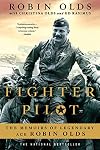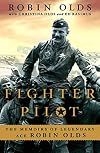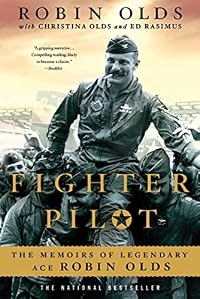
Fighter Pilot: The Memoirs of Legendary Ace Robin Olds
by Robin Olds
On This Page
Description
A larger-than-life hero with a towering personality, Robin Olds was a graduate of West Point and an inductee in the National College Football Hall of Fame for his All-American performance for Army. In World War II, Olds quickly became a top fighter pilot and squadron commander by the age of twenty-two—a double ace with twelve aerial victories. But it was in Vietnam where the man became a legend. He motivated a dejected group of pilots by placing himself under junior officers and show more challenging them to train him properly. He led the wing with aggressiveness, scoring another four confirmed kills and becoming a rare triple ace. With his marriage to Hollywood actress and pinup girl Ella Raines, his nonregulation mustache and penchant for drink, Olds was a unique individual whose story is one of the most eagerly anticipated military books of the year.. show less
Tags
Recommendations
















Member Reviews
Ed Rasimus has a perfect quote about fighter pilots, and that quote fits Robin Olds to a T. This book is Olds' memories, collected into publishable shape by his daughter and Rasimus, and it is one hell of a story.
Olds with his infamous Vietnam War mustache
“Flying fighters is simply an assignment, but being a fighter pilot isn’t. Being a fighter pilot is a state-of-mind. It’s an attitude toward your job, toward the mission, toward the way you live your life. You don’t have to fly fighters to be a fighter pilot. You’ve simply got to have the attitude. There are fighter pilots driving B-52s and fighter pilots hauling trash. They may not have the flash and glamour, but they are the best they can possibly be at the job they’ve show more got to do. There are pilots who fly fighters and there are fighter pilots. You guys want to be fighter pilots, not pilots flying fighters. Look for the difference.”
Olds was born to aviation nobility. His father was Army Air Forces Major General Robert Olds, and he grew up with WW1 aces over for dinner. Robin was accepted to West Point in 1940, and flight training shortly thereafter. He did everything possible to get into the war as soon as he could, making it over to Europe where he flew P-38s and P-51s, and shooting down 12 planes. Postwar, he transitioned to jets and married actual movie star Ella Raines (though the marriage was often unhappy). Raines used her influence to keep him out of Korea, but even with doldrums in the basement of the Pentagon, a football coach at West Point, and distant training commands, Olds was a fighter pilot to the bone.
In 1966 he was assigned command of the 8th Tactical Fighter Wing, an F-4 unit based in Thailand that flew strikes into North Vietnam. Olds was an aggressive commander, leading from the front as often as he could. He's most famous for Operation Bolo, an elaborate decoy mission that disguised a flight of F-4s as unwieldly F-105 Thuds for an ambush of North Vietnamese MiGs. In Vietnam, Olds shot down four more planes and then started letting his wingmen take all the shots, because as the first American ace of the war, he knew he'd be called back home. Olds also fiddled with his official mission count to keep flying fighters in combat, flying a total of 152, compared the official tour of 100 combat missions north.
Post-war, Olds served as commandant of cadets at the Air Force academy, and inspector general, rounding out his 30 year tour with distinction. He always advocated for aggressive conventional tactics, dogfighting and attack skills, and real readiness rather than perfect paper record-keeping. Olds retired to Colorado and passed away in 2007. I read a lot of these memoirs, and Olds is better than most, covering WW2, Vietnam, and the battle of bureaucracy, as well as lots of insight into the mind and culture of fighter pilots. show less
Olds with his infamous Vietnam War mustache
“Flying fighters is simply an assignment, but being a fighter pilot isn’t. Being a fighter pilot is a state-of-mind. It’s an attitude toward your job, toward the mission, toward the way you live your life. You don’t have to fly fighters to be a fighter pilot. You’ve simply got to have the attitude. There are fighter pilots driving B-52s and fighter pilots hauling trash. They may not have the flash and glamour, but they are the best they can possibly be at the job they’ve show more got to do. There are pilots who fly fighters and there are fighter pilots. You guys want to be fighter pilots, not pilots flying fighters. Look for the difference.”
Olds was born to aviation nobility. His father was Army Air Forces Major General Robert Olds, and he grew up with WW1 aces over for dinner. Robin was accepted to West Point in 1940, and flight training shortly thereafter. He did everything possible to get into the war as soon as he could, making it over to Europe where he flew P-38s and P-51s, and shooting down 12 planes. Postwar, he transitioned to jets and married actual movie star Ella Raines (though the marriage was often unhappy). Raines used her influence to keep him out of Korea, but even with doldrums in the basement of the Pentagon, a football coach at West Point, and distant training commands, Olds was a fighter pilot to the bone.
In 1966 he was assigned command of the 8th Tactical Fighter Wing, an F-4 unit based in Thailand that flew strikes into North Vietnam. Olds was an aggressive commander, leading from the front as often as he could. He's most famous for Operation Bolo, an elaborate decoy mission that disguised a flight of F-4s as unwieldly F-105 Thuds for an ambush of North Vietnamese MiGs. In Vietnam, Olds shot down four more planes and then started letting his wingmen take all the shots, because as the first American ace of the war, he knew he'd be called back home. Olds also fiddled with his official mission count to keep flying fighters in combat, flying a total of 152, compared the official tour of 100 combat missions north.
Post-war, Olds served as commandant of cadets at the Air Force academy, and inspector general, rounding out his 30 year tour with distinction. He always advocated for aggressive conventional tactics, dogfighting and attack skills, and real readiness rather than perfect paper record-keeping. Olds retired to Colorado and passed away in 2007. I read a lot of these memoirs, and Olds is better than most, covering WW2, Vietnam, and the battle of bureaucracy, as well as lots of insight into the mind and culture of fighter pilots. show less
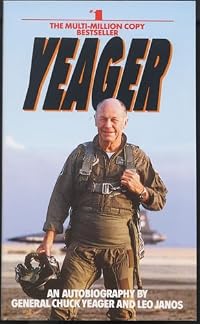
I read this side-by-side with Yeager: An Autobiography: two books about fighter pilots that went from before the jet age to become WW II aces, military airmen in Vietnam and help usher in the space age. Both had careers that skipped over direct involvement in Korea with Olds somewhat stagnant in the military bureaucracy. While Yeager was in a light bomber in the south of the conflict zone, Olds was having dogfights with MiGs in the much hotter north. Both Yeager and Olds recall the incident of Jack Broughton and his career-ending strafing of a Soviet ship in Haiphong Harbor (the "Turkestan incident"). Yeager recalls toeing a line on military discipline in the court-martial but stating it came out in court complete proof the American show more flyers were first fired on from the ship. Olds recalls it as political This incident, and others, were for both pilots a clear beginning of disenchantment with careers in the American military. Olds also became disenchanted with his marriage to Ella Wallace Raines, an American film and television actress. She a Hollywood actress, he a fighter pilot stationed even at a time in Libya made a complex two-body problem that proved, ultimately unsolvable. show less
First and foremost, thank you Christina Olds for bringing forth your fathers incredible story for all to enjoy. I admit finding most biographies difficult to wade through but this is the first book since The Hunt for Red October that I finished in such a short time and quite literally, could not put down.
This is more than the story of General Robin Olds and his exploits as a fighter pilot beginning in World War II and continuing through the war in Vietnam. Paralleling the incredible exploits of Olds, is also an ‘insider’s’ view of the United States Air Force from the Second World War through to the seventies. I had no doubt from reading various books and articles from the Vietnam War and constantly tripping over Old’s name, that show more this might be an interesting read, but I was woefully unprepared for the candour and outright ‘naming of names’ contained in the pages of Fighter Pilot.
There are also the personal stories woven throughout the book allowing you to realize that in spite of his abilities and incredible career, Robin Olds was still a human being with all the shortcomings, dreams and wants we all share. His frustrations with those in power to the air force’s insistence on trying weapons already proven useless in the skies over Vietnam will have you gripping the cover in your own frustration as you sympathize with his plight.
Without question, the United States Air Force owes much to the efforts of this man who although running an obstacle course throughout much of his career, still managed to teach the air tactics lessons that still hold true today.
Christina must be very proud of her father and what he has accomplished. I hope and pray that the last section of the book is true and that he still holding court in that heavenly ‘O’ club. show less
This is more than the story of General Robin Olds and his exploits as a fighter pilot beginning in World War II and continuing through the war in Vietnam. Paralleling the incredible exploits of Olds, is also an ‘insider’s’ view of the United States Air Force from the Second World War through to the seventies. I had no doubt from reading various books and articles from the Vietnam War and constantly tripping over Old’s name, that show more this might be an interesting read, but I was woefully unprepared for the candour and outright ‘naming of names’ contained in the pages of Fighter Pilot.
There are also the personal stories woven throughout the book allowing you to realize that in spite of his abilities and incredible career, Robin Olds was still a human being with all the shortcomings, dreams and wants we all share. His frustrations with those in power to the air force’s insistence on trying weapons already proven useless in the skies over Vietnam will have you gripping the cover in your own frustration as you sympathize with his plight.
Without question, the United States Air Force owes much to the efforts of this man who although running an obstacle course throughout much of his career, still managed to teach the air tactics lessons that still hold true today.
Christina must be very proud of her father and what he has accomplished. I hope and pray that the last section of the book is true and that he still holding court in that heavenly ‘O’ club. show less
I was in Thailand at Udorn shortly after Col. Olds' tour ended at Ubon. Even a couple of years after and at a different installation, his reputation and zeal as a "balls out" fighter pilot and leader were the standard against which everyone else was measured, both individuals and units.
For those reasons and my own life-long passion for all things that fly and the Air Force, I have been waiting to read his biography. While it is a good read and there are many details and stories that will be of interest to readers I found it a bit too self-serving in tone. It is his story so he was certainly allowed to tell it as he saw it, I just found it a little too much so.
That said, it is a good read (listen in my case). Written in a conversational show more and colloquial language it expresses the hard-nosed fighter pilot image for which he was so well known alongside the daily routine and occasional surprise of military life. For those unfamiliar it will be a good presentation of the nomadic military life. For those who have had the experience it will ring true and bring to mind one's own experiences.
I especially enjoyed learning of his early childhood, West Point and WWII experiences. These are parts of his life that precede the legend and enable us to understand the confidence and context of later years. But I strongly suspect there is an untold tale as well. One of personal demons and battles.
Like everything else he did, married life was lived in the fast lane...and not always within the lane markers. His wife had her own issues and I suppose the fact that they made it as long as they did as a couple is testament to their commitment and love for each other and their children. But this part of life was not kind to the good General. I suspect reality is that he shared a bit more of the responsibility for that than the book admits to, but that is purely my hunch.
All of which proves that he was merely human after all, despite the glory ascribed to him by fact and legend. I enjoyed this book immensely and would rate it higher if I didn't have this nagging feeling that it isn't as honest as it could have been. show less
For those reasons and my own life-long passion for all things that fly and the Air Force, I have been waiting to read his biography. While it is a good read and there are many details and stories that will be of interest to readers I found it a bit too self-serving in tone. It is his story so he was certainly allowed to tell it as he saw it, I just found it a little too much so.
That said, it is a good read (listen in my case). Written in a conversational show more and colloquial language it expresses the hard-nosed fighter pilot image for which he was so well known alongside the daily routine and occasional surprise of military life. For those unfamiliar it will be a good presentation of the nomadic military life. For those who have had the experience it will ring true and bring to mind one's own experiences.
I especially enjoyed learning of his early childhood, West Point and WWII experiences. These are parts of his life that precede the legend and enable us to understand the confidence and context of later years. But I strongly suspect there is an untold tale as well. One of personal demons and battles.
Like everything else he did, married life was lived in the fast lane...and not always within the lane markers. His wife had her own issues and I suppose the fact that they made it as long as they did as a couple is testament to their commitment and love for each other and their children. But this part of life was not kind to the good General. I suspect reality is that he shared a bit more of the responsibility for that than the book admits to, but that is purely my hunch.
All of which proves that he was merely human after all, despite the glory ascribed to him by fact and legend. I enjoyed this book immensely and would rate it higher if I didn't have this nagging feeling that it isn't as honest as it could have been. show less
Robin Olds was a larger-than-life hero with a towering personality. A graduate of West Point and an inductee in the National College Football Hall of Fame for his All-American performance for Army, Olds was one of the toughest college football players at the time. In WWII, Olds quickly became a top fighter pilot and squadron commander by the age of 22—and an ace with 12 aerial victories.
But it was in Vietnam where the man became a legend. He arrived in 1966 to find a dejected group of pilots and motivated them by placing himself on the flight schedule under officers junior to himself, then challenging them to train him properly because he would soon be leading them. Proving he wasn't a WWII retread, he led the wing with show more aggressiveness, scoring another four confirmed kills, becoming a rare triple ace.
Olds, who retired a brigadier general and died in 2007, was a unique individual whose personal story presents one of the most eagerly anticipated military books in recent memory. show less
But it was in Vietnam where the man became a legend. He arrived in 1966 to find a dejected group of pilots and motivated them by placing himself on the flight schedule under officers junior to himself, then challenging them to train him properly because he would soon be leading them. Proving he wasn't a WWII retread, he led the wing with show more aggressiveness, scoring another four confirmed kills, becoming a rare triple ace.
Olds, who retired a brigadier general and died in 2007, was a unique individual whose personal story presents one of the most eagerly anticipated military books in recent memory. show less
Enjoyed this book. I didn't enjoy the glimpses of classism and racism, but I understand he was a product of his era. Still a hero to me, just a tiny bit tarnished.
I liked 99% of this book, and I think any war buff will like it. However, there are a few parts that are a little hard to read. I don't know why but I didn't realize Mr Olds would be racist but, yup, he pretty much was. And yet, I guess I can accept that he was a product of his times. Overall recommend; excellent narrator (audiobook)
Members
- Recently Added By
Published Reviews
ThingScore 75
The late Brig. Gen. Robin Olds was a bigger-than-life fighter pilot best-known for his out-front leadership and combat exploits during the Vietnam War. His is the face most associated with the air war in Southeast Asia. But, as revealed through his own story in this excellent new book, Olds was a seasoned double ace long before the Vietnam War.
From his birth in 1922, Olds was hard-wired to show more fly, surrounded by the pioneers of U.S. air power. He was the son of Robert Olds, a World War I fighter pilot, who served as an aide to Brig. Gen. Billy Mitchell and achieved the rank of major general in the Army Air Corps. Giants of early military aviation, such as Hap Arnold, Carl A. "Tooey" Spaatz and Ira C. Eaker, regularly met at the Olds home to drink and discuss what became the tenets of U.S. airpower.
Ironically, while Robin was destined to be a trailblazer in the fighter community, his father was a key figure in building the U.S. bomber and military air transport forces.
Robin secured an appointment to the U.S. Military Academy at West Point, where he excelled on the football field and was named an All American. During his final months at the Point (1943), pilot training was added to an already accelerated academics, military and physical training schedule. Shortly before Robin graduated, his father and hero died, leaving a gaping hole in the cadet's life. Gen. Henry "Hap" Arnold pinned pilot wings on Second Lieutenant Olds's uniform and sent him off to advanced flight training.
Olds flew two tours in World War II, distinguishing himself as a natural, skilled combat pilot of both the Lockheed P-38 and North American P-51 fighters. As a 22-year-old major, he commanded the 434th Fighter Sqdn., a salute to his leadership skills, as well.
Although his accounts of aerial battles are gripping, conveying the excitement, anxiety and exhaustion of air combat, Olds also captures the humor, grief, numbing routine and seasoned-warrior insights that also were part of a pilot's life in war-torn Europe. For example, his pithy description of an aerial engagement in the P-38 Lightning bares both his foibles and courage: "Just as I started to squeeze the trigger, both of my engines sputtered, chugged, burped and quit. Good God, I had forgotten to switch to internal tanks after getting rid of the drops! I'm a glider!"
He managed to shoot the German Me-109 already in his sights, then dove to restart both engines, before rejoining the air battle. He notes, "It occurred to me that I was probably the first fighter pilot to shoot down an enemy in the dead-stick mode, but ... there were some forty-nine other bandits out there."
At times, his poetic descriptions reveal a humanity rarely exhibited in public by this swashbuckling, handlebar-mustachioed giant of air power. Reflecting on grueling weeks of air combat that followed the D-Day invasion of Normandy, Olds notes: "We were maturing as warriors, not necessarily as civilized men. ... Those of us who survived those days went on to fly and fight with an appreciation of life that can be known only by those who have been in combat. Laughter was as profound as sadness. Friendships deepened. Every moment of each day felt exactly right, and the edges of time seemed tinged by light."
The European war ended with then-Maj. Robin Olds having logged 107 missions, 12 air-to-air kills, and 11.5 German aircraft destroyed on the ground. He also had formed strong ideas about how fighters could be employed more effectively, and wasn't shy about expounding on those concepts.
Olds was one of the first to fly Lockheed's new P-80, literally teaching himself to fly the jet, after brazenly taking the aircraft aloft without authorization. He later flew the P-80 with an aerobatic team that would evolve into the USAF's Thunderbirds.
Unknown to him at the time, multiple attempts to fly combat in the Korean War were thwarted by his movie-star wife, Ella Raines, and her producer friends, who had considerable political pull in Washington. Staff assignments that bored him almost prompted Olds to leave military service. He was particularly distressed by the Air Force's narrow focus on a nuclear mission at the expense of training and equipping a new generation of pilots for conventional war. It was during those frustrating months and years of Pentagon duty that Olds made a conscious decision to become a patriotic rebel-in-uniform; promotions be damned.
"I began seriously questioning what was really going on, rather than giving blind obedience to the system. My dad and his buddies, after World War I, had fought for air power against all odds—against infantry and artillery generals and battleship admirals. ... I could follow my upbringing or go along with the pack. ... I knew what needed to be done to build a fighting force, and I [was] determined to be the missionary for those concepts."
His leadership skills led to a number of operational commands, where he honed those ideas and backed them with action, often behind the backs of generals. Although eventually proven correct, he constantly was swimming upstream against conventional wisdom into the 1960s. On one occasion, Olds recounts, USAF's four-star director of operations "claimed we didn't need bombs and bullets and conventional training programs for fighter pilots. ... Then he looked right at me and ... told me to get it through my head and understand we would never fight a conventional war again. Never!"
Later, as the war in Vietnam was heating up, it looked like Olds again would be grounded and shackled to a desk, thanks to his pending promotion to brigadier general. True to form, Olds managed to "screw up" just enough to get his promotion orders ripped to pieces and, eventually, sent to Southeast Asia.
He took over as commander of the 8th Tactical Fighter Wing, located at Upon AB, Thailand, on Sept. 30, 1966. Although the wing's morale was dismal at best, Olds quickly whipped the unit into shape, declaring that he would "lead from the front" by flying combat missions in the F-4 Phantom. At the time, his F-4s were flying fighter-escort for F-105 Thunderchiefs, but rarely even spotted an enemy aircraft in the air. He wasn't impressed by tactics of the day, either.
"I had never seen such a gaggle as a Pack VI strike package. ... [T]hat business of going in at low altitude, jinking and weaving, pulling three negative and four positive g's at 4,500 ft., going like the hammers of hell in flights of four, in trail, was perhaps one of the dumbest things I had ever seen," he wrote. "Our tactics were going to have to change...."
Whenever the F-4s weren't along, F-105s were being attacked and shot down by North Vietnamese MiG fighters. Olds and a few bright junior officers devised a clever plan to trick the Vietnamese into sending up their MiGs, thinking they would ambush yet another unescorted group of "Thud" fighter-bombers.
Olds's book details myriad preparations for "Operation Bolo," one of the air war's most successful missions. Emulating a flight of F-105s, right down to speeds, call signs and radio calls, dozens of F-4s succeeded in suckering a flock of MiGs into a trap that decimated the Russian-built fighters. Bolo's F-4s downed seven MiGs, including one kill by Olds. It was a turning point for the air war in Southeast Asia (SEA).
Olds, indeed, led from the front, ultimately flying 152 combat missions in the SEA region. He shot down four MiGs, boosting his career total to 16 air-to-air kills. Accounts of those missions, which took the lives of numerous 8th TFW "Wolfpack" pilots and weapon systems officers (backseaters), are as descriptive as any written about the Vietnam air war.
After returning to the states, Olds served as the Air Force Academy's commandant of cadets and was promoted to brigadier general in 1968. His outspoken manner and blistering indictments of USAF air combat tactics and training ensured he didn't receive a second star. He retired in 1973, but continued to write attention-getting papers and to speak about air power.
The book ends with Olds recounting the vagaries of an aging warrior, revealing a grouchy sense of humor: His daughter, Christine, "nags me to take my medicine, keep my oxygen on, eat her cooking. What's wrong with frozen macaroni and cheese? There's some in the freezer; been there for years. ...Where are my glasses? Oh s***, sitting on them again."
His description of a recurring dream about a fighter pilot's final flight in an F-4 Phantom will cause even the crustiest airman to choke up. Brig. Gen. Robin Olds died of congestive heart failure on June 14, 2007, and was buried at the U.S. Air Force Academy cemetery.
Today's fighter pilots are told they'll be replaced by bomb-laden unmanned aircraft flown by "operators" sitting in air-conditioned cubicles halfway around the world from battlefields. Because their careers can be snuffed in a heartbeat by a single politically incorrect quip, or by an alcohol-induced antic, pilots now go to the gym instead of the club. And senior officers who decide which pilots get promoted comb personnel records for graduate degrees instead of demonstrated bombing skills; for program-management kudos rather than flying ability and air medals; for squeaky-clean command tours versus air combat leadership.
Many of those officers may fly and labor in silence, but each yearns to fly wing on a real leader, a commander and fighter pilot's fighter pilot, a warrior like Robin Olds. show less
From his birth in 1922, Olds was hard-wired to show more fly, surrounded by the pioneers of U.S. air power. He was the son of Robert Olds, a World War I fighter pilot, who served as an aide to Brig. Gen. Billy Mitchell and achieved the rank of major general in the Army Air Corps. Giants of early military aviation, such as Hap Arnold, Carl A. "Tooey" Spaatz and Ira C. Eaker, regularly met at the Olds home to drink and discuss what became the tenets of U.S. airpower.
Ironically, while Robin was destined to be a trailblazer in the fighter community, his father was a key figure in building the U.S. bomber and military air transport forces.
Robin secured an appointment to the U.S. Military Academy at West Point, where he excelled on the football field and was named an All American. During his final months at the Point (1943), pilot training was added to an already accelerated academics, military and physical training schedule. Shortly before Robin graduated, his father and hero died, leaving a gaping hole in the cadet's life. Gen. Henry "Hap" Arnold pinned pilot wings on Second Lieutenant Olds's uniform and sent him off to advanced flight training.
Olds flew two tours in World War II, distinguishing himself as a natural, skilled combat pilot of both the Lockheed P-38 and North American P-51 fighters. As a 22-year-old major, he commanded the 434th Fighter Sqdn., a salute to his leadership skills, as well.
Although his accounts of aerial battles are gripping, conveying the excitement, anxiety and exhaustion of air combat, Olds also captures the humor, grief, numbing routine and seasoned-warrior insights that also were part of a pilot's life in war-torn Europe. For example, his pithy description of an aerial engagement in the P-38 Lightning bares both his foibles and courage: "Just as I started to squeeze the trigger, both of my engines sputtered, chugged, burped and quit. Good God, I had forgotten to switch to internal tanks after getting rid of the drops! I'm a glider!"
He managed to shoot the German Me-109 already in his sights, then dove to restart both engines, before rejoining the air battle. He notes, "It occurred to me that I was probably the first fighter pilot to shoot down an enemy in the dead-stick mode, but ... there were some forty-nine other bandits out there."
At times, his poetic descriptions reveal a humanity rarely exhibited in public by this swashbuckling, handlebar-mustachioed giant of air power. Reflecting on grueling weeks of air combat that followed the D-Day invasion of Normandy, Olds notes: "We were maturing as warriors, not necessarily as civilized men. ... Those of us who survived those days went on to fly and fight with an appreciation of life that can be known only by those who have been in combat. Laughter was as profound as sadness. Friendships deepened. Every moment of each day felt exactly right, and the edges of time seemed tinged by light."
The European war ended with then-Maj. Robin Olds having logged 107 missions, 12 air-to-air kills, and 11.5 German aircraft destroyed on the ground. He also had formed strong ideas about how fighters could be employed more effectively, and wasn't shy about expounding on those concepts.
Olds was one of the first to fly Lockheed's new P-80, literally teaching himself to fly the jet, after brazenly taking the aircraft aloft without authorization. He later flew the P-80 with an aerobatic team that would evolve into the USAF's Thunderbirds.
Unknown to him at the time, multiple attempts to fly combat in the Korean War were thwarted by his movie-star wife, Ella Raines, and her producer friends, who had considerable political pull in Washington. Staff assignments that bored him almost prompted Olds to leave military service. He was particularly distressed by the Air Force's narrow focus on a nuclear mission at the expense of training and equipping a new generation of pilots for conventional war. It was during those frustrating months and years of Pentagon duty that Olds made a conscious decision to become a patriotic rebel-in-uniform; promotions be damned.
"I began seriously questioning what was really going on, rather than giving blind obedience to the system. My dad and his buddies, after World War I, had fought for air power against all odds—against infantry and artillery generals and battleship admirals. ... I could follow my upbringing or go along with the pack. ... I knew what needed to be done to build a fighting force, and I [was] determined to be the missionary for those concepts."
His leadership skills led to a number of operational commands, where he honed those ideas and backed them with action, often behind the backs of generals. Although eventually proven correct, he constantly was swimming upstream against conventional wisdom into the 1960s. On one occasion, Olds recounts, USAF's four-star director of operations "claimed we didn't need bombs and bullets and conventional training programs for fighter pilots. ... Then he looked right at me and ... told me to get it through my head and understand we would never fight a conventional war again. Never!"
Later, as the war in Vietnam was heating up, it looked like Olds again would be grounded and shackled to a desk, thanks to his pending promotion to brigadier general. True to form, Olds managed to "screw up" just enough to get his promotion orders ripped to pieces and, eventually, sent to Southeast Asia.
He took over as commander of the 8th Tactical Fighter Wing, located at Upon AB, Thailand, on Sept. 30, 1966. Although the wing's morale was dismal at best, Olds quickly whipped the unit into shape, declaring that he would "lead from the front" by flying combat missions in the F-4 Phantom. At the time, his F-4s were flying fighter-escort for F-105 Thunderchiefs, but rarely even spotted an enemy aircraft in the air. He wasn't impressed by tactics of the day, either.
"I had never seen such a gaggle as a Pack VI strike package. ... [T]hat business of going in at low altitude, jinking and weaving, pulling three negative and four positive g's at 4,500 ft., going like the hammers of hell in flights of four, in trail, was perhaps one of the dumbest things I had ever seen," he wrote. "Our tactics were going to have to change...."
Whenever the F-4s weren't along, F-105s were being attacked and shot down by North Vietnamese MiG fighters. Olds and a few bright junior officers devised a clever plan to trick the Vietnamese into sending up their MiGs, thinking they would ambush yet another unescorted group of "Thud" fighter-bombers.
Olds's book details myriad preparations for "Operation Bolo," one of the air war's most successful missions. Emulating a flight of F-105s, right down to speeds, call signs and radio calls, dozens of F-4s succeeded in suckering a flock of MiGs into a trap that decimated the Russian-built fighters. Bolo's F-4s downed seven MiGs, including one kill by Olds. It was a turning point for the air war in Southeast Asia (SEA).
Olds, indeed, led from the front, ultimately flying 152 combat missions in the SEA region. He shot down four MiGs, boosting his career total to 16 air-to-air kills. Accounts of those missions, which took the lives of numerous 8th TFW "Wolfpack" pilots and weapon systems officers (backseaters), are as descriptive as any written about the Vietnam air war.
After returning to the states, Olds served as the Air Force Academy's commandant of cadets and was promoted to brigadier general in 1968. His outspoken manner and blistering indictments of USAF air combat tactics and training ensured he didn't receive a second star. He retired in 1973, but continued to write attention-getting papers and to speak about air power.
The book ends with Olds recounting the vagaries of an aging warrior, revealing a grouchy sense of humor: His daughter, Christine, "nags me to take my medicine, keep my oxygen on, eat her cooking. What's wrong with frozen macaroni and cheese? There's some in the freezer; been there for years. ...Where are my glasses? Oh s***, sitting on them again."
His description of a recurring dream about a fighter pilot's final flight in an F-4 Phantom will cause even the crustiest airman to choke up. Brig. Gen. Robin Olds died of congestive heart failure on June 14, 2007, and was buried at the U.S. Air Force Academy cemetery.
Today's fighter pilots are told they'll be replaced by bomb-laden unmanned aircraft flown by "operators" sitting in air-conditioned cubicles halfway around the world from battlefields. Because their careers can be snuffed in a heartbeat by a single politically incorrect quip, or by an alcohol-induced antic, pilots now go to the gym instead of the club. And senior officers who decide which pilots get promoted comb personnel records for graduate degrees instead of demonstrated bombing skills; for program-management kudos rather than flying ability and air medals; for squeaky-clean command tours versus air combat leadership.
Many of those officers may fly and labor in silence, but each yearns to fly wing on a real leader, a commander and fighter pilot's fighter pilot, a warrior like Robin Olds. show less
added by cheezdoggie
Author Information

1 Work 302 Members
All Editions
Common Knowledge
- Canonical title
- Fighter Pilot: The Memoirs of Legendary Ace Robin Olds
- Original title
- Fighter Pilot
- Original publication date
- 2010-04-07
- People/Characters
- Robin Olds
- Dedication
- To the warriors who go forth to find and defeat our nation's enemies, those I've shared the skies with, those I've known over the years, and those who hopefully will follow the tradition in years to come: American fighter pil... (show all)ots.
- First words
- I couldn't help but feel the excitement. My 479th Fighter Group was the lead out in front of the two bomber groups and not tied to close escort or stuck at the back of the bomber stream hoping to sweep up the leftovers.
- Last words
- (Click to show. Warning: May contain spoilers.)We sing, we drink, we retell our warrior tales, and we laugh. I have flown home.
- Blurbers
- Coonts, Stephen; Shelton, Henry H.; Moseley, T. Michael; Boyne, Walter J.; Dunn, Michael M.
Classifications
- Genres
- Nonfiction, Biography & Memoir, History, General Nonfiction
- DDC/MDS
- 358.40092 — Society, Government, and Culture Public administration & military science Air and other specialized forces and warfare; engineering and related services Air Forces Biography; History By Place Biography
- LCC
- UG626.2 .O43 .A3 — Military Science Military engineering. Air forces Air forces. Air warfare
- BISAC
Statistics
- Members
- 300
- Popularity
- 106,522
- Reviews
- 14
- Rating
- (4.12)
- Languages
- English
- Media
- Paper, Audiobook, Ebook
- ISBNs
- 11
- ASINs
- 7