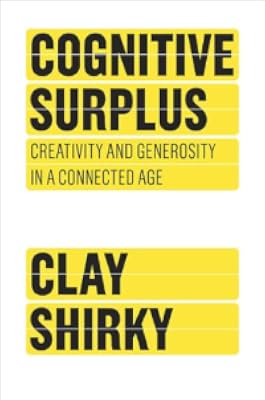
Cognitive Surplus: Creativity and Generosity in a Connected Age
by Clay Shirky
On This Page
Description
The author of the breakout hit "Here Comes Everybody" reveals how new technology is changing us from consumers to collaborators, unleashing a torrent of creative production that will transform our world.Tags
Recommendations










Member Recommendations
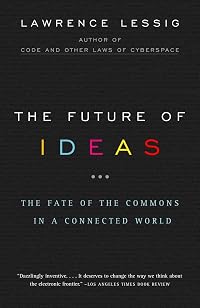
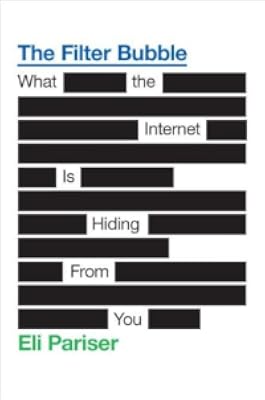
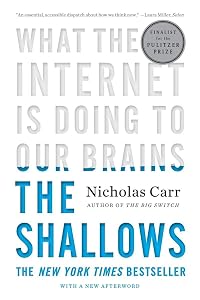
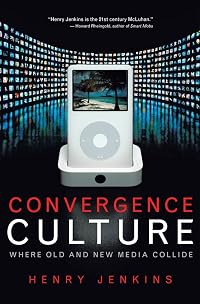
infiniteletters Clay Shirky and Nicholas Carr have very different perspectives about the Internet; read both for the pros and cons.
20

Member Reviews
All through Cognitive Surplus I was compulsively underlining and marking key paragraphs in an approved Jacobsean manner. Shirky elegantly illustrates how participatory culture–like Wikipedia or YouTube–changes the nature of media, and gives names to many of the phenomena we’re peripherally aware of as users. He attempts to draw up guidelines for successful harnessing of cognitive surplus at the end, although I didn’t find that as successful as his catalogue of examples. But the man is amazingly quotable, and you feel like he actually understands where media is going (his online writing on the state of newspapers has been the best analysis of their woes I’ve read).
Free LibraryThing Early Reviewer book. (Seriously, this program is amazing. If it exists in your country, you should sign up.) Flippant capsule review: great book, too bad about its adoption of the Geek Hierarchy.
Less flippant review: Shirky’s typical wit and verve are on display here as he passionately advocates for the value of online engagement; he’s particularly good on the ridiculous dismissiveness of “where do people find the time to do all this trivial stuff online?” Sample line: “Did you ever see that episode of Gilligan’s Island where they almost get off the island and then Gilligan messes up and they don’t? I saw that one a lot when I was growing up.” That’s the cognitive surplus—all the free time that show more internet-enabled citizens have and can use to watch and talk and tweet and share.
Unfortunately, while Shirky gets the Sturgeon’s Law defense of online content absolutely right—it’s not just that 90% of everything is crap, but that in any given genre you don’t get the good stuff without the crap—he seems uninterested in performing the same analysis on varieties of online participation. Of course lolcats are dumb and irrelevant, he argues, but the tools that produce them also allow direct political engagement, and that’s what we should care about.
Thus: “making and sharing open source software creates value for more people than making and sharing Harry Potter fan fiction.” I’m pretty sure that this incorporates the Sturgeon’s Law mistake—the average open source software project is as unsuccessful as the average work of fan fiction, and while I’ll happily celebrate the immense value of open source, I’m not quite sure how to measure it against the literacy benefits of even average fan fiction, the community benefits of fandom ([livejournal.com profile] help_haiti and [livejournal.com profile] help_pakistan come to mind), and the New York Times-best-selling authors (plural!) I know who came out of fandom.
More to the point, why do I have to choose? (The whole point of fandom as I know it is having one’s cake and eating it too.) The relationship between lolcats and Tea Parties is more complex than lolcats being a mere epiphenomenon of the really significant uses of online tools. Shirky identifies a “spectrum” of forms of creation that range from creating personal value to creating civic value, but his conception seems static: each person’s activity emits light at a certain frequency only.
I would argue instead that “trivial” social spaces are an on-ramp for engagement of all kinds: seeing oneself as a producer is an important way of seeing oneself as a citizen. As Mimi Ito puts it, “[i]n fact it is the flow between the serious and the playful where we are seeing so much energy and engagement.” Shirky even uses Ito’s example of South Korean protests against American beef imports, significant enough that they threatened the entire South Korean government and led to the firing of the cabinet, along with an apology from the president for moving too fast without consulting the public. The protesters numbered over a million, an estimated 60-70% teens, mostly teenage girls. And a lot of them organized using fannish spaces—many were fans of a boy band, Dong Bang Shin Gi. Ito reports, “young women fans of this boy group were mobilizing to attend the protests. They carried placards saying ‘We don't want our boys to get sick because of mad[] cows.’ Their participation in the protests was grounded less in the concrete conditions of their everyday lives, and more in their solidarity with a shared media fandom.” As Ito concludes, “you should never underestimate the power of peer-to-peer social communication and the bonding force of popular culture. Although so much of what kids are doing online may look trivial and frivolous, what they are doing is building the capacity to connect, to communicate, and ultimately, to mobilize.” (This is also true of another story to which Shirky returns several times, the charitable fundraising performed by (female) fans of Josh Groban, without giving significance to the fact that it was founded out of fannishness.)
Shirky says that one thirteen-year-old Korean protester said outright, “I’m here because of Dong Bang Shin Ki.” (I note that I couldn’t find that quote in the cited Ito piece.) That resonated strongly with me, because I’m here because of Kirk and Spock, and Sime/Gen, and Mulder and Scully. Fandom taught me that if I had something to say, I could say it, and if that I wanted something to exist, it was worth trying to build it. The run-it-up-the-flagpole attitude I learned in fandom was what convinced me to start a teaching resource for use in my field that, five years after I started it, is now used by teachers around the world, equalizing access and, I strongly believe, enhancing students’ understanding of the material.
Anyway, key examples of social /civic participation in Shirky’s account involve women coming from fandom. And yet Shirky reassures us that we don’t have to worry about organizing our social or technological worlds to support fannish engagement, because it will naturally be provisioned (if I were being snarky, I’d say, “like housework and childcare”): it’s not that there’s anything wrong with lolcats and fan fiction, but “anything at the personal and communal end of the spectrum isn’t in much danger of going away, or even of being underprovisioned.”
If only that were true, I wouldn’t be as troubled as I am by Shirky’s rhetorical choice to throw fandom under the bus. But laws like the DMCA and anti-anonymity measures taken by multiple governments (not for nothing, including South Korea) don’t leave fannish spaces untouched. A culture or a legal system that discourages you from commenting on and remixing the first things you love, in communities who love the same thing you do, also discourages you from commenting on and remixing everything else.
This problem is related to another vital silence in Shirky’s book: the role of government. I know Larry Lessig already told us about West Coast Code versus East Coast Code, but hey, East Coast Code is still around. Take another prominent example Shirky uses to show the power of (women) organizing online: a Facebook group, the Association of Pub-going, Loose and Forward Women, organized to fight back against anti-woman violence perpetrated in the Indian city of Mangalore by the religious fundamentalist group Sri Ram Sene. As Shirky tells it, “women communicated their shared resolve to politicians in Mangalore and to the regional government of Karnatka. Unfortunately politicians and police tend to react to threats more readily if there is evidence of public concern. Participation in the Pink Chaddi [underwear] campaign demonstrated publicly that a constituency of women were willing to counter Sene and wanted politicians and the police to do the same…. [T]he state of Mangalore arrested Muthali and several key members of Sene … as a way of preventing a repeat of the January attacks.”
Shirky emphasizes the need for hard work by participants to sustain effective groups, and that’s clearly correct. A lot of that, government can’t help with. But there are definitely ways that it can hinder—and, as the Mangalore example suggests, those groups that get things done will often in the end get them done at least in part by getting government on their side. I’m sure Shirky would have some fascinating things to say about that. I’m just left wondering what they’d be. show less
Less flippant review: Shirky’s typical wit and verve are on display here as he passionately advocates for the value of online engagement; he’s particularly good on the ridiculous dismissiveness of “where do people find the time to do all this trivial stuff online?” Sample line: “Did you ever see that episode of Gilligan’s Island where they almost get off the island and then Gilligan messes up and they don’t? I saw that one a lot when I was growing up.” That’s the cognitive surplus—all the free time that show more internet-enabled citizens have and can use to watch and talk and tweet and share.
Unfortunately, while Shirky gets the Sturgeon’s Law defense of online content absolutely right—it’s not just that 90% of everything is crap, but that in any given genre you don’t get the good stuff without the crap—he seems uninterested in performing the same analysis on varieties of online participation. Of course lolcats are dumb and irrelevant, he argues, but the tools that produce them also allow direct political engagement, and that’s what we should care about.
Thus: “making and sharing open source software creates value for more people than making and sharing Harry Potter fan fiction.” I’m pretty sure that this incorporates the Sturgeon’s Law mistake—the average open source software project is as unsuccessful as the average work of fan fiction, and while I’ll happily celebrate the immense value of open source, I’m not quite sure how to measure it against the literacy benefits of even average fan fiction, the community benefits of fandom ([livejournal.com profile] help_haiti and [livejournal.com profile] help_pakistan come to mind), and the New York Times-best-selling authors (plural!) I know who came out of fandom.
More to the point, why do I have to choose? (The whole point of fandom as I know it is having one’s cake and eating it too.) The relationship between lolcats and Tea Parties is more complex than lolcats being a mere epiphenomenon of the really significant uses of online tools. Shirky identifies a “spectrum” of forms of creation that range from creating personal value to creating civic value, but his conception seems static: each person’s activity emits light at a certain frequency only.
I would argue instead that “trivial” social spaces are an on-ramp for engagement of all kinds: seeing oneself as a producer is an important way of seeing oneself as a citizen. As Mimi Ito puts it, “[i]n fact it is the flow between the serious and the playful where we are seeing so much energy and engagement.” Shirky even uses Ito’s example of South Korean protests against American beef imports, significant enough that they threatened the entire South Korean government and led to the firing of the cabinet, along with an apology from the president for moving too fast without consulting the public. The protesters numbered over a million, an estimated 60-70% teens, mostly teenage girls. And a lot of them organized using fannish spaces—many were fans of a boy band, Dong Bang Shin Gi. Ito reports, “young women fans of this boy group were mobilizing to attend the protests. They carried placards saying ‘We don't want our boys to get sick because of mad[] cows.’ Their participation in the protests was grounded less in the concrete conditions of their everyday lives, and more in their solidarity with a shared media fandom.” As Ito concludes, “you should never underestimate the power of peer-to-peer social communication and the bonding force of popular culture. Although so much of what kids are doing online may look trivial and frivolous, what they are doing is building the capacity to connect, to communicate, and ultimately, to mobilize.” (This is also true of another story to which Shirky returns several times, the charitable fundraising performed by (female) fans of Josh Groban, without giving significance to the fact that it was founded out of fannishness.)
Shirky says that one thirteen-year-old Korean protester said outright, “I’m here because of Dong Bang Shin Ki.” (I note that I couldn’t find that quote in the cited Ito piece.) That resonated strongly with me, because I’m here because of Kirk and Spock, and Sime/Gen, and Mulder and Scully. Fandom taught me that if I had something to say, I could say it, and if that I wanted something to exist, it was worth trying to build it. The run-it-up-the-flagpole attitude I learned in fandom was what convinced me to start a teaching resource for use in my field that, five years after I started it, is now used by teachers around the world, equalizing access and, I strongly believe, enhancing students’ understanding of the material.
Anyway, key examples of social /civic participation in Shirky’s account involve women coming from fandom. And yet Shirky reassures us that we don’t have to worry about organizing our social or technological worlds to support fannish engagement, because it will naturally be provisioned (if I were being snarky, I’d say, “like housework and childcare”): it’s not that there’s anything wrong with lolcats and fan fiction, but “anything at the personal and communal end of the spectrum isn’t in much danger of going away, or even of being underprovisioned.”
If only that were true, I wouldn’t be as troubled as I am by Shirky’s rhetorical choice to throw fandom under the bus. But laws like the DMCA and anti-anonymity measures taken by multiple governments (not for nothing, including South Korea) don’t leave fannish spaces untouched. A culture or a legal system that discourages you from commenting on and remixing the first things you love, in communities who love the same thing you do, also discourages you from commenting on and remixing everything else.
This problem is related to another vital silence in Shirky’s book: the role of government. I know Larry Lessig already told us about West Coast Code versus East Coast Code, but hey, East Coast Code is still around. Take another prominent example Shirky uses to show the power of (women) organizing online: a Facebook group, the Association of Pub-going, Loose and Forward Women, organized to fight back against anti-woman violence perpetrated in the Indian city of Mangalore by the religious fundamentalist group Sri Ram Sene. As Shirky tells it, “women communicated their shared resolve to politicians in Mangalore and to the regional government of Karnatka. Unfortunately politicians and police tend to react to threats more readily if there is evidence of public concern. Participation in the Pink Chaddi [underwear] campaign demonstrated publicly that a constituency of women were willing to counter Sene and wanted politicians and the police to do the same…. [T]he state of Mangalore arrested Muthali and several key members of Sene … as a way of preventing a repeat of the January attacks.”
Shirky emphasizes the need for hard work by participants to sustain effective groups, and that’s clearly correct. A lot of that, government can’t help with. But there are definitely ways that it can hinder—and, as the Mangalore example suggests, those groups that get things done will often in the end get them done at least in part by getting government on their side. I’m sure Shirky would have some fascinating things to say about that. I’m just left wondering what they’d be. show less
 This review was written for LibraryThing Early Reviewers.
No doubt this book will be widely described as about the Internet, and that description is true but incomplete. This *is* a book about technology, but even more it's a book about *us* and what our use of technology reveals about ourselves. The Internet gives us the means and opportunity to accomplish new projects, but the motives have been present in us all along. This book is about the rise of the amateur in a culture dominated so long by the professional. It's not just about what we can do online, but why we might bother.
The subtitle strikes a warm and fuzzy tone about creativity and generosity, and the book does have a lot to say about the civic possibilities crowdsourcing offers. Readers learn about fans of a singer who fund-raise show more for charity, websites that distribute information about violence in Kenya that might otherwise go unreported, and the man-hours available for creations on the order of Wikipedia now that television viewing is on the decline. Proponents of civic engagement can find a wide range of inspirational examples.
You won't find mentioned on the cover flaps the more profound discussions about motivation and economics in this book. The title's use of surplus, an economic term, is meaningful. Some other reviews I've seen didn't quite convey how these more academic discussions were deeply tied to the examples in the first part of the book. Some of what is billed as collaboration and civic activism may be motivated largely by one's individual identity formation and self-expression rather than any social good in itself. Thus, donations are made to honor a singer (and to bond with other fans) more than for the sake of those in need. People edit wikis more to share one's personal expertise and interests than out of a will to greater global knowledge. Technology's coordination and aggregation of individual efforts can emerge as functionally equivalent to collaboration, and can accomplish real social goods, but an awareness of individual motivation may help channel these efforts. Free time may be a social asset, but it is spent for personal gain.
To understand the economics of motivation we also need to understand that "values" encompass more than financial worth. This book offers interesting discussion of how involving money (an extrinsic motivation) doesn't add to but can actually degrade the effects of positive impulses provided by motivators such as personal belonging, identity expression, and adherence to cultural norms. Open source succeeds precisely because it is voluntary. Personal passion is productive.
It follows from "everyone may publish" that a lot of what emerges will be crap. Shirky admits that many contributions of fanfiction and lolcats may not represent high creativity, but he considers them necessary and inevitable in a participatory web.
Online, those with rare interests (from hobbies to medical conditions) are no longer limited by geography but can find one another and form close-knit communities. Shirky doesn't dwell on the Balkanization that the web may bring, which can break down society into incommenserable subcultures, some deliberately misinformed. In championing the revolution of amateur media, Shirky underplays the positive contributions the professional media provide in unifying cultures with a common frame of reference. The sometimes unbalanced optimistic tone is a weakness of the book, but the strengths are such that it remains well worth the read.
Like other books by this author, Cognitive Surplus is quite readable and engaging. Shirky is an academic and draws capably on research from several fields to inform his arguments, and he offers notes to original sources for those who might want to explore further. I highly recommend this book. show less
The subtitle strikes a warm and fuzzy tone about creativity and generosity, and the book does have a lot to say about the civic possibilities crowdsourcing offers. Readers learn about fans of a singer who fund-raise show more for charity, websites that distribute information about violence in Kenya that might otherwise go unreported, and the man-hours available for creations on the order of Wikipedia now that television viewing is on the decline. Proponents of civic engagement can find a wide range of inspirational examples.
You won't find mentioned on the cover flaps the more profound discussions about motivation and economics in this book. The title's use of surplus, an economic term, is meaningful. Some other reviews I've seen didn't quite convey how these more academic discussions were deeply tied to the examples in the first part of the book. Some of what is billed as collaboration and civic activism may be motivated largely by one's individual identity formation and self-expression rather than any social good in itself. Thus, donations are made to honor a singer (and to bond with other fans) more than for the sake of those in need. People edit wikis more to share one's personal expertise and interests than out of a will to greater global knowledge. Technology's coordination and aggregation of individual efforts can emerge as functionally equivalent to collaboration, and can accomplish real social goods, but an awareness of individual motivation may help channel these efforts. Free time may be a social asset, but it is spent for personal gain.
To understand the economics of motivation we also need to understand that "values" encompass more than financial worth. This book offers interesting discussion of how involving money (an extrinsic motivation) doesn't add to but can actually degrade the effects of positive impulses provided by motivators such as personal belonging, identity expression, and adherence to cultural norms. Open source succeeds precisely because it is voluntary. Personal passion is productive.
It follows from "everyone may publish" that a lot of what emerges will be crap. Shirky admits that many contributions of fanfiction and lolcats may not represent high creativity, but he considers them necessary and inevitable in a participatory web.
Online, those with rare interests (from hobbies to medical conditions) are no longer limited by geography but can find one another and form close-knit communities. Shirky doesn't dwell on the Balkanization that the web may bring, which can break down society into incommenserable subcultures, some deliberately misinformed. In championing the revolution of amateur media, Shirky underplays the positive contributions the professional media provide in unifying cultures with a common frame of reference. The sometimes unbalanced optimistic tone is a weakness of the book, but the strengths are such that it remains well worth the read.
Like other books by this author, Cognitive Surplus is quite readable and engaging. Shirky is an academic and draws capably on research from several fields to inform his arguments, and he offers notes to original sources for those who might want to explore further. I highly recommend this book. show less
This review was written for LibraryThing Early Reviewers.On the cover this doesn't necessarily look like a punk book about community care but in many ways I'd say it is. Clay Shirky takes a look at modern consumer-based technology: how it's created, how it's used, the patterns that creates in it's user base that further it's own devices, and how we can hijack the system to create meaningful action with our surplus of human hours. In many ways it inspires hope that the mess of social media we have now can still be used in some way for positive gains and it gives pretty clear instructions about techniques we can use as individuals to work towards those ends, including being an informed consumer. While note 100% up to date with the latest tech and trends it's still very informed about human show more usage patterns & the mentality that drives them, so to that end it's quite good. show less
The central thesis - laid out in the first part of the book - is a compelling refutation of the idea that the modern communications technology is a black hole, sucking up our time and attention. Shirky's point is that pre-internet, many in the developed world (his focus is on America, but the same thing applies for other rich nations) spent their free time watching television. By this measure, even the most asinine of internet activities (e.g. making cat memes) is something of an improvement and if only a small percentage of people's free time can be harnessed, unprecedented works of mass collaboration (e.g. Wikipedia) will be the result. The increases in free time combined with modern technology present us with a unprecedented show more opportunity to produce and create. show less
My copy of Cognitive Surplus is festooned with sticky-tabs, noting passages of particular interest that I'd like to revisit. Shirky's argument in this work is that society will be improved by the increased access, communication, and social interaction that is available to people now, via the internet and the social media aspect of its use. He spends many pages on the history, research, and examples to back his claims that the mix of these tools and the free time available to average Americans will lead to increased participation in projects that will improve society; and not many pages on the themes of his detractors. Shirky particularly draws upon the findings of Behavior Economics, and the study of what motivates people to make the show more choices that they do, with regards to how they spend their time (and by some extension, their money).
Optimism also permeates the work, which is a refreshing change from the usual discussions around our technological and communication revolution. Taken historically, people have been through this before, and we (as a people) will come out the other side. Shirky mentions the casualties of such upheaval, but briefly, and with that self-same optimism that the upheaval will be seen as a necessary onward step, eventually.
In all, it was a hopeful book, steeped in technological culture even as Shirky is analyzing the behavior of people within that culture. show less
Optimism also permeates the work, which is a refreshing change from the usual discussions around our technological and communication revolution. Taken historically, people have been through this before, and we (as a people) will come out the other side. Shirky mentions the casualties of such upheaval, but briefly, and with that self-same optimism that the upheaval will be seen as a necessary onward step, eventually.
In all, it was a hopeful book, steeped in technological culture even as Shirky is analyzing the behavior of people within that culture. show less
This review was written for LibraryThing Early Reviewers.Reading this in 2019 felt a bit old-hat, so I can't imagine it'll age well. But some good anecdotes/interesting facts, rather loosely held together by the thesis (which is that people are using their spare time to create content rather than just consume it - as indeed I'm doing right now).. Well written, if a bit shallow.
Members
- Recently Added By
Published Reviews
ThingScore 85
As a route towards action, rather than an escape from it, technology and media have never looked more potent than they do today. And perhaps the most amazing fact about Shirky's incisive manual for building a better world is this: it's just possible that everything he promises may be true.
added by Ludi_Ling
The time we might free up by ditching TV is Shirky’s “cognitive surplus” — an ocean of hours that society could contribute to endeavors far more useful and fun than television.
added by tim.taylor
Shirky is the best chronicler we have of the unfolding cultural revolution brought on by the web. But, with his passion for fighting the old enemy, television, he may not have given enough attention to the new battles under way in which emerging media powers such as Amazon, Facebook, Apple and Google compete to fence off a digital landscape that is only just coming into view for most of us.
added by Katya0133
Lists

Books referenced in David Weinberger's Too Big to Know
65 works; 2 members

Mind Expanding Books by hackerkid
581 works; 8 members
Author Information

Clay Shirky is on the faculty of NYU's Interactive Telecommunications Program.
Some Editions
Awards and Honors
Common Knowledge
- Canonical title
- Cognitive Surplus: Creativity and Generosity in a Connected Age
- Original title
- Cognitive Surplus: Creativity and Generosity in a Connected Age
- Original publication date
- 2010
- Dedication
- For Red Burns
- First words
- In the 1720s, London was busy getting drunk.
- Last words
- (Click to show. Warning: May contain spoilers.)I'm betting the answer is yes, or could be yes, if we give one another the opportunity to participate and reward one another for trying.
- Blurbers
- Doctorow, Cory; Ozzie, Ray
Classifications
- Genres
- Technology, Sociology, Nonfiction, General Nonfiction
- DDC/MDS
- 303.4833 — Society, government, & culture Social sciences, sociology & anthropology Social processes Social change Causes of change Development of science and technology Communication
- LCC
- HM851 .S5464 — Social sciences Sociology (General) Sociology Social change
- BISAC
Statistics
- Members
- 918
- Popularity
- 29,337
- Reviews
- 29
- Rating
- (3.73)
- Languages
- 6 — Dutch, English, Italian, Portuguese, Russian, Spanish
- Media
- Paper, Audiobook, Ebook
- ISBNs
- 16
- ASINs
- 12