
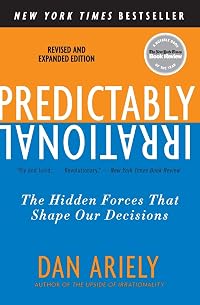
Predictably Irrational: The Hidden Forces That Shape Our Decisions
by Dan Ariely
On This Page
Description
An evaluation of the sources of illogical decisions explores the reasons why irrational thought often overcomes level-headed practices, offering insight into the structural patterns that cause people to make the same mistakes repeatedly.Tags
Recommendations


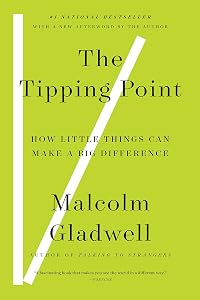
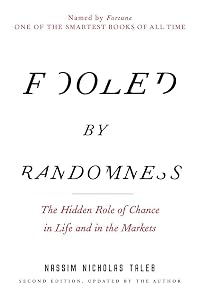
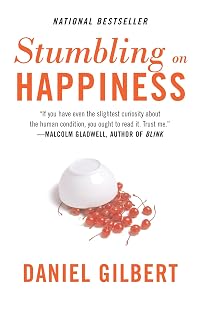
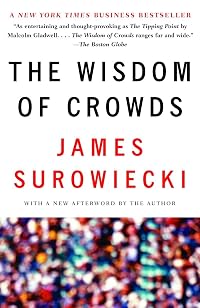
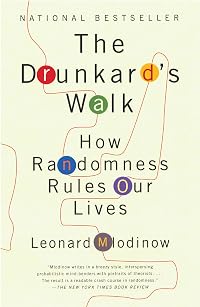
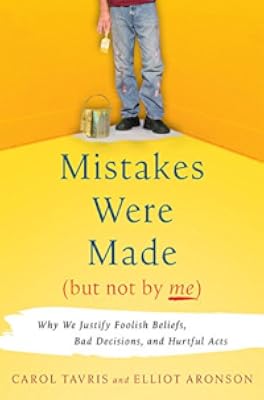
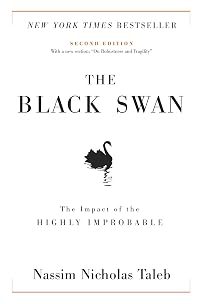
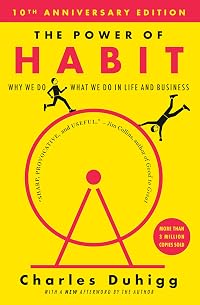
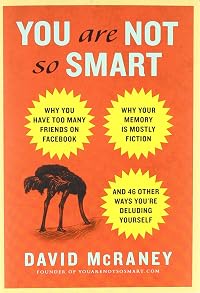
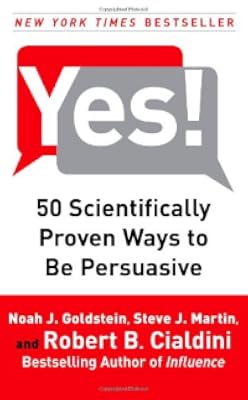
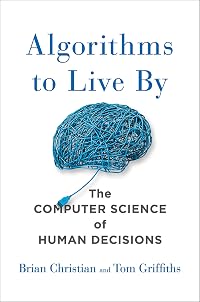
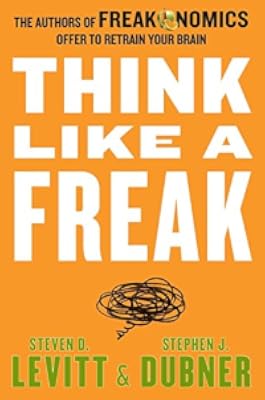
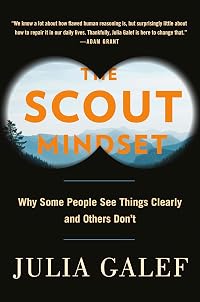
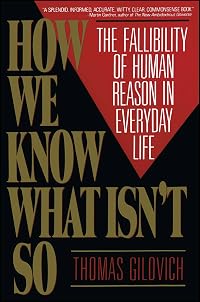
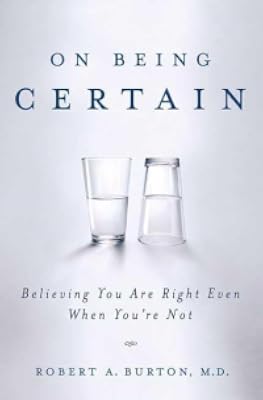
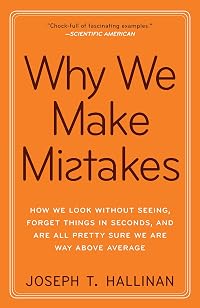


Member Recommendations
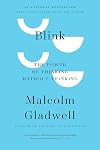


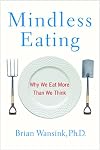
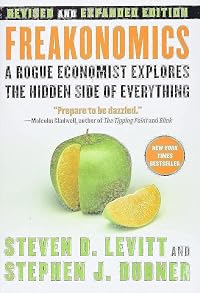
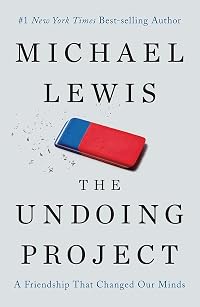
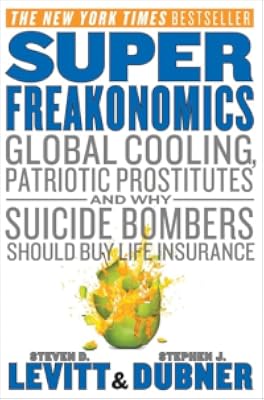
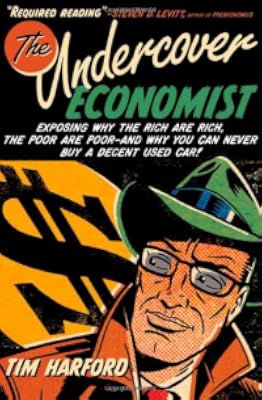
electronicmemory Both books are interesting reads about the intersections of psychology, habit and human behavior.

Member Reviews
Books about behavioural economics are generally good fun, and this one is especially entertaining. I enjoyed it considerably more than 'Nudge', which takes itself far too seriously. In 'Predictably Irrational', Ariely describes a series of behavioural quirks through experiment and anecdote. The quantity of empirical research described in the book is a definite strength. It's impressive that the writing remains entertaining and accessible despite this relatively high level of academic rigour.
When I started this book I wondered what it would add to my knowledge of behavioural economics, as I studied the subject years ago. What I found new and interesting in particular was the section on social and market norms. This makes the important show more point that when the sphere of market norms of expanded, it changes how people interact. Moreover, the switch from one set of norms to the other is hard to reverse. This has important implications for public services, in my view.
As with any quasi-academic book, two of my responses were, a) clearly more research is needed! (It always is), and b) I wonder how this fits with other disciplines? Although Ariely grounds himself securely in behavioural economics, much of what he says is also social psychology and in some cases neuroscience. This reinforces to me that way that economics seems to have occupied the social sciences in recent decades. Public policy research is now an outgrowth of economics, which I'm sure never used to be the case. Human behaviour is increasingly interrogated in relation to money and resource allocation, the sphere of economics. Of course, I much prefer that behavioural economists try to bring some reality into the idiotic rationality assumptions of standard economic theory. Nonetheless, it seems to me salutary (especially having just read a book about Marxism, a form of thought that spanned the social sciences) to consider that human activity is now studied with a relentless emphasis on economic costs.
Be that as it may, I highly recommend this book as both an accessible introduction to behavioural economics and a thought-provoking read for those familiar with the basic concepts. Ariely writes in an engagingly humble style and entreats the reader to examine their own behaviour for irrationality. Personally I have definitely found that studying economics and thinking carefully about my own economic behaviour has made me more rational, and possibly less ethical in some respects. What I think behavioural economics needs, though, is to take it a step further and challenge perfect rationality as a desirable model, regardless of its practicality. Entering the realm of philosophy, is the rationality that economics worships possible? Can we even approach it? Is there some quirk of our brains that causes us to reach for it? Or is rationality-worship a purely cultural trend, perhaps a way to deal with the complexity and ambivalence of late-modern capitalist life by waving it away?
It certainly seems that this book made me quite thoughtful. For that I'll upgrade it from four stars to five. show less
When I started this book I wondered what it would add to my knowledge of behavioural economics, as I studied the subject years ago. What I found new and interesting in particular was the section on social and market norms. This makes the important show more point that when the sphere of market norms of expanded, it changes how people interact. Moreover, the switch from one set of norms to the other is hard to reverse. This has important implications for public services, in my view.
As with any quasi-academic book, two of my responses were, a) clearly more research is needed! (It always is), and b) I wonder how this fits with other disciplines? Although Ariely grounds himself securely in behavioural economics, much of what he says is also social psychology and in some cases neuroscience. This reinforces to me that way that economics seems to have occupied the social sciences in recent decades. Public policy research is now an outgrowth of economics, which I'm sure never used to be the case. Human behaviour is increasingly interrogated in relation to money and resource allocation, the sphere of economics. Of course, I much prefer that behavioural economists try to bring some reality into the idiotic rationality assumptions of standard economic theory. Nonetheless, it seems to me salutary (especially having just read a book about Marxism, a form of thought that spanned the social sciences) to consider that human activity is now studied with a relentless emphasis on economic costs.
Be that as it may, I highly recommend this book as both an accessible introduction to behavioural economics and a thought-provoking read for those familiar with the basic concepts. Ariely writes in an engagingly humble style and entreats the reader to examine their own behaviour for irrationality. Personally I have definitely found that studying economics and thinking carefully about my own economic behaviour has made me more rational, and possibly less ethical in some respects. What I think behavioural economics needs, though, is to take it a step further and challenge perfect rationality as a desirable model, regardless of its practicality. Entering the realm of philosophy, is the rationality that economics worships possible? Can we even approach it? Is there some quirk of our brains that causes us to reach for it? Or is rationality-worship a purely cultural trend, perhaps a way to deal with the complexity and ambivalence of late-modern capitalist life by waving it away?
It certainly seems that this book made me quite thoughtful. For that I'll upgrade it from four stars to five. show less
An engaging look at the irrational decisions we make and how systematic they are. Each chapter of this book covers a specific influence on behaviour or a type of irrational behaviour and the various experiments that the author and his fellow researchers conducted. Some of these experiments were really illuminating, such as the one involving the beer samples, which demonstrated people's tendency to be "different", even if it means ordering something they wouldn't necessarily like, or the one involving the Duke basketball ticket lottery (which set out to determine how much people value things they own). And of course the chapter on FREE! was very well done too. Yes, that's the way he wrote FREE! in the book.
And if you're honest (or just show more recalling the Ten Commandments before reading this, like the dust jacket says), you'll recognize yourself in these pages. The part that discussed "decoy" prices used to steer you to the price that the retailer actually wants you to pay? I was sitting there going "AAAHHH I TOTALLY go for the middle price." The chapter on procrastination also hit close to home, as did the one on keeping all your options open. I am terrible about that, and one of my relatives is the same way. Perhaps I should get that person to read that chapter!
One thing I would like to think I am somewhat immune to, at least in the realm of food, is "The Power of Price", the focus of Chapter 10, which basically states that people enjoy expensive things more because they've paid more for them, so they must be good. Our household uses house brands wherever possible and it's no real hardship, and actually I am more likely to be disappointed by a high-price meal because I have ridiculously high expectations. Like if it doesn't cause an immediate and devastating foodgasm, I'm not impressed. Or perhaps I am just hard to please.
Anyway, if you're interested in the quirks and foibles of humanity, this is well worth a read. The book also includes a list of all of the papers Ariely and his fellow researchers wrote, so you can look those up for more information about the experiments discussed in the book. show less
And if you're honest (or just show more recalling the Ten Commandments before reading this, like the dust jacket says), you'll recognize yourself in these pages. The part that discussed "decoy" prices used to steer you to the price that the retailer actually wants you to pay? I was sitting there going "AAAHHH I TOTALLY go for the middle price." The chapter on procrastination also hit close to home, as did the one on keeping all your options open. I am terrible about that, and one of my relatives is the same way. Perhaps I should get that person to read that chapter!
One thing I would like to think I am somewhat immune to, at least in the realm of food, is "The Power of Price", the focus of Chapter 10, which basically states that people enjoy expensive things more because they've paid more for them, so they must be good. Our household uses house brands wherever possible and it's no real hardship, and actually I am more likely to be disappointed by a high-price meal because I have ridiculously high expectations. Like if it doesn't cause an immediate and devastating foodgasm, I'm not impressed. Or perhaps I am just hard to please.
Anyway, if you're interested in the quirks and foibles of humanity, this is well worth a read. The book also includes a list of all of the papers Ariely and his fellow researchers wrote, so you can look those up for more information about the experiments discussed in the book. show less
Interesting and much better researched than Malcolm Gladwell's books, Ariely's story of how irrational most of our decisions are doesn't come across as a surprise, but it is depressing, nevertheless. As he narrates tale after tale of people making irrational decisions, you'll see yourself time and again. What is most interesting is how by varying his experiments just a little, he can produce significantly different results. Sad to think that we aren't generally honest unless we are being watched -but I'm afraid he is right. The other depressing thing is just how poor we are at gauging the extent of our irrationality, even when we understand that there are situations, such as when we are sexually aroused, when our decision-making powers show more are weakened. Throughout the book, Ariely's sense of humor and self-deprecation make for an engaging read (or listen in my case.) show less
As always it is fun to read Dan's books. A fun take on behavioral economics and why people do the things they do and how they think of their rationale behind their decisions.
This book surmises many social and psychological experiments Dan and his colleagues have done over the year to understand human nature and behavior.
The book will make you laugh at times, but more often than not, it will make you think, "Do I really do/think like that?".
And if you do get to that stage, well, you are on your way to understanding yourself and your mind better.
This book surmises many social and psychological experiments Dan and his colleagues have done over the year to understand human nature and behavior.
The book will make you laugh at times, but more often than not, it will make you think, "Do I really do/think like that?".
And if you do get to that stage, well, you are on your way to understanding yourself and your mind better.
This is a splendid little book by a MIT behavioral economist. The author did have a lot of fun doing his experiments in showing us how predictably irrational people are.
This book you can think of like Blink, Tipping Point, and Freakonmoics.
Some of the topics that stuck out were people's irrational infatuation with FREE, the differences in decision making for men in "aroused" and "cold" states (I want to see the grant request for that experiment!), people citing the Ten Commandments before a decision makes for a more honest decision, and finally the boundaries between social and market requests.
The way he described the experiments were a little convoluted. And I also wonder how people knowing they are part of an experiment behave show more differently.
Any person who doesn't understand why people can be so irrational should read this. show less
I don't think anyone would argue with the claim that people aren't totally rational. Even in areas where we should be looking after our own interests, we don't always do so. There are probably interesting ways to look at this, and I think this book does a decent job of it. The problem is that it only does it about half of the time, and the rest, it just seems obvious.
For example, things I was surprised by included how much difference it makes for something to be free, rather than just a penny, or the influence that a decoy offer can have on one's decision making process. Even the portion on the costs people pay to keep options open was enlightening. Others among the studies just seemed like the sorts of things we already knew, and show more they're just going ahead and proving it. So things like people thinking differently when they're very emotional than when they're not, or that foreknowledge and expectations can lead to people experiencing things differently, doesn't really come as a shock.
Still, the book is fairly nice and breezily written, and Ariely's a clever guy. The experiments he comes up with are usually fairly interesting, even if the points they're proving aren't always. I'd have liked it better if he'd stuck with about half the book, and left out the more obvious bits, but it's still a good read, and it won't take you long. I'd wait for the paperback, though, if you're going to buy it. show less
For example, things I was surprised by included how much difference it makes for something to be free, rather than just a penny, or the influence that a decoy offer can have on one's decision making process. Even the portion on the costs people pay to keep options open was enlightening. Others among the studies just seemed like the sorts of things we already knew, and show more they're just going ahead and proving it. So things like people thinking differently when they're very emotional than when they're not, or that foreknowledge and expectations can lead to people experiencing things differently, doesn't really come as a shock.
Still, the book is fairly nice and breezily written, and Ariely's a clever guy. The experiments he comes up with are usually fairly interesting, even if the points they're proving aren't always. I'd have liked it better if he'd stuck with about half the book, and left out the more obvious bits, but it's still a good read, and it won't take you long. I'd wait for the paperback, though, if you're going to buy it. show less
When it comes to making decisions you like to think of yourself as pretty sensible, right? Well, now comes Dan Ariely, a good-humored and self-effacing professor at MIT in the emerging field of behavioral economics, a discipline that blends insights of both psychology and conventional economics, to tell you you’re wrong. Not only isn’t your decision-making process rational, as this engaging book demonstrates, he can show you how you’re likely to make the same irrational judgments time and again.
Ariely sets himself a challenging task: “My goal, by the end of this book,” he writes, “is to help you fundamentally rethink what makes you and the people around you tick.” To accomplish that he summons up a host of entertaining show more and revealing controlled experiments to demonstrate the frequently odd but disturbingly consistent way the human mind works.
He leads off his study by exploring the concept of relativity. We “rarely choose things in absolute terms,” he observes. “Rather, we focus on the relative advantage of one thing over another, and estimate value accordingly.” That’s the reason why high-priced restaurants that want to promote a particular entrée make it the second most expensive dish and why home buyers moving to a new community tend to base their buying decision on prices in their former home town. From these examples, Ariely moves on to consider the concept of anchoring, or how our initial beliefs subtly influence future behavior. To illustrate this tendency he reports that when subjects were asked to write down the last two digits of their Social Security numbers their bids on various objects in a hypothetical auction tended to be high or low based upon those digits.
Ariely is particularly intrigued by our sometimes bizarre behavior when we think we’re getting something for “free.” In one particularly entertaining experiment, he shows that some 70 percent of people will choose a Hershey Kiss over a piece of premium chocolate when the price of the Kiss is reduced from one cent to free while the percentage is exactly reversed when the price of the premium chocolate is fifteen cents and the Kiss is a penny.
Compelling as are these and many other tests (often subtly humorous ones) he recounts, if Ariely were satisfied merely to regale us with them his book would be intriguing, but likely soon forgotten. Instead, he questions nothing less than the foundation beliefs of standard economic theory, by demonstrating the lack of scientific support for those beliefs. “So wouldn’t it make sense to modify standard economics,” he concludes, “and move way from naïve psychology, which often fails the tests of reason, introspection, and --- most important --- empirical scrutiny.” The public policy implications of Ariely’s behavioral research --- from health care to retirement saving, even to developing a new kind of credit card that would enable us to exercise greater self-control over its use --- are potentially enormous.
Ariely’s “one main lesson” from his research is that “we are pawns in a game whose forces we largely fail to comprehend." Yet he refuses to yield to the essentially pessimistic view that we are doomed to make the same irrational mistakes over and over. “If we all make systematic mistakes in our decisions,” he offers, “then why not develop new strategies, tools and methods to help us make better decisions and improve our overall well-being?” That’s an especially pertinent question as we struggle to shake off the hangover brought on by years of binging on excessive borrowing, fueled in part by irrational assumptions about the inevitability of rising home prices.
There’s no doubt Ariely brings a strong, perhaps even a controversial, political perspective to his work. He’s no fan, for example, of the “market norms” inherent in the No Child Left Behind program, and he believes that cuts in employer-sponsored medical insurance are responsible for “undermining the social contract.” In his view, life with “fewer market norms and more social norms would be more satisfying, creative, fulfilling and fun.”
But whether you accept Dan Ariely’s political prescriptions or not, where Predictably Irrational succeeds, in the end, is in its insistence on shaking us out of the complacency that surrounds our decision-making process. Whether you choose a cheaper or more expensive brand of chocolate isn’t the point. Gaining more insight into the way the mind works can translate more astute decisions as we wend our way through the thicket of choices that confront us daily. That guidance makes a few hours spent in the company of Dan Ariely worthwhile ones.
Copyright 2009 Harrisburg Magazine show less
Ariely sets himself a challenging task: “My goal, by the end of this book,” he writes, “is to help you fundamentally rethink what makes you and the people around you tick.” To accomplish that he summons up a host of entertaining show more and revealing controlled experiments to demonstrate the frequently odd but disturbingly consistent way the human mind works.
He leads off his study by exploring the concept of relativity. We “rarely choose things in absolute terms,” he observes. “Rather, we focus on the relative advantage of one thing over another, and estimate value accordingly.” That’s the reason why high-priced restaurants that want to promote a particular entrée make it the second most expensive dish and why home buyers moving to a new community tend to base their buying decision on prices in their former home town. From these examples, Ariely moves on to consider the concept of anchoring, or how our initial beliefs subtly influence future behavior. To illustrate this tendency he reports that when subjects were asked to write down the last two digits of their Social Security numbers their bids on various objects in a hypothetical auction tended to be high or low based upon those digits.
Ariely is particularly intrigued by our sometimes bizarre behavior when we think we’re getting something for “free.” In one particularly entertaining experiment, he shows that some 70 percent of people will choose a Hershey Kiss over a piece of premium chocolate when the price of the Kiss is reduced from one cent to free while the percentage is exactly reversed when the price of the premium chocolate is fifteen cents and the Kiss is a penny.
Compelling as are these and many other tests (often subtly humorous ones) he recounts, if Ariely were satisfied merely to regale us with them his book would be intriguing, but likely soon forgotten. Instead, he questions nothing less than the foundation beliefs of standard economic theory, by demonstrating the lack of scientific support for those beliefs. “So wouldn’t it make sense to modify standard economics,” he concludes, “and move way from naïve psychology, which often fails the tests of reason, introspection, and --- most important --- empirical scrutiny.” The public policy implications of Ariely’s behavioral research --- from health care to retirement saving, even to developing a new kind of credit card that would enable us to exercise greater self-control over its use --- are potentially enormous.
Ariely’s “one main lesson” from his research is that “we are pawns in a game whose forces we largely fail to comprehend." Yet he refuses to yield to the essentially pessimistic view that we are doomed to make the same irrational mistakes over and over. “If we all make systematic mistakes in our decisions,” he offers, “then why not develop new strategies, tools and methods to help us make better decisions and improve our overall well-being?” That’s an especially pertinent question as we struggle to shake off the hangover brought on by years of binging on excessive borrowing, fueled in part by irrational assumptions about the inevitability of rising home prices.
There’s no doubt Ariely brings a strong, perhaps even a controversial, political perspective to his work. He’s no fan, for example, of the “market norms” inherent in the No Child Left Behind program, and he believes that cuts in employer-sponsored medical insurance are responsible for “undermining the social contract.” In his view, life with “fewer market norms and more social norms would be more satisfying, creative, fulfilling and fun.”
But whether you accept Dan Ariely’s political prescriptions or not, where Predictably Irrational succeeds, in the end, is in its insistence on shaking us out of the complacency that surrounds our decision-making process. Whether you choose a cheaper or more expensive brand of chocolate isn’t the point. Gaining more insight into the way the mind works can translate more astute decisions as we wend our way through the thicket of choices that confront us daily. That guidance makes a few hours spent in the company of Dan Ariely worthwhile ones.
Copyright 2009 Harrisburg Magazine show less
Members
- Recently Added By
Lists

Non-Fiction Worth Reading
1,015 works; 261 members

Psicología - Clásicos
165 works; 2 members

Mind Expanding Books by hackerkid
581 works; 8 members

Psychology
6 works; 1 member
Author Information

42+ Works 10,274 Members
Dan Ariely was born in 1968 in New York, but he grew up in Israel. He was a physics and mathematics major at Tel Aviv University but later switched to philosophy. He holds an M.A. and Ph.D. in cognitive psychology from the University of North Carolina at Chapel Hill, and a Ph.D. in business from Duke University. He has taught at numerous show more universities including MIT Sloan School of Management, MIT's Media Lab, and Duke University. He is considered one of the leading behavioral economists. His work has been featured in several scholarly journals in the areas of psychology, economics, neuroscience, medicine and business. He has also been published in the New York Times, the Wall Street Journal, The New Yorker, and Scientific American. He is a regular commentator on National Public Radio and has appeared on CNN and CNBC. He is the author of Predictably Irrational: The Hidden Forces That Shape Our Decisions, The Upside of Irrationality: The Unexpected Benefits of Defying Logic at Work and at Home, and The (Honest) Truth about Dishonesty: How We Lie to Everyone - Especially Ourselves. (Bowker Author Biography) show less
Some Editions
Awards and Honors
Distinctions
Work Relationships
Is contained in
Is abridged in
Common Knowledge
- Canonical title*
- Prevedibilmente irrazionale: le forze nascoste che influenzano le nostre decisioni
- Original title
- Predictably Irrational
- Original publication date
- 2008-02-19
- Important places
- Massachusetts Institute of Technology; Cambridge, Massachusetts, USA
- Dedication
- To my mentors, colleagues, and students -- who make research exciting
To my mentors, colleagues, and students—
who make research exciting - First words
- I have been told by many people that I have an unusual way of looking at the world.
- Quotations
- So what about our football fans and the game-winning pass? Although both friends were watching the same game, they were doing so through markedly different lenses. One saw the past is in bounds. The other saw it as out in spo... (show all)rts, such arguments are not particularly damaging— in fact, they can be fun. The problem is that the same biased processes can influence how we experience other aspects of our world. These biased processes are in fact, a major source of escalation in almost every conflict, whether Israeli Palestinian, American-Iraqi, Serbian-Croatian, or Indian-Pakistani.
The more we understand the connection between brain and body, the more things that once seemed clear-cut, become ambiguous. Nowhere, is this as apparent, as with the placebo.
If you look at a dollar bill, in fact, it seems to have been designed to conjure up a contract: THE UNITED STATES OF AMERICA, it says in prominent type, with a shadow beneath that makes it seem three-dimensional. And there is... (show all) George Washington himself (and we all know that he could never tell a lie). And then, on the back, it gets even more serious: IN GOD WE TRUST, it says. And then we've got that weird pyramid, and on top, that unblinking eye! And it's looking right at us! - Last words
- (Click to show. Warning: May contain spoilers.)PS: If you want to participate in this journey, log on to www.predictablyirrational.com, sign up for a few of our studies, and leave us your ideas and thoughts.
- Publisher's editor
- Wachtel, Claire
- Blurbers
- Groopman, Jerome; Surowiecki, James; Gilbert, Daniel; McFadden, Daniel; Akerlof, George; Schwab, Charles
- Disambiguation notice
- There is also a revised and expanded edition. Please do not combine.
*Some information comes from Common Knowledge in other languages. Click "Edit" for more information.
Classifications
- Genres
- Economics, General Nonfiction, Science & Nature, Nonfiction
- DDC/MDS
- 153.83 — Philosophy & psychology Psychology Conscious mental processes and intelligence Decision Making And Persuasion Decision Making
- LCC
- BF448 .A75 — Philosophy, Psychology and Religion Psychology Psychology Consciousness. Cognition
- BISAC
Statistics
- Members
- 4,677
- Popularity
- 3,074
- Reviews
- 130
- Rating
- (3.89)
- Languages
- 16 — Catalan, Czech, Dutch, English, French, German, Hebrew, Italian, Japanese, Russian, Slovenian, Spanish, Swedish, Thai, Turkish, Portuguese (Portugal)
- Media
- Paper, Audiobook, Ebook
- ISBNs
- 60
- UPCs
- 1
- ASINs
- 32